
Taking mindful walks while listening to educational audio helps you turn everyday movement into an immersive learning experience. As you focus on your surroundings and absorb sounds like rustling leaves and birds, you ground your mind and boost concentration. Rhythmic walking combined with calm audio creates a meditative state that enhances retention and clarity. By practicing this regularly, you’ll discover how natural environments can deepen your understanding and enjoyment of learning — keep exploring to find out more.
Key Takeaways
- Combining mindful walking with educational audio creates an immersive learning experience rooted in nature.
- Nature sounds and footsteps enhance focus, making information retention more effective during walks.
- Practicing active listening during walks promotes mindfulness, reducing distractions and deepening understanding.
- Reflective pauses and deep breathing reinforce insights and improve mental clarity.
- Regular mindful walks with audio learning foster long-term cognitive benefits and emotional well-being.
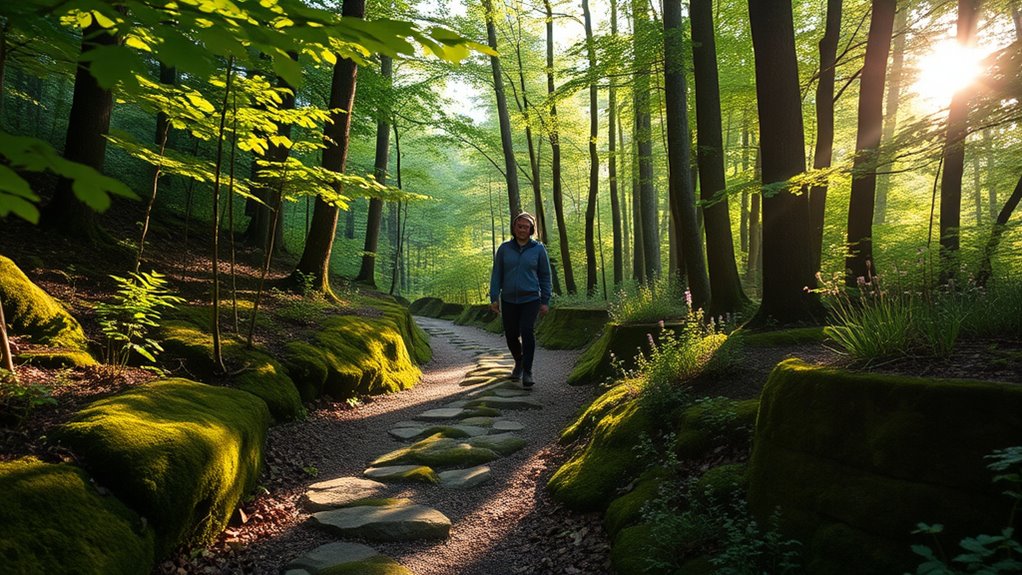
Taking a mindful walk while listening to educational audio can transform a simple stroll into a powerful learning experience. As you step outside, focus on your surroundings and allow yourself to reconnect with nature. This isn’t just about moving your body; it’s about fostering a genuine nature connection that grounds you and enhances your ability to absorb new information. When you combine this with auditory meditation—listening deeply and intentionally to educational content—you create a unique synergy. The sounds of rustling leaves, birdsong, and your footsteps become part of your learning environment, making the experience more immersive and memorable.
By tuning into nature’s symphony while engaging with educational audio, you heighten your awareness of your environment and your own mental state. This mindfulness helps you stay present, preventing your mind from wandering or becoming distracted. As you walk, let the sounds of nature serve as a gentle backdrop, encouraging you to focus fully on the audio content. This active listening becomes an auditory meditation, where you’re not just hearing words but absorbing ideas in a calm, focused state. The natural setting supports your concentration, allowing information to sink in more effectively than when you’re surrounded by the noise and clutter of daily life.
Tuning into nature’s sounds enhances focus and transforms learning into a calm, mindful experience.
The act of walking in nature itself is beneficial, but pairing it with educational audio takes it a step further. It encourages a state of openness and curiosity, as your mind associates the outdoors with learning and growth. You might find that your retention improves, and complex concepts become clearer when your body and mind are in harmony. During your walk, take pauses to reflect on what you’ve heard, letting the natural environment reinforce your understanding. Breathe deeply, appreciating the fresh air, and let the rhythm of your steps sync with the flow of information from the audio. This rhythm creates a meditative cycle that enhances focus and retention.
Incorporating this practice into your routine can redefine how you learn on the go. Instead of viewing walk times as merely physical exercise, see them as opportunities for mental expansion. The combination of nature connection and auditory meditation creates a calming yet stimulating experience. Over time, you may notice increased clarity, better memorization, and a deeper appreciation for both nature and knowledge. It’s a simple, effective way to turn everyday movement into a meaningful journey of discovery, making each walk an enriching act of mindful learning. Practicing mindfulness during these walks can further deepen your focus and emotional regulation, amplifying the benefits of this approach.
nature sound headphones for meditation
As an affiliate, we earn on qualifying purchases.
As an affiliate, we earn on qualifying purchases.
Frequently Asked Questions
How Do I Start Practicing Mindful Walking Effectively?
To start practicing mindful walking effectively, focus on your breathing exercises to stay centered. As you walk, enhance your sensory awareness by paying close attention to the sights, sounds, and textures around you. Walk slowly, breathe deeply, and gently observe your surroundings without judgment. This mindful approach helps you stay present, reduce stress, and deepen your connection with the moment. Keep practicing consistently to experience the full benefits.
What Types of Audio Content Are Best for Learning During Walks?
Think of audio content as your walking companion, guiding you through new ideas. The best options are educational audiobooks and podcasts across genres like science, history, or self-improvement. These keep your mind engaged without distraction. Choose content that excites you, making each step feel like an exploration. You’ll find yourself learning effortlessly, your curiosity growing with every stride you take.
Can Mindful Walks Improve Mental Health Significantly?
Yes, mindful walks can markedly improve your mental health. By practicing mindfulness techniques like deep breathing, observing your surroundings, and staying present, you reduce stress and boost emotional resilience. Regular mindful walks help clear your mind, lower anxiety, and enhance overall well-being. Incorporating these practices into your routine allows you to experience mental health benefits firsthand, making it easier to manage daily stressors and foster a positive mindset.
How Long Should Each Mindful Walk Last for Optimal Benefits?
For ideal benefits, aim for a walking duration of at least 15 to 30 minutes. This allows you to fully engage in mindfulness and notice mental clarity improvements. The optimal timing varies based on your schedule, but consistency matters most. Try to incorporate mindful walks into your daily routine, whether in the morning or evening, to maximize mental health benefits and cultivate a sense of calm and focus throughout your day.
Are There Specific Environments Ideal for Mindful Walking and Audio Learning?
You should seek out nature settings like parks or forests, as they’re perfect for mindful walking and audio learning. Urban environments can work too, especially quiet streets or gardens, but they might be a bit of a double-edged sword. Think of it as finding a needle in a haystack—your goal is to find peaceful spots that allow you to focus and connect. The environment sets the stage for your mindfulness and learning experience.
Conclusion
As you embrace mindful walks paired with audio learning, remember that you’re stepping into a journey like Odysseus’s, steering both external landscapes and inner depths. Every step becomes a chapter, every lesson a guiding star. Let this practice be your modern-day Odyssey, where you discover clarity and purpose along the path. With each mindful stride, you open a world of knowledge and peace, transforming ordinary walks into extraordinary voyages of self-discovery.