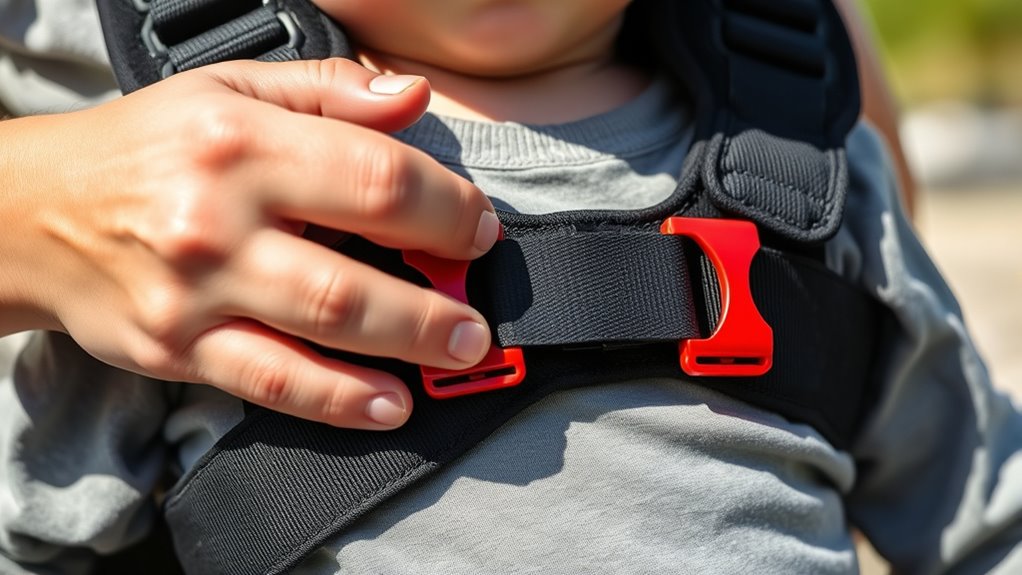

To buckle and harness correctly, start by loosening all straps for proper positioning. Place the harness over your body, ensuring the shoulder straps sit at or just below your shoulders. Tighten the straps so they fit snugly without causing discomfort, and make sure waist and leg straps are secure but allow movement. Insert the buckles with a click, then double-check they’re locked and secure. Regularly inspect and adjust your harness to stay safe—there’s more to guarantee your safety properly.
Key Takeaways
- Ensure all straps are loosened, properly positioned, and lay flat against skin or clothing before fastening.
- Insert the buckle tongue securely until you hear a click, then perform a gentle tug to confirm fastening.
- Check that shoulder, waist, and leg straps are snug but comfortable, with no twists or bunching.
- Visually inspect for frayed straps or damage, and verify all buckles are latched properly before use.
- Regularly review and adjust the harness for fit and safety compliance, following manufacturer instructions.
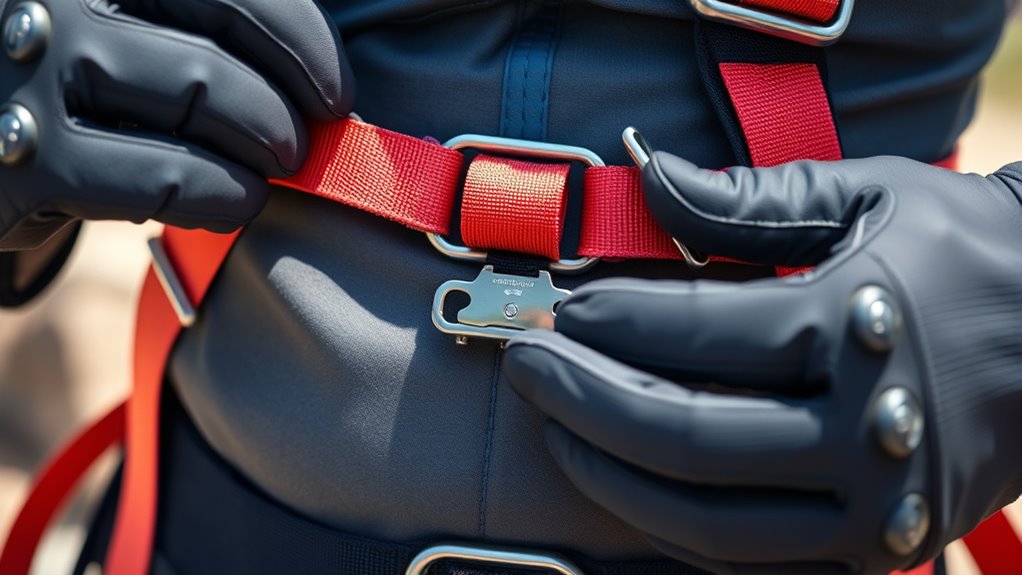
A properly secured buckle and harness are essential for keeping you safe and comfortable during travel or daily activities. When it comes to harness safety, adhering to safety standards is crucial. These standards are set by manufacturers and regulatory bodies to ensure that the harness can withstand forces during impact and provide optimal protection. Before using your harness, always check that it meets the relevant safety standards, which often include labels or certification marks indicating compliance. This guarantees you’re using a product designed to keep you safe in various situations, whether in a vehicle, on a bike, or in other applications.
Proper adjustment is key to harness safety and comfort. When fitting your harness, start by loosening all straps so you can position it correctly. Place the harness over your body, making sure it sits snugly but not too tight. The straps should lay flat against your skin or clothing without bunching or twisting. The shoulder straps should be positioned at or just below your shoulders, and you should be able to fit no more than a finger’s width between the strap and your collarbone. For waist and leg straps, ensure they are snug enough to prevent slipping but not so tight that they cause discomfort or restrict movement. Proper adjustment involves testing the fit by performing a quick tug on each strap; if they shift excessively or feel loose, tighten them until they hold firmly without causing pain.
Proper harness fit involves snug straps, correct shoulder positioning, and testing for comfort and security.
Remember, each harness might have specific instructions for adjustment, so always refer to the manufacturer’s guidelines. Incorrectly adjusted harnesses can compromise safety, increasing the risk of injury during an impact or sudden stop. It’s also essential to double-check your harness before each use. A quick visual inspection ensures no straps are frayed or damaged, and all buckles are securely fastened and latched correctly. When buckling up, insert the tongue into the buckle until you hear a click, signaling it’s locked in place. Give the buckle a gentle tug to confirm it’s securely fastened, preventing accidental unbuckling.
Ensuring proper adjustment and compliance with safety standards creates a reliable harness setup. It maximizes safety, minimizes discomfort, and provides peace of mind during your daily routines or travels. Taking these steps might seem simple, but they’re vital to ensuring your harness performs as intended when you need it most. Regularly reviewing and adjusting your harness ensures it continues to meet safety standards and fits correctly, keeping you protected every time you use it. Ultimately, paying careful attention to buckle and harness safety means you’re actively prioritizing your safety, comfort, and confidence in any situation.
adjustable harness straps for safety
As an affiliate, we earn on qualifying purchases.
As an affiliate, we earn on qualifying purchases.
Frequently Asked Questions
How Often Should I Check the Harness for Wear and Tear?
You should check your harness for wear and tear before each use, making sure it’s in good condition. Follow a regular maintenance schedule, inspecting the webbing, buckles, and stitching for signs of damage or deterioration. If you notice any fraying, cuts, or weakened parts, replace the harness immediately. Regular inspections help keep you safe and guarantee your harness remains reliable, so don’t skip these essential checks.
Can I Use a Harness Designed for One Activity in Another?
You can’t just cross your fingers and hope it works; using a harness designed for one activity in another isn’t safe. Cross compatibility concerns could lead to safety risks, as different harnesses are built to meet specific standards and stresses. Always check the manufacturer’s guidelines. When in doubt, stick to the intended use—your safety depends on it. Don’t cut corners, and prioritize proper, activity-specific gear.
What Should I Do if the Harness Feels Uncomfortable?
If your harness feels uncomfortable, first check for a proper fit—adjust straps so it’s snug but not tight. Look for padding options; adding or repositioning padding can improve comfort. Make sure the harness isn’t chafing or pinching your skin. If discomfort persists, consider trying a different size or style that offers better support and padding. Always prioritize a secure, comfortable fit for safety and ease during use.
Are There Different Harness Types for Children and Adults?
Yes, there are different harness types for children and adults. Child harnesses are designed to be lightweight, adjustable, and comfortable for smaller bodies, often with added safety features. Adult harnesses are typically sturdier, with stronger materials and more support to handle higher weights and different body sizes. Always select the appropriate harness for your size and purpose to guarantee safety and comfort. Proper fitting is essential for effective use.
How Do I Properly Store My Harness When Not in Use?
To properly store your harness, keep it clean, dry, and away from direct sunlight. Use a dedicated storage bag or a cool, dry drawer to prevent dust and damage. Always inspect it for signs of wear before storing, guaranteeing proper maintenance. Hang or lay it flat to avoid unnecessary stress on the straps. By doing so, you prolong its lifespan and ensure safe, reliable use whenever needed.
Conclusion
So, after all that, it’s funny how something as simple as buckling up can feel so complicated. You’d think securing your loved ones would be second nature, but surprisingly, many overlook the basics. Remember, a quick double-check might just save a life—yours included. Ironically, in our rush to get somewhere, we often forget the tiniest step that keeps us safe. Don’t let carelessness be the reason you miss out on tomorrow. Buckle up, and stay protected.