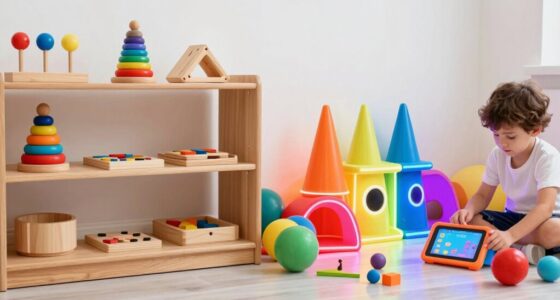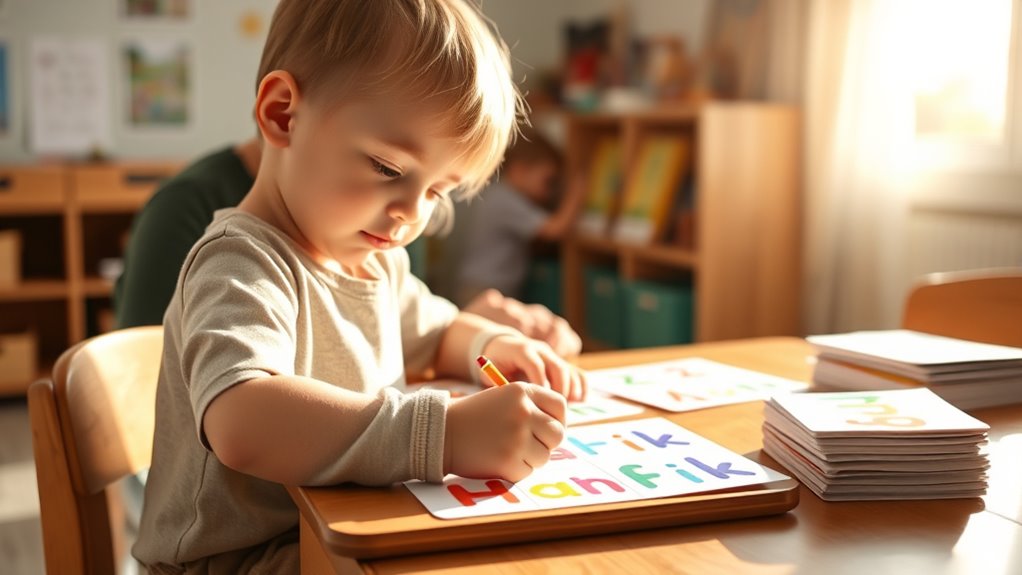

Children learn through repetition by practicing skills repeatedly, which strengthens neural pathways and builds muscle memory. When they repeat actions, their brains and muscles form connections that make tasks automatic and easier over time. This consistent practice helps them recognize patterns, improve coordination, and internalize language and concepts. The more they repeat, the more skills become second nature. Keep exploring, and you’ll discover how repetition plays a crucial role in lifelong learning.
Listen free for 30 days with Audible
Thousands of audiobooks and originals — cancel anytime.
As an affiliate, we earn on qualifying purchases.
Key Takeaways
- Repetition helps children internalize language patterns, pronunciation, and grammar, improving fluency and understanding.
- It strengthens neural pathways, making new skills and knowledge easier to recall and apply over time.
- Repeated practice develops muscle memory, enabling children to perform physical and cognitive tasks effortlessly.
- Consistent repetition builds confidence and reinforces learning, leading to more automatic and natural skill execution.
- Through repetition, children recognize patterns and connections, supporting long-term retention and mastery of skills.

Have you ever wondered how children master new skills so quickly? It’s fascinating to watch a young child learn to walk, talk, or read in just a few short months. The secret lies in how their brains and bodies respond to repetition. When children practice an activity repeatedly, they’re building what’s called muscle memory—a process where movements become automatic through consistent practice. This isn’t just about physical actions; it also plays a vital role in language acquisition. As kids hear words over and over, they begin to recognize patterns, sounds, and meanings, which helps them speak more fluently and understand language more deeply. Your child’s brain is wired to learn through repetition, making these repeated experiences indispensable for mastering new skills.
Every time your child practices a new word or a new motor skill, their brain forms stronger connections related to that activity. These connections are the foundation of muscle memory, which allows them to perform tasks with less conscious effort over time. For example, when they first try to tie their shoelaces, it feels awkward and complicated. But with each attempt, their fingers become more coordinated, and the action becomes smoother. Soon, they can do it almost automatically. This process benefits both physical and mental skills, emphasizing the importance of consistent practice. When your child repeats activities, they’re fundamentally training their muscles and brain to work together efficiently, which speeds up learning.
Repeated practice strengthens neural and muscle connections, making skills like tying shoelaces become effortless over time.
Language acquisition is another area where repetition works wonders. Hearing the same words, phrases, or songs repeatedly helps children internalize pronunciation and grammar rules. This repetition allows their brains to encode language patterns more effectively, turning unfamiliar sounds into familiar words. As they practice speaking and listening, they gain confidence and fluency. Repetition also helps solidify vocabulary and understanding, making it easier to recall words when they need them. You might notice your child mispronouncing a word at first but gradually getting it right after hearing and trying it multiple times. That’s muscle memory at work in their speech muscles, as well as their neural pathways. Additionally, consistent practice reinforces neural pathways, making it easier for children to retain and retrieve new information.
In effect, the power of repetition in a child’s learning process is undeniable. It creates the neural and muscular pathways necessary for skills to become second nature. Whether it’s learning to walk, speak, or write, your child’s consistent practice builds the foundation for mastery. So, when your little one keeps practicing that song, puzzle, or phrase, remember—they’re not just playing or repeating; they’re developing essential skills that will serve them for a lifetime.
muscle memory learning toys for kids
As an affiliate, we earn on qualifying purchases.
As an affiliate, we earn on qualifying purchases.
Frequently Asked Questions
How Does Repetition Impact Long-Term Memory Retention in Children?
Repetition strengthens long-term memory retention in children by aiding memory consolidation and providing cognitive reinforcement. When you repeat information regularly, it helps solidify neural connections, making recall easier over time. This process enhances understanding and retention, ensuring that knowledge moves from short-term to long-term memory. Consistent practice and repetition are key to building a strong memory foundation, enabling children to learn more effectively and retain information longer.
What Age Groups Benefit Most From Repetitive Learning?
You’ll find that children in early developmental stages, like preschoolers and early elementary students, benefit most from repetitive learning. At these ages, their learning styles thrive on repetition, helping solidify foundational skills. Repetition supports memory retention and skill mastery, especially when tailored to their developmental needs. As children grow and their learning styles evolve, the effectiveness of repetition might shift, but it remains a crucial tool across all ages.
How Can Parents Encourage Healthy Repetition Without Causing Boredom?
Research shows that incorporating creative engagement keeps children excited about repetition. You can encourage healthy repetition by using playful strategies like turning learning into games, singing songs, or storytelling. These methods make practice fun and dynamic, preventing boredom. By mixing activities and allowing your child to explore different ways to repeat, you foster enthusiasm and reinforce learning naturally, creating a positive, engaging environment that supports their development.
Are There Differences in Repetition Effectiveness Across Learning Subjects?
Yes, repetition’s effectiveness varies across subjects because it impacts subject mastery and cognitive engagement differently. For example, in math, repeated practice builds problem-solving skills, while in language, it enhances vocabulary retention. You should tailor repetition strategies to each subject, ensuring your child stays cognitively engaged without boredom. Focus on variety and active participation to boost mastery, helping your child develop a deeper understanding and a love for learning across different areas.
What Role Does Emotional Connection Play in Repetitive Learning?
You might think repetition feels dull, but emotional resonance makes it powerful. When you connect emotionally, like through bonding significance, children stay engaged and motivated. That emotional connection boosts memory and understanding, turning routine practice into meaningful learning. It’s not just about repeating; it’s about creating a bond that makes lessons memorable and enjoyable. This emotional engagement helps children internalize concepts more deeply, making repetition a joyful part of their growth.
Conclusion
By encouraging children to repeat activities and lessons, you help solidify their learning and build confidence. Remember, practice makes perfect, and patience is key. When you give them time to absorb and revisit ideas, you’re planting seeds for long-term understanding. Keep in mind, Rome wasn’t built in a day, so stay persistent. Your consistent efforts will pay off, helping your child grow smarter and more confident with every repetition.
Flea & tick season Picks
flea and tick prevention
As an affiliate, we earn on qualifying purchases.