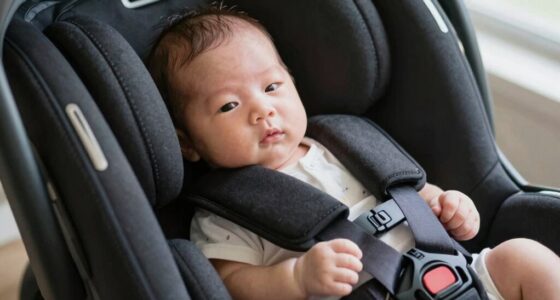

When taking your newborn on a car ride, plan trips around their feeding schedule and make certain they are comfortable and well-fed, which can reduce fussiness. Secure the car seat correctly, using a rear-facing position and snug harness, and keep loose items secured in the vehicle. Support their head, maintain a comfortable temperature, and take breaks during long trips. Want more tips to make car rides safer and more comfortable? Keep going for helpful details.

Turn the school run and nap time into listening time
- Thousands of audiobooks, podcasts and originals
- Listen on your phone, tablet or Echo — also offline
- Cancel anytime
Key Takeaways
- Schedule trips around the newborn’s feeding routine to keep them calm and comfortable.
- Use a properly installed, rear-facing car seat that fits snugly and meets safety standards.
- Keep feeding supplies accessible and consider feeding before or after trips to minimize fussiness.
- Support the baby’s head with a soft headrest and secure loose items to prevent hazards.
- Take regular breaks on long trips to check on, feed, and adjust the baby’s comfort.
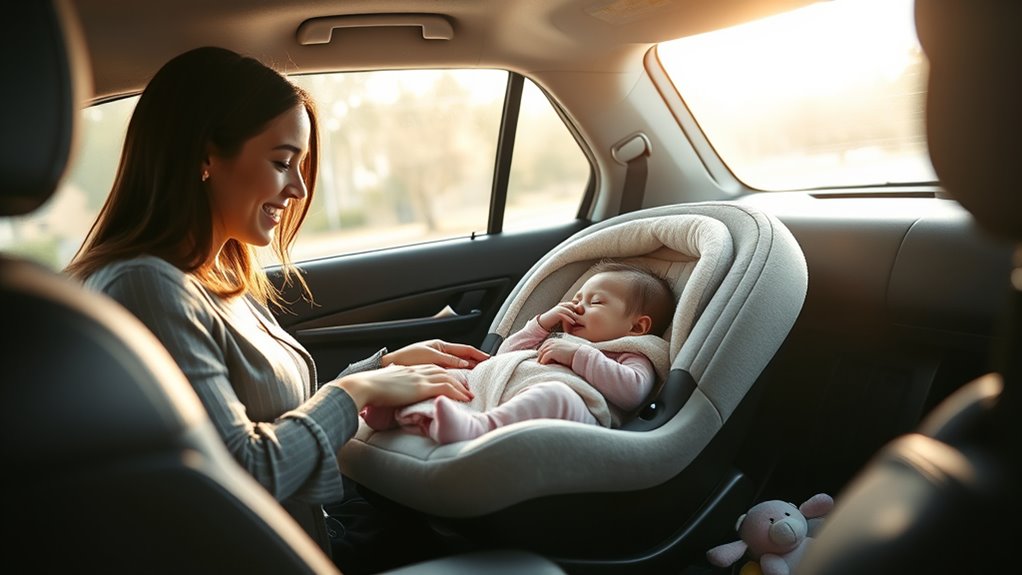
Taking your newborn on car rides can be both exciting and nerve-wracking, especially if it’s your first time. You want to make sure your little one stays safe and comfortable, which means paying close attention to feeding schedules and car seat safety. Planning ahead helps keep things smooth and stress-free. For feeding schedules, try to time your trips around your baby’s eating routine. If your newborn typically feeds every two to three hours, consider planning shorter trips during these times or bringing along enough milk or formula to feed on the go. A well-fed baby is usually calmer and less likely to become fussy during the ride. If you’re breastfeeding, consider using a nursing cover or having your partner assist with feeding before or after the trip to minimize disruptions. Keeping your baby well-fed and comfortable is key to a pleasant journey. Additionally, selecting a high-quality car seat that meets safety standards can provide extra peace of mind during travel.
Car seat safety is paramount when traveling with a newborn. Always ensure the car seat is correctly installed according to the manufacturer’s instructions. The seat should be rear-facing, as this position offers the best protection for your baby’s fragile neck and spine. Check that the seat is tightly secured in the vehicle, with minimal movement when tested at the base. The harness should be snug against your baby’s chest, with no slack, and the straps should be positioned at or below your baby’s shoulders. Make sure the harness clips are at armpit level and that your baby’s harness is properly adjusted as they grow. Never place any additional padding under or behind your newborn in the car seat, as this can interfere with the harness’s effectiveness. Always double-check that the car seat is compatible with your vehicle and that it’s installed correctly before hitting the road.
During the drive, keep your baby’s head supported with a soft, well-fitted headrest, and avoid any loose items in the car that could become projectiles in a sudden stop. Keep the temperature comfortable—neither too hot nor too cold—and consider covering your baby with a light blanket if necessary, but avoid heavy coverings that could interfere with the harness. Regularly stop for breaks if you’re on a long trip, giving you a chance to check on your little one, feed if needed, and ensure they’re comfortable. Staying attentive to your baby’s cues and maintaining proper feeding schedules and car seat safety measures will help you both enjoy safe, stress-free car rides with your newborn.
As an affiliate, we earn on qualifying purchases.
Frequently Asked Questions
What Should I Do if My Newborn Gets Car Sick?
If your newborn gets car sick, try calming techniques like gentle rocking or soft singing to soothe them. Keep the car well-ventilated and avoid sudden stops or sharp turns, as motion sickness can worsen with abrupt movements. Make certain your baby is seated upright and in a comfortable position, and consider taking breaks for fresh air. These steps can help reduce discomfort and make car rides more pleasant for your little one.
How Can I Soothe a Fussy Newborn During a Ride?
To soothe a fussy newborn during a ride, try playing white noise to mimic familiar sounds and create a calming environment. Offer a pacifier for soothing comfort, as sucking can help relax your baby. Keep the car seat comfortable and make certain the baby is securely fastened. Gentle rocking or talking softly can also help, but focus on maintaining a calm atmosphere to ease your newborn’s fussiness quickly.
Is It Safe to Leave the Car Seat Installed Long-Term?
They say “prevention is better than cure,” so it’s safe to say you shouldn’t leave your car seat installed long-term without proper maintenance. Regularly check the car seat for recalls and make certain it’s correctly secured using vehicle safety features. Keep in mind, prolonged installation can weaken the seat’s effectiveness. Always follow manufacturer instructions and schedule periodic inspections to guarantee your newborn stays safe on every ride.
How Do I Handle Diaper Changes During a Long Trip?
During a long trip, handle diaper changes by keeping your diaper bag essentials handy and prepared. Find a safe, flat spot to change your newborn, and use a changing pad for cleanliness. To handle diaper leaks, carry extra wipes and a plastic bag for soiled diapers. Stay calm and patient, and plan breaks at rest stops to make sure your baby stays comfortable and clean throughout the journey.
What Are the Best Car Accessories for Newborn Comfort?
You should invest in a comfortable, supportive car seat that prioritizes car seat safety for your newborn. Look for accessories like padded inserts and sunshades to keep your baby cozy and protected from glare. Additionally, choose a stroller compatible with your car seat, making changes smooth and convenient. These accessories help guarantee your newborn’s comfort and safety during car rides, making trips more enjoyable for both of you.
Conclusion
With these tips in mind, car rides with your newborn become smoother sailing. Remember, each trip is like a gentle wave—sometimes calm, sometimes a little choppy, but always manageable with patience and preparation. Trust your instincts, stay alert, and keep essentials close. As you navigate these journeys, you’ll build confidence and create precious memories. Before you know it, car rides will feel as natural as a lullaby, turning every trip into a peaceful voyage for both of you.
Fall Picks
fall essentials
As an affiliate, we earn on qualifying purchases.