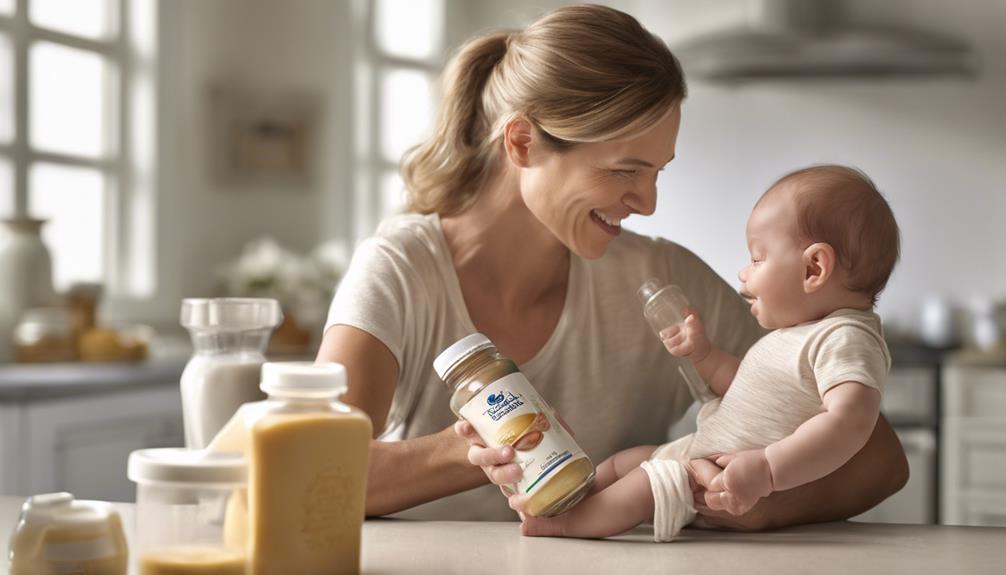
Do you think mixing powder and water is all there is to making baby formula? Think again. The AAP Infant Formula Feeding Guidelines provide detailed instructions on how to properly prepare formula, and it’s not as simple as just shaking a bottle.
Listen free for 30 days with Audible
Thousands of audiobooks and originals — cancel anytime.
As an affiliate, we earn on qualifying purchases.
From precise measurements to storage techniques, this how-to guide covers it all. But what if I told you there's more to it than meets the eye? Stay tuned to uncover the hidden gems of infant formula feeding that could make a world of difference in your baby's development.
Key Takeaways
- Follow strict safety guidelines for formula preparation and storage.
- Adjust feeding schedules based on baby's cues and needs.
- Feed newborns on demand to establish healthy feeding patterns.
- Discard any leftover formula promptly to prevent bacterial growth.
infant formula powder measuring scoop
As an affiliate, we earn on qualifying purchases.
As an affiliate, we earn on qualifying purchases.
Formula Preparation Guidelines
When preparing infant formula, it's important to follow strict guidelines to guarantee the safety and nutritional quality for your baby.
The American Academy of Pediatrics emphasizes the significance of measuring water and formula accurately to ensure the proper balance of nutrients essential for your infant's health.
Sterilizing bottles, nipples, caps, and rings before first use is essential in preventing bacterial growth and maintaining cleanliness during feeding times.
Ensuring the formula is at a safe temperature by warming the bottle in warm water is key for your baby's comfort and safety during feeding sessions.
It's recommended to use the prepared formula within one hour of starting a feeding and to discard any leftovers promptly to prevent bacterial growth and maintain freshness.
Safe Storage Practices

To maintain the freshness and safety of infant formula, it is essential to adhere to proper storage practices. When handling infant formula, it's vital to store powdered infant formula in a safe place, use prepared infant formula within 2 hours, and store the bottle in the fridge if there is any leftover formula. Here is a detailed guide to safe storage practices for infant formula:
| Storage Practice | Guidelines |
|---|---|
| Store powdered infant formula | Keep in a cool, dry place away from direct sunlight. |
| Use prepared infant formula | Consume within 2 hours to prevent bacterial growth. |
| Store the bottle | Refrigerate any unused formula and use within 24 hours. |
| Discard any leftover formula | After feeding, discard any remaining formula to avoid contamination. |
Follow these guidelines diligently to ensure that the infant formula remains a safe source of nutrition for your little one. Remember to always measure the water accurately, warm the bottle under running warm water, test the temperature on your wrist before feeding, and discard any leftover formula promptly. Additionally, store unopened formula in a cool, dry place and use it within the specified timeframe to maintain its quality and nutritional value.
Feeding Schedule Recommendations
For best infant nourishment and growth, establishing a consistent feeding schedule based on your baby's cues and routine is essential. Newborns thrive on demand feedings, allowing them to regulate their intake based on hunger cues. As parents, we can observe our baby's signals and establish a schedule that aligns with their natural routine. Here are some key recommendations to ponder:
- Initially, feed newborns on demand to establish feeding patterns.
- Babies will naturally regulate their intake based on hunger cues.
- Parents can schedule feedings based on baby's signals and routine.
- Babies between 2-4 months may not require middle-of-the-night feedings.
- As babies grow, they may go longer between daytime feedings as stomach capacity increases.
Formula Safety Measures

As we focus on ensuring the well-being of our infants, prioritizing formula safety measures is paramount to safeguarding their health and development. When preparing infant formula, it is essential to follow strict guidelines to safeguard safety and prevent contamination. Here are some key safety measures to keep in mind:
| Safety Measure | Description | Importance |
|---|---|---|
| Wash hands before preparation | Prevents contamination and guarantees cleanliness | High |
| Use clean bottles and equipment | Reduces the risk of bacterial growth and infection | Critical |
| Discard leftover formula after feeding | Prevents bacterial growth and potential health risks | Crucial |
| Follow manufacturer's instructions | Ensures proper mixing and handling to maintain nutritional integrity | Essential |
Feeding Guide for First Year
During the first year of your infant's life, a structured feeding guide is essential for their health and development. It's recommended by the Academy of Pediatrics to feed infants breast milk or formula exclusively for the first 6 months. Around 6 months, introduce solid foods while continuing breast milk or formula. When it comes to formula feeding, babies typically consume about 2½ ounces of formula per pound of body weight daily, but they shouldn't exceed an average of 32 ounces in a 24-hour period. It's vital to follow your baby's feeding cues and adjust schedules based on their individual needs.
- Infants should be fed breast milk or formula exclusively for the first 6 months of life.
- Introduce solid foods around 6 months while continuing breast milk or formula.
- Formula-fed babies typically consume about 2½ ounces of formula per pound of body weight daily.
- Babies shouldn't exceed an average of 32 ounces of formula in a 24-hour period.
- Follow infant feeding cues and adjust feeding schedules based on individual baby's needs.
Frequently Asked Questions
How Do You Make a Formula Feed Step by Step?
We make formula feed step by step with care. First, wash hands and sterilize equipment. Measure water and formula precisely. Warm gently if needed. Use within an hour and discard leftovers. Prioritize hygiene for baby's health.
What Are the AAP Guidelines for Infant Feeding?
We follow AAP guidelines for infant feeding, prioritizing exclusive breastfeeding for about 6 months. Formula serves as a valuable alternative. It's essential to heed infant cues over a rigid schedule and consult healthcare providers before introducing cow's milk before age 1.
What Is the AAP Policy on Infant Formula?
We support infant formula use when breastfeeding isn't an option. Consult healthcare providers for guidance on selecting and feeding formulas. Proper preparation and storage are essential. Following AAP guidelines guarantees the best nutrition, growth, and development for formula-fed infants.
What Is the Correct Procedure to Follow When Preparing Infant Formula?
When preparing infant formula, we wash hands diligently, sterilize all equipment, measure accurately, warm gently, use within an hour, and discard leftovers. Following these steps guarantees proper nutrition and reduces the risk of contamination.
Conclusion
As parents following the AAP Infant Formula Feeding Guidelines, we must prioritize the safety and health of our little ones.
Did you know that proper formula preparation and storage can reduce the risk of bacterial contamination by 80%?
By adhering to these guidelines diligently, we can guarantee our babies receive the nutrition they need to thrive and grow.
Let's continue to provide our little ones with the best care possible through safe and accurate formula feeding practices.
Fall Picks
fall essentials
As an affiliate, we earn on qualifying purchases.