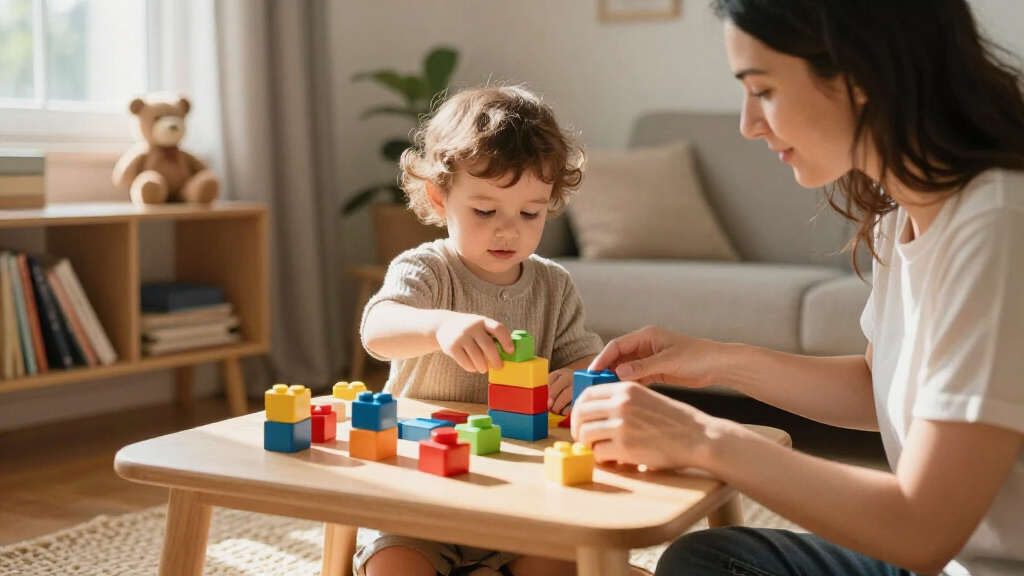

Parents seeking educational toys for toddlers often face the choice between traditional wooden toys and modern electronic options. Wooden Montessori-style toys promote sensory exploration and fine motor skills through simple, durable designs. In contrast, electronic learning toys offer interactive, multimedia experiences that can teach letters, numbers, and problem-solving. Both types aim to foster development but do so through fundamentally different approaches. Understanding the key differences can help parents select toys that align with their child’s learning style, safety concerns, and their own values about play.

Turn the school run and nap time into listening time
- Thousands of audiobooks, podcasts and originals
- Listen on your phone, tablet or Echo — also offline
- Cancel anytime

LeapFrog 2-in-1 LeapTop Touch
- ✔ Modes: 5 (ABCs, numbers, games, music, messages)
- ✔ Age Range: 2-5 years
- ✔ Batteries: 3 AA (included for demo, new recommended)

Montessori Busy Book Color Sorting Toys for Toddlers 2-4 Years
- ✔ Brand: MUONE
- ✔ Age Range: 36 months – 6 years
- ✔ Number of Packs: 1

Montessori Wooden Sorting and Stacking Puzzle Toys for Toddlers 1-3 Years Old
- ✔ Material: Wood
- ✔ Colors: Red, orange, yellow, green, blue
- ✔ Shapes: Pentagon, square, rectangle, triangle, circle
This comparison examines the core features of these two popular categories, highlighting their strengths and weaknesses across several important criteria. Whether you prioritize hands-on tactile engagement or electronic interactivity, this guide will help clarify which option suits your child’s needs best.
At a Glance
| Criteria | Wooden Montessori-Style Toys | Plastic Electronic Learning Toys | Winner |
|---|---|---|---|
| Educational Value | Focus on sensory, fine motor, and independence skills through open-ended play | Provides multimedia-based learning, teaching numbers, letters, and problem-solving | A |
| Safety and Durability | Made from natural wood, with non-toxic finishes, highly durable, less prone to breakage | Made from plastic, often with electronic components, potentially less durable over time | A |
| Engagement and Interactivity | Limited to physical manipulation; relies on child’s imagination | High engagement through sounds, lights, and interactive games | B |
| Developmental Focus | Supports motor skills, spatial reasoning, and independence | Focus on cognitive skills, early literacy, and problem-solving | A |
| Design and Aesthetics | Simple, minimalist, natural look that blends into home decor | Bright, colorful, and often themed designs appealing to children | B |
| Price and Value | Generally higher upfront cost but longer-lasting | Lower initial cost but may require additional batteries or accessories | B |
| Ease of Use | Requires minimal setup, intuitive for toddlers | Requires batteries and sometimes supervision for complex features | A |
| Maintenance and Cleanability | Easy to clean; only need a damp cloth | Can be harder to clean due to electronic parts and crevices | A |
LeapFrog 2-in-1 LeapTop Touch
The LeapFrog 2-in-1 LeapTop Touch stands out for its adaptability as both a laptop and tablet, making it a versatile tool that grows with your child. It offers five interactive modes covering ABCs, numbers, and music, fostering early literacy and numeracy skills. Compared with simpler toys, this model encourages role-play and can keep children engaged for longer periods. However, it’s limited to the preschool age range and requires new batteries for regular use, which adds ongoing cost and maintenance.
Pros:
- Versatile 2-in-1 design encourages role-play and learning
- Multiple modes keep children engaged
- Supports early literacy and numeracy skills
Cons:
- Batteries are not included for regular use
- Limited to preschool age, not suitable for younger or older children
- Screen-based play may be less physical
Best for: Parents wanting a durable, tech-oriented toy that promotes literacy and role-playing for children aged 2-5.
Not ideal for: Those seeking a simple, screen-free activity or toys for children outside the preschool age range.
Bottom line: This pick offers the best combination of versatility and educational value for preschoolers interested in tech-based learning, despite its reliance on batteries and age constraints.
“This pick offers the best combination of versatility and educational value for preschoolers interested in tech-based learning, despite its reliance on batteries and age constraints.”
Montessori Busy Book Color Sorting Toys for Toddlers 2-4 Years
This Montessori-inspired busy book is ideal for fostering color recognition, vocabulary, and fine motor skills through tactile matching activities. Its durable, tear-resistant cardboard and safety features make it perfect for shared play and quiet, focused learning sessions. Compared with digital options, this toy emphasizes manual dexterity and cognitive association. However, it may be too simple for older children and offers only color sorting, limiting its scope for broader skill development. The small sticker pieces might also pose a choking hazard for very young toddlers.
Pros:
- Promotes color recognition and vocabulary development
- Durable, non-toxic, safe materials
- Encourages shared, quiet play and cognitive skills
Cons:
- Limited to color sorting activities
- May be too simple for older or more advanced children
- Small sticker pieces could be a choking hazard
Best for: Parents seeking a durable, screen-free activity that promotes vocabulary and fine motor skills for children aged 2-4.
Not ideal for: Kids who need more complex activities or are beyond basic color matching.
Bottom line: This busy book excels as a durable, educational tool for early color and vocabulary learning, though its simplicity limits its appeal for older or more advanced toddlers.
“This busy book excels as a durable, educational tool for early color and vocabulary learning, though its simplicity limits its appeal for older or more advanced toddlers.”
Montessori Wooden Sorting and Stacking Puzzle Toys for Toddlers 1-3 Years Old
The Montessori Wooden Sorting and Stacking Puzzle is perfect for introducing toddlers to basic shapes and colors through hands-on manipulation. Made from high-quality, non-toxic wood, it promotes sensory development and shape recognition. Its simplicity makes it suitable for very young children, but it lacks the complexity or variety found in more advanced toys. Additionally, it doesn’t include a storage container, so cleanup and organization require extra effort. Compared with digital or sticker-based toys, it emphasizes tactile, open-ended play, but may not hold more advanced toddlers’ interest for long.
Pros:
- High-quality, non-toxic materials ensure safety
- Encourages sensory and shape recognition
- Versatile as sorting, stacking, and shape play tools
Cons:
- Limited to basic shapes and colors
- No included storage or organization features
- May be too simple for older toddlers
Best for: Parents wanting a safe, durable, and simple shape-sorting toy for children aged 1-3.
Not ideal for: Older children seeking more complex or varied activities.
Bottom line: This wooden puzzle offers a safe, tactile experience for early shape and color recognition, but its simplicity may limit engagement for more advanced toddlers.
“This wooden puzzle offers a safe, tactile experience for early shape and color recognition, but its simplicity may limit engagement for more advanced toddlers.”
As an Amazon Associate we earn from qualifying purchases.
Key Differences
The primary distinction lies in the learning approach: wooden Montessori toys promote exploration, fine motor skills, and independence through simple, open-ended play. These toys are designed to be durable, safe, and aesthetically minimalistic, encouraging children to use their imagination without external stimulation. Electronic learning toys, on the other hand, prioritize interactive experiences, often embedding lights, sounds, and digital content to engage toddlers cognitively and visually. They can teach specific skills like numbers and letters more directly but tend to be less durable and more complex to maintain.
In practical terms, wooden toys suit parents seeking long-lasting, safe, and minimalist options that support physical and sensory development. Electronic toys appeal to those who value immediate engagement, multimedia learning, and a variety of programmed activities. The choice depends heavily on the child’s learning style and the parent’s educational philosophy. For hands-on, tactile learning and durability, wooden toys generally offer better value. Conversely, for moms and dads wanting quick, interactive educational content that can hold a child’s attention for longer periods, electronic toys might be more effective.
Detailed Comparison
Educational Value (moderate difference)
Wooden Montessori toys emphasize sensory exploration, fine motor skills, and independence, making them excellent for foundational development. They foster creativity through open-ended play without predefined outcomes. Electronic toys excel in teaching specific skills like alphabet recognition, counting, and problem-solving via interactive features, often with immediate feedback. The gap is moderate: both support learning but through different methods. Choose A if you prioritize physical, imaginative, and self-directed learning; choose B if targeted cognitive skill development through interactive content is more important.
Safety and Durability (Wooden Montessori-Style Toys wins — major)
Wooden toys generally rank higher in safety, being free from electronic components and toxic plastics, with a sturdy build that withstands rough play. Electronic toys may contain small parts, batteries, or electronic failure points, making them less durable in the long run. The gap is major: durability and safety are critical for toddlers. For parents prioritizing long-term safety and minimal maintenance, wooden toys are preferable.
Engagement and Interactivity (Plastic Electronic Learning Toys wins — moderate)
Electronic toys outperform wooden toys here, offering lights, sounds, and interactive games that can captivate a child’s attention for extended periods. They adapt to different learning stages with multiple activities. Wooden toys rely solely on physical manipulation and imagination, which might be less immediately engaging but foster creativity. The gap is moderate: electronic toys provide higher engagement, but wooden toys support sustained imaginative play without external stimuli.
Developmental Focus (moderate difference)
Wooden toys support fine motor skills, spatial reasoning, and independence, aligning with Montessori principles. Electronic toys focus more on early literacy, numeracy, and cognitive skills, often with structured learning modules. The gap is moderate: both support development but target different areas. Select A if motor and sensory skills are priorities; B if early academic skills are more relevant.
Design and Aesthetics (Wooden Montessori-Style Toys wins — minor)
Wooden toys feature minimalist, natural designs that blend well with modern home decor and appeal to parents seeking simplicity. Electronic toys tend to be colorful, themed, and eye-catching, which can be highly attractive to children but less subtle. The gap is minor but important: aesthetic preferences vary, and some parents prefer a minimalist environment.
Price and Value (Plastic Electronic Learning Toys wins — moderate)
Wooden toys often involve higher upfront costs but are more durable, providing better long-term value. Electronic toys are generally cheaper initially but may require batteries, replacement parts, or additional content, increasing overall costs. The gap is moderate: consider value over time and usage frequency when choosing.
Ease of Use (Wooden Montessori-Style Toys wins — minor)
Wooden toys are straightforward, requiring no batteries or complicated instructions, making them easier for toddlers to use independently. Electronic toys often have multiple buttons, modes, and batteries, which can complicate their use and require adult supervision. The gap is minor, but for very young children, simplicity can enhance independent play.
Maintenance and Cleanability (Wooden Montessori-Style Toys wins — major)
Wooden toys are easy to clean with a damp cloth and require minimal upkeep. Electronic toys may need careful cleaning around electronic parts and batteries, making maintenance more complicated. The gap is major: ease of cleaning can influence daily practicality, especially for toddlers prone to messes.
Wooden Montessori-Style Toys: Pros and Cons
Pros:
- Highly durable and safe, made from natural materials
- Supports sensory and motor development
- Minimal maintenance and easy to clean
- Aesthetic design fits modern home decor
Cons:
- Limited engagement features; relies on child’s imagination
- Typically more expensive upfront
- Fewer structured learning activities
Plastic Electronic Learning Toys: Pros and Cons
Pros:
- Highly engaging with lights, sounds, and interactive content
- Can teach specific skills like alphabet and numbers
- Less effort for parents to provide structured learning
- Generally lower initial cost
Cons:
- Less durable, more prone to breakage or malfunction
- Requires batteries and maintenance
- Potential safety concerns with electronic parts
- Can be overly stimulating or distracting
Who Should Choose What
Choose Wooden Montessori-Style Toys if:
- You prioritize safety, durability, and natural materials
- Your child benefits from tactile, open-ended play
- You prefer minimalist design and long-term value
Choose Plastic Electronic Learning Toys if:
- You want engaging, multimedia learning experiences
- Your child responds well to lights, sounds, and structured activities
- Budget constraints favor initial affordability
Value for Money
Wooden toys generally offer better long-term value due to their durability and timeless appeal, making them suitable for parents willing to invest more upfront. Electronic toys may provide more immediate engagement and skill-specific learning but often require ongoing costs and replacements. For those prioritizing safety, simplicity, and longevity, paying a premium for wooden toys is justified. Conversely, electronic toys can be worth it if quick, engaging educational content is more critical and maintenance is manageable.Final Verdict
For most parents valuing safety, durability, and fostering independent, tactile learning, wooden Montessori-style toys are the better choice. They offer long-term value, aesthetic appeal, and support foundational development. Electronic learning toys suit parents seeking immediate engagement, skill-specific teaching, and a variety of activities, especially if budget constraints are a concern. Ultimately, the decision hinges on your child’s learning style and your educational priorities. When in doubt, combining both types can provide a well-rounded developmental environment, but if choosing one, prioritize wooden toys for lasting benefits and safety, or opt for electronic toys if interactive, targeted learning is the goal.
Frequently Asked Questions
Are wooden toys really safer for toddlers?
Yes, wooden toys typically contain fewer small parts, are made from natural, non-toxic materials, and lack electronic components that could pose safety risks. Their durability also means they are less likely to break into small, hazardous pieces.
Do electronic toys help with learning better than traditional toys?
Electronic toys can provide targeted, interactive learning experiences that might be more engaging for some children. However, traditional wooden toys foster creativity, sensory exploration, and motor skills without external stimulation, which are equally important at this stage.
Which type of toy lasts longer?
Wooden toys generally last longer due to their sturdy build and simple design, often surviving years of use and passing down through generations. Electronic toys tend to have a shorter lifespan due to electronic failures and technological obsolescence.
Can I combine both types for my toddler?
Absolutely. Using a mix of tactile, open-ended wooden toys along with electronic interactive toys can provide a balanced developmental environment, catering to different learning styles and keeping playtime fresh and stimulating.
Fall Picks
fall essentials
As an affiliate, we earn on qualifying purchases.