The best handheld puzzle games for kids combine easy-to-grasp play with challenges that stay interesting as a child improves. I’d put the GiiKER Super Slide at the top for its large challenge library and clear solo-puzzle format; Educational Insights Kanoodle is a strong pick for hands-on spatial reasoning, while Moose Games Flipslide suits kids who prefer quick, active rounds. The main tradeoffs are screen-based play versus tactile pieces, open-ended challenge depth versus simple replay, and portability versus small parts that can get lost. Age, patience, and whether a child likes logic, memory, or manipulation matter as much as the game’s challenge count. Read on for the full breakdown and help matching a game to the child who will actually play it.

Turn the school run and nap time into listening time
- Thousands of audiobooks, podcasts and originals
- Listen on your phone, tablet or Echo — also offline
- Cancel anytime
Complete the kit


Key Takeaways
- GiiKER Super Slide leads for structured solo play because its 500+ challenges offer a broader progression path than the simpler sliding puzzles in this lineup.
- Kanoodle stands apart from electronic options by making spatial reasoning a hands-on task with physical pieces and no screen.
- Flipslide and BrainBolt are better fits for kids who enjoy quick response and memory rounds than for children seeking quiet, extended logic challenges.
- The wooden maze cube and marble maze offer simple, screen-free portability, but their fixed routes provide less challenge variety than games with multiple puzzles.
- A large advertised challenge count is not the only measure of replay value: puzzle variety, clear progression, and a format a child enjoys matter more.
| 6-Sided Wooden Maze Fidget Cube Puzzle |  | Best for Varied Hands-On Challenges | Brand: CHEROSIN | Materials: Beech wood core and transparent acrylic shell | Size: 2.5 × 2.5 × 2.5 inches | VIEW LATEST PRICE | See Our Full Breakdown |
| Handheld Wooden Marble Maze Puzzle |  | Best for Steady, Screen-Free Play | Materials: Beech wood core with acrylic cover | Dimensions: 7 × 4.5 × 1 inches | Weight: 0.25 lb | VIEW LATEST PRICE | See Our Full Breakdown |
| Fizz Creations Tetris Keyring Handheld Arcade Game – Mini Retro Console |  | Best for Tetris Fans on the Go | Brand: Fizz Creations | Display: LCD | Game modes: Sprint and Marathon | VIEW LATEST PRICE | See Our Full Breakdown |
| Moose Games Flipslide Handheld Puzzle Game |  | Best for Fast, Changing Challenges | Game modes: Speed, Multiplayer, Level, and Memory | Recommended age: 8 years and up | Included: Handheld game console, batteries, and instructions | VIEW LATEST PRICE | See Our Full Breakdown |
| tingbowie Handheld Electronic Memory Game |  | Best for Simple Pattern-Memory Practice | Brand: tingbowie | Model: 907H | Age guidance: Age range listed as 14+; manufacturer recommendation listed as 3 years and up | VIEW LATEST PRICE | See Our Full Breakdown |
| GiiKER Super Slide Puzzle Game – 500+ Challenges, STEM Toy for Ages 6+ |  | Best for a Large Challenge Library | Brand: GiiKER | Model: JKHRD001 | Age range: 6 years and up | VIEW LATEST PRICE | See Our Full Breakdown |
| Educational Insights Kanoodle Brain Teaser Puzzle | 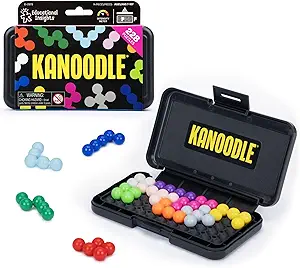 | Best for Hands-On 2D and 3D Solving | Puzzle challenges: 228 | Puzzle formats: 2D and 3D | Number of pieces: 12 | VIEW LATEST PRICE | See Our Full Breakdown |
| Educational Insights BrainBolt Light-Up Memory Game |  | Best for Quick Memory Challenges | Game type: Light-up memory puzzle | Play style: Solo | Format: Handheld and compact | VIEW LATEST PRICE | See Our Full Breakdown |
| Zonopy 3D Puzzle Magic Bead Ball |  | Best Tactile Fidget-Style Puzzle | Brand: Zonopy | Model: z-ball2 | Material: ABS plastic | VIEW LATEST PRICE | See Our Full Breakdown |
| V-Opitos Color Matching Slide Puzzle for Kids |  | Best for Younger Color-Matching Beginners | Brand: V-Opitos | Material: Wood | Age range: 3–18 years | VIEW LATEST PRICE | See Our Full Breakdown |
| SMILESSKIDDO Kids Brain Teaser Slide Puzzle with 1,000+ Challenges |  | Best for a Long Challenge Trail | Puzzle layout: Nine squares with one empty space | Challenges: 1,000+ | Difficulty levels: 3: Simple, Normal, and Hard | VIEW LATEST PRICE | See Our Full Breakdown |
| My Arcade Tetris Gamer V – Tetris Game with 200 Bonus Games and 2.5″ Screen | 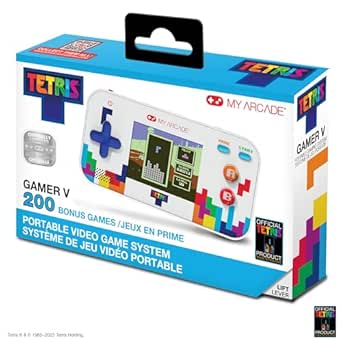 | Best for Classic Falling-Block Puzzles | Screen size: 2.5 inches | Display type: LCD | Games: Tetris with 200 bonus games | VIEW LATEST PRICE | See Our Full Breakdown |
| Learning Resources Scramboozle Puzzle Ball |  | Best Screen-Free Travel Puzzle | Puzzle format: 3-D puzzle ball | Challenge types: Twist, slide, and roll marbles through color sequences | Preset challenges: 30 | VIEW LATEST PRICE | See Our Full Breakdown |
More Details on Our Top Picks
6-Sided Wooden Maze Fidget Cube Puzzle
Six mazes with rising difficulty give this cube more variety than the single-route Handheld Wooden Marble Maze Puzzle. Players turn and tilt the cube to guide its internal challenge, making it a good fit for kids who like tactile puzzles and want several levels in one small object. Its 2.5-inch size and beech wood core inside a clear acrylic shell make it easy to pack and let players see the maze as they work. The tradeoff is that movement can create noise, so it is a poor choice for quiet settings such as a classroom or car ride where others need silence. The listing also gives differing age guidance; its specs say 6 years and up, so caregivers should check the product details before choosing it.
Pros:- Six mazes provide varied challenges in one handheld puzzle
- Increasing difficulty gives kids a reason to keep practicing
- Compact cube is easy to carry
- Beech wood core and clear acrylic shell combine a wood feel with a visible maze
Cons:- Movement makes it unsuitable as a quiet fidget toy
- Listing age recommendations are inconsistent
- The maze format may feel repetitive to kids who prefer changing game modes
Best for: Kids six and older who enjoy tactile mazes and want several challenges in a compact travel toy
Not ideal for: Families seeking silent fidget play or buyers who want one clearly consistent age recommendation
- Brand:CHEROSIN
- Materials:Beech wood core and transparent acrylic shell
- Size:2.5 × 2.5 × 2.5 inches
- Maze games:6
- Recommended age:6 years and up (listing age guidance differs)
- Weight:0.2 lb in description; 0.09 kg in item details
- Included component:Balance cube
- Educational objectives:Creativity, hand-eye coordination, and logical thinking
Our verdict“Choose this cube for a portable, tactile set of escalating maze challenges, but skip it when quiet play is a priority.”
Handheld Wooden Marble Maze Puzzle
This wooden labyrinth keeps the challenge simple to understand but demanding to control: players tilt the board to steer a marble past 21 holes and toward the finish. Compared with the six separate mazes in the 6-Sided Wooden Maze Fidget Cube Puzzle, this is a more focused test of patience and careful movement rather than a variety pack. Its slim 7 × 4.5-inch board is light enough for travel, and the acrylic cover keeps the marble contained during play. That straightforward format suits kids who prefer a visible, physical goal over electronic lights or sounds. The main tradeoff is precision: quick or uneven tilts can send the marble into a hole, which may frustrate younger players. The listing also gives inconsistent age suggestions; the stated spec is 8 years and up.
Pros:- Twenty-one holes make the route a sustained coordination challenge
- Physical marble movement provides screen-free play
- Lightweight board is suited to travel
- Acrylic cover helps keep the marble contained
Cons:- Requires steady tilting and careful movements
- Different sections of the listing suggest different ages
- One maze route offers less variety than the six challenges in the wooden cube
Best for: Screen-free families looking for a compact, skill-based maze for children who can manage careful tilting
Not ideal for: Younger children or players who get frustrated by slow, precision-based challenges
- Materials:Beech wood core with acrylic cover
- Dimensions:7 × 4.5 × 1 inches
- Weight:0.25 lb
- Maze holes:21
- Recommended age:8 years and up (listing age guidance differs)
- Included components:1 wooden maze puzzle
- Model number:CW-ST001
- Color:Wood
Our verdict“Pick this for a focused, screen-free dexterity challenge, provided the child is patient with precise movement.”
Fizz Creations Tetris Keyring Handheld Arcade Game – Mini Retro Console
This mini console brings the familiar shape-fitting challenge of Tetris to a keyring-sized device, making it the most recognizable electronic puzzle in this group. Its Sprint and Marathon modes let kids choose between a quicker session and a longer run, unlike the single-sequence memory challenge of the tingbowie Handheld Electronic Memory Game. Push-button controls and score memory support repeat play, while the LCD keeps the game self-contained without needing a phone. Its small screen is the compromise: falling pieces and details may be harder for some children to see than on a larger handheld, such as the My Arcade Tetris Gamer V listed elsewhere in the roundup. It also needs two AAA batteries, which are not included, so it is less ready to play straight from the box.
Pros:- Licensed Tetris gameplay offers a familiar spatial puzzle
- Sprint and Marathon modes support different session lengths
- Keyring-sized form is easy to carry
- Built-in score memory gives players a way to track runs
Cons:- Two AAA batteries are required and not included
- Small LCD may make game details difficult for some players to see
- Single-player format does not suit kids seeking shared puzzle play
Best for: Kids who already enjoy block-fitting puzzles and want short, portable Tetris sessions
Not ideal for: Children who need a larger, easier-to-read display or families who want a game ready to play without supplying batteries
- Brand:Fizz Creations
- Display:LCD
- Game modes:Sprint and Marathon
- Players:1
- Controls:Push buttons
- Power:2 AAA batteries required; not included
- Item weight:0.1 kg
- Recommended age:3 years and up
Our verdict“Choose this mini Tetris game for a portable, familiar solo puzzle, but opt for a larger-screen device if visibility matters most.”
Moose Games Flipslide Handheld Puzzle Game
Flipslide suits kids who want a puzzle that asks for quick physical responses rather than patient route planning. Players flip and slide colored blocks to match lights, with Speed, Level, Memory, and Multiplayer modes giving it more variety than the fixed marble route of the Handheld Wooden Marble Maze Puzzle. It can also shift from solo play to a shared challenge, a useful distinction from the single-player Fizz Creations Tetris Keyring. The pace is part of the appeal, but also its biggest limitation: children who need time to study a puzzle may find the faster modes stressful. Batteries and instructions are included, so setup is simpler than with the Tetris keyring, though the listing does not identify battery type or expected battery life.
Pros:- Four modes vary the style of challenge
- Multiplayer mode supports play with others
- Compact handheld design is easy to take along
- Batteries and instructions are included
Cons:- Fast-paced play may overwhelm children who need more time
- Battery type and battery life are not specified
- Light-matching gameplay may appeal less to kids seeking a physical maze or spatial block puzzle
Best for: Kids aged eight and up who enjoy quick visual challenges and want both solo and multiplayer modes
Not ideal for: Children who prefer calm, untimed puzzles or caregivers who need clear battery-life and battery-type details
- Game modes:Speed, Multiplayer, Level, and Memory
- Recommended age:8 years and up
- Included:Handheld game console, batteries, and instructions
- Power:Battery-powered
- Portability:Compact handheld design
- Play style:Solo or multiplayer
Our verdict“Pick Flipslide for energetic, mode-rich puzzle play with a multiplayer option, not for a relaxed or untimed challenge.”
tingbowie Handheld Electronic Memory Game
This compact game keeps the task clear: watch a sequence of colored lights and sounds, then repeat it. That makes it a gentler entry point to handheld electronic puzzles than Moose Games Flipslide, whose speed and sliding controls can demand faster reactions. At roughly 3 × 3 inches and 22.68 g, the tingbowie is easy to pack for short waits or trips, and its light-and-sound cues offer more than a visual pattern alone. The tradeoff is limited variety: the supplied description centers on repeating sequences, while Flipslide offers four named modes and multiplayer play. It is also described as single-player focused and needs batteries. Age guidance conflicts within the listing—one spec says 14+, while the manufacturer recommendation says 3 years and up—so caregivers should verify suitability before buying.
Pros:- Light and sound cues make the sequence easy to follow
- Small, lightweight body is convenient for travel
- Repeating patterns gives children practice with memory and persistence
- Simple core task is less demanding than Flipslide’s faster reaction challenges
Cons:- Description focuses on one repeated-sequence game format
- Designed mainly for one player
- Requires batteries
- Listing age guidance conflicts between 14+ and 3 years and up
Best for: Families seeking a very small, straightforward light-and-sound pattern game for one child
Not ideal for: Buyers who want multiple documented modes, multiplayer play, or clear, consistent age guidance
- Brand:tingbowie
- Model:907H
- Age guidance:Age range listed as 14+; manufacturer recommendation listed as 3 years and up
- Players:1+ listed
- Material:Plastic
- Power source:Battery
- Dimensions:3 × 3 inches
- Weight:22.68 g
- Included components:Toy unit
Our verdict“Choose this for simple, portable pattern-memory play, but skip it if you want multiplayer variety or dependable age guidance.”
GiiKER Super Slide Puzzle Game – 500+ Challenges, STEM Toy for Ages 6+
The GiiKER Super Slide is the strongest fit here for kids who want a puzzle that can keep presenting new tasks: its 500+ built-in challenges outnumber the 228 puzzles in Educational Insights Kanoodle. Players slide blocks on the LED screen to reach a detection zone, so each task calls for planning moves rather than matching colors or recalling a light sequence as in BrainBolt. Two game modes add some variety, and the pocket-sized format suits car rides or waiting rooms. The tradeoff is that the compact controls may be awkward for younger children or anyone who needs larger pieces to handle. It also offers less hands-on tactile play than Kanoodle’s physical pieces. For a screen-free, solo puzzle with a broad progression, though, it has a clear advantage over simpler one-mechanic options.
Pros:- More than 500 built-in challenges offer a long progression of puzzles.
- Two game modes add variety to the sliding-block mechanic.
- Compact rectangular design is easy to pack for travel.
- Screen-free play centers on reasoning, planning, and focus.
Cons:- Small handheld size may be difficult for younger children to manipulate.
- Electronic LED controls provide less tactile play than Kanoodle’s physical pieces.
- Designed around individual play rather than group solving.
Best for: Kids aged 6 and up who enjoy solo logic challenges and families seeking a compact travel game with a substantial built-in puzzle library.
Not ideal for: Younger children or kids who find small controls difficult to manipulate; also skip it if you want physical puzzle pieces or a game designed for shared play.
- Brand:GiiKER
- Model:JKHRD001
- Age range:6 years and up
- Challenges:500+
- Game modes:2
- Color:Black
- Shape:Rectangular
- Unit count:1
Our verdict“Choose the GiiKER Super Slide for an older child who wants many portable logic puzzles, but choose a physical-piece game if tactile handling matters more.”
Educational Insights Kanoodle Brain Teaser Puzzle
Kanoodle suits kids who want to manipulate pieces as part of the challenge, rather than press controls on an electronic handheld. Its 12 pieces and 228 puzzles cover both 2D and 3D formats, giving it more variation in spatial reasoning than the single sliding-block mechanic of GiiKER Super Slide. The case doubles as a board and stores the pieces, so it travels more neatly than a loose-parts puzzle might. The included illustrated book guides players through a range of difficulty, although some problems can feel demanding, especially for beginners. Kanoodle is still a solo game, so it will not answer a request for cooperative play. Compared with V-Opitos’ color-matching cards, it asks for more three-dimensional thinking and offers a wider range of puzzle formats.
Pros:- Includes 228 puzzles across both 2D and 3D formats.
- Twelve physical pieces make solving tactile and spatial.
- The case stores the pieces and serves as the playing board.
- Illustrated puzzle book offers a range of challenge levels.
Cons:- Designed for one player, limiting shared play.
- Some puzzles may be difficult for beginners.
- Small pieces can be easier to lose than an all-in-one electronic game.
Best for: Children who enjoy fitting and arranging physical pieces, especially families looking for a portable solo puzzle that progresses from simpler to harder challenges.
Not ideal for: Kids who prefer fast, simple rounds or need a partner to stay engaged; the harder puzzles may frustrate beginners without help.
- Puzzle challenges:228
- Puzzle formats:2D and 3D
- Number of pieces:12
- Players:1
- Included puzzle book:48-page illustrated book
- Storage and play:Carrying case doubles as a game board
Our verdict“Pick Kanoodle for a child who likes hands-on spatial puzzles and can enjoy solo play, rather than a quick light-sequence or color-matching game.”
Educational Insights BrainBolt Light-Up Memory Game
BrainBolt is the simplest match in this group for a child who wants a short, repeatable memory task: players follow flashing lights, with no cards or loose pieces to set up. Its compact handheld format works for quick breaks at home, in class, or while traveling. That makes it easier to pick up than Kanoodle, whose physical puzzles can take more time and attention, but BrainBolt has a narrower kind of challenge. It focuses on concentration, reaction time, and remembering sequences rather than the spatial planning found in GiiKER Super Slide. The product information does not give a challenge count or difficulty progression, so buyers looking for a clearly mapped path from beginner to advanced may prefer Kanoodle. It is also a solo game, which limits its usefulness when siblings want to play together.
Pros:- Light sequence mechanic gives the game a clear, easy-to-understand focus.
- Compact handheld format suits travel and short breaks.
- Screen-free play targets memory, concentration, and reaction time.
Cons:- Solo play is not suited to children seeking a shared game.
- The memory-focused mechanic offers less variety than Kanoodle’s 2D and 3D puzzles.
- The supplied product details do not specify a challenge count or difficulty range.
Best for: Children who enjoy short memory and attention exercises, and caregivers seeking a compact screen-free activity for brief breaks.
Not ideal for: Kids who want varied logic or spatial puzzles, a physical building element, or a game they can play with another person.
- Game type:Light-up memory puzzle
- Play style:Solo
- Format:Handheld and compact
- Screen-free:Yes
Our verdict“Choose BrainBolt for brief solo memory practice, but choose GiiKER Super Slide or Kanoodle for broader logic and spatial challenges.”
Zonopy 3D Puzzle Magic Bead Ball
The Zonopy Magic Bead Ball blends a simple color-alignment puzzle with a tactile object that can be turned in the hands, setting it apart from BrainBolt’s light-following memory play and the more structured challenges in Kanoodle. Its 2.5-inch sphere and included lanyard make it easy to carry for brief play on the go. The tradeoff is that the supplied description does not give a puzzle count or graded difficulty, so it is harder to judge how much progression a child will get compared with GiiKER Super Slide’s 500+ challenges. Age information also needs care: the listed range is 36 months–3 years, while the product notes warn that small parts may not suit very young children. I would check the manufacturer’s safety guidance before choosing it for a toddler, rather than relying on the age label alone.
Pros:- Combines bead matching with tactile turning and fidget play.
- Compact 2.5-inch sphere is easy to carry.
- Included lanyard helps keep the toy close during outings.
- Colorful sliding beads provide a hands-on alternative to electronic puzzles.
Cons:- The listed age range of 36 months–3 years is unusually narrow and should be checked against safety guidance.
- Small parts may be unsuitable for very young children.
- No challenge count or difficulty progression is provided, unlike GiiKER Super Slide.
Best for: Families seeking a small, tactile color-matching toy for supervised short play, after checking that the toy’s safety guidance fits the child’s age.
Not ideal for: Buyers seeking a substantial challenge ladder, clear age guidance for a specific child, or a larger puzzle with pieces that are easier to handle.
- Brand:Zonopy
- Model:z-ball2
- Material:ABS plastic
- Size:2.5 × 2.5 × 2.5 inches
- Shape:Sphere
- Recommended age:36 months–3 years
- Included components:1 puzzle magic bead ball, 1 lanyard, 1 color box
- Color:Brown basketball
Our verdict“Choose the Zonopy ball for brief tactile color-matching play only after confirming its age and safety fit; choose Kanoodle for more structured puzzle progression.”
V-Opitos Color Matching Slide Puzzle for Kids
The V-Opitos Color Matching Slide Puzzle gives children a visible target: move the wooden pieces until they match one of the 24 patterns on its double-sided cards. That makes it a more approachable starting point for color recognition and fine-motor practice than GiiKER Super Slide, whose LED sliding puzzles are aimed at ages 6 and up. Its wooden board also offers more substantial handling than the small Zonopy bead ball. The 6.6 × 9.7-inch board is portable, though it takes up more bag space than a pocket-size handheld. One limitation is that the description does not specify the number of pieces, making it hard to judge how complex the sliding action feels. It is a solo activity, too, so it works best when a child is happy to solve patterns independently.
Pros:- Twenty-four card patterns provide clear color-matching goals.
- Wooden board and pieces support hands-on play.
- Designed to develop color recognition, observation, and fine-motor coordination.
- Screen-free format can be used at home or on the go.
Cons:- Designed for one player.
- The product description does not specify the number of puzzle pieces.
- The 6.6 × 9.7-inch board is less compact than pocket-size options such as GiiKER Super Slide.
Best for: Young children learning color matching and basic observation, with an adult nearby to guide early attempts and keep the cards together.
Not ideal for: Families wanting a pocket-sized travel toy, a two-player activity, or a clearly specified piece count and advanced puzzle progression.
- Brand:V-Opitos
- Material:Wood
- Age range:3–18 years
- Cards:12 double-sided cards
- Pattern combinations:24
- Board size:6.6 × 9.7 inches
- Players:1
- Model:Slide Puzzle
Our verdict“Choose V-Opitos for a younger beginner who benefits from visible color patterns and hands-on sliding, not for a child seeking compact or advanced puzzles.”
For kids who enjoy working through one puzzle after another, the SMILESSKIDDO slide puzzle offers more staying power than the Learning Resources Scramboozle Puzzle Ball, which has 30 preset challenges. Its nine-square layout asks players to shift colored modules around an empty space until they match prompts on the LED screen. Three difficulty settings let a child start with Simple and move toward Normal or Hard without switching toys. That makes it a strong pick for solo play on trips or at home, especially from age six onward. The tradeoff is that it depends on batteries, and the product details don’t say which type; batteries are included, but replacement planning may be less straightforward. Choose it for quantity and adjustable challenge, not for screen-free play.
Pros:- More than 1,000 challenges offer substantial variety.
- Three difficulty levels accommodate different skill stages.
- Portable format suits indoor and outdoor play.
- Batteries and an instruction manual are included.
Cons:- Play depends on batteries, so it is not a screen-free option.
- The battery type is not specified in the product details.
Best for: Children aged six and up who like slide puzzles and want a large supply of challenges with room to build difficulty.
Not ideal for: Families seeking a screen-free, battery-free puzzle, or children who prefer hands-on three-dimensional play over moving pieces on an electronic grid.
- Puzzle layout:Nine squares with one empty space
- Challenges:1,000+
- Difficulty levels:3: Simple, Normal, and Hard
- Screen:LED
- Batteries:Included
- Recommended age:6 years and up
Our verdict“Pick this for a child who wants a portable slide puzzle with a long sequence of adjustable challenges.”
My Arcade Tetris Gamer V – Tetris Game with 200 Bonus Games and 2.5″ Screen
The My Arcade Tetris Gamer V is the clearest choice here for kids drawn to classic falling-block play rather than spatial mazes or color-sequence challenges. Its officially licensed Tetris game is joined by 200 bonus games, while the 2.5-inch color LCD and button controls keep the experience self-contained. Compared with the SMILESSKIDDO slide puzzle, it offers a familiar arcade style instead of prompts and grid-shifting; it also has a headphone jack for quieter play. The compromise is a small screen, which may feel cramped for some children, and three AAA batteries are not included. USB-C provides another power option, but there’s no built-in rechargeable battery. This is a better fit for kids who already enjoy video-game controls than for families seeking a tactile, screen-free puzzle.
Pros:- Officially licensed Tetris plus 200 bonus games.
- Bright 2.5-inch color LCD in a compact handheld body.
- Headphone jack supports private play.
- Can run on three AAA batteries or via USB-C.
Cons:- Three AAA batteries are required but not included.
- There is no built-in rechargeable battery.
- The 2.5-inch screen may feel cramped for some players.
Best for: Kids who enjoy Tetris-style action, simple button controls, and a handheld they can use with headphones or USB-C power.
Not ideal for: Families looking for a tactile, screen-free puzzle or children who may struggle with a small display and separately supplied batteries.
- Screen size:2.5 inches
- Display type:LCD
- Games:Tetris with 200 bonus games
- Power:Three AAA batteries or USB-C
- Battery inclusion:AAA batteries not included
- Players:1
- Dimensions:4.88 x 0.88 x 2.56 inches
- Weight:5.6 ounces
- Warranty:120 days manufacturer warranty
Our verdict“Choose this for a child who wants familiar Tetris gameplay in a portable handheld and doesn’t mind its small screen or battery requirements.”
Learning Resources Scramboozle Puzzle Ball
Unlike the electronic displays on the SMILESSKIDDO slide puzzle and My Arcade Tetris Gamer V, Scramboozle keeps the challenge physical: kids twist, slide, and roll marbles through color-sequence puzzles inside a compact ball. Its self-contained design has no loose pieces, making it a practical choice for travel, quiet solo play, or a classroom fidget break. The 30 built-in challenges offer a clear starting point, and custom puzzles add room to invent new arrangements. That variety is still more limited than the SMILESSKIDDO’s 1,000-plus prompts, so children who want a long, guided progression may outgrow the preset puzzles sooner. Best suited to kids aged six and up who enjoy manipulating objects and spatial reasoning, it trades electronic variety for hands-on, screen-free play.
Pros:- Twisting, sliding, and rolling encourage spatial reasoning and problem-solving.
- Self-contained design avoids loose pieces during travel.
- Custom challenges add variety beyond the 30 presets.
- Can also serve as a quiet fidget during downtime.
Cons:- Only 30 preset puzzles are included, which may limit guided variety.
- Its physical, color-sequence play may not suit children who prefer electronic games.
Best for: Children aged six and up who want a compact, screen-free puzzle for travel, classroom downtime, or hands-on solo play.
Not ideal for: Kids who prefer electronic prompts, a large built-in challenge library, or puzzles with a defined progression beyond 30 preset challenges.
- Puzzle format:3-D puzzle ball
- Challenge types:Twist, slide, and roll marbles through color sequences
- Preset challenges:30
- Custom puzzles:Can be created
- Age range:6 years and up
- Unit count:1
- Model number:LER5900
- Warranty:2-year limited warranty
Our verdict“Choose Scramboozle for a child who wants a portable, screen-free puzzle they can manipulate and customize.”

How We Picked
I compared these 13 options as handheld puzzle games for kids, looking at how directly each one supports independent play, how its challenges work, and whether the format suits a child’s likely age and attention span. I weighed puzzle variety and progression against ease of understanding, portability, tactile or electronic appeal, and the risk of pieces being misplaced. I also considered whether a game offers a distinct kind of thinking—such as spatial reasoning, memory, pattern matching, or steady hand control—rather than treating every item as interchangeable.
The ranking favors games that combine clear play with meaningful replay and a distinctive role for a range of kids. That puts GiiKER Super Slide first for its extensive guided challenge set, while Kanoodle earns a high place for tactile spatial puzzles. Faster memory games, compact mazes, and electronic arcade-style options remain useful picks, but their narrower play style or lower puzzle variety limits their position. I treat product claims such as challenge counts as one factor, not a guarantee that every child will find a game engaging.
Factors to Consider When Choosing Best Handheld Puzzle Games For Kids
Before choosing, match the puzzle’s way of thinking to the child’s play habits. A child who likes arranging pieces may prefer a tactile brain teaser, while one who enjoys fast feedback may gravitate toward a light-up memory game. These broader checks can help avoid buying a game that looks appealing but rarely leaves the shelf.
Match the puzzle style to the child
Start with the kind of challenge the child already enjoys: moving pieces, remembering sequences, solving mazes, or spotting color patterns. Spatial puzzles reward patience and visual planning, while memory games rely more on attention and recall. A child who wants a quick round may find a long, quiet logic puzzle frustrating, even if it has many challenges. Likewise, a child who likes to work at their own pace may not enjoy timed or reaction-based play. If you are unsure, choose a format with a simple first challenge and a clear way to increase difficulty. The best match is the one that invites another turn without requiring an adult to keep the game moving.
Check age fit through task demands, not labels alone
Age guidance is a useful starting point, but children of the same age can differ in reading comfort, fine motor control, and tolerance for trial and error. Look at what a child must do: follow instructions, manipulate small pieces, remember a sequence, or plan several moves ahead. Younger beginners may benefit from visible goals and a low-friction start, while older children may want more complex puzzles or a longer progression. A game that is too easy can lose appeal quickly; one with a steep opening challenge can make a child feel stuck. When choosing for siblings, shared play does not automatically mean equal access, so think about whether each child can play independently. Adult support can help at first, but a good fit should allow the child to take over.
Decide whether screen-free play matters
Electronic games can add sound, lights, prompts, or a brisk pace, which may help hold attention during short sessions. They also bring batteries, device upkeep, and another screen-like experience into the play mix. Wooden and plastic puzzles avoid power needs and can offer a more direct tactile experience, though they may have fewer built-in prompts or challenge variations. Neither format is automatically better: the right choice depends on whether the child responds to sensory feedback or prefers manipulating pieces quietly. For travel, check whether the game can be played without loose accessories and whether its controls are manageable in a small space. If limiting electronic play is a household priority, settle that before comparing challenge counts.
Look beyond the number of challenges
A high puzzle count can sound like a promise of lasting play, but it says little about how varied or well-paced the challenges are. Check whether the game moves from simple tasks to harder ones, offers more than one type of puzzle, or repeats the same mechanic at a new difficulty. Clear instructions and a way to reset or check progress can matter more than a large headline number. A child who loves mastering one mechanic may be content with a compact set; another may need frequent novelty. Avoid assuming every listed challenge will feel distinct or equally engaging. Think about how the child handles frustration: hints or a gentle ramp can keep a difficult puzzle from ending play early.
Balance portability with durability and lost-piece risk
Handheld games are often chosen for car rides, waiting rooms, and visits, so size and self-contained design affect how often they get used. Small pieces can make a puzzle more flexible, but they are easier to drop or lose when played away from home. A single-piece maze avoids that problem, though its play may be less varied. Electronic units need to withstand repeated button presses and fit comfortably in a child’s hands; rigid puzzles need to tolerate being packed and handled. Consider where the game will live between outings, since a dedicated storage spot can protect pieces and keep the puzzle ready. For travel, favor a case or enclosed design when loose components would be a recurring headache.
Choose value by likely play time, not feature count
More modes, games, or challenges are useful only if the child wants to use them. A focused puzzle can offer better value for a child who enjoys mastering one kind of task, while a broader electronic game may suit someone who switches activities often. Think about whether the game can grow with the child or whether its challenge is likely to plateau quickly. Also account for ongoing needs such as batteries and replacement pieces, not just the initial feature list. A premium-format option makes most sense when its build, variety, or replay structure solves a real need in your household. For a first puzzle game, a straightforward design can be a safer choice than paying for features the child may not use.
Frequently Asked Questions
Which type is best for a child who gets frustrated when a puzzle is too hard?
Choose a game with a gentle entry point, visible goals, and a way to work up to harder tasks. A large challenge collection can help only if the early puzzles feel approachable and the child can move at their own pace. Avoid starting with a puzzle that depends on long sequences of trial and error if the child tends to quit when stuck. Playing the first few rounds together can show how the game works without turning every challenge into an adult-led activity. The goal is a puzzle that offers progress, not one that makes difficulty feel like failure.
Should I choose an electronic game or a screen-free puzzle for travel?
For travel, compare how self-contained the game is, whether it needs batteries, and how easily its pieces can be kept together. An electronic handheld may provide prompts and quick rounds, but it adds power needs and can be less appealing if you are limiting screens. A screen-free maze or compact puzzle avoids batteries, though its play may be more repetitive. Loose pieces are a particular concern in cars and waiting areas, where they can slip out of reach. Pick the format that fits your travel routine rather than assuming one type is always more convenient.
Are challenge counts a reliable way to compare puzzle games?
Challenge counts offer a rough sense of how much guided content a game includes, but they do not show how varied or enjoyable that content is. A smaller set with distinct tasks and a thoughtful difficulty ramp may hold a child’s attention longer than many near-identical variations. Check whether the challenges use different skills, such as planning, memory, or pattern matching. It also helps to think about whether the child prefers structured prompts or open-ended experimentation. Treat the count as a useful detail, not a verdict on replay value.
What makes a handheld puzzle suitable for a younger beginner?
A good beginner puzzle has understandable instructions, manageable pieces or controls, and an early success that helps the child learn the rules. Fine motor demands matter: a small control or tricky piece movement can make an otherwise simple game feel difficult. Look for a format the child can reset and try again without needing an adult to explain every step. Age guidance can help, but watch for reading requirements, timed play, and small parts that may not suit the child. A straightforward first game is often a better starting point than one with a long feature list.
Is a tactile puzzle a better choice than a light-up memory game for building problem-solving skills?
They exercise different skills, so neither format is a universal winner. Tactile puzzles often ask children to plan moves, recognize shapes, or reason about space, while light-up memory games focus more on attention and recalling sequences. The better choice depends on the skill the child wants to practice and the kind of play they enjoy repeating. If you are choosing for a specific learning goal, focus on the actual task rather than a broad educational label. A child is more likely to benefit from a game they return to willingly.
Conclusion
For most families, I’d start with GiiKER Super Slide as the best overall: its substantial challenge library gives solo players a clear path through many puzzles. Kanoodle is my best value-style pick for tactile play when a child likes spatial challenges and you want a screen-free format; Flipslide is the better choice for quick, energetic rounds. For beginners, choose a simple maze or a puzzle with an easy first task rather than a game that begins with demanding logic. If your child prefers memory challenges, look to BrainBolt or tingbowie; if they want a retro handheld game, My Arcade Tetris Gamer V offers a different, arcade-led kind of puzzle play. Match the pick to the child’s preferred challenge, and the game is more likely to earn repeat play.
Cold & flu season Picks
humidifiers
As an affiliate, we earn on qualifying purchases.