TL;DR

Turn the school run and nap time into listening time
- Thousands of audiobooks, podcasts and originals
- Listen on your phone, tablet or Echo — also offline
- Cancel anytime
NHS figures cited in a MadeForMums report show 85 firework-related hospital admissions in England in November 2025, up from 60 a year earlier. Health officials and safety groups urge families to keep children away from fireworks or attend an organised display, and to know how to respond to burns and eye injuries.
Firework-related hospital admissions in England increased in 2025, according to NHS figures cited by MadeForMums, prompting health officials to urge families to take extra care around children ahead of Bonfire Night and Diwali. There were 85 admissions in November 2025, compared with 60 in November 2024; the NHS has raised concern about serious injuries among children.
Across the whole of 2025, the figures show 161 firework-related hospital admissions, up from 120 in 2024. The November comparison is a separate measure: it covers admissions in that month only, while the annual totals cover the full calendar year. The source report describes the November rise as 42% and the annual increase as 41%.
Anna Baker, a clinical nurse specialist in children’s burns and plastics, said some children with firework injuries would need further treatment in the years ahead. The report also cites Children’s Burns Trust research that found children’s firework burns requiring admission to specialist burns units rose by 63% between 2024 and 2025. These are different measures from the NHS hospital-admission figures.
The Children’s Burns Trust research, as reported by MadeForMums, found that many injuries happen at home displays and often involve the hands, head or eyes. It identified rockets, air bombs and sparklers among products associated with injuries, and said boys—particularly those aged 12 to 15—were more likely to be injured than girls. The source does not provide the underlying dataset or additional detail on how those findings were collected.
Why Home Displays Raise Concern
The figures add urgency to safety advice at a time when families may be celebrating at home. The Children’s Burns Trust findings point to home displays as a common setting for injuries, while officials warn that some injuries can have lasting effects. That makes supervision and keeping children at a safe distance more than routine precautions.
The Royal Society for the Prevention of Accidents (RoSPA) recommends attending a professionally organised public display rather than holding a fireworks event at home. Families who do use fireworks should follow each product’s instructions and keep children away from handling, lighting and disposal. Sparklers should not be treated as harmless: the report says they can reach temperatures above 1,000 degrees when lit.
Products Worth Considering

LEGO Boost Creative Toolbox 17101 Robot Building and Coding Kit, 847 Pieces

LEGO Icons Tranquil Garden Building Set – Japanese Zen Garden DIY Kit for Adults, 10315

Owlet Dream Sight Smart Baby Monitor Camera with Floor Stand
As an affiliate, we earn on qualifying purchases.
Advice for Bonfire Night Celebrations
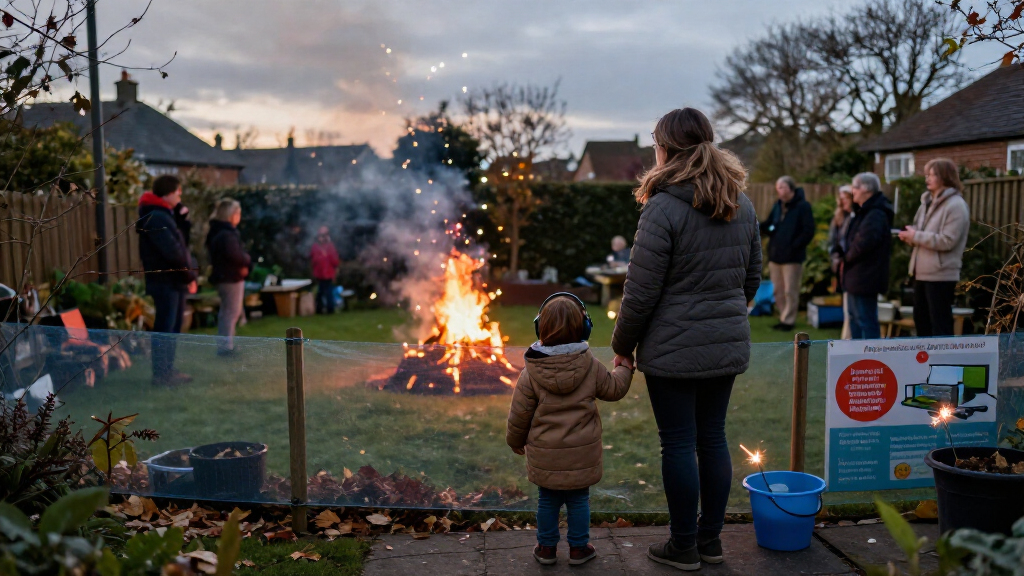
The NHS and safety organisations advise that only adults handle, light and dispose of fireworks. Buy them from reputable retailers and check for a UKCA or CE safety mark. Keep fireworks in a closed box, use them one at a time, light them at arm’s length with a taper and stand well back. Never return to a lit firework, throw one, or keep fireworks in a pocket; keep naked flames, including cigarettes, away. Rockets should be directed well away from spectators, and bonfires should be fully extinguished before people leave.
For sparklers, RoSPA advises never giving them to children under five and supervising children at all times. Wear gloves, hold a sparkler at arm’s length, light only one at a time and do not run with it. Keep it away from faces, clothing and other people. Do not hold a baby or young child while using a sparkler, and put used sparklers straight into a bucket of cold water.
If a burn occurs, NHS advice cited in the report is to cool it under cool running water for 20 minutes. Remove nearby jewellery or restrictive clothing if it is safe to do so; after cooling, loosely lay cling film over the burn rather than wrapping it around the injury. Seek urgent medical advice for a large burn. For an eye injury, do not rub the eye or try to remove debris; seek urgent medical attention. If clothing catches fire, remember “stop, drop and roll.” Call 999 for a serious injury.
““This data is a timely reminder of the danger fireworks can pose – and it’s children that often end up paying a devastating price.””
— Professor Frankie Swords, NHS medical director
Limits of the Injury Figures
The figures reported here establish an increase in admissions, but the source does not give a breakdown by injury severity, age, location or firework type for the NHS totals. It is also not clear from the report whether the counts include repeat admissions by the same person. The Children’s Burns Trust statistic concerns admissions to specialist burns units, a narrower measure than all firework-related hospital admissions, and should not be read as the same dataset.
The report does not specify the precise dates used for the full-year 2025 totals or provide links to the underlying NHS and trust datasets. The figures describe admissions, not every firework injury or the overall risk to an individual child. Further detail on the data and its collection is not included in the source material.
Safety Steps Before Celebrations
Families planning celebrations can use the NHS and RoSPA guidance before buying or lighting fireworks, and consider choosing an organised public display instead of a home event. Adults should check product instructions and safety marks in advance, set a clear viewing distance for children and prepare a bucket of cold water for used sparklers.
If someone is injured, follow NHS first-aid guidance and seek medical help promptly; call 999 for a serious injury. The report does not announce a new policy or provide a date for further figures, so the next developments to watch are any additional NHS or Children’s Burns Trust data and updated safety guidance.
Key Questions
The figures cited by MadeForMums show 85 admissions in November 2025, compared with 60 in November 2024. The report gives the November rise as 42%.
Are sparklers safe for young children?
Sparklers can cause serious burns and the report says they can reach temperatures above 1,000 degrees. RoSPA advises not giving sparklers to children under five, supervising older children closely and putting used sparklers straight into cold water.
What should I do if a child gets burned by a firework?
The NHS advice cited in the report is to cool a burn under cool running water for 20 minutes. Seek urgent medical advice for a large burn. For serious injuries, call 999; follow NHS guidance for the individual situation.
What should I do if a firework injures someone’s eye?
Do not rub the eye or try to remove any debris. The report says to seek urgent medical attention immediately.
Is an organised display safer than fireworks at home?
RoSPA recommends attending a professionally organised public display rather than holding an event at home. The report does not provide a direct risk comparison, but the Children’s Burns Trust research it cites found that many firework injuries happen at home displays.
Source: madeformums.com