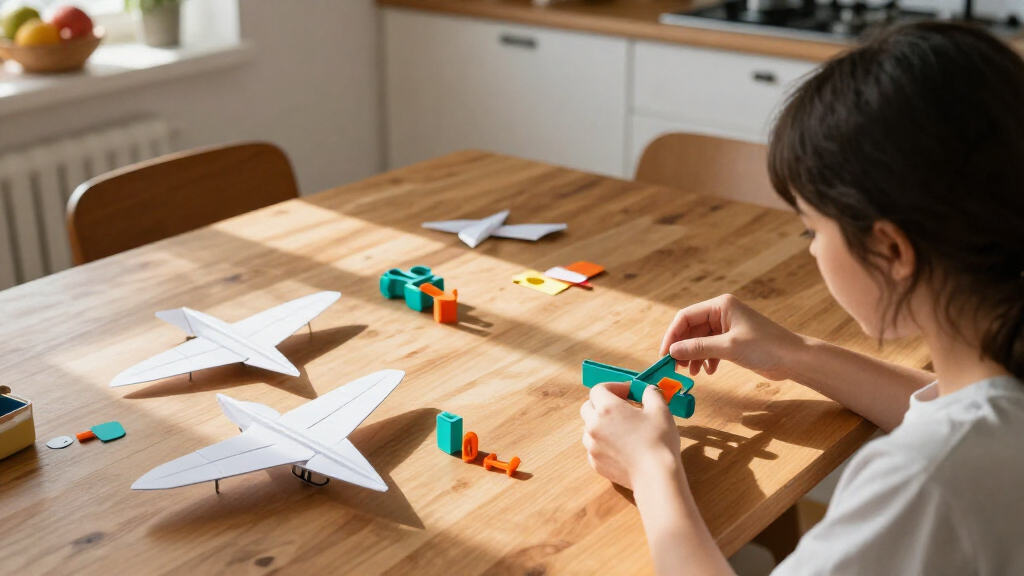
The best paper airplane launcher kits balance easy setup, repeatable launches, and enough building or flying variety to hold a child’s attention. My best overall pick is the CrunchLabs Turbo Trick Paper Airplane Launcher Kit for shoppers seeking a launcher-led activity, while the Snap Circuits Flight Deck stands out for circuit-based STEM play and the Fun Express kit for making planes in a group. The main tradeoff is whether to prioritize a reusable launcher, a larger supply of paper planes, or a more involved build. Age guidance, assembly effort, and how much of the kit can be reused also shape the choice. Read on for the full comparison and recommendations by buyer type.

Turn the school run and nap time into listening time
- Thousands of audiobooks, podcasts and originals
- Listen on your phone, tablet or Echo — also offline
- Cancel anytime
Complete the kit


Key Takeaways
- Launcher-first kits and paper-heavy kits serve different needs: the CrunchLabs and Snap Circuits options center the launcher experience, while the 100-plane and 70-plane sets put more emphasis on making and decorating planes.
- STEM features add activity, not automatically better flight: Snap Circuits and Smartivity offer building or mechanism-focused play, while simpler catapult kits may suit buyers who mainly want to fold and launch.
- Group use favors kits with multiple planes: Fun Express makes 12, and the Creativity for Kids set includes 70 planes and two launchers, giving several participants material to work with.
- Motorized options ask for more from the buyer: the 4M electric launcher and Hvcemi remote-control motor kit are distinct from basic catapults, so check assembly, power needs, and age fit before choosing.
- There are two similarly named Doctor Jupiter entries: treat them as the same listed product unless the seller page shows a distinct version; the duplicate should not be mistaken for a separate design.
| CrunchLabs Turbo Trick Paper Airplane Launcher Kit |  | Best for Flight Experiments | Brand: CrunchLabs | Set name: Turbo Trick Planes | Recommended age: 6–15 years | VIEW LATEST PRICE | See Our Full Breakdown |
| Doctor Jupiter Paper Airplane Launcher Kit for Kids Ages 6+ |  | Best for Beginners | Brand: Doctor Jupiter | Recommended age: 6 years and up | Included airplane sheets: 50+ sheets in 4 designs | VIEW LATEST PRICE | See Our Full Breakdown |
| Snap Circuits Flight Deck STEM Kit, Paper Airplane Launcher, Ages 8+ |  | Best for STEM Project Variety | Brand: Snap Circuits | Model: SCFLTKIT | Age range: 8 years and up | VIEW LATEST PRICE | See Our Full Breakdown |
| Smartivity Hydraulic Paper Airplane and Dart Launcher STEM Kit, Ages 6–14 |  | Best for Hydraulic Mechanism Learning | Brand: Smartivity | Age range: 6–14 years | Model number: SMRT1163 | VIEW LATEST PRICE | See Our Full Breakdown |
| Pathfinders Sky Surfer Paper Airplane Launcher STEM Kit |  | Best for Glider Design Variety | Brand: PATHFINDERS | Model: D-56 | Material: FSC wood | VIEW LATEST PRICE | See Our Full Breakdown |
| Fat Brain Toys Sky Surfer Wooden Airplane Launcher Kit |  | Best for Flight Experiments | Brand: Fat Brain Toys | Recommended age: 14 years and up | Assembly time: About 30 minutes | VIEW LATEST PRICE | See Our Full Breakdown |
| Fun Express STEM Airplane Launcher Craft Kit, Makes 12 |  | Best for Classroom Groups | Brand: Fun Express | Kit type: Airplane building craft kit | Quantity: Makes 12 planes | VIEW LATEST PRICE | See Our Full Breakdown |
| High-Performance Paper Airplanes Kit with 10 Models and Catapult Launcher |  | Best for Quick Model Variety | Number of models: 10 | Assembly: Pre-cut and easy to assemble | Included items: Pop-out cards, paper-airplane book, and catapult launcher | VIEW LATEST PRICE | See Our Full Breakdown |
| 4M Science in Action Electric Paper Airplane Launcher Kit |  | Best Motorized Launcher | Brand: 4M | Model number: 403453 | Included components: Launcher base, 2 motors, 2 pulley wheels, plane holder, adjustable legs, paper templates, screws, and instructions | VIEW LATEST PRICE | See Our Full Breakdown |
| Paper Airplane Kit with 100 Planes, Stickers, Launcher, and Rubber Bands |  | Best for High-Volume Decorating | Planes: 100 | Stickers: 1,000 | Rubber bands: 100 | VIEW LATEST PRICE | See Our Full Breakdown |
| Doctor Jupiter Paper Airplane Launcher Kit for Kids Ages 6+ |  | Best for Guided STEM Learning | Brand: Doctor Jupiter | Recommended age: 6 years and up | Included launcher: DIY cardboard launcher | VIEW LATEST PRICE | See Our Full Breakdown |
| Creativity for Kids Stunt Squadron Neon Glow Paper Airplane Kit, 70 Planes and 2 Launchers, Ages 6+ |  | Best for Group Play | Brand: Creativity for Kids | Recommended age: 6 years and up | Airplanes: 70 | VIEW LATEST PRICE | See Our Full Breakdown |
| Hvcemi RC Paper Airplane Motor Kit with Remote Control, Gyro Stabilizer, and Dual Propellers (Set 1) |  | Best for Powered Outdoor Flight | Brand: Hvcemi | Set: Set 1 | Remote control frequency: 2.4 GHz | VIEW LATEST PRICE | See Our Full Breakdown |
| Make 24 Paper Planes: Paper Plane and Launcher Kit |  | Best for a Simple Build-and-Launch Activity | Number of paper planes: 24 | Included accessory: Launcher | Product format: Paper plane and launcher kit | VIEW LATEST PRICE | See Our Full Breakdown |
| National Geographic Paper Airplane Kit for Kids |  | Best for Flight Challenges and Tracking | Brand: Blue Marble | Recommended age: 6 years and up | Paper sheets: 50 | VIEW LATEST PRICE | See Our Full Breakdown |
| paper airplane launcher kit | Brand |
|---|---|
| CrunchLabs Turbo Trick Paper A | CrunchLabs |
| Doctor Jupiter Paper Airplane | Doctor Jupiter |
| Snap Circuits Flight Deck STEM | Snap Circuits |
| Smartivity Hydraulic Paper Air | Smartivity |
| Pathfinders Sky Surfer Paper A | PATHFINDERS |
| Fat Brain Toys Sky Surfer Wood | Fat Brain Toys |
| Fun Express STEM Airplane Laun | Fun Express |
| High-Performance Paper Airplan | — |
| 4M Science in Action Electric | 4M |
| Paper Airplane Kit with 100 Pl | — |
| Doctor Jupiter Paper Airplane | Doctor Jupiter |
| Creativity for Kids Stunt Squa | Creativity for Kids |
| Hvcemi RC Paper Airplane Motor | Hvcemi |
| Make 24 Paper Planes: Paper Pl | Not specified |
| National Geographic Paper Airp | Blue Marble |
More Details on Our Top Picks
CrunchLabs Turbo Trick Paper Airplane Launcher Kit
I’d choose the Turbo Trick for kids who want to change how a plane flies, not just launch a succession of folded sheets. Its five trick-focused designs give each flight a different aim, while three interchangeable power bands let kids compare launch strength and trajectory. QR-code videos add guided challenges and explain the science, making the kit more structured than the simpler launcher concept in the PATHFINDERS Sky Surfer. That variety comes with limits: there are only five included planes, and trying another band means replacing the current one rather than adjusting power with a dial. It also offers less project breadth than Snap Circuits Flight Deck, which covers several kinds of builds. I see this as a focused choice for repeat experiments with paper-plane tricks, rather than a large-volume folding kit.
Pros:- Five paper-plane designs provide different trick-flying goals.
- Three interchangeable power bands let kids compare launch strength and trajectory.
- QR-code videos offer guided challenges and science explanations.
- Includes the launcher, clip, bands, planes, and a tool for the core activity.
Cons:- Only five paper planes are included, so frequent flyers may need additional paper or designs.
- Changing launch strength requires swapping the power band.
- The activity focuses on paper planes rather than the broader project range of Snap Circuits Flight Deck.
Best for: Children ages 6–15 who enjoy repeating flight challenges and comparing how different launch bands affect a plane’s trajectory.
Not ideal for: Families seeking a large supply of folding paper or several different STEM builds; this kit includes five planes and centers on one launcher.
- Brand:CrunchLabs
- Set name:Turbo Trick Planes
- Recommended age:6–15 years
- Included planes:5 paper planes
- Power bands:3 interchangeable bands
- Included components:Launcher, plane clip, power bands, paper planes, tool, 2 googly eyes, instruction manual
- Model number:11605
Our verdict“Choose the Turbo Trick for guided experiments with launch power and trick designs, but skip it if a high-volume supply of planes matters more.”
Doctor Jupiter Paper Airplane Launcher Kit for Kids Ages 6+
For a first launcher project, I’d favor the Doctor Jupiter kit because it pairs pre-cut launcher pieces with more than 50 airplane sheets and both illustrated and video guidance. That combination gives a beginner plenty of chances to practice folding without running out of included paper after a few flights. The listed flight distance of up to 50 feet points to room for longer-range play, though results depend on the build and the plane. Compared with the CrunchLabs Turbo Trick, Doctor Jupiter emphasizes quantity and straightforward launch play over multiple power bands and trick-specific designs. The tradeoff is that children must assemble the launcher and fold every plane themselves; it is not a ready-to-use toy. Its material listing also differs between the description’s wooden launcher and the specs’ cardboard material, so buyers should check the supplied product details.
Pros:- Includes more than 50 airplane sheets across four designs.
- Pre-cut launcher pieces and illustrated instructions support a first build.
- QR video guides provide another way to follow assembly and play directions.
- Described for indoor or outdoor play and lists a maximum flight distance of up to 50 feet.
Cons:- The launcher must be assembled before use.
- Every airplane must be folded by the user.
- Product information lists cardboard as the material while the description calls the launcher wooden.
Best for: First-time builders ages 6 and up who want guided assembly and enough paper to practice folding many planes.
Not ideal for: Buyers who want a ready-to-fly launcher or pre-folded planes; this kit requires launcher assembly and hands-on folding.
- Brand:Doctor Jupiter
- Recommended age:6 years and up
- Included airplane sheets:50+ sheets in 4 designs
- Maximum flight distance:Up to 50 feet
- Included components:Launcher, airplane sheets, rubber bands, foam grips, illustrated instructions, QR code for video guides
- Material listed in specs:Cardboard
- Item dimensions:13.38 x 9.84 x 1.77 inches
- Educational focus:STEM and aerodynamics
Our verdict“Pick Doctor Jupiter for a beginner-friendly build with plenty of folding practice, provided you are comfortable assembling the launcher and making each plane.”
Snap Circuits Flight Deck STEM Kit, Paper Airplane Launcher, Ages 8+
I’d rank Snap Circuits Flight Deck highest for buyers who want the launcher to be one part of a broader STEM activity. Its five projects explore circuits, motors, motion, and air pressure, with builds that can launch paper airplanes, flying saucers, and balls. That range makes it a different proposition from the PATHFINDERS Sky Surfer, which is centered on building one wooden, rubber-band-powered launcher and trying several glider styles. Step-by-step directions and no need for extra tools support independent building for the stated age range of 8 and up. The compromise is that this is less narrowly focused on paper-airplane folding and flight design than the Doctor Jupiter kit, which includes more than 50 airplane sheets. Batteries are also not included, so buyers need to supply them before powered activities can begin.
Pros:- Five projects cover circuits, motors, motion, and air pressure.
- Builds include launchers for paper airplanes, flying saucers, and balls.
- Step-by-step directions support independent activities.
- No extra tools are required for the listed projects.
Cons:- Batteries are not included.
- Paper-airplane launching is only one part of the project set.
- The product data does not specify an included supply of airplane sheets.
Best for: STEM-minded children ages 8 and up who want several motion and air-pressure projects, not just repeated paper-plane launches.
Not ideal for: Families focused mainly on folding many paper airplanes or seeking a kit ready for powered play without supplying batteries.
- Brand:Snap Circuits
- Model:SCFLTKIT
- Age range:8 years and up
- Number of projects:5
- Educational focus:Critical thinking, problem solving, and STEM
- Included components:Flight Deck Kit
- Batteries:Not included
- Tools required:No extra tools needed
Our verdict“Choose Flight Deck when project variety matters more than a large supply of paper planes or a dedicated folding-and-launching experience.”
Smartivity Hydraulic Paper Airplane and Dart Launcher STEM Kit, Ages 6–14
The Smartivity Hydraulic Launcher is the standout pick when the mechanism matters as much as the flight. Rather than relying on the rubber-band approach used by PATHFINDERS Sky Surfer, it uses water-filled syringes and a connecting tube to demonstrate hydraulic pressure. Children can launch paper airplanes or soft-tip foam darts, so play has more variety than a paper-only kit. Its engineered-wood parts and no-glue, no-screw assembly suit a hands-on build, and the included booklet introduces hydraulics, aerodynamics, and a scissor mechanism. That system also adds setup: the launcher needs water, and children must assemble it before play. The ten included paper sheets are a much smaller supply than Doctor Jupiter’s 50-plus, so this makes more sense for learning how a launcher works than for extended folding practice.
Pros:- Water-filled syringes make hydraulic pressure part of the hands-on activity.
- Launches both paper airplanes and soft-tip foam darts.
- Engineered-wood construction and assembly without glue or screws.
- Booklet covers hydraulics, aerodynamics, and a scissor mechanism.
Cons:- Requires water to operate the hydraulic launcher.
- Children must assemble the launcher before play.
- Includes 10 paper airplane sheets, fewer than Doctor Jupiter’s 50-plus.
Best for: Children ages 6–14 who are curious about hydraulics and want a launcher that works with both paper airplanes and soft foam darts.
Not ideal for: Buyers who want a simple rubber-band launcher, a large stack of airplane paper, or play without water setup and assembly.
- Brand:Smartivity
- Age range:6–14 years
- Model number:SMRT1163
- Materials:Engineered wood
- Included airplane sheets:10 sheets in 5 designs
- Other projectiles:2 soft-tip foam darts
- Hydraulic components:2 syringes with connecting tube
- Assembly:No glue or screws required
- Educational concepts:Hydraulics, aerodynamics, engineering, and scissor mechanism
Our verdict“Choose Smartivity for a mechanism-focused build with two types of projectiles, but pick a simpler launcher if water setup or assembly is a drawback.”
Pathfinders Sky Surfer Paper Airplane Launcher STEM Kit
I’d pick the PATHFINDERS Sky Surfer for older kids or families who want to build a wooden launcher and experiment with more than ordinary folded paper. It uses a rubber-band-powered mechanism and includes specialty paper, templates, and instructions for designs such as the Dart, Canard, and Straw Glider; the kit is also described as supporting straw and foam designs. That gives it a wider glider-design focus than the CrunchLabs Turbo Trick, whose five planes are organized around trick abilities and interchangeable launch bands. The tradeoff is time and age guidance: assembly takes about 60 minutes, solo use is recommended from age 14, and younger children need adult guidance. Compared with Doctor Jupiter’s larger paper supply and video instructions, Sky Surfer is a more involved wooden build with fewer stated details about included sheet quantity.
Pros:- FSC wood launcher uses a rubber-band-powered mechanism.
- Supports paper airplanes, straw gliders, and foam designs.
- Includes specialty paper, templates, and instructions for multiple airplane styles.
- Compact listed dimensions and an 8-ounce weight make the assembled kit relatively light.
Cons:- Assembly takes about 60 minutes.
- Solo use is recommended for ages 14 and up; younger users need adult guidance.
- The product data does not state how many specialty paper sheets are included.
Best for: Teens or adult-guided children who enjoy a longer build and want to try paper, straw, and foam glider designs with one launcher.
Not ideal for: Younger children seeking quick, independent play or buyers who do not want to spend about an hour assembling a launcher.
- Brand:PATHFINDERS
- Model:D-56
- Material:FSC wood
- Age recommendation:14+ solo; ages 8+ with adult guidance
- Assembly time:About 60 minutes
- Dimensions:16 x 3.5 x 3.5 inches
- Weight:8 ounces
- Included:Wooden launcher components, specialty airplane paper, templates, and instructions
Our verdict“Choose Sky Surfer for a patient builder interested in varied glider designs, but choose a simpler kit for younger children or faster setup.”
Fat Brain Toys Sky Surfer Wooden Airplane Launcher Kit
I’d choose the Sky Surfer for older learners who want to change launch settings and observe how those changes affect paper-plane flight. Its adjustable, elastic-powered wooden launcher supports launches from 10 to over 30 feet, while the booklet supplies plane designs and experiment ideas. Compared with the motorized 4M Science in Action Electric Paper Airplane Launcher Kit, this one avoids a battery requirement and puts more emphasis on adjusting an elastic launcher and testing materials or wing shapes. The tradeoff is a roughly 30-minute assembly and an age recommendation of 14 years and up, so it’s less suitable for a quick activity with young children. I’d rank it ahead of simpler craft kits for hands-on flight exploration, but not for shoppers who want an instant, ready-to-use launcher.
Pros:- Adjustable launcher supports comparisons between launch settings.
- Booklet includes airplane designs and experiment ideas.
- Launch distance is listed as 10 to over 30 feet.
- Includes paper and materials for assembling and testing planes.
Cons:- Requires about 30 minutes of assembly before use.
- Recommended for ages 14 and up, limiting its fit for younger kids.
Best for: Teens aged 14 and up who want a buildable launcher and guided experiments with paper-plane design and launch settings.
Not ideal for: Younger children or families seeking an activity that can be launched straight from the box without assembly.
- Brand:Fat Brain Toys
- Recommended age:14 years and up
- Assembly time:About 30 minutes
- Launch distance:10 to over 30 feet
- Materials:Mixed materials, including die-cut wood and foam
- Item dimensions:12.18 x 7.5 x 2.25 inches
- Included components:14 die-cut wooden pieces, 2 foam pads, wooden dowel, 15 elastics, decals, 6 sheets of paper, 2 O-rings, twist-tie, clay, glue, sandpaper, and 20-page booklet
Our verdict“Choose the Sky Surfer for teen-focused flight experiments; skip it if you need a quick, younger-child-friendly launcher.”
Fun Express STEM Airplane Launcher Craft Kit, Makes 12
The Fun Express kit is the group-activity pick: it makes 12 paper-and-cardstock planes, giving a classroom, homeschool group, or party enough projects for shared building and flying. That makes it a better fit for distributing than the one-set 4M Science in Action Electric Paper Airplane Launcher Kit, which focuses on constructing a single motorized launcher. Here, the emphasis is on making and customizing planes together, rather than a powered launching mechanism or detailed flight lessons. The instructions are described as extremely simplified and leave room for different assembly approaches, which can invite experimentation but may frustrate adults who want consistent results or step-by-step guidance. I’d pick it for a collaborative craft session, not for a buyer whose main goal is a well-specified launcher or structured engineering instruction.
Pros:- Makes 12 planes for group activities.
- Paper and cardstock support hands-on decorating and building.
- Can prompt experimentation with different plane designs.
- Fits classroom, homeschool, and party settings.
Cons:- Instructions are extremely simplified and do not prescribe one assembly method.
- Paper-and-cardstock construction is less suited to repeated rough handling than a sturdier launcher kit.
- The product data does not specify launcher mechanics or launch distance.
Best for: Teachers, homeschool organizers, and party hosts who need plane-building projects for a group of 12 participants.
Not ideal for: Buyers seeking a clearly specified mechanical launcher, detailed instructions, or durable reusable aircraft.
- Brand:Fun Express
- Kit type:Airplane building craft kit
- Quantity:Makes 12 planes
- Material:Paper and cardstock
- Item dimensions:8.5 x 11 x 2 inches
- Age range:Kid
- Model number:14466795
- Warranty:No warranty
Our verdict“Choose this kit for a shared 12-person plane craft activity, not for a launcher-focused engineering project.”
High-Performance Paper Airplanes Kit with 10 Models and Catapult Launcher
I’d pick this kit for someone who wants a defined set of 10 airplane models and a catapult launcher, without starting from blank sheets. The models are pre-cut and easy to assemble, and the pop-out cards and accompanying book give the activity more structure than the open-ended Fun Express STEM Airplane Launcher Craft Kit. That difference matters for families who want to build several distinct designs without having to invent their own folding or construction approach. The tradeoff is that the supplied description gives no age guidance, launch distance, or detail about how adjustable the catapult is, so I can’t recommend it on performance claims. Assembly is still required, and buyers seeking extensive design experimentation may prefer the adjustable Fat Brain Toys Sky Surfer instead.
Pros:- Includes 10 airplane models.
- Pre-cut pieces are described as easy to assemble.
- Comes with pop-out cards and a paper-airplane book.
- Includes a catapult launcher rather than planes alone.
Cons:- Assembly is required before the planes can be used.
- The supplied product data does not state launch distance or launcher adjustability.
- No recommended age or material details are provided.
Best for: Families and young builders who want several pre-cut airplane models plus a catapult launcher in one activity.
Not ideal for: Buyers who need a stated age range, a documented launch distance, or adjustable launcher settings for experiments.
- Number of models:10
- Assembly:Pre-cut and easy to assemble
- Included items:Pop-out cards, paper-airplane book, and catapult launcher
- Launcher type:Catapult
- Product format:Paper airplane kit
- ASIN:0804843074
Our verdict“Choose this kit for guided variety and a catapult; pick the Sky Surfer instead for more clearly described launch adjustments and flight experiments.”
4M Science in Action Electric Paper Airplane Launcher Kit
The 4M Electric Paper Airplane Launcher stands apart from elastic and hand-operated options by using two motors and rotating pulley wheels to launch planes. Its adjustable legs also give builders a way to vary the launch angle, making it a stronger match for testing angle and plane design than the group-oriented Fun Express STEM Airplane Launcher Craft Kit. The kit includes templates and step-by-step assembly instructions, so the project has a clearer build path than Fun Express’s deliberately open-ended craft format. That powered mechanism comes with practical tradeoffs: you’ll need to supply three AAA batteries, and the listing’s age guidance varies. I’d choose it for a builder who specifically wants a motorized launcher, but the Fat Brain Toys Sky Surfer is a better fit if avoiding batteries or comparing elastic-launch settings matters more.
Pros:- Two motors and pulley wheels provide powered launches.
- Adjustable legs allow changes to launch angle.
- Includes paper templates and step-by-step assembly instructions.
- Supports experimentation with plane designs and flight.
Cons:- Requires three AAA batteries, which are not included.
- Age guidance varies between the listing text and product description.
- The set quantity is one, making it less suited to outfitting a group.
Best for: Families and young makers who want to assemble a battery-powered launcher and experiment with launch angles.
Not ideal for: Buyers who want a battery-free setup, consistent age guidance, or a group kit that makes multiple planes.
- Brand:4M
- Model number:403453
- Included components:Launcher base, 2 motors, 2 pulley wheels, plane holder, adjustable legs, paper templates, screws, and instructions
- Batteries required:3 AAA batteries, not included
- Language:English
- Set quantity:1
Our verdict“Choose the 4M kit for a motorized, angle-adjustable build; choose the Sky Surfer if you prefer an elastic launcher without batteries.”
Paper Airplane Kit with 100 Planes, Stickers, Launcher, and Rubber Bands
For a long craft session with plenty of planes to fold and decorate, this kit offers 100 colorful sheets, 1,000 stickers, a launcher, and 100 rubber bands. Its scale makes it a better fit for ongoing play or sharing than the High-Performance Paper Airplanes Kit, which supplies 10 pre-cut models and a catapult. The difference is that this set centers on folding and customization, while the High-Performance kit offers a defined collection of assembled designs. The listed age range starts at 7, which gives it a clear audience, but the product information doesn’t describe the launcher’s mechanism, launch distance, or plane instructions. I’d select it when quantity and decorating are the main goals; for guided flight experiments, the adjustable Fat Brain Toys Sky Surfer is the more informative choice.
Pros:- Includes materials for folding 100 planes.
- Comes with a launcher and 100 rubber bands.
- Includes 1,000 stickers for decorating.
- Listed for ages 7 and up.
Cons:- The supplied product data does not explain the launcher mechanism or launch distance.
- No assembly instructions or airplane designs are specified in the product details.
- The large emphasis on quantity and stickers may not suit buyers focused on controlled flight experiments.
Best for: Families with children aged 7 and up who want many planes to fold, decorate, and share over multiple sessions.
Not ideal for: Buyers who want detailed plane-building instructions, a documented launch range, or a launcher with specified mechanics.
- Planes:100
- Stickers:1,000
- Rubber bands:100
- Included accessories:Launcher
- Age range:7 and up
- Paper:Colorful sheets
Our verdict“Choose this set for abundant folding and decorating materials; choose the Sky Surfer for more structured launcher and flight experiments.”
Doctor Jupiter Paper Airplane Launcher Kit for Kids Ages 6+
For families who want the launcher to support a lesson as well as play, this Doctor Jupiter kit pairs a DIY cardboard launcher with 50 sheets across five designs. Its instructions and assembly video give children a route from setup to folding, while the focus on thrust, drag, and lift gives adults useful ideas for discussing why flights differ. Compared with the National Geographic kit, it offers fewer airplane designs and lacks a flight log and activity poster, so there is less built-in variety for tracking results. In return, the format keeps attention on core flight concepts rather than a larger set of extras. Children still have to fold every plane, and the cardboard launcher requires assembly; this suits a guided activity better than instant, ready-to-launch play.
Pros:- Connects launching with explanations of thrust, drag, and lift.
- Includes 50 sheets in five airplane designs.
- Provides step-by-step instructions and a QR-code assembly video.
Cons:- Every plane must be folded before it can be launched.
- The cardboard launcher needs assembly and is intended for children ages 6 and up.
Best for: Adults seeking a guided launcher activity that introduces flight concepts to children ages 6 and up.
Not ideal for: Families wanting the broadest design selection or a kit with a flight log and poster; the National Geographic kit includes more designs and tracking activities.
- Brand:Doctor Jupiter
- Recommended age:6 years and up
- Included launcher:DIY cardboard launcher
- Paper sheets:50
- Airplane designs:5
- Educational focus:STEM and flight concepts
- Instructions:Step-by-step instructions and QR-code assembly video
- Dimensions:13.38 x 9.84 x 1.77 inches
Our verdict“Choose this kit for an instruction-led introduction to flight concepts, but pick the National Geographic kit for more designs and recording activities.”
Creativity for Kids Stunt Squadron Neon Glow Paper Airplane Kit, 70 Planes and 2 Launchers, Ages 6+
With two launchers and supplies for 70 planes, this Creativity for Kids kit is the strongest fit here for siblings or a small group who want to fold, decorate, and launch at the same time. Double-sided paper and glow-in-the-dark stickers make the building stage more of an activity than the simpler Doctor Jupiter kit, which puts more emphasis on flight concepts and guided instruction. Five designs offer a manageable starting set, though not the breadth of the National Geographic kit’s ten. The glow effect also has a condition: stickers need exposure to bright light, so they should not be expected to glow immediately in a dim room. Planes still require folding, and the supplied description does not specify how to build the launchers. Choose it for shared creative play, not for the most detailed flight-learning materials.
Pros:- Includes materials for 70 airplanes, supporting repeated builds.
- Two launchers make side-by-side play possible.
- Double-sided paper and glow-in-the-dark stickers add decorating options.
- Instructions cover five airplane designs.
Cons:- Planes require folding before use.
- Glow-in-the-dark stickers need bright-light exposure to glow.
- The listed materials do not specify launcher assembly instructions or educational detail.
Best for: Families with two or more children who want plenty of planes, decorating supplies, and two launchers for shared play.
Not ideal for: Buyers seeking detailed flight tracking or a larger range of airplane patterns; the National Geographic kit has ten designs and a flight log.
- Brand:Creativity for Kids
- Recommended age:6 years and up
- Airplanes:70
- Launchers:2
- Plane designs:5
- Included materials:Double-sided paper, glow-in-the-dark stickers, and instructions
- Activity focus:Origami and kinetic energy
Our verdict“Pick this for group-friendly building and decorating, while the National Geographic kit is a better match for structured flight activities.”
Hvcemi RC Paper Airplane Motor Kit with Remote Control, Gyro Stabilizer, and Dual Propellers (Set 1)
This Hvcemi set takes a different path from the paper-and-launcher kits: it adds a battery-powered motor, remote control, and dual propellers to a folded paper airplane. Gyro stabilization is intended to help steady flight, making this the pick for buyers who want to steer a powered flyer outdoors rather than simply send a plane forward with a launcher. Compared with the Creativity for Kids kit, which supplies paper and two launchers for shared folding play, Hvcemi requires users to provide or fold a compatible plane and offers only one included battery. That added control also brings more setup and dependence on powered components. Its outdoor-use focus makes it a poor fit for indoor flights, and the listed age recommendation of 3 years and up does not remove the need for adult supervision around small components and moving propellers.
Pros:- Remote control and dual propellers enable powered flight.
- Gyro stabilization is designed to support steadier flying.
- DIY folding can introduce aerodynamics and balance.
- One battery is included.
Cons:- Designed for outdoor use rather than indoor launcher play.
- Does not include a specified paper airplane supply or design.
- Powered components and a single included battery add setup and power-management needs.
Best for: Families looking for a remote-controlled outdoor flyer who are comfortable supplying or folding a paper airplane and managing battery-powered gear.
Not ideal for: Buyers wanting a ready-made folding-and-launching activity for indoor use; Creativity for Kids includes paper and launchers for simpler shared play.
- Brand:Hvcemi
- Set:Set 1
- Remote control frequency:2.4 GHz
- Stabilization:Gyro
- Propellers:Dual
- Power source:Battery; one battery included
- Recommended age:3 years and up
- Usage:Outdoor
- Dimensions:9 x 5 x 3 inches
Our verdict“Choose Hvcemi for remote-controlled outdoor flights, not for a straightforward paper-folding launcher kit.”
Make 24 Paper Planes: Paper Plane and Launcher Kit
This kit’s appeal is its straightforward promise: make 24 planes and use the included launcher. That simplicity can suit buyers who want a paper-airplane activity without the extra science lessons, stickers, or recording tools found in the National Geographic kit. The tradeoff is limited information: the supplied details do not identify the designs, paper type, launcher construction, age guidance, or any instructions beyond making 24 planes. Compared with Doctor Jupiter’s kit, it offers a larger stated plane count but no listed focus on thrust, drag, or lift and no assembly video. I would choose it when the number of planes and a launcher matter more than structured STEM content. Buyers who need clear setup guidance or well-defined learning activities have stronger-supported choices elsewhere in this roundup.
Pros:- Includes materials for 24 paper planes.
- A launcher is included for sending planes into the air.
- Keeps the stated activity focused on making and flying planes.
Cons:- The available product details do not specify airplane designs or paper type.
- No age recommendation or instruction format is listed.
- Compared with Doctor Jupiter and National Geographic, it has no stated flight-concept lessons or tracking activities.
Best for: Buyers who want a basic kit centered on making a batch of paper planes and launching them, without needing extra STEM activities.
Not ideal for: Adults who need age guidance, detailed folding instructions, or flight-learning materials; the product information does not specify these.
- Number of paper planes:24
- Included accessory:Launcher
- Product format:Paper plane and launcher kit
- Brand:Not specified
- Age recommendation:Not specified
- Airplane designs:Not specified
Our verdict“Choose this for a basic 24-plane activity with a launcher, but opt for Doctor Jupiter or National Geographic if clear guidance and STEM content matter.”
National Geographic Paper Airplane Kit for Kids
The National Geographic kit stands out for turning launches into repeatable challenges: its 50 illustrated sheets and ten designs are paired with a buildable launcher, a two-sided poster, stickers, and a flight log. That gives children more ways to compare planes and record results than the Doctor Jupiter kit, which has five designs and focuses more directly on explaining thrust, drag, and lift. The larger design range makes this the more varied activity, while the log and runway poster give each flight a purpose beyond distance. The tradeoff is a more involved setup: children must fold the planes and assemble the launcher, and the kit is intended for ages six and up. Buyers who want a compact, minimal activity may find the extras unnecessary; families who enjoy testing and recording different flights have more to work with here.
Pros:- Includes 50 illustrated sheets for ten airplane designs.
- Buildable launcher supports repeated flights.
- Two-sided poster adds a runway challenge and flight-physics information.
- Flight log helps children record and compare launches.
Cons:- The launcher requires assembly.
- Planes must be folded before use.
- The activity is designed for children ages 6 and up.
Best for: Families with children ages 6 and up who want multiple plane designs plus a runway challenge and a way to log flight results.
Not ideal for: Buyers seeking the simplest launcher setup or a focused introduction to thrust, drag, and lift; Doctor Jupiter gives those concepts more direct emphasis.
- Brand:Blue Marble
- Recommended age:6 years and up
- Paper sheets:50
- Airplane designs:10
- Included components:Buildable launcher, paper sheets, instructions, two-sided poster, flight log, and stickers
- Educational objective:STEM
- Dimensions:10.98 x 2.99 x 12.01 inches
- Weight:0.63 kg
Our verdict“Choose this for varied designs and structured flight challenges; pick Doctor Jupiter for a more focused introduction to flight concepts.”
How We Picked
I compared the 15 listings by the factors that change the buying decision: how central the launcher is, what kind of assembly or STEM activity is involved, how much paper-plane variety is included, and whether the kit appears suited to solo or shared play. I also weighed stated age guidance, potential setup demands, reusability, and the practical difference between manual, hydraulic, electric, and remote-control approaches.
The ranking favors kits that make the launcher experience clear and usable while offering a sensible balance of play and build activity. Kits with a more specialized purpose—such as group crafting, a large plane supply, or motorized flight—can be a better match for specific buyers, but rank below more broadly useful options when their added complexity or narrower appeal is a tradeoff. The Doctor Jupiter listing appears twice, so I count it as one distinct product rather than awarding two positions to the same kit.
Factors to Consider When Choosing Best Paper Airplane Launcher Kits
Before choosing a kit, decide what the activity is meant to deliver: repeat launches, folding practice, a build challenge, or a shared craft session. Those goals affect which features matter and can prevent paying for mechanisms or supplies the recipient will rarely use.
Choose the Main Activity Before Comparing Features
Some kits make launching the central event; others put more time into folding, decorating, or assembling a mechanism. A child who enjoys quick rounds may lose interest in a kit with a long build before the first flight. A child who likes following instructions may get more from a STEM-focused assembly even if it takes longer to play. Think about the usual setting, too: a short indoor activity calls for a different experience than repeated outdoor flights. Avoid treating extra components as automatic value if they do not support the activity the recipient enjoys.
Match the Mechanism to Setup Tolerance
Manual launchers generally keep the routine straightforward, while hydraulic, electric, and remote-control designs can add assembly, power, or operating steps. More mechanisms can make a kit feel like a richer project, but they also create more points where setup may interrupt play. Check the product details for whether batteries or other supplies are required rather than assuming everything is in the box. Younger users may need an adult nearby for assembly or troubleshooting even when the age label seems appropriate. Choose complexity for the enjoyment of building, not just for a longer feature list.
Estimate How Many Planes the Activity Will Use
A kit with many sheets is useful for repeated folding, decorating, or sharing, but it does not necessarily provide a more capable launcher. Reusable launcher components paired with a smaller paper supply can suit a child who wants to practice the same designs. For groups, count both the paper planes and the launchers: a large stack with one launcher may still create turns and waiting. Also check whether replacement paper can be cut or folded from ordinary sheets if the included supply runs out. This helps distinguish consumable craft value from long-term launcher value.
Plan for the Space Where Planes Will Fly
Paper planes need a clear path, and a launcher can send them farther or more consistently than a hand toss. Before buying, consider whether the main play area is a living room, classroom, yard, or open park. Indoor use can call for gentler launches and a clear area away from breakable objects, while outdoor use makes wind and retrieval more relevant. A kit with elaborate flight claims may not suit a cramped room simply because its launcher is fun to operate. Match the play space to the expected flight rather than relying on a product name to signal suitability.
Use Age Guidance as a Starting Point, Not a Guarantee
Age labels offer a useful first check, but they do not tell you how much help a particular child will need with folding, small parts, or mechanism assembly. Consider fine-motor confidence, patience with instructions, and whether an adult can join the activity. A simpler kit can be more rewarding for a beginner than a technically richer one that spends too long on setup. For a mixed-age group, look for an activity that gives younger participants a manageable role while older children can take on more detailed builds. Read the included instructions and safety notes before deciding.
Separate Reusable Play Value from One-Time Craft Output
Some kits are built around a launcher that can be used with multiple folded planes, while others emphasize a set amount of paper, decorations, or project output. Neither format is automatically better: a craft session may be the goal, while another buyer wants a toy that comes back out repeatedly. Check whether the launcher works with independently folded paper or depends on particular shapes or parts. Consider what remains once the included planes are used. That distinction can matter more to long-term use than the number of activities printed on the package.
Frequently Asked Questions
Which kind of kit is better for a child who mostly wants to launch planes rather than build?
Start with a launcher-led kit that keeps assembly and folding demands manageable. A project with a complex mechanism may appeal less if the child wants to get to repeated flights quickly. Check how the launcher is operated and whether it can be reused with additional folded planes. If the child’s interest shifts between building and flying, a STEM kit may offer more variety, though it can take longer to get started. The best match depends on whether setup is part of the fun or an obstacle.
Are electric or remote-control paper airplane kits a better choice than a basic launcher?
They are better for buyers specifically interested in powered flight or operating a motorized device, not for everyone seeking a simple paper-plane activity. Electric and remote-control designs can involve extra assembly, power requirements, or troubleshooting compared with a manual launcher. A basic catapult may be easier to share and restart when a plane needs refolding. Check the included components and any battery requirements before purchase. If straightforward play matters most, added electronics may not justify the extra setup.
What should I buy for a classroom, party, or several children?
Look at the number of planes and launchers together, since a generous paper supply can still leave children waiting if there is only one launch point. Kits designed to make multiple planes can support a shared folding or decorating activity, while multiple launchers help reduce turn-taking. Confirm whether the activity needs adult-led setup and whether the instructions are easy to divide among participants. For a group, a simple repeatable process often works better than a mechanism that needs individual troubleshooting. Plan for a clear launch area and a way to collect planes safely.
Does a kit with more included planes always offer better long-term value?
No. A high plane count can be useful for groups or for repeated folding practice, but it does not tell you how durable or reusable the launcher is. A smaller set with a launcher that works with newly folded paper may last longer as an activity. Check whether the planes require special paper or shapes and whether the kit includes meaningful folding variety. Also think about whether the recipient enjoys decorating and making many planes or prefers refining a few designs. Match the supply to the intended play style rather than choosing by count alone.
How should I choose between a STEM build and a simple paper-plane craft kit?
Choose a STEM build when the recipient enjoys instructions, mechanisms, or learning how a launcher works as part of the activity. Pick a craft-focused set when folding, coloring, and sharing finished planes are the main goals. A STEM kit may offer more to discuss and assemble, but it can require patience and adult help. A craft kit can start more quickly and suit groups, though its activity may depend more on the included paper supply. Consider the child’s previous interest in building projects, not only the age printed on the box.
Conclusion
For the broadest launcher-centered choice, I’d start with the CrunchLabs Turbo Trick Paper Airplane Launcher Kit as my best overall pick; the Snap Circuits Flight Deck is the better fit when circuit-based building is part of the appeal. For group crafting, the Fun Express kit is my best value-style pick among these listings, while the Doctor Jupiter kit is a straightforward option for younger beginners—check the age guidance and the duplicate listing before ordering. For specialized needs, choose Creativity for Kids for many planes and two launchers, or consider the 4M electric and Hvcemi remote-control options if powered flight is the priority. I’d pay more attention to activity fit, setup demands, and reuse than to the number of parts alone.