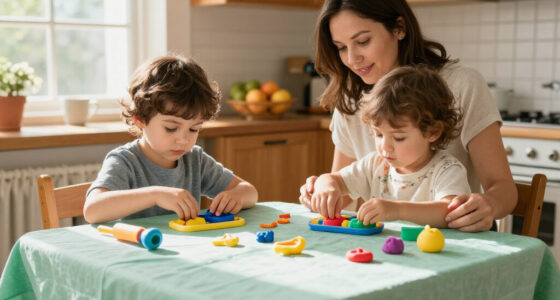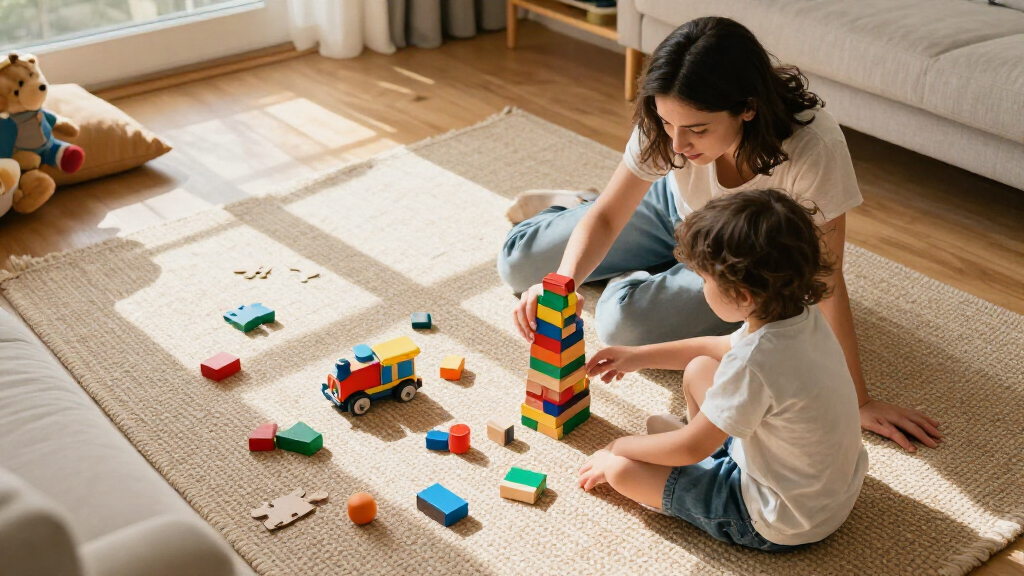

The best award-winning toys in this roundup offer very different kinds of play, from the tile strategy of Azul to the hands-on building of Smartivity’s DIY Pinball Machine. I’d choose Azul as the best overall for families who want a replayable game with room for thoughtful decisions, while ThinkFun Rush Hour is a standout for solo logic play and ThinkFun Zingo! suits preschoolers practicing early reading skills. The main tradeoff is choosing between shared play, independent challenges, and build-it-yourself projects—not every toy fits every age or household routine. Some picks are easy to start, while others reward patience or adult help. Read on for the full breakdown and help matching each option to its intended player.

Turn the school run and nap time into listening time
- Thousands of audiobooks, podcasts and originals
- Listen on your phone, tablet or Echo — also offline
- Cancel anytime
Complete the kit


Key Takeaways
- Azul earns the best-overall position because it pairs a clear turn structure with strategic choices and repeat play, though it suits players ready for more than a simple first game.
- Rush Hour and Kanoodle stand out for self-directed puzzle play; the choice comes down to a sliding-car logic challenge versus compact spatial brainteasers.
- Zingo! and Count Your Chickens serve younger players differently: one practices word and picture matching, while the other makes cooperative counting the shared goal.
- The STEM kits reward active making, but the Smartivity Pinball Machine and Robotic Mechanical Hand ask for more assembly time than ready-to-play games.
- The lineup’s award-winning label does not settle the buying decision: age fit, adult involvement, group size, and willingness to repeat a puzzle matter more to day-to-day usefulness.
| Azul Mosaic Tile-Placement Strategy Board Game, 2–4 Players, 30‑45 Min |  | Best Overall Strategy Game | Players: 2–4 | Playing time: 30–45 minutes | Age range: 96–1188 months | VIEW LATEST PRICE | See Our Full Breakdown |
| Grab The Mic – Award Winning Karaoke Party Game for Bad Singers with Foam Mic |  | Best for Big, Lively Groups | Players: 2–12 | Recommended age: 8+ | Playing time: 20 minutes | VIEW LATEST PRICE | See Our Full Breakdown |
| ThinkFun Rush Hour Traffic Jam Logic Game |  | Best Solo Logic Challenge | Brand: ThinkFun | Age range: 8 years and up | Game type: Logic puzzle board game | VIEW LATEST PRICE | See Our Full Breakdown |
| LeapFrog Magic Adventures Globe |  | Best Interactive Learning Toy | Brand: LeapFrog | Model number: 80-605401 | Dimensions: 11 × 10 × 14 inches | VIEW LATEST PRICE | See Our Full Breakdown |
| Hape Dynamo Wooden Domino Set, 107 Pieces |  | Best for Open-Ended Building | Brand: Hape | Model: E1042 | Piece count: 107 | VIEW LATEST PRICE | See Our Full Breakdown |
| The Happy Puzzle Company Genius Star Puzzle Board Game |  | Best for Varied Logic Challenges | Players: 1–2 | Recommended age: 8 years and up | Puzzle setups: 165,888 | VIEW LATEST PRICE | See Our Full Breakdown |
| Bug Bash Card Game |  | Best for Quick Math-Fueled Family Play | Players: 2–4 | Age range: 7–12 years | Material: Cardstock | VIEW LATEST PRICE | See Our Full Breakdown |
| Smartivity DIY Pinball Machine STEM Kit |  | Best Build-and-Play STEM Project | Recommended age: 8–14 years | Parts: 375 | Included components: Instructional manual, rubber bands, marbles | VIEW LATEST PRICE | See Our Full Breakdown |
| ThinkFun Zingo! Bingo Preschool Reading Game for Ages 4 and Up |  | Best for Early Readers | Age range: 4–10 years | Players: 2–6 | Included components: 6 double-sided cards, 72 double-sided tiles, Parent’s Guide, Zingo! Zinger with easy-cleanup unit | VIEW LATEST PRICE | See Our Full Breakdown |
| The Genius Square STEM Puzzle Game for 1–2 Players, Ages 6 and Up |  | Best for Younger Puzzle Beginners | Players: 1–2 | Recommended age: 6 years and up | Grid size: 6 × 6 | VIEW LATEST PRICE | See Our Full Breakdown |
| Peaceable Kingdom Count Your Chickens Cooperative Board Game |  | Best for Cooperative Preschool Play | Players: 2–4 | Recommended age: 3 years and up | Playing time: Approximately 15 minutes | VIEW LATEST PRICE | See Our Full Breakdown |
| Educational Insights Kanoodle Brain Teaser Puzzle Game |  | Best Compact Solo Puzzle | Players: 1 | Recommended age: 7 years and up | Puzzle challenges: 228 | VIEW LATEST PRICE | See Our Full Breakdown |
| ThinkFun Gravity Maze – Falling Marble Logic Game |  | Best for Hands-On STEM Logic | Recommended age: 8 years and up | Puzzle challenges: 60 | Game type: Logic maze | VIEW LATEST PRICE | See Our Full Breakdown |
| Smartivity Robotic Mechanical Hand STEM Toy for Kids Ages 8–14 |  | Best Build-It-Yourself STEM Kit | Recommended age: 8–14 years | Material: Engineered wood | Theme: Anatomy and robotics | VIEW LATEST PRICE | See Our Full Breakdown |
| award-winning toy | Players | Included components | Recommended age | Material |
|---|---|---|---|---|
| Azul Mosaic Tile-Placement Str | 2–4 | 4 scoring markers, 1 starting player marker, 1 linen bag | — | — |
| Grab The Mic | 2–12 | Foam microphone, game board, player tokens, instructions | 8+ | — |
| ThinkFun Rush Hour Traffic Jam | — | — | — | Plastic |
| LeapFrog Magic Adventures Glob | 1 | — | — | — |
| Hape Dynamo Wooden Domino Set | — | — | — | Wood |
| The Happy Puzzle Company Geniu | 1–2 | 2 game boards, 26 play pieces, 7 dice, instructions | 8 years and up | Mixed materials |
| Bug Bash Card Game | 2–4 | — | — | Cardstock |
| Smartivity DIY Pinball Machine | — | Instructional manual, rubber bands, marbles | 8–14 years | Engineered wood |
| ThinkFun Zingo! Bingo Preschoo | 2–6 | 6 double-sided cards, 72 double-sided tiles, Parent’s Guide, Zingo! Zinger with easy-cleanup unit | — | Plastic |
| The Genius Square STEM Puzzle | 1–2 | 2 grids, 7 dice, 2 sets of 7 blockers, 2 sets of 9 colored shapes | 6 years and up | — |
| Peaceable Kingdom Count Your C | 2–4 | Game board, Mother Hen with stand, 40 baby chicks, spinner, and printed instructions | 3 years and up | — |
| Educational Insights Kanoodle | 1 | 12 puzzle pieces, 48-page illustrated puzzle book, and carrying case | 7 years and up | Plastic |
| ThinkFun Gravity Maze | — | 1 target piece, 3 marbles, 60 challenge cards, 9 towers, and game grid | 8 years and up | — |
| Smartivity Robotic Mechanical | — | — | 8–14 years | Engineered wood |
More Details on Our Top Picks
Azul Mosaic Tile-Placement Strategy Board Game, 2–4 Players, 30‑45 Min
Azul earns this spot by pairing striking tactile tiles with rules that are approachable for new players and choices that stay engaging over repeat games. Players draft tiles and place them on their boards, balancing immediate points against the risk of taking pieces they cannot use. Compared with Rush Hour, which is a solo sequence of fixed puzzles, Azul turns each session into a changing contest among players. It also suits a wider range of group sizes than the single-player LeapFrog Magic Adventures Globe. The tradeoff is a more deliberate pace: the 30–45-minute playtime and factory-display setup ask for more table time than a quick party game like Grab The Mic. I’d choose it for families who want strategy with an attractive, hands-on feel, not for groups seeking a loud, fast activity.
Pros:- Tile drafting is easy to learn while leaving room for tactical decisions.
- Changing tile availability gives each game a different feel.
- Resin tiles add a satisfying tactile and visual element.
- Works for two to four players, unlike the solo Rush Hour puzzle.
Cons:- Arranging the factory displays and distributing components takes some setup time.
- The measured strategy pace may not suit players who prefer quick, high-energy rounds.
Best for: Families and board-game groups who want a replayable strategy game for two to four players and enjoy thoughtful, tactile play.
Not ideal for: Groups looking for a very short, high-energy party game or buyers who want a game with almost no setup.
- Players:2–4
- Playing time:30–45 minutes
- Age range:96–1188 months
- Resin tiles:100
- Player boards:4
- Factory displays:9
- Included components:4 scoring markers, 1 starting player marker, 1 linen bag
Our verdict“Choose Azul for a visually appealing, replayable strategy game that gives a small group more depth than a solo puzzle or party activity.”
Grab The Mic – Award Winning Karaoke Party Game for Bad Singers with Foam Mic
Grab The Mic is the pick here for turning a gathering into a shared performance rather than a quiet puzzle session. Players draw word cards and try to sing lyrics containing the revealed word, so quick recall and willingness to join in matter more than musical skill. With room for 2–12 players and a roughly 20-minute playtime, it suits birthdays and family get-togethers better than Azul, whose tile-drafting rewards slower, strategic turns. The foam microphone gives the game a clear party-game identity, while 120 word cards help supply prompts for repeat rounds. That format has limits: it depends on players being comfortable singing in front of others, and its board-and-mic setup is intended for indoor play. I’d skip it for a quiet, solo activity; Rush Hour is a better fit for that.
Pros:- Accommodates groups of up to 12, more than Azul’s four-player limit.
- Word prompts make the rules quick to grasp and rounds easy to start.
- Encourages recall, creativity, and speaking or singing in front of a group.
- Includes a foam microphone and multiple game modes.
Cons:- The sing-along premise may put off players who dislike performing.
- Board and microphone play are suited to indoor gatherings, not outdoor use.
Best for: Families, birthday hosts, and friend groups with players aged eight and up who enjoy singing, word prompts, and group participation.
Not ideal for: Shy players, quiet settings, or anyone looking for a portable solo game rather than an indoor group activity.
- Players:2–12
- Recommended age:8+
- Playing time:20 minutes
- Word cards:120
- Included components:Foam microphone, game board, player tokens, instructions
- Dimensions:4.53 × 8.66 × 2.68 inches
- Battery requirement:No batteries required
Our verdict“Pick Grab The Mic for an indoor group that wants a fast, playful sing-off and is comfortable performing for one another.”
ThinkFun Rush Hour Traffic Jam Logic Game
Rush Hour stands out among these award-winning toy picks as a self-contained challenge a child can tackle alone, then revisit at a harder level. Its 40 challenge cards set the starting positions; players slide the cars and trucks until the red car can leave the grid. That concrete, hands-on problem-solving contrasts with the open-ended tile choices in Azul and the social performance of Grab The Mic. The sequence from beginner to expert gives the puzzle a built-in path for growing skills, while the compact board and drawer keep the pieces together. The tradeoff is a narrow format: every challenge centers on clearing a traffic jam, so it offers less variety than a construction set like Hape Dynamo. The age recommendation also starts at eight, making it a poor match for younger preschoolers.
Pros:- Forty challenges span beginner through expert difficulty.
- Sliding vehicles make the logic problem tactile and easy to follow.
- Designed to develop planning, reasoning, and problem-solving.
- The grid includes a drawer to hold the puzzle pieces.
Cons:- All challenges use the same traffic-jam puzzle format.
- The listed age recommendation starts at eight, excluding younger children.
Best for: Children aged eight and up who enjoy independent puzzles, hands-on planning, and gradually harder challenges.
Not ideal for: Preschoolers or families seeking a multiplayer game, broad creative building, or changing gameplay formats.
- Brand:ThinkFun
- Age range:8 years and up
- Game type:Logic puzzle board game
- Challenges:40
- Included pieces:1 grid with drawer, 1 hero car, 11 cars, 4 trucks
- Challenge cards:40
- Material:Plastic
- Edition:Standard Edition
Our verdict“Choose Rush Hour for a child ready to work through progressively harder solo logic puzzles rather than a social or open-ended toy.”
LeapFrog Magic Adventures Globe
LeapFrog Magic Adventures Globe makes geography an activity to explore rather than a static reference: children use the stylus to access topics such as countries, languages, animals, and landmarks, with BBC video content on a built-in screen. That guided, fact-focused approach gives it a different role from Hape Dynamo, which invites children to build their own cause-and-effect courses. The globe is also a solo experience, unlike the group play of Grab The Mic, so it suits a child who likes to explore at their own pace. Its 2.8-inch screen adds video without making the globe a large display, though this is still a substantial tabletop toy at 14 inches tall. Four AA batteries are required after the included demonstration cells run out, an ongoing supply consideration for families who prefer toys without batteries.
Pros:- BBC video content adds moving examples to geography topics.
- A stylus and three built-in games invite active exploration and quiz play.
- Covers countries, capitals, languages, landmarks, animals, and habitats.
- A sturdy stand supports tabletop use.
Cons:- Requires four AA batteries, with included cells intended for demonstration.
- The 14-inch height and 2.9-pound weight make it less convenient to move around.
- Designed for one player, so it does not provide shared multiplayer play.
Best for: Children aged five and up who enjoy guided geography, animals, and world-culture content through interactive solo play.
Not ideal for: Buyers seeking a battery-free toy, a compact travel activity, or a multiplayer game for siblings and friends.
- Brand:LeapFrog
- Model number:80-605401
- Dimensions:11 × 10 × 14 inches
- Weight:2.9 pounds
- Screen size:2.8 inches
- Players:1
- Battery requirement:4 AA batteries; included for demonstration
- Educational content:Countries and capitals, animals and habitats, languages, landmarks, and more
Our verdict“Pick the Magic Adventures Globe for a curious child who wants guided, screen-supported world learning and has a place to keep it set up.”
Hape Dynamo Wooden Domino Set, 107 Pieces
Hape Dynamo is the most open-ended pick in this group: instead of following fixed challenge cards like Rush Hour, children arrange wooden dominoes and trick pieces to invent courses and watch a chain reaction unfold. Its 107 pieces, including a bridge, bell, and rails, give builders more to work with than a single-format puzzle. The wooden blocks and child-safe paint also make it a tactile alternative to the plastic interactive LeapFrog globe. This set can support spatial thinking and cause-and-effect play, but success depends on careful setup: a misplaced block can stop a run, and rebuilding is part of the activity. The age range begins at three, though younger children may not be ready for the small-scale sequencing and careful placement. I’d choose it for hands-on builders, not buyers seeking an immediately guided game.
Pros:- A 107-piece set offers room to create varied domino courses.
- Bridge, bell, rails, and other trick pieces add effects beyond a basic domino line.
- Wooden construction gives the blocks a sturdy, tactile feel.
- Encourages spatial thinking, balance, and cause-and-effect exploration.
Cons:- Careful setup is needed, and a disrupted course may need to be rebuilt.
- Open-ended play offers less step-by-step guidance than Rush Hour’s challenge cards.
- The age recommendation starts at three, so it is not intended for younger children.
Best for: Children aged three and up who enjoy arranging pieces, experimenting with chain reactions, and inventing their own courses.
Not ideal for: Families wanting a guided activity with predictable progress, or children who are not ready for careful placement and rebuilding.
- Brand:Hape
- Model:E1042
- Piece count:107
- Material:Wood
- Finish:Non-toxic, child-safe paint
- Age range:3 years and up
- Included features:Bridge, bell, rails, and assorted tricks
Our verdict“Choose Hape Dynamo for a young builder who enjoys designing and rebuilding chain-reaction courses more than following set puzzles.”
The Happy Puzzle Company Genius Star Puzzle Board Game
Genius Star earns its place among award-winning toys for the sheer range of puzzles packed into a compact, replayable format. Dice and blockers set each star-shaped challenge, while colorful Tetris-style pieces turn spatial reasoning into a hands-on task. With 165,888 setups, it offers far more puzzle variation than a fixed-configuration brain teaser such as ThinkFun Rush Hour. Two boards also let players race head-to-head, though the game works just as well as a solo activity.
The tradeoff is that its small pieces need careful handling, and the timed head-to-head format may not suit children who prefer to solve at their own pace. Compared with The Genius Square, Genius Star is aimed at older players and uses a star-shaped board rather than a square grid. I’d choose it for families seeking a long-lived logic challenge, not a toy for outdoor play or very young children.
Pros:- 165,888 puzzle setups provide substantial replay variety.
- Supports both solo solving and head-to-head play with two boards.
- Colorful pieces make spatial reasoning and logic hands-on.
- Compact board set is easy to store.
Cons:- Small parts create a choking hazard for younger children.
- Designed for indoor use rather than outdoor play.
Best for: Families with children aged 8 and up who want a compact logic game that supports both solo puzzles and two-player races.
Not ideal for: Households with children under 8 or players who dislike timed competition; its small pieces also make it unsuitable for play around toddlers.
- Players:1–2
- Recommended age:8 years and up
- Puzzle setups:165,888
- Included components:2 game boards, 26 play pieces, 7 dice, instructions
- Dimensions:7.5 × 7.5 × 0.1 inches
- Material:Mixed materials
- Warranty:1 year against manufacturer defects
Our verdict“Choose Genius Star for a high-variety spatial puzzle that can shift between solo play and a two-player race.”
Bug Bash Card Game
Bug Bash is the liveliest pick here for children who enjoy thinking quickly while playing with others. Players count the bugs on flipped cards and race to slap the card that matches the total, turning number grouping and addition into an active challenge rather than a worksheet-style exercise. Its simple rules and compact deck make it easier to bring to a classroom or on a trip than a board game such as Azul, which asks players to settle in for a longer strategy session.
The same speed that makes Bug Bash exciting can leave slower-paced players feeling rushed, and its math-and-reflex focus offers less strategic depth than Azul. The listed age range is 7–12, so it may not hold the attention of adults seeking a complex game. I’d pick it for a family or classroom that wants a quick, social way to practice counting, not for quiet solo play.
Pros:- Turns counting, addition, and number grouping into active play.
- Compact card format suits travel and classroom use.
- Quick rules make it easy to start a game.
- Designed for interaction between children and adults.
Cons:- Fast reactions can overwhelm players who prefer a slower pace.
- Its math-and-reflex format may feel too simple for older players seeking strategic depth.
Best for: Families with children aged 7–12 who want a portable, quick-to-teach game that makes counting and addition part of lively group play.
Not ideal for: Players who prefer calm, deliberate turns, children outside the listed age range, or anyone looking for a deep strategy game.
- Players:2–4
- Age range:7–12 years
- Material:Cardstock
- Dimensions:3.5 × 2.5 inches
- Weight:0.1 kg
- Theme:Insect
- Educational objectives:Mathematics, reflexes, strategy
Our verdict“Pick Bug Bash when you want a portable group game that gets children practicing math at a lively pace.”
Smartivity DIY Pinball Machine STEM Kit
Smartivity’s DIY Pinball Machine makes the building process part of the play: children assemble a working tabletop game with a spring launcher, flippers, ramps, and scoring targets. That gives it a different appeal from The Genius Square, which offers a ready-to-play puzzle rather than a substantial construction project. As kids put the machine together, its moving parts create a practical introduction to ideas such as momentum and energy transfer. 375 parts and illustrated instructions give the activity more substance than a quick craft.
The main tradeoff is time: this is not ready for play straight out of the box, and the assembly may call for adult help. Marbles and other small components also need supervision. Compared with Smartivity’s Robotic Mechanical Hand, this kit ends in a tabletop game rather than a wearable mechanism. I’d choose it for a patient child who enjoys building as much as playing, not for families seeking an immediate, low-setup activity.
Pros:- Builds into a functional pinball game with flippers and scoring targets.
- Assembly introduces mechanical ideas through moving parts.
- Illustrated instructions guide the construction process.
- Uses engineered wood described as sustainably sourced.
Cons:- Requires substantial assembly before the game can be played.
- Small parts and marbles require supervision and careful storage.
- Construction may be frustrating for children who prefer instant play.
Best for: Children aged 8–14 who enjoy hands-on construction and want a finished project they can play with after assembly.
Not ideal for: Families seeking a toy that is ready to use immediately, or homes where small parts and marbles cannot be kept away from younger children.
- Recommended age:8–14 years
- Parts:375
- Included components:Instructional manual, rubber bands, marbles
- Material:Engineered wood
- Dimensions:11 × 14.5 × 5.3 inches
- Weight:529.5 g
- Educational objectives:Concentration, construction skills, dexterity, engineering
Our verdict“Choose this kit for a child who values the build as much as the pinball game waiting at the end.”
ThinkFun Zingo! Bingo Preschool Reading Game for Ages 4 and Up
Zingo! is the most direct choice in this group for preschoolers and early readers: players match picture-and-word tiles to their cards, building recognition through a familiar bingo-style format. The Zinger dispenser gives turns a little ceremony and its cleanup unit helps keep tiles together, making the game easier to manage with young children. Unlike Bug Bash, which asks players to count quickly and react, Zingo! focuses on matching and language, so it better fits children who are still building confidence with words.
Double-sided cards offer two levels of play, but the game is limited to two to six players and depends on indoor tabletop space. Its reading focus also means it is less suited to families looking for a broader strategy challenge like Azul. I’d choose it for a young child who benefits from simple, repeatable word play; older children may outgrow the matching format.
Pros:- Makes word recognition and matching the center of play.
- Double-sided cards provide two levels of play.
- Zinger dispenser adds an engaging way to reveal tiles.
- Easy-cleanup unit helps keep the pieces organized.
Cons:- Supports only two to six players.
- Indoor tabletop play limits where it can be used.
- The matching format may feel too simple for older children.
Best for: Families, preschool teachers, and caregivers supporting children aged 4–10 who are learning to recognize words and match language to images.
Not ideal for: Groups larger than six, outdoor play, or older children who want a more involved strategy game.
- Age range:4–10 years
- Players:2–6
- Included components:6 double-sided cards, 72 double-sided tiles, Parent’s Guide, Zingo! Zinger with easy-cleanup unit
- Material:Plastic
- Language:English
- Educational objective:Reading
- Model number:97700
Our verdict“Choose Zingo! for an accessible, hands-on way to practice early reading with a small group.”
The Genius Square STEM Puzzle Game for 1–2 Players, Ages 6 and Up
The Genius Square is the most accessible logic-game pick in this set for children starting at age 6. Players roll dice to place blockers on a 6 × 6 grid, then fit colored shapes into the remaining spaces. Because every setup has at least one solution, the challenge comes from finding a fit rather than getting stuck with an impossible board. Two grids support a race, while solo play lets a child work at a comfortable pace. Compared with the star-shaped Genius Star, this version uses a straightforward square grid and has a lower recommended starting age.
Its race format may add pressure for players who prefer untimed puzzles, and the small blockers and shapes can be tricky for younger hands. The compact grids travel easily, but the game is designed for indoor use. I’d choose it as a first hands-on spatial puzzle, while older children seeking a tougher challenge may prefer Genius Star.
Pros:- Every setup has at least one solution, keeping challenges fair.
- Works for solo solving or two-player races.
- Supports pattern recognition and problem solving.
- Compact 7 × 7-inch grids are easy to carry.
Cons:- The race format may not suit players who prefer untimed puzzles.
- Small blockers and shapes may be difficult for younger children to handle.
- Designed for indoor use.
Best for: Families with children aged 6 and up who want a compact first logic game that can be played solo or raced head-to-head.
Not ideal for: Children who dislike timed competition, players who want a larger physical puzzle, or households looking for outdoor play.
- Players:1–2
- Recommended age:6 years and up
- Grid size:6 × 6
- Possible solutions:62,208
- Included components:2 grids, 7 dice, 2 sets of 7 blockers, 2 sets of 9 colored shapes
- Game mechanics:Grid filling, puzzle solving, racing
- Dimensions:7 × 7 inches
- Weight:8.8 oz
- Educational objective:Pattern recognition
Our verdict“Choose The Genius Square as a portable first spatial puzzle for children who enjoy fitting shapes under a playful challenge.”
Peaceable Kingdom Count Your Chickens Cooperative Board Game
Count Your Chickens earns its place among award-winning toys by making early counting a shared activity rather than a contest. Players spin and move together to help Mother Hen collect 40 chicks, so young children can practice number skills while taking turns and working toward one goal. Its no-reading format makes it more accessible to preschoolers than strategy games such as Azul, which asks players to manage more involved choices. The short, roughly 15-minute playtime also suits children who are still learning to stay with a game. The tradeoff is a narrow age fit: children who have outgrown basic counting may want more challenge, and the small chicks pose a choking risk around younger siblings. Choose it for gentle first-game teamwork, not lasting complexity.
Pros:- Shared goal encourages teamwork instead of winner-versus-loser play
- Practices counting and early math through simple turns
- No reading required, making it approachable for preschoolers
- Short playtime fits younger children’s attention spans
Cons:- Small chick pieces create a choking hazard around very young children
- Basic counting mechanics may feel too simple once children outgrow the preschool age range
Best for: Families introducing children ages 3–5 to counting, turn-taking, and cooperative board games
Not ideal for: Households with children who need advanced strategy or younger siblings who may put small pieces in their mouths
- Players:2–4
- Recommended age:3 years and up
- Playing time:Approximately 15 minutes
- Game type:Cooperative counting game
- Educational objective:Mathematics
- Mechanics:Spin and move; cooperative gameplay
- Included components:Game board, Mother Hen with stand, 40 baby chicks, spinner, and printed instructions
- Dimensions:9.09 × 12.6 inches
Our verdict“Choose Count Your Chickens for a short, welcoming first board game that lets preschoolers learn and cooperate together.”
Educational Insights Kanoodle Brain Teaser Puzzle Game
Kanoodle is the most portable solo choice in this group: its case stores the pieces and doubles as the board, so a child can start a puzzle without setting up a full game. The 228 challenges range from beginner to expert and include both flat and 3D arrangements, giving it more variety than a single-format puzzle. Compared with ThinkFun Gravity Maze, Kanoodle is less about building a marble pathway and more about fitting pieces into a prescribed configuration; that makes it a quieter, self-paced option for travel or independent downtime. Its main limitation is also its defining feature: it is designed for one player, so it will not create the shared problem-solving that Gravity Maze can. The all-plastic pieces may also be less appealing to families seeking wood or other materials.
Pros:- 228 challenges provide a broad range of difficulty
- Includes both 2D and 3D puzzle formats
- Case stores the pieces and serves as the playing surface
- Supports independent, screen-free play
Cons:- Designed for one player, with little built-in social play
- Plastic construction may not suit buyers seeking a different material
Best for: Families wanting a compact, screen-free solo activity for children ages 7 and up, especially for travel or quiet time
Not ideal for: Buyers looking for a multiplayer game, collaborative play, or a toy made from materials other than plastic
- Players:1
- Recommended age:7 years and up
- Puzzle challenges:228
- Puzzle formats:2D and 3D
- Included components:12 puzzle pieces, 48-page illustrated puzzle book, and carrying case
- Material:Plastic
- Model number:EI-2978
- Manufacturer warranty:1 year against manufacturer defects
Our verdict“Pick Kanoodle when portability and a long sequence of solo logic challenges matter more than playing together.”
ThinkFun Gravity Maze – Falling Marble Logic Game
Gravity Maze makes spatial reasoning physical: children arrange towers on a grid, then test whether gravity carries a marble to the target. Its 60 progressive challenges provide a clear path from easier setups to harder ones, while the building element gives each puzzle a more tactile feel than Kanoodle’s piece-fitting format. That distinction matters for kids who learn by arranging and adjusting objects rather than visualizing a solution on a page. The towers and marbles can also support collaborative discussion, though the puzzle-solving challenge remains the focus. Compared with the simpler counting in Count Your Chickens, this is aimed at older children ready to plan several steps ahead. The age floor of 8 is meaningful: younger players may find the puzzles frustrating, and the product data does not specify a playtime or player count.
Pros:- 60 progressive challenges support continued practice
- Building tower pathways turns logic into a hands-on activity
- Marble movement makes cause and effect visible
- Can prompt children to explain and compare possible solutions
Cons:- Recommended age of 8 and up rules out younger puzzle fans
- The challenge-based format may feel frustrating to children who prefer open-ended play
Best for: Children ages 8 and up who enjoy building, testing solutions, and practicing spatial reasoning through hands-on puzzles
Not ideal for: Preschoolers or younger grade-school children who need simple rules, plus buyers who want a clearly specified multiplayer game
- Recommended age:8 years and up
- Puzzle challenges:60
- Game type:Logic maze
- Included components:1 target piece, 3 marbles, 60 challenge cards, 9 towers, and game grid
- Educational focus:Spatial reasoning, critical thinking, and engineering skills
- Brand:ThinkFun
- Model number:44001006
Our verdict“Choose Gravity Maze for an older child who wants tactile STEM challenges rather than Kanoodle’s compact piece-placement puzzles.”
Smartivity Robotic Mechanical Hand STEM Toy for Kids Ages 8–14
Smartivity Robotic Mechanical Hand is the strongest fit here for a child who wants to make a working object, not just solve a sequence of puzzles. The step-by-step manual guides an ages 8–14 build around anatomy and robotics, while the engineered-wood construction gives the finished project a different feel from the plastic pieces in Kanoodle and Gravity Maze. Its screen-free format makes the build itself the activity, and lifetime replacement parts offer a way to address missing or damaged components after purchase. The tradeoff is that the child must assemble the hand before using it, so this is a project kit rather than an immediate-play toy. Unlike Gravity Maze’s ready-to-use challenge cards, it asks for time and patience up front; younger children may need help, and the listed dimensions do not indicate the assembled hand’s size.
Pros:- Step-by-step manual supports a structured building process
- Connects mechanical construction with anatomy and robotics themes
- Engineered-wood material differs from the plastic puzzle toys in this roundup
- Lifetime replacement parts can help keep the kit usable if components are lost or damaged
Cons:- Requires assembly before the main play experience begins
- Age range of 8–14 may call for adult support at the younger end
- Provided dimensions do not clarify the assembled hand’s size
Best for: Children ages 8–14 who enjoy guided construction projects and want a screen-free introduction to mechanics, anatomy, and robotics
Not ideal for: Families seeking an instant-play toy, children who dislike following assembly instructions, or buyers who need a clearly stated finished-product size
- Recommended age:8–14 years
- Material:Engineered wood
- Theme:Anatomy and robotics
- Educational objective:STEM
- Assembly:Child assembly required; step-by-step instruction manual included
- Replacement parts:Lifetime replacement parts
- Model:SMRT1135
- Item dimensions:11.81 × 9.8 inches
Our verdict“Choose this kit for a child who would rather build a mechanical project than work through ready-made puzzles like Gravity Maze.”
How We Picked
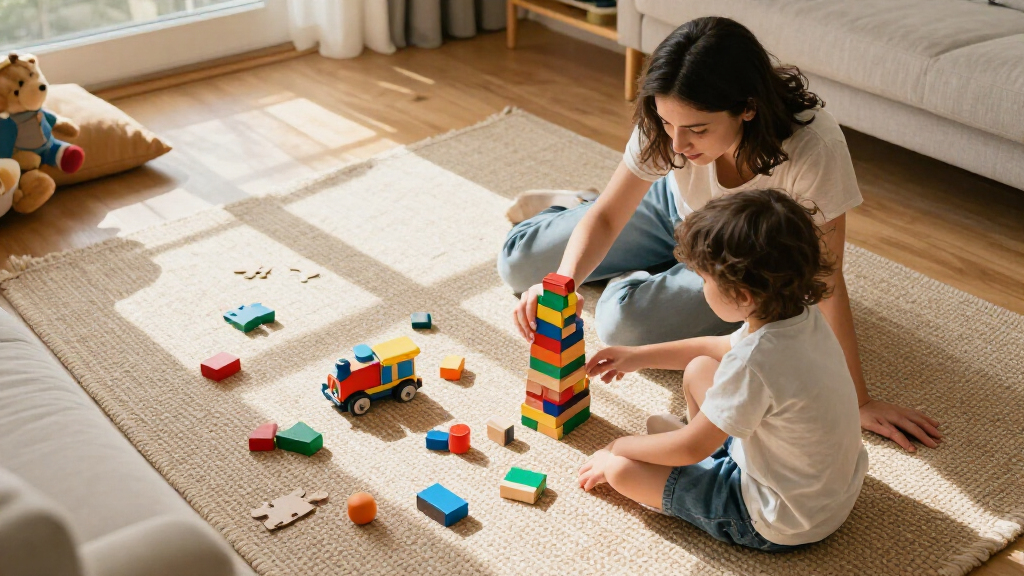
I compared the 14 toys by how well their play format serves its likely audience: whether the rules or build steps are approachable, how much children can do independently, and what kind of thinking or interaction the activity invites. I also considered setup and reset effort, player count, replay potential, and whether the toy’s appeal depends on a particular skill such as reading, spatial reasoning, or construction.
The ranking favors options with a clear use case and broad practical appeal, not simply a long list of features. Azul leads as a flexible family game; Rush Hour and Zingo! follow for strong, distinct age and play needs. More specialized puzzles, cooperative games, party play, and build kits rank according to how well they serve narrower preferences. Awards offer a useful starting point, but I treat them as context rather than a substitute for checking age fit, adult help, and household play habits.
| award-winning toy | Material |
|---|---|
| Azul Mosaic Tile-Placement Str | — |
| Grab The Mic | — |
| ThinkFun Rush Hour Traffic Jam | Plastic |
| LeapFrog Magic Adventures Glob | — |
| Hape Dynamo Wooden Domino Set | Wood |
| The Happy Puzzle Company Geniu | Mixed materials |
| Bug Bash Card Game | Cardstock |
| Smartivity DIY Pinball Machine | Engineered wood |
| ThinkFun Zingo! Bingo Preschoo | Plastic |
| The Genius Square STEM Puzzle | — |
| Peaceable Kingdom Count Your C | — |
| Educational Insights Kanoodle | Plastic |
| ThinkFun Gravity Maze | — |
| Smartivity Robotic Mechanical | Engineered wood |
Factors to Consider When Choosing Best Award-winning Toys
Before choosing among award-winning toys, match the play experience to the child and the way your household actually plays. These broader checks can prevent a well-regarded toy from becoming a poor fit.
Match the challenge to the child, not just the age label
Age guidance is a starting point, not a guarantee that a child will enjoy the task. Reading confidence, patience, fine-motor control, and comfort with rules can matter just as much. A younger child may enjoy a toy with a slightly older suggested age if an adult joins in, while an older beginner may prefer a gentler entry point. Avoid buying only for the skill you hope the toy will teach; the activity still needs to feel rewarding. If possible, check whether the challenge can be simplified or expanded. This matters especially for puzzles and construction sets, where frustration can arrive before the learning benefit.
Choose the play format your household will repeat
A party game, a solo logic puzzle, and a cooperative board game ask for different schedules and social energy. Group games need willing players at the same time, while solo puzzles can fit short independent play sessions. Cooperative play may suit children who dislike direct competition, but it still asks everyone to share attention and follow a common goal. Think about whether the toy will be used on quiet afternoons, family nights, or gatherings. A toy with fewer players can be a better fit if it gets used regularly. Avoid assuming that a larger group makes a toy more versatile if your usual play group is small.
Count adult involvement as part of the setup
Some toys can be opened and played with quickly; build kits and more involved games may need an adult to read instructions, sort pieces, or help with early steps. That support can be a welcome shared activity, but it can also limit independent use. Ask whether the child wants to make something, operate it afterward, or both. The distinction matters: construction may be the main reward for one child and an obstacle for another. Plan for a suitable work surface and enough uninterrupted time if assembly is part of the experience. Do not mistake an educational goal for a promise of effortless play.
Look beyond the first play session
A quick first activity can be appealing, but repeat value depends on what changes from one session to the next. Some games draw interest from new decisions or changing challenges, while a fixed construction project may offer its main payoff during assembly. Ask whether the toy invites new strategies, adjustable difficulty, or different ways to play. Also consider whether children can return to it without an adult resetting everything. A longer play life does not always mean more pieces; it can come from a format that stays engaging after the rules are familiar. Choose based on the kind of repetition the child enjoys.
Weigh learning goals against play appeal
Many toys in this lineup connect play with a skill, such as counting, reading, logic, or building. That connection is most useful when the child enjoys the activity even before noticing the lesson. Decide whether you want practice in a specific area or a flexible play option that serves several moods. A focused learning toy can be a good choice when it matches a current interest, but it may see less use if the child resists that task. Avoid treating educational value as a reason to overlook difficulty or social fit. The strongest match is one the child is willing to pick up again.
Check storage, pieces, and reset effort
Piece count affects more than the size of the box: it can change setup time, cleanup, and the chance of losing parts. A large set may support elaborate play but need a dedicated storage spot. Compact puzzles are easier to put away, though their small format may be less appealing for shared play. Consider whether pieces are easy for the intended child to handle and whether the activity can pause without being dismantled. If the toy needs sorting or rebuilding after every session, that maintenance may fall to an adult. A realistic storage plan can make the difference between frequent play and an item left on a shelf.
Frequently Asked Questions
Which of these toys works best when a child wants to play alone?
Rush Hour, Kanoodle, and The Genius Square are the clearest solo-play choices in this lineup. Pick Rush Hour for a sequence of traffic-grid logic challenges, Kanoodle for portable spatial puzzles, or The Genius Square for a board-based challenge that can also involve a second player. A child’s preferred puzzle style matters more than the word “logic” on the box. If independent play is the priority, check that the child can understand the challenge and reset it without help.
Which option is a better fit for preschoolers: Zingo! or Count Your Chickens?
Choose Zingo! when picture and word matching is a good fit for the child’s current interests and skills. Count Your Chickens is the stronger match when you want players to work together around a counting goal rather than compete for individual wins. The choice is less about which game is universally easier and more about whether the child enjoys matching or shared, cooperative play. An adult can help with turns and rules at first, especially if the child is new to board games. Check the age guidance and the child’s comfort with the game’s core task before deciding.
Should I choose a build-it-yourself STEM toy or a ready-to-play game?
Choose a build kit if the child enjoys following steps, handling parts, and seeing a mechanism take shape. A ready-to-play game is a better fit when the goal is to start playing with little assembly or adult setup. Build-it-yourself toys can create a satisfying shared project, but they require time and patience before the finished activity is ready. Ask whether the child is interested in making the object as well as using it afterward. If the answer is unclear, a game with a quicker start may be the safer household fit.
Are award-winning toys a good choice when I do not know the child’s interests?
An award can help narrow the field, but it cannot tell you whether a particular child enjoys competition, puzzles, construction, or group play. Start with what you know about how the child spends free time and whether they prefer playing alone or with others. A flexible family game may suit a wider range of occasions, while a specialized puzzle or kit can be a better gift when you know the child’s interests. Check age guidance and adult-help requirements before choosing. If you have little information, avoid a toy whose appeal depends on one specific skill or play style.
How can I decide whether a game with a longer play session is suitable for my family?
Think about the time your household can regularly set aside, not just the length of a game on an occasional free day. A longer session can work well for a planned family activity, while shorter or solo challenges may fit busy routines better. Consider whether everyone who needs to play can stay engaged for the full session and whether the game can be paused easily. The stated duration is a guide, and first-time play may take longer while everyone learns the rules. Choose a format that fits your usual schedule so the toy has a realistic chance of being used.
Conclusion
Azul is my best overall pick for households seeking a replayable family game with meaningful choices. For best value in use, I’d look first at Rush Hour: its solo logic format makes it easy to return to without assembling a project or gathering a group. Zingo! is my pick for beginners who are ready for early word and picture matching, while the Smartivity DIY Pinball Machine is the best fit for children who want a hands-on build as well as play. For specific needs, choose Count Your Chickens for cooperative counting, Kanoodle for compact solo puzzles, or Grab The Mic for a lively party setting. The right award-winning toy is the one whose challenge, setup, and play style match the child—not simply the one with the broadest appeal.