
The best classic toys for kids offer play that does not depend on a screen, but the right pick depends on a child’s age, interests, and patience. I’d put the Melissa & Doug Wooden Building Blocks first overall for open-ended play, while Mr. Potato Head is a strong choice for younger children and Twister suits active group play. The main tradeoff is between toys that invite repeated, self-directed play and games that work best with specific players, rules, or adult help. Size, small parts, cleanup, and how long a child can play independently matter as much as nostalgia. Read on for the full breakdown and guidance on choosing the right kind of classic.

Turn the school run and nap time into listening time
- Thousands of audiobooks, podcasts and originals
- Listen on your phone, tablet or Echo — also offline
- Cancel anytime
Complete the kit


Key Takeaways
- Open-ended play gives the blocks an edge: The wooden building set can support many kinds of play, while most other picks are built around one central activity.
- Age fit changes what counts as easy to use: Mr. Potato Head and Spirograph Jr. have younger audiences in mind, while Twister and Operation call for older children who can follow rules and take turns.
- Group size separates the social picks: Twister and Operation create shared play, while the Rubik’s Cube, kaleidoscope, and Wooly Willy can suit quieter solo moments.
- Small and portable does not always mean durable: The Slinky, Koosh ball, and handheld Waterfuls are easy to carry, but their appeal relies on repeated handling and simple physical parts.
- Classic toys vary widely in adult involvement: Building blocks and Mr. Potato Head allow child-led play, while games with rules or fiddly setup may need an adult to get started or keep play moving.
| Hasbro Twister Classic Party Game for 2–4 Players, Ages 6 and Up |  | Best for Active Group Play | Brand: Hasbro Gaming | Players: 2–4 | Age range: 6 years and up | VIEW LATEST PRICE | See Our Full Breakdown |
| Mr. Potato Head Set with 13 Parts and Pieces, Ages 2+ |  | Best for First Pretend Play | Brand: Mr. Potato Head | Manufacturer: Hasbro | Included components: 1 potato body and 12 accessories | VIEW LATEST PRICE | See Our Full Breakdown |
| Rubik’s Cube Original 3×3 Puzzle |  | Best for Brainy Solo Play | Brand: Rubik’s | Puzzle type: 3×3 cube | Material: Plastic | VIEW LATEST PRICE | See Our Full Breakdown |
| JA-RU Vintage Metal Jacks Game with 2 Bouncy Balls |  | Best for Compact Two-Player Play | Brand: JA-RU | Material: Aluminum | Included components: 16 metal jacks, 2 bouncy balls, instructions | VIEW LATEST PRICE | See Our Full Breakdown |
| Schylling Classic Tin Kaleidoscope |  | Best for Quiet Imaginative Play | Brand: Schylling | Material: Metal | Recommended age: 3 years and up | VIEW LATEST PRICE | See Our Full Breakdown |
| Spin Master Games Barrel of Monkeys Linking Game |  | Best for Dexterity Practice | Brand: Spin Master Games | Game type: Linking and balancing game | Players: 1 or more | VIEW LATEST PRICE | See Our Full Breakdown |
| Mattel Games Magic 8 Ball Fortune-Telling Toy |  | Best Classic Conversation Starter | Brand: Mattel Games | Recommended age: 6 years and up | Material: Plastic | VIEW LATEST PRICE | See Our Full Breakdown |
| Original Waterfuls Handheld Water Game with 6 Interchangeable Backgrounds |  | Best Screen-Free Travel Toy | Brand: PlayMonster | Age range: 3 years and up | Number of games: 6 | VIEW LATEST PRICE | See Our Full Breakdown |
| Melissa & Doug 100-Piece Wooden Building Blocks Set with Storage Box |  | Best for Open-Ended Building | Pieces: 100 | Material: Solid wood | Colors: 4 | VIEW LATEST PRICE | See Our Full Breakdown |
| Spirograph Jr. Jumbo Gear Drawing Kit for Kids Ages 3+ |  | Best for Guided Creative Play | Brand: Spirograph | Recommended age: 3 years and up | Kit type: Drawing and design kit | VIEW LATEST PRICE | See Our Full Breakdown |
| Slinky Brand The Original Slinky Walking Spring Toy |  | Best for Open-Ended Play | Material: Metal | Diameter: 2.75 inches | Age guidance: 5 years and up in the description | VIEW LATEST PRICE | See Our Full Breakdown |
| Koosh 3-Inch Ball |  | Best for Easy Catch | Brand: Koosh | Diameter: 3 inches | Material: Rubber | VIEW LATEST PRICE | See Our Full Breakdown |
| Let’s Go Fishin’ Classic Fishing Game | 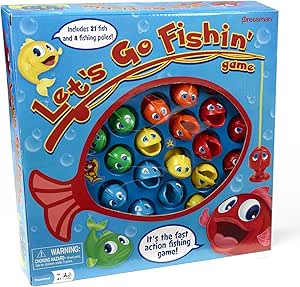 | Best for Family Game Time | Brand: Goliath; manufactured by Pressman Toys | Players: 1–4 | Recommended age: 4 years and up | VIEW LATEST PRICE | See Our Full Breakdown |
| Original Wooly Willy Magnetic Drawing Toy |  | Best Compact Travel Toy | Brand: Wooly Willy | Age range: 3 years and up | Players: 1 | VIEW LATEST PRICE | See Our Full Breakdown |
| Hasbro Gaming Operation Electronic Board Game |  | Best for Steady-Hand Challenges | Brand: Hasbro Gaming | Age range: 6 years and up | Players: 1 or more | VIEW LATEST PRICE | See Our Full Breakdown |
| classic toys for kid | Brand | Included components | Recommended age | Material |
|---|---|---|---|---|
| Hasbro Twister Classic Party G | Hasbro Gaming | — | — | — |
| Mr. Potato Head Set with 13 Pa | Mr. Potato Head | 1 potato body and 12 accessories | 24 months and up | — |
| Rubik’s Cube Original 3×3 Puzz | Rubik’s | 1 Rubik’s Cube | 8 years and up | Plastic |
| JA-RU Vintage Metal Jacks Game | JA-RU | 16 metal jacks, 2 bouncy balls, instructions | — | Aluminum |
| Schylling Classic Tin Kaleidos | Schylling | Classic Tin Kaleidoscope | 3 years and up | Metal |
| Spin Master Games Barrel of Mo | Spin Master Games | 1 barrel and 15 monkeys | 3 years and up | — |
| Mattel Games Magic 8 Ball Fort | Mattel Games | — | 6 years and up | Plastic |
| Original Waterfuls Handheld Wa | PlayMonster | Waterfuls toy with storage compartment and 6 games on 3 double-sided background cards | — | — |
| Melissa & Doug 100-Piece Woode | — | — | — | Solid wood |
| Spirograph Jr. Jumbo Gear Draw | Spirograph | 4 large gears, 1 gear ring, 5 washable markers, 24-page design paper pad, 8-page design guide, and carry-along case with built-in desk, storage, and gear frame | 3 years and up | — |
| Slinky Brand The Original Slin | — | — | — | Metal |
| Koosh 3-Inch Ball | Koosh | — | 3 years and up | Rubber |
| Let’s Go Fishin’ Classic Fishi | Goliath; manufactured by Pressman Toys | 21 fish, 4 plastic fishing poles, instructions, and plastic game base | 4 years and up | — |
| Original Wooly Willy Magnetic | Wooly Willy | Wooly Willy board and magnetic wand | — | Plastic |
| Hasbro Gaming Operation Electr | Hasbro Gaming | Gameboard with Cavity Sam, tweezers, 26 cards, 12 Funatomy parts, play money, rubber band, and instructions | — | — |
More Details on Our Top Picks
Hasbro Twister Classic Party Game for 2–4 Players, Ages 6 and Up
Twister turns a simple mat and color spinner into a lively group challenge, making it the strongest choice here for kids who want to move and play together. Players follow color-and-limb prompts while trying to keep their balance, so rounds build coordination and color recognition through physical play. Unlike the quieter, solo-focused Rubik’s Cube or Classic Tin Kaleidoscope, Twister is designed for shared turns, teams, and tournaments. That group appeal comes with a practical tradeoff: the mat and players need clear floor space, and the elimination rule can frustrate children who dislike falling out of a round. I’d choose it for energetic gatherings, not as a compact toy for a small room or quiet play.
Pros:- Supports group, team, and tournament play
- Combines movement with balance, coordination, and color recognition
- Can be played indoors or outdoors where there is enough space
- Spinner includes additional moves
Cons:- The mat and players require substantial clear floor space
- Falling or touching the mat with a knee or elbow eliminates a player
Best for: Families with children six and older who want an active game for group play, team rounds, or parties.
Not ideal for: Households with limited open floor space or children who are discouraged by elimination when they lose their balance.
- Brand:Hasbro Gaming
- Players:2–4
- Age range:6 years and up
- Included:1 vinyl mat, 1 spinner, instructions
- Skills:Balance, coordination, color recognition
- Play options:Team play and tournaments
Our verdict“Choose Twister for active group fun; pick a compact solo toy like the Rubik’s Cube if space or quieter play matters more.”
Mr. Potato Head Set with 13 Parts and Pieces, Ages 2+
Mr. Potato Head is the most accessible pick in this group for very young children: its large, easy-to-hold body and rearrangeable accessories invite simple experiments with faces and characters. The rear storage compartment also gives the pieces a place to go when play is over, a practical advantage over small loose items like the jacks in the JA-RU Vintage Metal Jacks Game. Its appeal is open-ended rather than rule-based, so it suits short, repeatable play sessions better than a puzzle such as the Rubik’s Cube, which asks for sustained twisting and problem-solving. The tradeoff is a modest 13-piece selection; children who want more combinations may need additional compatible accessories, which are sold separately.
Pros:- Rearrangeable accessories support different faces and characters
- Five-inch body is shaped for little hands
- Rear compartment helps keep the pieces together
- Accessories are compatible with most Potato Head toys
Cons:- The 13-piece set may offer limited variety for children who want many character options
- More compatible accessories are sold separately
- No manufacturer warranty is listed
Best for: Caregivers seeking a first character toy for toddlers who enjoy making faces, swapping parts, and simple pretend play.
Not ideal for: Families looking for a larger, self-contained accessory collection or a game with rules and a defined challenge.
- Brand:Mr. Potato Head
- Manufacturer:Hasbro
- Included components:1 potato body and 12 accessories
- Number of pieces:13
- Height:5 inches (12.5 cm)
- Recommended age:24 months and up
- Model number:F94175X2
- Toy figure type:Play figure
Our verdict“Pick Mr. Potato Head for toddler-friendly creative play and easy piece storage, but look elsewhere for a bigger accessory set or a rule-driven game.”
Rubik’s Cube Original 3×3 Puzzle
The Rubik’s Cube is the clearest choice here for children who enjoy working through a challenge on their own. Its six colored faces turn a familiar matching task into a puzzle that rewards problem-solving and hand-eye coordination, and its portable form makes it easy to take along. Compared with Twister, it needs no group, mat, or open floor; compared with the Classic Tin Kaleidoscope, it asks the child to actively solve rather than simply observe changing patterns. That added challenge is also its main limitation: repeated twisting is central to play, and a child who wants an immediate, easy result may lose interest. I’d favor it for patient kids around the recommended age of eight and up, not as a first puzzle for younger beginners.
Pros:- Classic six-sided color-matching puzzle
- Encourages problem-solving and hand-eye coordination
- Compact design is convenient for travel
- Plastic tiles resist fading and peeling
Cons:- Solving depends on repeated twisting and turning, which may frustrate beginners
- No manufacturer warranty is listed
Best for: Children eight and older who like solo puzzles, color matching, and carrying a compact activity between home and outings.
Not ideal for: Younger beginners or children seeking collaborative, active, or instantly rewarding play.
- Brand:Rubik’s
- Puzzle type:3×3 cube
- Material:Plastic
- Included components:1 Rubik’s Cube
- Recommended age:8 years and up
- Manufacturer:Spin Master
- Model number:6063971
- Length:8.38 inches
Our verdict“Choose the Rubik’s Cube for a portable solo challenge, while Twister is a better fit for kids who want movement and group play.”
JA-RU Vintage Metal Jacks Game with 2 Bouncy Balls
JA-RU Jacks offers a traditional tabletop challenge in a small set that is easy to put away or bring along. The game pairs 16 metal jacks with two bouncy balls, turning each turn into a test of timing and fine motor control. It is a more direct two-player choice than Twister, which needs a larger play area and supports more participants, while its skill-based turns differ from the open-ended character making of Mr. Potato Head. The tradeoffs are the small pieces and the sound: the jacks may be difficult for younger children to handle, and metal pieces can clatter on hard floors. Though the set is described as suitable for ages four to ten, I’d reserve it for children ready to manage small components carefully.
Pros:- Classic two-player game supports hand-eye coordination and fine motor skills
- Includes 16 jacks, two bouncy balls, and instructions
- Compact, lightweight set is easy to store or take along
- Smooth, rounded corners and ASTM testing are specified
Cons:- Small pieces may be difficult for younger children to manipulate
- Metal jacks can be noisy when dropped on hard surfaces
- The listed weight may feel less substantial than traditional heavy metal jacks
Best for: Families looking for a compact, turn-based game for two players and children who can comfortably handle small pieces.
Not ideal for: Very young children, players who prefer larger pieces, or households where noise from dropped metal pieces is unwelcome.
- Brand:JA-RU
- Material:Aluminum
- Included components:16 metal jacks, 2 bouncy balls, instructions
- Age range:4–10 years
- Number of players:2
- Item weight:8.53 g
- Item dimensions:4 x 7 x 1 inches
- Safety standard:ASTM tested
- Model number:FBA_950
Our verdict“Choose JA-RU Jacks for compact skill-based play between two players, but skip it if small metal pieces or clatter are a concern.”
Schylling Classic Tin Kaleidoscope
The Schylling Classic Tin Kaleidoscope is the simplest, quietest pick in this lineup: twist its separate turning cell and watch colorful patterns shift through the view. It offers a low-pressure way to encourage curiosity and imaginative observation, unlike the goal-focused solving of the Rubik’s Cube or the coordinated group movement of Twister. Its metal construction gives it a traditional tin-toy character, but the play is more observational than interactive; children seeking a game, changing accessories, or a building activity may want more to do. It also relies on a light source for the patterns to show, so viewing conditions affect when it is enjoyable. I’d choose it as a small, calm novelty rather than a toy expected to sustain long sessions.
Pros:- Twisting the turning cell produces changing colorful patterns
- Metal construction offers a classic tin-toy feel
- Encourages creative play and imaginative observation
Cons:- A light source is needed to view the patterns
- The play is primarily observational and may not hold every child’s attention
- No manufacturer warranty is listed
Best for: Caregivers seeking a simple, quiet visual toy for children three and older who enjoy looking closely at colors and patterns.
Not ideal for: Children who want an active game, hands-on building, or a toy with many different play modes.
- Brand:Schylling
- Material:Metal
- Recommended age:3 years and up
- Included components:Classic Tin Kaleidoscope
- Number of items:1
- Model number:CTK
- Warranty:No warranty
Our verdict“Choose the kaleidoscope for quiet visual play, but pick the Rubik’s Cube for a more involved solo challenge.”
Spin Master Games Barrel of Monkeys Linking Game
Barrel of Monkeys turns a simple linking challenge into a hands-on test of patience: players hook the monkeys together and try to build the longest chain without dropping it. Its easy-to-grasp goal makes it a stronger fit for younger children than Rubik’s Cube Original 3×3 Puzzle, which asks for sustained puzzle-solving, while the careful linking adds more of a dexterity challenge than the free-form building of Melissa & Doug Wooden Building Blocks. The barrel keeps all 15 pieces together between turns, though the small components can still be easy to scatter during play. The balancing element can frustrate children who want fast, predictable results, and the description does not specify a team or competitive format beyond collecting monkeys in a turn.
Pros:- Straightforward linking goal is accessible to young children
- Careful handling gives fine motor skills and dexterity a practical workout
- Includes 15 monkeys for building chains
- Barrel provides a dedicated place to store the pieces
Cons:- Monkeys can fall from the chain, which may frustrate less patient players
- Small pieces can be scattered or misplaced during play
Best for: Preschool families looking for a compact, repeatable activity that practices careful hand movements and can be played solo or with others
Not ideal for: Children who dislike delicate balancing challenges or families seeking a large shared game with a defined multi-player format
- Brand:Spin Master Games
- Game type:Linking and balancing game
- Players:1 or more
- Recommended age:3 years and up
- Included components:1 barrel and 15 monkeys
- Model number:6069692
Our verdict“Choose Barrel of Monkeys for young kids who enjoy careful, hands-on challenges more than open-ended building or fast-moving group play.”
Mattel Games Magic 8 Ball Fortune-Telling Toy
The Magic 8 Ball is less a skill-building game than a familiar prompt for asking questions and sharing laughs. A child poses a yes-or-no question, turns the ball over, and reads a positive, negative, or neutral response; that simplicity makes it easier to pick up than Barrel of Monkeys, which asks players to handle a chain carefully. It also packs more neatly for travel than Melissa & Doug Wooden Building Blocks, but its play depends on treating the answers as a joke rather than guidance. The manual format has no changing rules or creative construction, so it may lose appeal once the novelty fades. It is listed for one player, though asking questions together can make it a social party activity.
Pros:- Question-and-answer format is quick to understand
- Responses include positive, negative, and neutral possibilities
- Compact size suits indoor play and travel
- Retro-style packaging reinforces its classic toy appeal
Cons:- Manual responses offer little variety beyond the fortune-telling format
- Listed for one player, so it has no defined multiplayer rules
- Colors and decorations may vary
Best for: Families seeking a compact novelty toy for silly yes-or-no questions during car trips, parties, or casual play
Not ideal for: Buyers who want a skill-based game, open-ended creative play, or a toy with substantial replay variety
- Brand:Mattel Games
- Recommended age:6 years and up
- Material:Plastic
- Dimensions:4.5 x 4.5 x 4.5 inches
- Weight:9.92 ounces
- Number of players:1
- Operation mode:Manual
- Usage:Indoor
Our verdict“Pick the Magic 8 Ball for light, conversation-led fun, not for children who need a hands-on challenge or varied game mechanics.”
Original Waterfuls Handheld Water Game with 6 Interchangeable Backgrounds
Waterfuls gives children a small, self-contained arcade-style activity without a screen, batteries, or cords. Players use water-powered controls to work through six backgrounds, including themes such as pinball and basketball, so it offers more visual variety than the single-format Magic 8 Ball. Its portable design also makes it easier to pack than the larger Spirograph Jr. Jumbo Gear Drawing Kit, which includes a case but needs paper and markers for drawing. The tradeoff is that Waterfuls must be filled with water before play, making it less convenient if a spill-free activity is the priority. The six game scenes vary the presentation, but the core handheld play remains similar across them.
Pros:- Screen-free play needs no batteries or cords
- Six backgrounds provide different arcade-style scenes
- Compact design supports travel and easy storage
- Handheld controls encourage fine motor practice and coordination
Cons:- Requires water before play, which may be inconvenient while traveling
- The core play style stays similar across the interchangeable backgrounds
Best for: Caregivers who want a portable, battery-free activity for preschoolers at home or on trips where water access is available
Not ideal for: Families who need a completely dry toy or older kids seeking complex rules and varied game mechanics
- Brand:PlayMonster
- Age range:3 years and up
- Number of games:6
- Background cards:3 double-sided cards
- Power source:No batteries required
- Included components:Waterfuls toy with storage compartment and 6 games on 3 double-sided background cards
- Model number:1580Z
Our verdict“Choose Waterfuls for portable, screen-free play when you can manage the water requirement and want more scene variety than a simple novelty toy.”
Melissa & Doug 100-Piece Wooden Building Blocks Set with Storage Box
This set earns its place through open-ended play: 100 solid wood blocks in nine shapes let children build, sort, stack, and invent without following a single game’s rules. Compared with the guided designs in Spirograph Jr. Jumbo Gear Drawing Kit, blocks leave more room for a child to set the direction, while the variety of shapes and four colors can support sorting and early shape recognition as well as construction. That flexibility also means there is no built-in activity or finish line; kids who prefer a clear challenge may gravitate toward the goal-driven Barrel of Monkeys instead. The cardboard box with a carrying handle helps keep the set together, but it is less durable than a rigid storage container, especially with frequent handling.
Pros:- 100 blocks give children many options for building and rebuilding
- Nine shapes and four colors support varied constructions and sorting
- Solid wood pieces suit hands-on, open-ended play
- Carrying handle makes the storage box easier to move
Cons:- Cardboard storage box may wear with repeated use
- Open-ended play can feel less engaging to children who want a defined challenge
- FSC certification applies to new inventory only
Best for: Families wanting a substantial set of classic building pieces for toddlers and preschoolers who enjoy inventing their own structures and sorting games
Not ideal for: Buyers who need a sturdy long-term storage container or children who prefer structured, rule-based activities
- Pieces:100
- Material:Solid wood
- Colors:4
- Shapes:9
- Age range:2 years and up
- Storage:Cardboard box with carrying handle
- Certification:FSC certification applies to new inventory only
Our verdict“Choose this set for children who like to create their own play; pick a structured game instead if they need rules or a specific goal.”
Spirograph Jr. Jumbo Gear Drawing Kit for Kids Ages 3+
Spirograph Jr. pairs large gears with washable markers and guided designs, giving young children a more structured route into drawing than a blank page. Its built-in desk and storage in the carry-along case make it more self-contained for travel than Melissa & Doug Wooden Building Blocks, though the blocks allow a wider range of play once unpacked. Compared with Waterfuls, this kit creates keepsake drawings rather than offering a quick handheld game, but it asks children to keep the gears and paper in place while they work. The guide and design paper help reduce guesswork, yet the spiral-focused format may feel limiting to kids who want painting, free drawing, or broader art materials. Washable markers are a practical choice for younger artists, not a substitute for supervision.
Pros:- Large gears are designed for smaller hands
- Washable markers and design paper let children start drawing with included materials
- Carry-along case includes a built-in drawing desk and storage
- Design guide offers structured ideas for making spiral patterns
Cons:- Spiral drawing format offers less variety than a general art kit
- Small gears, markers, and paper require organization during and after play
- No warranty is listed
Best for: Caregivers seeking a portable, guided drawing activity for young children who enjoy patterns and want materials included
Not ideal for: Children looking for varied art techniques or families who want a toy that requires no setup or loose supplies
- Brand:Spirograph
- Recommended age:3 years and up
- Kit type:Drawing and design kit
- Included components:4 large gears, 1 gear ring, 5 washable markers, 24-page design paper pad, 8-page design guide, and carry-along case with built-in desk, storage, and gear frame
- Target audience:Unisex children
- Model number:1023Z
- Manufacturer:PlayMonster LLC
Our verdict“Choose Spirograph Jr. for young children who enjoy guided pattern-making and portability, but skip it for broader, free-form art play.”
Slinky Brand The Original Slinky Walking Spring Toy
The Original Slinky earns its place for how much play it invites from one simple spring: kids can stretch, jiggle, pass it between their hands, or try guiding it down steps. Unlike Let’s Go Fishin’, it needs no setup, battery, or group, so it is easy to pick up for a short stretch of play. Its small, hand-sized form also makes it a natural take-along toy. The tradeoff is that its appeal depends on experimenting rather than following rules or completing a challenge; children looking for a structured game may prefer Operation. The metal coil can tangle or bend with rough handling, and the listed age guidance is inconsistent: the description says ages 5 and up, despite the title mentioning younger children. I would choose it for supervised, exploratory play rather than as a toy for a three-year-old.
Pros:- Supports open-ended stretching, wiggling, and walking play.
- Small 2.75-inch diameter fits easily in a child’s hand.
- Manual operation means no batteries or setup.
- Can be played with alone or shared with another person.
Cons:- Metal coils can tangle or bend with rough handling.
- Offers no rules or changing challenges for children who prefer structured play.
- Product description lists ages 5 and up, although the title references younger children.
Best for: Families seeking a compact, screen-free toy for children old enough to handle a metal spring gently and invent their own ways to play.
Not ideal for: Buyers shopping for a structured group game or a toy for a child under five; the age guidance says five and up, and the spring can tangle or bend.
- Material:Metal
- Diameter:2.75 inches
- Age guidance:5 years and up in the description
- Players:1 or more
- Operation:Manual
- Batteries:Not required
- Color:Multicolor
Our verdict“Choose the Original Slinky for children who enjoy inventing their own play, not for buyers seeking a structured game or a toy for under-fives.”
Koosh 3-Inch Ball
The Koosh 3-Inch Ball is the most direct choice here for gentle catch: its soft, lightweight feel is suited to indoor tosses as well as outdoor play, and the compact size is easy to carry. Compared with the Original Slinky, it gives kids a clear activity—throw and catch—instead of asking them to invent a use for the toy. It also asks less coordination than Let’s Go Fishin’, which has moving fish and small poles to manage. That simplicity has limits: one ball cannot provide the variety of a game set, and its small size will not suit every kind of ball play. The color is selected from several options, so buyers cannot count on receiving a particular shade. I’d pick it for casual, low-fuss catch rather than a full family game.
Pros:- Soft feel suits gentle play indoors or outdoors.
- Designed to be easy to catch.
- Lightweight 3-inch form is portable.
- Needs no batteries.
Cons:- Only one ball is included, limiting play options compared with a game set.
- The small size may not fit every ball activity.
- Color is selected from the listed variety.
Best for: Caregivers wanting a lightweight, soft-feel ball for young children to practice simple indoor or outdoor catch.
Not ideal for: Buyers who need a larger ball, a specific color, or a multi-piece game with varied activities.
- Brand:Koosh
- Diameter:3 inches
- Material:Rubber
- Quantity:1 ball
- Available colors:Red, orange, yellow, green, blue, or purple; color selected
- Recommended age:3 years and up
- Players:1 or more
- Batteries:Not required
Our verdict“Choose Koosh for portable, uncomplicated catch practice; pick a game set instead if you want multiple pieces or structured play.”
Let’s Go Fishin’ Classic Fishing Game
Let’s Go Fishin’ turns simple hand-eye practice into a shared challenge: players aim their poles at 21 moving fish as their mouths open and close. With four poles and room for up to four players, it has a stronger group-play case than the solo-focused Wooly Willy or the free-form Koosh 3-Inch Ball. The rotating pond gives turns a little urgency, which can help keep a short game lively. That activity comes with more setup and upkeep than battery-free classics: it needs a C battery that is not included, and the motorized motion makes this less suitable for quiet, anytime play. The listed 30-minute playing time may also be a longer commitment than some young players want. I’d choose it for families who want a light competitive game, not for a no-prep toy.
Pros:- Rotating pond and moving fish create an active catching challenge.
- Includes 21 fish and four fishing poles.
- Supports one to four players.
- Gameplay practices hand-eye coordination.
Cons:- Requires one C battery, which is not included.
- Needs more setup than simple toys such as Koosh or Slinky.
- The listed playing time is 30 minutes, which may not suit children wanting a very short activity.
Best for: Families with children aged four and up who want a turn-based tabletop activity for up to four players.
Not ideal for: Buyers seeking battery-free, quiet, or instant-start play, or families without a C battery available.
- Brand:Goliath; manufactured by Pressman Toys
- Players:1–4
- Recommended age:4 years and up
- Playing time:30 minutes
- Included components:21 fish, 4 plastic fishing poles, instructions, and plastic game base
- Battery requirement:1 C battery, not included
- Edition:Classic
- Languages:Dutch, English, French, German, and Spanish
Our verdict“Choose Let’s Go Fishin’ when you want a lively, shared tabletop game and are prepared to supply its C battery.”
Original Wooly Willy Magnetic Drawing Toy
Wooly Willy is a tidy choice for quiet, portable play: children use the included magnetic wand to shift sealed metal shavings into hairstyles and facial hair, then tilt the frame to clear the drawing. That built-in reset makes it less messy than open-ended art supplies, while its compact board is easier to pack than the tabletop Let’s Go Fishin’. It also requires no batteries, unlike that fishing game and Operation. The limitation is the narrow play pattern: kids are drawing on one face rather than building, tossing, or competing, and the toy is designed for one player. Compared with the Original Slinky, Wooly Willy offers a more focused activity but less freedom in how the toy is used. I’d choose it for contained solo play, not for a group looking to share a game.
Pros:- Sealed magnetic shavings keep play contained.
- Tilting the frame clears designs for a quick restart.
- Compact board and included wand are portable.
- Manual operation requires no batteries.
Cons:- Designed for one player, so it does not support shared game turns.
- Creative play is limited to arranging the magnetic shavings.
- Indoor-use design does not suit outdoor play as well as the Koosh ball.
Best for: Caregivers wanting a compact, mess-free solo activity for children aged three and up, especially for travel or quiet indoor time.
Not ideal for: Families seeking multiplayer play, varied creative materials, or an activity beyond making designs with magnetic shavings.
- Brand:Wooly Willy
- Age range:3 years and up
- Players:1
- Material:Plastic
- Dimensions:7 x 0.37 x 8 inches
- Included components:Wooly Willy board and magnetic wand
- Operation:Manual
- Usage:Indoor
Our verdict“Choose Wooly Willy for portable, contained solo drawing, but skip it if you want a toy that supports group play or broader art projects.”
Hasbro Gaming Operation Electronic Board Game
Operation gives older children a defined skill challenge: use the tweezers to remove 12 ailment pieces without touching the metal edges, which triggers the buzzer and flashing nose. That feedback makes the stakes easy to understand, and the cards and play money add a competitive layer missing from the free-form Original Slinky and solo-focused Wooly Willy. It can be played alone or with a group, so it adapts better to different occasions than Let’s Go Fishin’, which is designed for up to four players. The tradeoff is that success depends on steady hand coordination; younger or easily frustrated players may find the buzzer more discouraging than fun. It also needs two D batteries, unlike the battery-free Koosh ball. I’d choose it for children six and up who enjoy careful, goal-driven play.
Pros:- Supports solo or multiplayer play.
- Buzzer and flashing nose give immediate feedback when tweezers touch the edges.
- Includes 12 ailment pieces, 26 cards, and play money.
- Combines fine-motor coordination with strategy.
Cons:- Requires two D batteries.
- Players need steady coordination to avoid triggering the buzzer.
- More rules and components make it less casual than Slinky or Koosh.
Best for: Families with children aged six and up who enjoy a fine-motor challenge with either solo play or a competitive group format.
Not ideal for: Buyers seeking a battery-free toy, or young children who may become frustrated by the precision needed to remove the pieces.
- Brand:Hasbro Gaming
- Age range:6 years and up
- Players:1 or more
- Ailment pieces:12
- Included components:Gameboard with Cavity Sam, tweezers, 26 cards, 12 Funatomy parts, play money, rubber band, and instructions
- Skills:Fine motor coordination and strategy
- Batteries:2 D batteries required
- Instructions:English and Spanish
Our verdict“Choose Operation for a structured, precision-based challenge for children six and up, provided you have batteries and the players enjoy careful play.”
How We Picked
I compared these 15 toys by how well they fit the classic-toy promise: simple, recognizable play that can be picked up without screens or a long setup. I weighed age suitability, ease of use, play variety, likely durability, cleanup, portability, and whether a child can play alone or needs a group. I also looked at how much adult help a toy may need, since that can change whether it works for everyday play or only for planned family time.
The ranking favors toys with broad appeal and more ways to play, which puts the wooden blocks at the top for their open-ended use. Picks with a clearer age or play-style match rank well in their own lane, such as Mr. Potato Head for younger kids and Twister for groups. Single-purpose novelties and games with narrower settings rank lower—not because they cannot be fun, but because they offer less flexibility across children and occasions. No toy is a fit for every household, so the tradeoffs matter as much as the standouts.
Factors to Consider When Choosing Best Classic Toys For Kids
Classic toys span everything from quiet solo activities to games that need a whole group. I’d choose by the way a toy will actually fit into your household, rather than by nostalgia alone.
Match the play to the child’s age and ability
Age guidance is a starting point, not a guarantee that a toy will feel easy or engaging. A child may enjoy the idea of a game but get frustrated by small parts, precise hand movements, or rules that require sustained attention. Think about what they can already do: sort pieces, take turns, follow several steps, or play independently for a few minutes. A toy that asks for only one new skill can feel rewarding; one that stacks several challenges may need adult support. Avoid buying solely for the age printed on a box if the child’s play style points another way. Check piece size and supervision guidance, especially when younger siblings share the space.
Decide whether play should be solo, shared, or flexible
Some classic toys work best when a child has uninterrupted time alone; others rely on company to create the fun. Before choosing, ask who is usually available to play and whether siblings are close enough in age to enjoy the same activity. A group game can become a cupboard resident if the household rarely has enough players, while a solo puzzle may not satisfy a child looking for lively interaction. Flexible toys can bridge the gap: children might build alone and later turn their creations into shared play. Do not assume that a toy described as a game is automatically social in a way your child enjoys. The best match reflects your real routines, not an ideal family game night.
Think beyond the first play session
Nostalgia can make a toy seem like an easy choice, but replay value differs sharply across classic designs. Ask whether the child can change the challenge, invent rules, combine the toy with other materials, or make a different result each time. A single-use novelty may be a good fit for a short activity or small gift, but it may not hold attention as long as an open-ended set. On the other hand, a toy with many possibilities can feel overwhelming if the child prefers clear directions and a quick payoff. Look for a balance between familiar structure and room for the child to take over. A simple toy is not automatically a lasting toy; the child’s interest is the deciding factor.
Account for storage, cleanup, and missing pieces
Loose parts can be part of the fun, yet they also add sorting and cleanup to the toy’s everyday cost. Consider where the toy will live, whether pieces can be contained together, and how difficult it would be to play if one part goes missing. Small components may be a poor match for a shared play area with toddlers or pets, even when an older child is ready for them. Large sets can take up more shelf space than their box suggests once opened. If cleanup often ends playtime early, favor toys with fewer components or an easy storage plan. A quick check of the set contents and care instructions can prevent avoidable frustration.
Choose the right balance of independence and adult help
A toy can be child-focused and still need an adult to explain the rules, set up pieces, or manage turns. That help may be part of the appeal when a parent wants a shared activity, but less useful when the goal is independent play during a busy moment. Think about whether an adult will need to stay involved for the entire session or only help at the start. Younger children often benefit from an initial demonstration, while older children may prefer a challenge they can solve on their own. Avoid treating adult involvement as a flaw; it is a tradeoff tied to the use case. Pick based on the amount of shared play you genuinely want to provide.
Pay for versatility only when it suits the child
A toy with more pieces or a broader range of uses can be a better long-term choice, but only if the child enjoys exploring options. Some children would rather repeat a familiar action than invent new ways to play, and a simpler design may serve them better. Before choosing a larger set, consider whether its extra materials add meaningful play or mostly add storage and sorting. For a gift, familiar rules and a clear first activity can make a toy easier to start using. For a household toy, flexibility may matter more because different children can approach it in different ways. The right tradeoff is not maximum features; it is enough variety for the child who will receive it.
Frequently Asked Questions
Which toys in this roundup work best for a child who usually plays alone?
I’d start with options that do not depend on having a second player, such as the Rubik’s Cube, kaleidoscope, Wooly Willy, or building blocks. The blocks offer more freedom to change activities, while the puzzle and drawing toys provide a more defined solo task. A child who likes short, tactile play may prefer the Slinky or Koosh ball, though those offer less variety. Consider whether the child likes open-ended play or wants a clear goal to work toward. That preference matters more than whether a toy is traditionally labeled a game.
What should I choose for a mixed-age household?
Look for a toy whose appeal does not rely on every child using it at the same skill level. Building blocks can be adapted to different abilities, while a simple pretend-play activity may let younger children join with older siblings. Rule-based games can be harder to share if the youngest player cannot follow the same pace or instructions. Check the toy’s age guidance and small-parts cautions before letting children play together. It can also help to plan separate roles, so a younger child can participate without needing to perform every step independently.
Are classic toys a good choice when I want less screen time?
They can provide screen-free activities, but no single toy will replace every kind of digital entertainment. Choose something that matches the reason the child reaches for a screen: a hands-on puzzle may suit someone who likes challenges, while a group game can offer social play. For a child who wants quick stimulation, a toy with a simple action may be easier to pick up than a complicated set. Keep the toy accessible and ready to use; a forgotten item in a high cupboard is unlikely to change a routine. Pairing a toy with a regular play opportunity can help it become part of the day.
How can I tell whether a toy will hold a child’s interest beyond the novelty?
Look for signs that the toy offers more than one route to play, such as adjustable challenges, repeatable rounds, or room for imaginative variations. Open-ended toys tend to let a child change the activity without needing extra instructions, while single-action novelties may suit shorter bursts. Neither format is automatically better: some children prefer a familiar routine they can repeat. Think about what the child returns to now, rather than what adults remember enjoying. If possible, choose a toy that connects with an existing interest, such as building, drawing, movement, or problem-solving.
What should I check before buying a classic toy as a gift?
Check the child’s age, interests, and access to other players before deciding on a toy. For a group game, find out whether the household has enough people who will want to join; for a solo activity, consider whether the child likes quiet, focused play. Look at the number and size of pieces, storage needs, and any adult help required to get started. A familiar toy may still be a mismatch if it asks for a skill the child has not developed yet. When you do not know the child well, a flexible activity is often a safer fit than a game with narrow rules or a specific player count.
Conclusion
For the broadest range of play, I’d choose the Melissa & Doug Wooden Building Blocks as the best overall pick: their open-ended format suits many moods and play styles. The best value in play variety is also the blocks, especially for households that will use them in different ways; for a compact, simple activity, the Original Wooly Willy is a smaller-scale alternative. My best pick for beginners and younger children is Mr. Potato Head, with its straightforward, hands-on play. For a premium-feeling group activity, I’d choose Twister when the household has room to move and people ready to join. Choose the Rubik’s Cube for a child who likes solo problem-solving, or Operation for a shared turn-taking challenge. The best match is the toy that fits the child’s age, play habits, and your household’s space—not simply the one adults remember most fondly.