

Fostering creativity in early years helps your child develop problem-solving skills, confidence, and a lifelong love for learning. Activities like imaginative play, drawing, singing, and dancing encourage your little one to explore ideas, express feelings, and experiment freely. These experiences build their ability to think outside the box and adapt to new challenges. Keep exploring these creative opportunities, and you’ll discover inspiring ways to support your child’s growth and imagination.
Key Takeaways
- Early childhood fosters critical thinking, problem-solving, and confidence through imaginative and creative activities.
- Imaginative play encourages exploration, social skills, and brain development essential for lifelong learning.
- Artistic expression helps children communicate emotions, discover talents, and build self-esteem.
- Providing diverse art supplies and positive reinforcement promotes risk-taking and creative growth.
- Supporting creativity in early years establishes a foundation for innovation, adaptability, and joyful exploration.
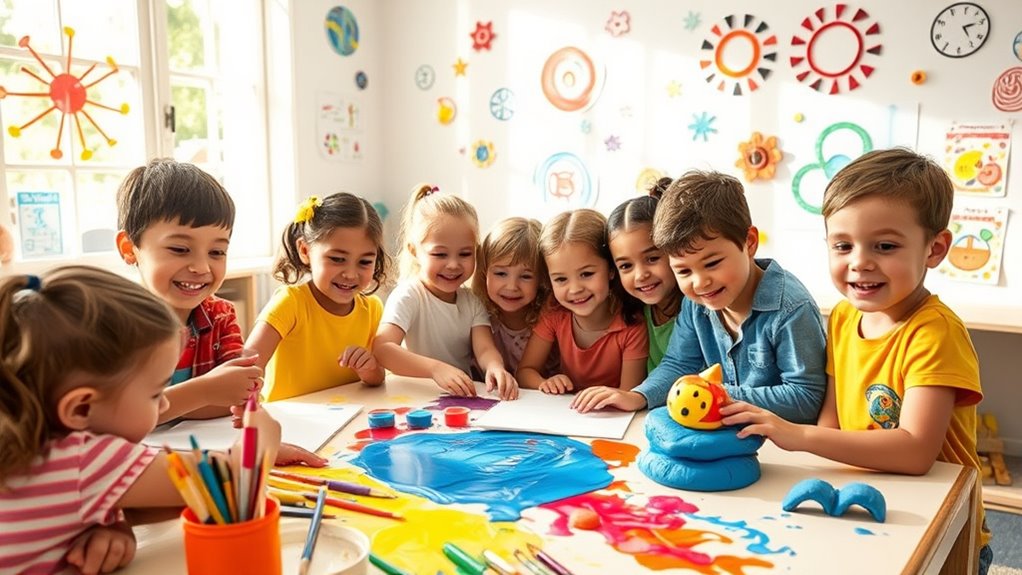
Have you ever wondered why fostering creativity in early childhood is so important? It’s because these formative years lay the foundation for a child’s ability to think outside the box, solve problems, and develop confidence. One of the most powerful ways to nurture this creativity is through imaginative play. When children engage in pretend scenarios, they’re not just having fun—they’re exploring new ideas, practicing social skills, and building their understanding of the world around them. Whether they’re pretending to be astronauts, chefs, or superheroes, they’re creating entire worlds in their minds, which sharpens their ability to imagine, innovate, and adapt later in life.
Imaginative play encourages children to take control of their learning environment. It gives them the freedom to experiment with roles, narratives, and concepts without the fear of failure. As they invent stories or scenarios, they develop problem-solving skills and learn how to negotiate and collaborate with others. This kind of play stimulates their brain’s creative centers, laying the groundwork for artistic expression and critical thinking. Plus, it makes learning enjoyable, fostering a love for exploration that can last a lifetime.
Imaginative play sparks creativity, problem-solving, and collaboration, laying the foundation for lifelong learning and joyful exploration.
Artistic expression is another essential aspect of nurturing creativity in early years. When children draw, paint, sing, or dance, they’re not just creating pretty pictures or sounds—they’re communicating their feelings, thoughts, and ideas. Artistic activities serve as a safe outlet for emotions, helping children process complex feelings and experiences. Encouraging children to experiment with different materials and techniques allows them to discover their unique preferences and talents. This process boosts their confidence and helps them develop a sense of identity.
Providing a variety of art supplies and opportunities for creative exploration inspires children to express themselves freely. Don’t worry about the end product; focus instead on the process of creation. Praise their efforts and originality, which reinforces their willingness to experiment and take risks. The more options they have for artistic expression, the more they’ll learn about themselves and the world around them. Whether it’s finger painting, clay modeling, or singing a new song, these activities cultivate their ability to think creatively and develop their individual voice.
In essence, fostering imaginative play and artistic expression in early childhood isn’t just about having fun—it’s about building essential skills that support lifelong learning and development. By providing children with opportunities to explore, create, and imagine, you’re helping them develop a resilient, innovative, and confident mindset that will serve them well throughout their lives.
Frequently Asked Questions
How Does Creativity Influence Early Childhood Brain Development?
Creativity boosts your child’s neuroplasticity development, helping their brain form new connections through imaginative exploration. When kids engage in creative activities, they strengthen their problem-solving skills and adapt more easily to new situations. This process encourages flexibility and resilience, laying a strong foundation for lifelong learning. You can support this by providing diverse materials and opportunities for your child to explore their imagination freely.
What Are Common Barriers to Fostering Creativity in Young Children?
Ever wonder why fostering creativity can be tough? Overly structured routines often limit children’s free exploration, while limited resource access hampers their ability to experiment and imagine. When activities become too rigid or resources scarce, it’s harder for kids to express themselves creatively. To overcome these barriers, you should create flexible environments and provide diverse materials, encouraging spontaneous play and inventive thinking. Wouldn’t you want to nurture their natural curiosity?
How Can Parents Support Creative Play at Home Effectively?
You can support creative play at home by actively engaging with your child, showing enthusiasm and curiosity. Provide a variety of creative materials like paints, blocks, and recycled items to inspire imagination. Parental involvement is key—ask open-ended questions and encourage your child’s ideas without judgment. Create a safe, inviting space where they feel free to explore and experiment, fostering their confidence and love for creative play.
What Role Do Teachers Play in Nurturing Creativity in Preschool Settings?
Like a skilled painter shaping a masterpiece, you play a crucial role in nurturing creativity by actively involving yourself in the classroom. Your presence and enthusiasm inspire children to explore and express themselves freely. Creating a vibrant, open classroom environment encourages curiosity and experimentation. When you embrace flexible spaces and diverse materials, you foster a sense of wonder, empowering preschoolers to develop their unique ideas and confidently explore their creative potential.
Are There Specific Activities Proven to Boost Creativity in Early Years?
You can boost creativity in early years through art exploration and sensory activities. Encourage children to experiment with different materials, colors, and textures, allowing their imaginations to flourish. Sensory activities like finger painting, playing with clay, or exploring natural objects stimulate their senses and inspire new ideas. These hands-on experiences foster curiosity, problem-solving, and self-expression, helping children develop creative skills that last a lifetime.
Conclusion
As you nurture a child’s creativity, remember they’re planting seeds in a vast garden. Each idea, like a tiny sprout, holds the potential to grow into something beautiful and unique. By guiding and supporting their imagination, you help them water these seeds with encouragement and freedom. Ultimately, their creativity blossoms into a vibrant, colorful tapestry—proof that with care, even the smallest seed can flourish into a masterpiece.