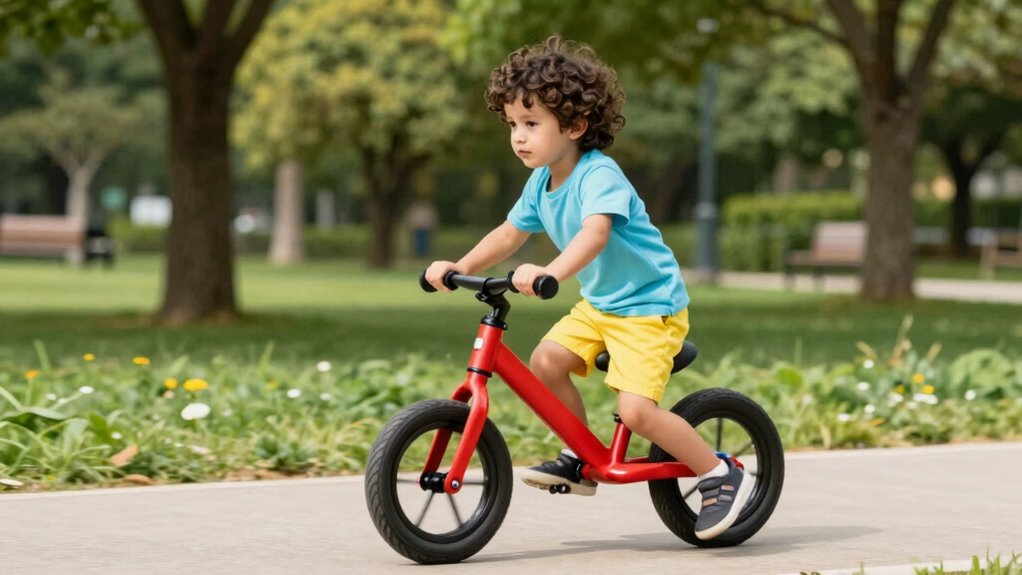
Mastering balance bike skills helps you build confidence, coordination, and control, all of which easily transfer to pedal bikes. Skills like smooth balancing, turning, starting, and stopping develop a child’s ability to handle different terrains and improve steering. As they gain stability and confidence on the balance bike, shifting to pedals becomes smoother. Keep exploring to discover key techniques that make the shift even easier and faster.

Turn the school run and nap time into listening time
- Thousands of audiobooks, podcasts and originals
- Listen on your phone, tablet or Echo — also offline
- Cancel anytime
Key Takeaways
- Developing balancing skills on a scooter enhances coordination and steering, which transfer directly to pedal bike control.
- Mastering proper riding posture and helmet safety builds confidence and creates a strong foundation for pedal biking.
- Practicing smooth starts, stops, and turns on a balance bike promotes better handling during pedal bike transitions.
- Improving stability and weight distribution on a balance bike aids in quick directional changes and terrain adaptability on a pedal bike.
- Building muscle memory through balance exercises and control techniques facilitates effortless pedaling and braking on a pedal bike.
As an affiliate, we earn on qualifying purchases.
What Balance Bike Skills Help Kids Transition to Pedal Bikes?
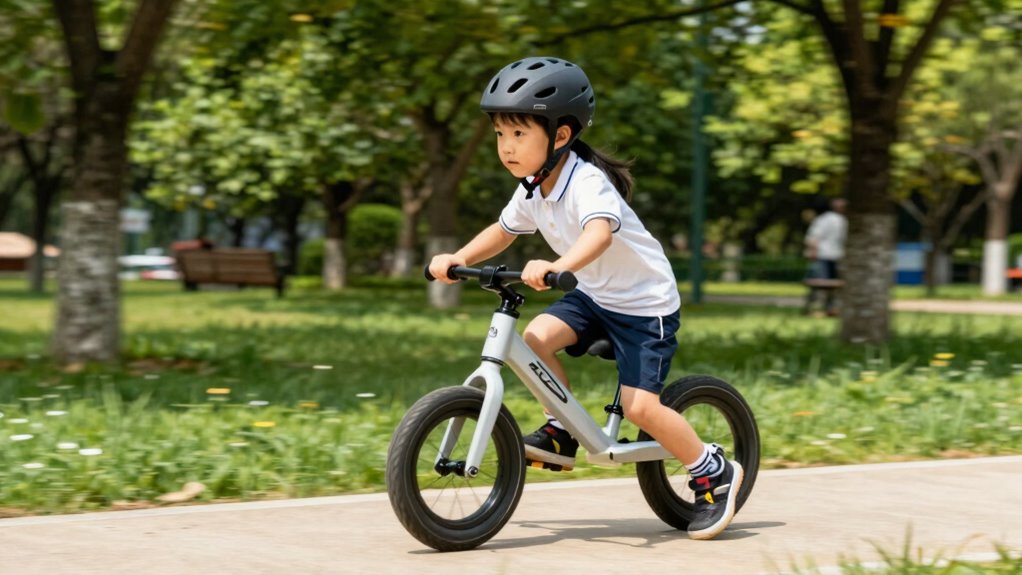
Have you ever wondered what specific balance bike skills make the shift to pedal bikes smoother for kids? One key skill is mastering scooter riding, which helps children develop better coordination, steering, and confidence. Scooter riding encourages kids to balance while moving, a crucial foundation for pedal bikes. Additionally, proper helmet fitting is essential, as it teaches kids safety habits early on and builds their confidence to ride independently. When kids wear helmets that fit well, they’re more comfortable and less distracted, allowing them to focus on balancing and steering. These skills create a solid base for transitioning to pedal bikes, where balance and safety become even more important. Developing these abilities early sets the stage for a successful and enjoyable biking experience.
How Does Balance Improve Steering and Handling on Pedal Bikes?
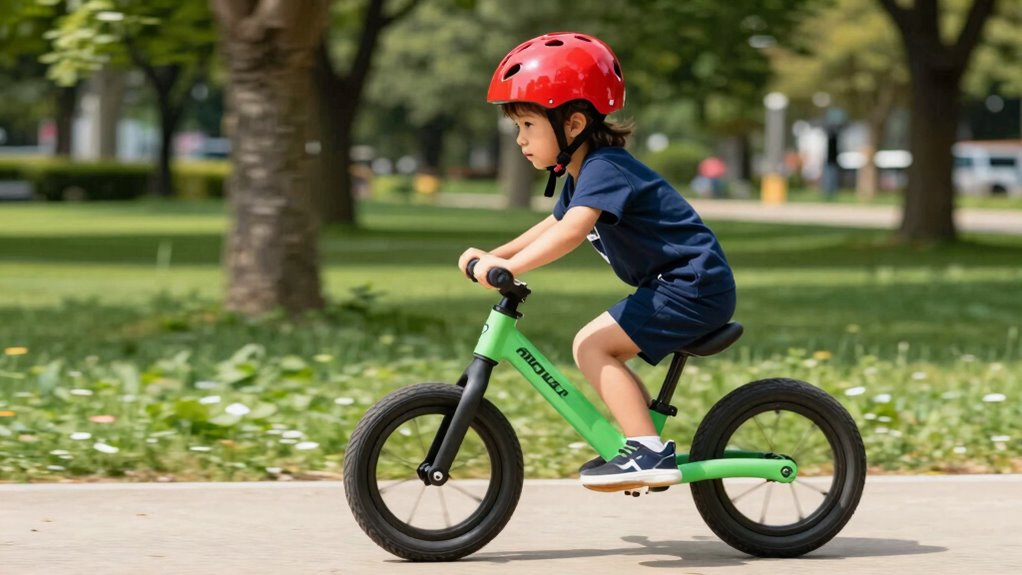
Ever wonder how good balance makes steering and handling easier on a pedal bike? When your child develops strong balance biomechanics, their motor skill development improves, leading to better control. This enhanced balance allows for more precise steering and smoother handling. Here’s how it helps: 1. It stabilizes the bike during turns, reducing wobbling. 2. It enables quick adjustments to maintain direction, especially on uneven terrain. 3. It fosters better weight distribution, making maneuvers more efficient. Developing free floating balance skills further enhances a child’s ability to respond dynamically to changing riding conditions, increasing confidence and safety. Additionally, mastering modern balance bikes can serve as an effective stepping stone for transitioning to pedal bikes with greater ease.
Building Confidence: How Balance Reduces Fear in Young Riders
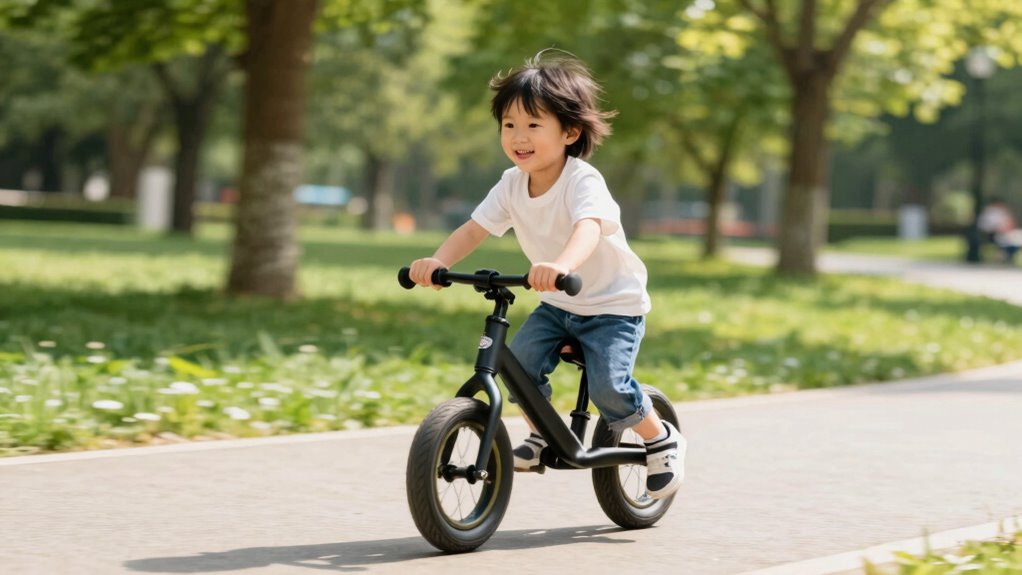
Why does developing balance make young riders feel more confident on their bikes? When you master balance, fears of falling decrease because you trust your ability to stay upright. This increased trust is a fundamental aspect of ergonomic comfort that influences confidence. Developing proper riding skills also enhances overall self‑assurance. This sense of physical mastery fosters a positive mindset and encourages persistence in learning. This confidence encourages better riding posture, which further improves stability. Wearing a helmet safety gear also becomes second nature, reducing anxiety about injuries. As you become more comfortable balancing, you naturally take smoother, more controlled actions, making riding feel less intimidating. Additionally, understanding the importance of contrast ratio in visual clarity can help riders better perceive their surroundings and obstacles for safer riding. Recognizing the role of visual perception in riding safety can further enhance a rider’s confidence. The table below shows how balance skills contribute to confidence:
| Skill Focus | Confidence Impact |
|---|---|
| Steady riding posture | Less fear of wobbling or falling |
| Smooth equilibrium transitions | Reduces anxiety during movement |
| Proper helmet safety use | Builds security and trust |
| Controlled speed | Less fear of losing control |
| Overall stability | Promotes a sense of safety |
Mastering Starting, Stopping, and Turning on a Balance Bike
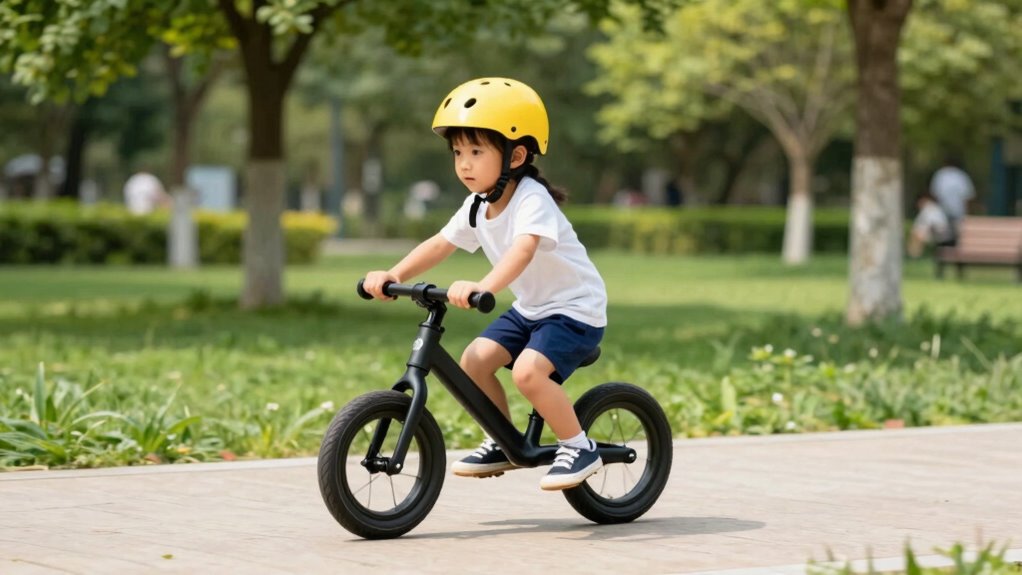
To master your balance bike, you need to focus on proper starting techniques that set you up smoothly. Controlled stopping methods help you stay safe and confident, while effective turning strategies make navigation easier. Let’s explore how to perfect these skills to ride with control and ease. Incorporating natural light into your practice area can also boost your comfort and focus during learning sessions. Utilizing accessibility features like adjustable settings can further support your learning process and help create a more accessible environment. Additionally, understanding power quality can ensure that any electronic training aids or lights used during practice operate reliably and safely, especially when considering ergonomic setup to reduce fatigue and improve posture during practice. Ensuring your practice space has optimal lighting conditions can make a significant difference in your ability to learn and stay motivated.
Proper Starting Techniques
Mastering proper starting techniques is essential for building confidence and control on a balance bike. To start smoothly, focus on maintaining proper posture: keep your back straight, eyes forward, and hands firmly on the handlebars. Before beginning, confirm your bike is well-maintained—check tire pressure and brake function to avoid surprises. When starting, follow these steps:
- Place one foot on a pedal or ground, and push off with the other foot.
- Keep your body centered over the bike for stability.
- Use your legs to propel forward, gradually gaining speed.
- Remember that practicing these techniques can help develop innate creativity, making the transition to pedal bikes easier and more natural. Proper posture, bike maintenance, and understanding floating on water can improve overall balance and coordination, which are crucial skills for young riders. Additionally, developing a consistent starting technique can boost confidence and reduce hesitation during rides. Incorporating performance metrics into practice routines can help track progress and motivate improvement. Proper posture and bike maintenance are key to safe, confident starts every time.
Controlled Stopping Methods
Controlling your stop on a balance bike is essential for safety and confidence. To guarantee reliable stopping, regularly check your bike maintenance, especially the brake and wheel condition. Wearing proper bike safety gear, like a helmet and gloves, protects you in case of falls. When stopping, shift your weight back slightly and gently press down on the brake if your bike has one, or drag your feet smoothly on the ground. Practice stopping gradually to avoid sudden jerks that could cause you to lose balance. Consistent practice builds muscle memory and improves your control. Remember, a well-maintained bike combined with proper safety gear keeps you safe while mastering controlled stops, giving you the skills and confidence to transition seamlessly to pedal bikes later. Proper bike maintenance is also crucial for ensuring your brakes and wheels function effectively during stopping. Additionally, practicing in safe, open areas helps you develop better stopping techniques and overall control. Incorporating balance exercises can further enhance your stability and confidence on the bike. Developing a clear understanding of bike safety principles further supports safe stopping and riding. Engaging in regular bike safety training can also boost your overall riding skills and awareness.
Effective Turning Strategies
Once you’ve practiced stopping smoothly and maintaining control, learning how to turn effectively on a balance bike becomes the next step. Good turning skills are essential for mountain biking and urban cycling, helping you navigate tight corners and obstacles confidently. To improve your turns, focus on these strategies:
- Shift your weight slightly to the outside pedal and lean into the turn for stability.
- Look where you want to go—your head guides your bike smoothly through curves.
- Use your handlebars and body together, steering gently while leaning for better control.
Practicing these techniques helps transfer your skills to pedal bikes, making sharp turns and quick maneuvers easier. Developing effective turning strategies on your balance bike lays a strong foundation for more advanced riding in any environment.
Transferring Balance and Coordination to Pedaling and Braking
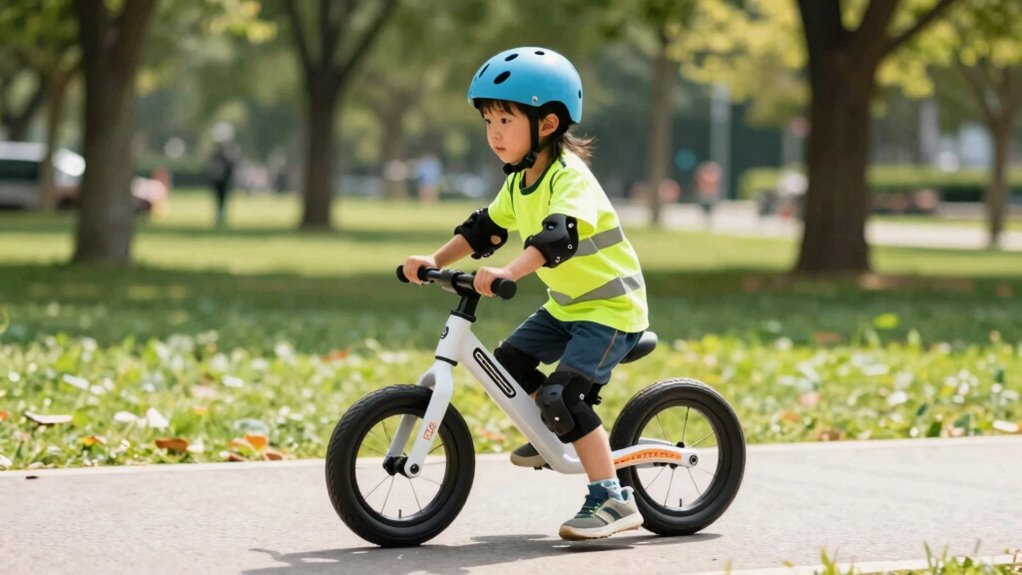
As you start pedaling and braking, your balance skills are put to the test in new ways. Focusing on pedal control and building brake confidence helps you stay steady and safe. Moving these skills smoothly makes riding more confident and enjoyable. Developing these abilities also enhances coordination and prepares you for more advanced biking activities.
Enhancing Pedal Control
To effectively transfer your balance and coordination from the bike to pedaling and braking, you need to focus on developing smooth, controlled movements. First, assure your bike fits properly; a good bike fitting helps you pedal efficiently and stay comfortable. Second, keep your balance bike well-maintained, as a smoothly functioning bike boosts confidence in controlling your pedals and brakes. Third, practice gentle, deliberate pedal strokes, emphasizing even pressure and steady cadence to build muscle memory. Incorporate small, consistent braking drills to improve your control without abrupt stops. By paying attention to bike fitting, maintaining your bike, and practicing controlled pedaling, you’ll develop the pedal control necessary for a seamless shift from balance to pedal bikes.
Developing Brake Confidence
Building confidence in your brakes is the next step in mastering your bike skills. Start by ensuring your helmet fit is secure; a proper fit keeps you safe and comfortable, which boosts your confidence. As you practice braking, maintain a good riding posture—sit upright with relaxed shoulders and gentle hands on the handlebars. This position helps you react smoothly and control your speed effectively. Practice gentle, controlled stops on flat terrain, focusing on gradual pressure on the brake levers. Over time, you’ll develop a sense of how much force to use without losing balance. Consistent practice builds trust in your ability to brake safely, making your overall riding experience more confident and enjoyable.
Transitioning Balance Skills
Shifting your balance skills to pedaling and braking involves coordinating your movements smoothly and maintaining control. As you transition, focus on keeping your helmet safety in mind, especially during longer ride lengths. To help make the switch easier, consider these steps:
- Practice pedaling at a slow, steady pace to build confidence and coordination.
- Incorporate braking drills to develop control, ensuring you can stop safely without losing balance.
- Gradually increase ride length, allowing your body to adapt and build endurance without fatigue affecting your balance.
Handling Gears and Different Terrains With Balance Skills
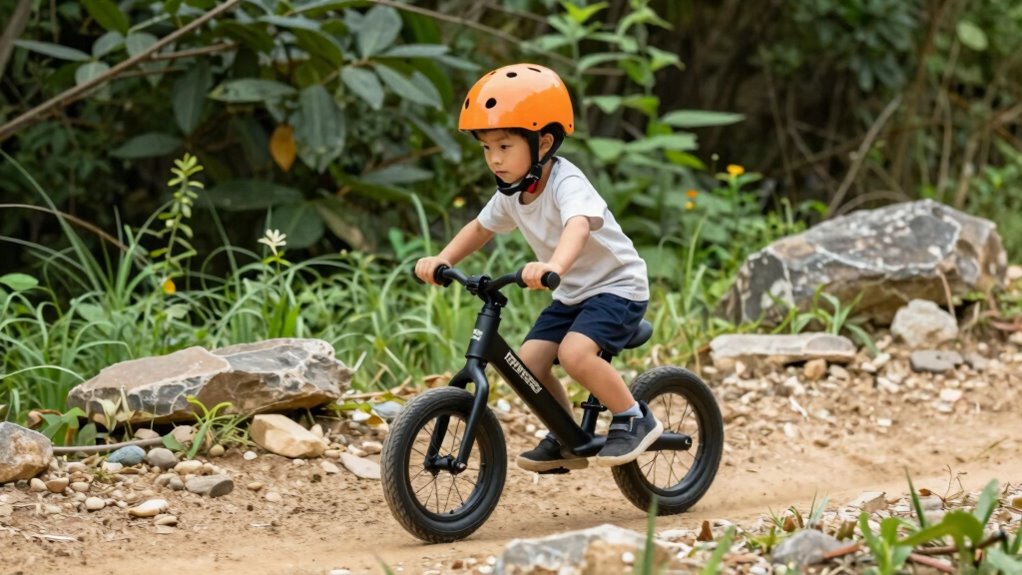
Handling gears and maneuvering different terrains become easier once you master your balance skills. When you’re confident on your bike, gear shifting feels smoother, allowing you to adjust to various speeds effortlessly. Good balance helps you stay stable when navigating or traversing uneven surfaces, steep inclines, or rough patches. As you develop terrain adaptation, you’ll find it easier to stay in control, whether you’re riding on gravel, grass, or pavement. Your ability to balance reduces the need for constant corrections, making it simpler to shift gears at the right moments. This confidence in handling different terrains and gears translates directly to pedal bikes, where mastering these skills enhances your overall riding experience. Ultimately, strong balance skills provide a solid foundation for tackling diverse riding conditions with ease.
Key Balance Skills That Speed Up Learning to Ride Pedal Bikes
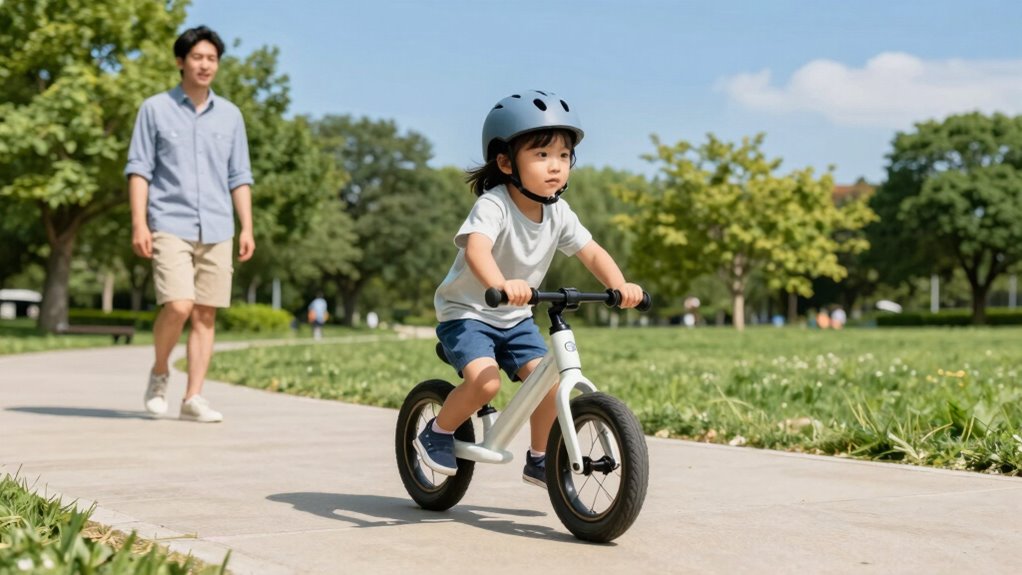
Having strong balance skills is essential for quickly learning to ride a pedal bike. These skills help you stay stable, control your speed, and navigate safely. To build a solid foundation, focus on these key balance abilities:
Strong balance skills are key to safe, confident cycling and mastering your ride quickly.
- Practice maintaining a steady, controlled speed, which improves cycling safety and confidence.
- Develop the ability to start and stop smoothly, ensuring you can handle unexpected obstacles.
- Master helmet fitting and proper gear positioning, which protect you and enhance your comfort during rides.
Tips for Parents to Maximize Balance Bike Practice and Make the Transition Easier
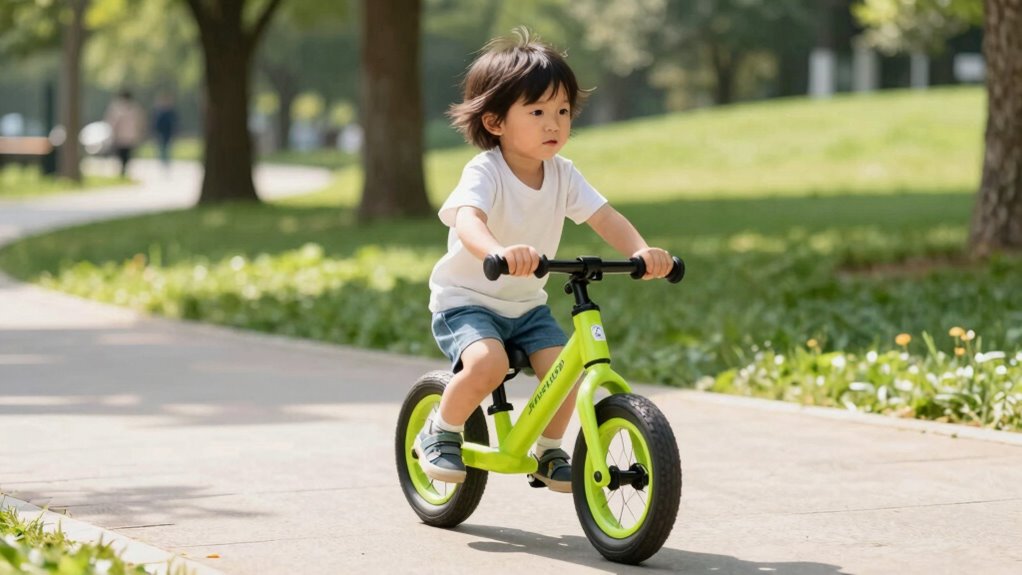
To help your child get the most out of balance bike practice and smoothly shift to a pedal bike, you should create a structured, distraction-free environment that encourages confidence-building. Regular bike maintenance ensures the bike remains safe and easy to control, preventing frustrations during practice. Check tire pressure, brake function, and the frame before each session. Always equip your child with proper safety gear like a helmet, knee pads, and elbow pads to protect them and boost their confidence. Keep practice sessions short and positive, gradually increasing difficulty as they improve. Celebrate small successes to reinforce their progress. By maintaining the bike well and prioritizing safety gear, you create a supportive setting that makes moving to a pedal bike easier and more enjoyable.
Frequently Asked Questions
When Should a Child Transition From a Balance Bike to a Pedal Bike?
You should shift your child from a balance bike to a pedal bike when they can confidently balance, steer, and brake independently, usually around age 4 or 5. Make sure they’re comfortable with helmet safety and ready for the pedal transition. Watch for signs of readiness, like strong leg muscles and coordination, so the switch feels natural. This way, your child builds confidence and enjoys a smooth, safe biking experience.
Do Balance Bikes Help With Learning to Ride on Uneven or Rough Terrain?
Balance bikes do help with learning to ride on uneven or rough terrain because they improve your child’s terrain adaptation and wheel grip skills. By practicing on various surfaces, your child develops better balance and control, making it easier to handle bumps and dips. This foundational confidence helps them navigate challenging terrains more smoothly when they switch to pedal bikes, giving them a strong, stable riding experience even on tricky ground.
Can Balance Bike Skills Improve a Child’s Overall Coordination Beyond Cycling?
Yes, balance bike skills can improve your child’s overall coordination beyond cycling. As they practice balancing, steering, and stopping, they develop better motor coordination and spatial awareness. These skills help your child move confidently and smoothly in various activities, not just on bikes. The improved coordination boosts their agility, control, and confidence in other physical tasks, making them more adaptable and skilled in different environments and sports.
How Long Does It Typically Take for Kids to Transfer Skills From Balance Bikes to Pedal Bikes?
You’ll likely see your child shift to a pedal bike in about a week or two, as their motor skills and confidence build. Imagine a young rider who masters balance quickly on a bike, then confidently pedals away—it’s like learning to walk and run in rapid succession. Most kids gain enough coordination within a few sessions, making the switch smooth and enjoyable while boosting their overall motor skills.
Are There Specific Balance Bike Features That Best Prepare Kids for Pedal Biking?
You should look for balance bikes with low, stable frames and adjustable handlebars to help your child develop confidence. Incorporate training techniques like gentle steering exercises and obstacle courses to enhance balance. Always guarantee proper safety equipment, like helmets and pads, are used during practice. These features and methods prepare your child for pedal bikes by building core skills and safety habits that transfer seamlessly, making the changeover smoother and more enjoyable.
Conclusion
Mastering your child’s balance bike is like planting a sturdy seed—they’ll soon sprout into confident pedal riders. By honing these skills, you’re laying a strong foundation that guides them smoothly from wobbly beginnings to confident cruising. Think of it as teaching them to dance—once they find their rhythm on the balance bike, pedaling and steering become second nature, turning every ride into a joyful adventure where they’re the stars of their own journey.
Halloween Picks
halloween
As an affiliate, we earn on qualifying purchases.