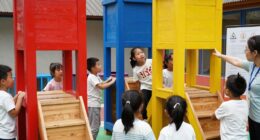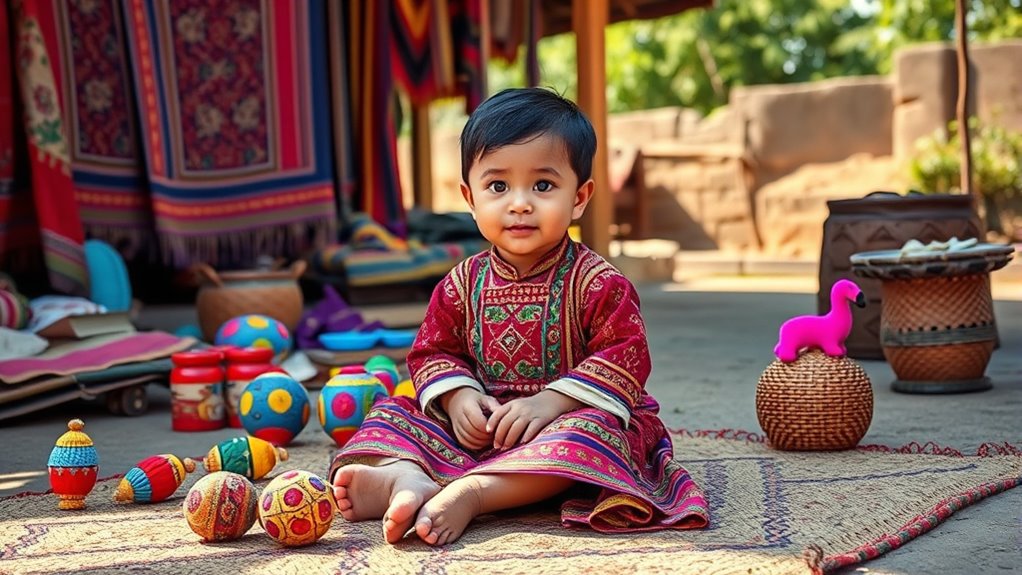

Culture influences how and when your child reaches early milestones like talking, walking, and social skills. The home environment, language exposure, and parenting styles all shape their development. Some cultures celebrate milestones publicly, boosting confidence, while others keep them private. Different cultural norms can lead to variations in milestone timing without indicating delays. Understanding these influences helps you see your child’s growth in context. Keep exploring to learn more about how culture guides your child’s developmental journey.
Key Takeaways
- Cultural environments influence the timing and nature of language development milestones, such as bilingualism or speech onset.
- Parenting styles rooted in cultural norms shape how and when children achieve early developmental skills.
- Cultural practices and celebrations can motivate and socially reinforce children’s developmental achievements.
- Learning approaches and environmental opportunities vary across cultures, affecting the pace of skill acquisition.
- Developmental timelines are culturally relative, emphasizing support aligned with specific cultural values rather than universal benchmarks.
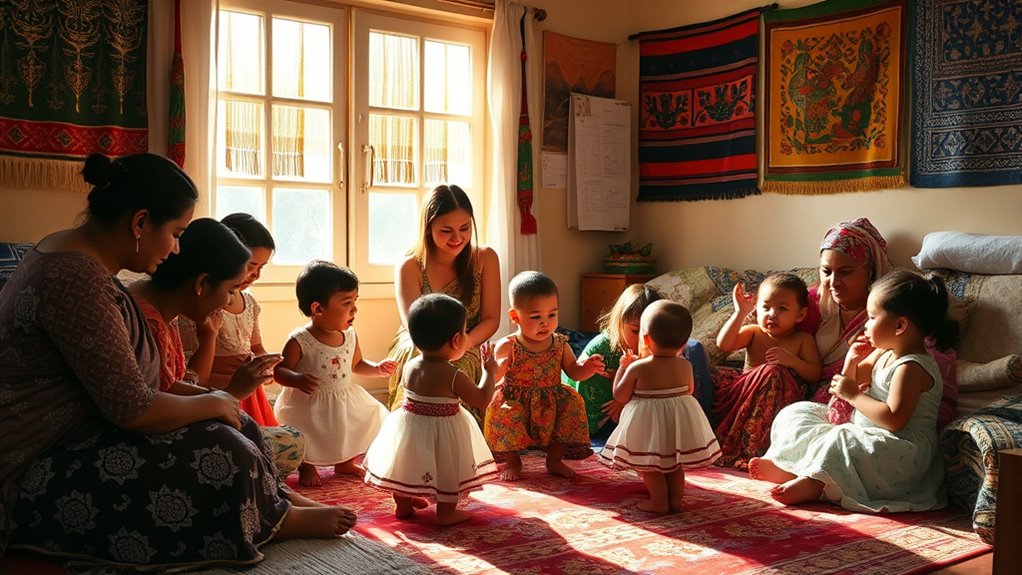
Culture plays a essential role in shaping early childhood development and milestones. From the moment your child is born, the cultural environment around them influences how they grow, learn, and interact. One of the most noticeable ways culture impacts development is through language differences. If your family speaks a different language at home or follows specific communication styles rooted in cultural traditions, your child’s language milestones may look different from those in other communities. For example, some cultures emphasize bilingualism early on, encouraging children to develop multiple languages simultaneously. This can lead to a different timeline for speech development, but it also strengthens cognitive skills and cultural identity. Conversely, in cultures where children are primarily exposed to a single language, their language milestones might appear sooner in that language but may involve different social or expressive behaviors. Recognizing these differences helps you appreciate that variations in language development are often rooted in cultural practices rather than delays. Additionally, integration of new learning can vary widely across cultures, influencing how quickly children acquire new skills and knowledge within their environment. Parenting styles are another essential element influenced by culture and they markedly shape early milestones. In some cultures, parents adopt an authoritative approach, encouraging independence and exploration, which can foster early milestones like walking or speaking. In others, a more protective or nurturing style might mean children are closely supervised, possibly delaying certain milestones but promoting emotional security. For instance, in cultures where physical closeness and constant reassurance are valued, children might take longer to reach milestones like independent walking or talking, but they develop strong attachment bonds. Your parenting style, influenced by cultural norms, guides how you support your child’s growth, which milestones they prioritize and how they interpret setbacks. Some cultures celebrate early milestones with community recognition, boosting your child’s confidence and motivation, while others may see milestones as a private or family achievement. Understanding that your cultural background influences these aspects helps you see milestones as part of a broader social context. It’s important to remember that there’s no universal timetable for development—what’s typical in one culture might be different in another. Your cultural values shape how you support your child’s progress, whether that’s through encouraging language use, fostering independence, or emphasizing communal learning. By embracing these differences, you can better appreciate your child’s unique growth trajectory and avoid unnecessary concerns about deviations from mainstream milestones. Recognizing the role of culture in shaping language differences and parenting styles allows you to nurture your child’s development in a way that aligns with your values and traditions, ultimately supporting their well-rounded growth within your cultural context.

iPlay, iLearn Baby Musical Turtle Toy, Spanish English Bilingual Learning, Toddler Crawling Toys W/ Light & Sound, Infant Development Educational Birthday Gifts 6 7 8 9 10 12 Month 1 Year Old Boy Girl
Safety: The shatterproof ABS plastic material ensure the musical turtle in long lasting performance and construction with soft…
As an affiliate, we earn on qualifying purchases.
As an affiliate, we earn on qualifying purchases.
Frequently Asked Questions
How Do Cultural Norms Influence Language Development in Infants?
Cultural norms directly influence your infant’s language development by shaping their language acquisition and communicative behaviors. When your culture emphasizes storytelling, singing, or specific gestures, your baby learns to imitate these behaviors, enhancing their vocabulary and social skills. You support this by engaging in culturally relevant interactions, which help your child develop language skills that reflect their community’s norms and expectations.
What Role Do Family Traditions Play in Early Social Skills?
Family traditions play a crucial role in shaping your child’s early social skills. By engaging in family rituals, you teach them important values, manners, and ways to connect with others. These traditions promote tradition transmission, helping your child understand their cultural identity and build social confidence. As you participate in these shared activities, you’re guiding your child to develop empathy, cooperation, and communication skills essential for their social growth.
How Does Cultural Variation Affect Motor Skill Milestones?
You might notice that cultural variation influences motor skill milestones through cultural parenting and traditional rituals. In some cultures, children are encouraged early on to crawl or walk by participating in specific rituals, while others emphasize different physical activities. These practices, rooted in tradition, shape when and how children develop motor skills. Coincidentally, your own child’s progress could reflect these cultural influences, highlighting how diverse practices impact early physical development.
Are There Specific Cultural Practices That Delay or Accelerate Milestones?
Yes, cultural rituals and parenting styles can delay or accelerate milestones. For instance, some cultures emphasize early motor skill development through specific practices, while others prioritize rest or traditional rituals that might slow progress. You might notice that in certain communities, children are encouraged to crawl or walk earlier, reflecting cultural values, while in others, gentle nurturing or delayed intervention influences milestone timing.
How Do Multicultural Environments Impact Early Cognitive Development?
Have you ever wondered how multicultural environments shape your child’s early cognitive development? They expose your child to diverse perspectives, which can boost adaptability and problem-solving skills. However, cultural stereotypes and varying parenting styles might influence development differently. By fostering open communication and encouraging curiosity, you help your child navigate this rich cultural landscape, ensuring they develop a well-rounded understanding of the world around them.

PartyHooman 1st Birthday Photo Banner for Baby from Newborn to 12 Months, First Birthday Decorations Boy or Girl Monthly Milestones Garland | 1 Year Old Photo Banner Pre-strung with Frame (Kraft)
PRE-STRUNG BANNER – We understand that 1st birthday party planning can be overwhelming, but we're here for you!…
As an affiliate, we earn on qualifying purchases.
As an affiliate, we earn on qualifying purchases.
Conclusion
Understanding how culture shapes early milestones helps you appreciate diverse parenting styles. For example, in some cultures, children start walking earlier because mobility is highly valued, while others emphasize cautious development. By recognizing these differences, you can support your child’s growth in a way that respects your cultural background. Embracing these varied milestones allows you to foster confidence and independence, ensuring your child’s development aligns with your cultural beliefs and values.

The Danish Way of Parenting: What the Happiest People in the World Know About Raising Confident, Capable Kids
As an affiliate, we earn on qualifying purchases.
As an affiliate, we earn on qualifying purchases.

Urban Kiddy Zoo Alphabet Cards | Soft Alphabet Flash Cards, Educational Early Learning Infant Toys for Babies Infants Toddlers Boys Girls Kids Over 0 1 2 3 Years Old | My First ABC Animal Cloth Cards
Educational Fun: Develops Language, Motor, & Cognitive Skills
As an affiliate, we earn on qualifying purchases.
As an affiliate, we earn on qualifying purchases.