
TL;DR

Turn the school run and nap time into listening time
- Thousands of audiobooks, podcasts and originals
- Listen on your phone, tablet or Echo — also offline
- Cancel anytime
An opinion article describes how Pennsylvania educator Lori McGarry guided first- and second-graders through a classroom dispute over a guinea pig. The authors argue that structured deliberation can help students practice civic decision-making, while noting that their pilot findings are based on teacher reports and classroom materials, not long-term causal evidence.
An opinion article published by The 74 describes how Pennsylvania educator Lori McGarry turned a disagreement over a guinea pig in her first- and second-grade classroom into a lesson in deliberation. Rather than hold a quick vote, McGarry’s 6- and 7-year-old students considered who might be affected, weighed options and agreed that the guinea pig could visit sometimes while the class also got a fish.
The dispute began when a family offered to lend a guinea pig to McGarry’s classroom for the school year. Students questioned why one child could bring in a pet when others could not, and raised the possibility that classmates might have allergies. The animal also began drawing attention during recess, lunch and math, according to the article.
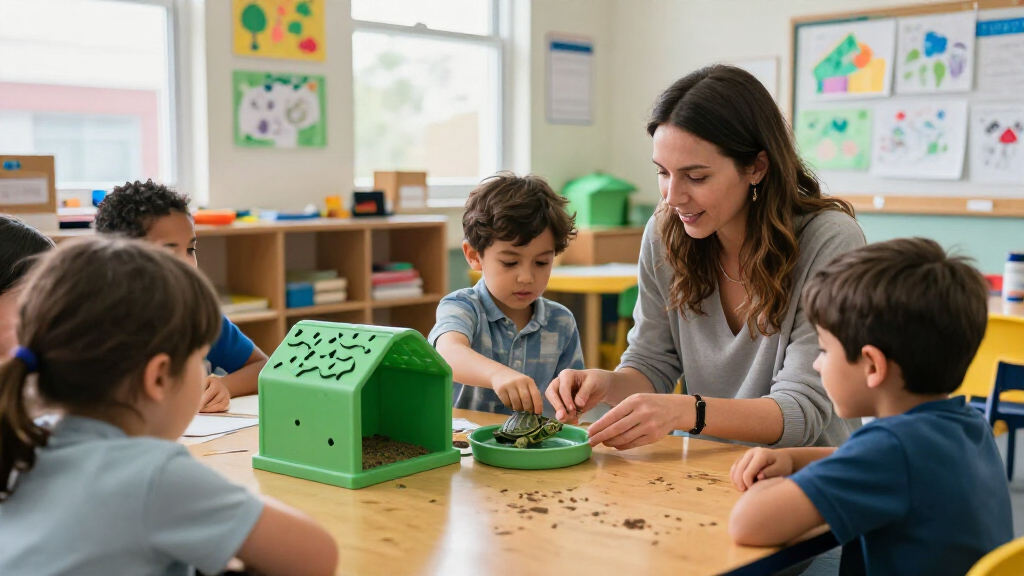
McGarry used construction paper, drawings, lists of advantages and disadvantages, and a talking stick to guide discussion of four possible approaches. The students considered trade-offs and listened to different views. One child changed their preferred option after considering that a classmate could become sick. The class settled on a compromise: the guinea pig would visit occasionally, and students would have a fish.
The article’s authors say the experience influenced how students approached later classroom problems. They began asking who needed to be heard and what they still did not understand. The authors also describe a mixed-methods pilot involving 23 educators and deliberation resources developed with the USC Democracy Project. In that pilot, 95% of participating teachers rated the curriculum highly relevant; those findings reflect teacher ratings and classroom artifacts, not evidence of long-term effects.
Deliberation Beyond the Civics Textbook
The article’s central argument is that civic learning involves more than studying government institutions: students can also practice listening, considering evidence and making shared decisions. The guinea pig example offers a low-stakes setting to work through competing needs, including fairness, attention and classmates’ health.
The authors say teachers can use deliberation for issues students encounter in school or their communities, from recess and cleanliness to neighborhood safety and water quality. Their position is that structured discussion can help students recognize who is affected and consider compromises without turning every classroom disagreement into a contest. The article presents this as a case for regular civic practice, not as proof that one classroom activity produces lasting democratic outcomes.
classroom discussion talking stick
As an affiliate, we earn on qualifying purchases.
As an affiliate, we earn on qualifying purchases.
From Classroom Dispute to Civic Practice
The opinion article links its argument to the United States approaching the 250th anniversary of the Declaration of Independence and another general election. Its authors contend that students hear plenty about democracy but may have fewer chances to take part in decisions with others.
They define deliberation as a guided discussion of a shared problem: students consider evidence and trade-offs, hear different perspectives and work toward a judgment or next step. The authors distinguish that process from an unstructured conversation or a debate aimed at defeating an opponent. Their classroom example begins with a practical concern rather than a divisive national issue, illustrating their recommendation to start with a problem students already care about.
“They “loved seeing my students slowly start to care more about the injustices currently going on in our world.””
— A teacher quoted in the opinion article
Limits of the Pilot Evidence
The source does not provide the names of the opinion article’s authors or a publication date. It also does not give detailed methods, a comparison group or long-term follow-up for the 23-educator pilot. The 95% figure refers to teachers rating the curriculum highly relevant; it is not a measure of student learning gains or proof that deliberation caused lasting changes.
The article does not specify how often McGarry’s guinea pig visited, how the class managed any allergy concerns, or what happened after the described compromise. Its broader examples of student work are reported by the authors, and the source does not independently establish their effects beyond the accounts presented.
A Deliberation on the School Calendar
The authors urge teachers and school leaders to schedule at least one genuine deliberation during the school year. They suggest starting with a shared concern, presenting more than two reasonable options, making trade-offs visible and setting expectations for listening and evidence without predetermining the outcome.
They propose that students ask who is affected, what remains unknown and what action the group could take, then choose a next step and reflect on it. The article reports no new policy, formal program launch or follow-up evaluation. Whether schools adopt the recommendation, and whether further evidence shows lasting effects, remains to be seen.
Key Questions
What happened in Lori McGarry’s classroom?
A family offered to lend the class a guinea pig. Students discussed fairness, possible allergies and distractions, then agreed that the animal could visit sometimes and that the class would also get a fish.
How did the teacher guide the discussion?
McGarry used construction paper, drawings, lists of advantages and disadvantages, and a talking stick to help students examine four possible approaches and hear one another.
What evidence does the article provide for deliberation?
The authors cite a mixed-methods pilot with 23 educators; 95% rated the curriculum highly relevant. They caution that the findings rely on teacher reports and classroom artifacts, not long-term causal evidence.
Does the article say schools should begin with national political disputes?
No. The authors recommend starting with a real, shared issue students already care about, such as classroom routines, school cleanliness or a local concern.
Source: rss
Columbus Day / Indigenous Peoples' Day Picks
long weekend sales
As an affiliate, we earn on qualifying purchases.