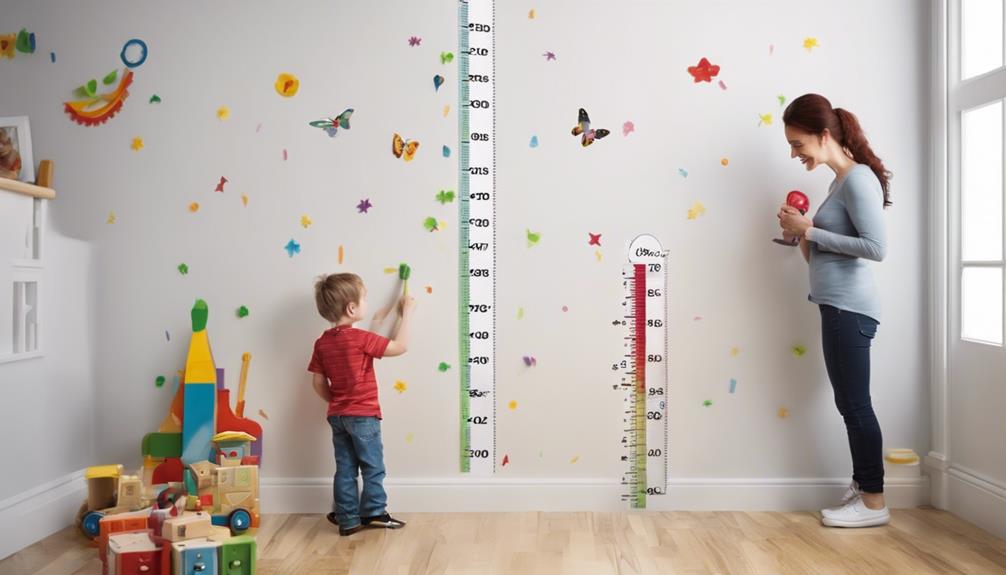

To understand growth charts, compare your child’s measurements to the percentile lines to see how they compare to peers. If they stay on the same percentile over time, their growth is steady, which is a good sign. Watch for sudden jumps or drops, as these could indicate concerns. Focus on overall patterns rather than individual points. Keep monitoring their growth, and you’ll find that these charts help you better track your child’s development.

Turn the school run and nap time into listening time
- Thousands of audiobooks, podcasts and originals
- Listen on your phone, tablet or Echo — also offline
- Cancel anytime
Key Takeaways
- Percentile lines show how a child’s measurements compare to a reference population.
- Consistent placement along a percentile indicates steady growth; shifts may signal concerns.
- Growth over time should be monitored to identify upward or downward trends.
- Focus on overall growth patterns, not just individual measurements.
- Significant deviations from typical percentiles warrant discussion with a healthcare provider.
Growth charts are vital tools that help track a child’s physical development over time. When you observe these charts, you’re looking at a visual representation of how your child’s growth compares to typical patterns for their age and sex. Understanding growth patterns is essential because they reveal whether your child is growing steadily, experiencing rapid changes, or showing signs of concern. These patterns aren’t random; they follow established trends that healthcare professionals have studied extensively. By examining where your child’s measurements fall on the chart, you can gain insight into their overall health and development.
Growth charts visually compare your child’s development to typical patterns for their age and sex.
One of the most important aspects of reading growth charts is percentile interpretation. Percentiles tell you how your child’s measurements compare to a reference population. For example, if your child is at the 60th percentile for height, it means they are taller than 60% of children their age and sex but shorter than 40%. Percentile lines run vertically on the chart, and your child’s data point will fall somewhere along these lines. If your child’s measurements are consistently in the 50th percentile, it indicates a steady, average growth pattern. However, if measurements suddenly jump or drop across percentiles, it could signal a need for further evaluation by a healthcare provider.
It’s important to remember that growth is individualized, and no single percentile defines your child’s health. A child consistently in a higher percentile may be perfectly healthy, just as one in a lower percentile can be thriving. The key is to look at the overall trend over time. If measurements are moving along a consistent growth curve, that’s typically a good sign. But if you notice your child’s percentile shifting dramatically—either upward or downward—it warrants discussion with your child’s doctor, who can interpret what these changes mean in the context of growth patterns. Additionally, herbal teas like chamomile and ginger may provide soothing effects for children experiencing discomfort, emphasizing the importance of holistic health monitoring.
When reading growth charts, pay attention to the percentile curves, but don’t focus solely on the numbers. Consider how your child is growing over months and years. Are they following the same percentile line, or are they veering off? Consistent growth along a specific percentile suggests normal development. Sudden deviations might indicate health issues, nutritional concerns, or other factors worth exploring with your healthcare provider. In short, growth patterns and percentile interpretation are your tools for understanding your child’s development, helping you guarantee they’re on a healthy growth trajectory.
children's growth chart percentile tracker
As an affiliate, we earn on qualifying purchases.
As an affiliate, we earn on qualifying purchases.
Frequently Asked Questions
How Often Should My Child’s Growth Be Monitored Using Charts?
You should monitor your child’s growth using charts at each well-child visit, typically every 3 to 6 months during early years. Regular tracking intervals help you observe growth milestones and catch any concerns early. Keep an eye on patterns over time, and consult your healthcare provider if growth appears unusually slow or rapid. Consistent monitoring guarantees your child’s development stays on track and supports early intervention if needed.
Are Growth Charts Different for Boys and Girls?
Yes, growth charts differ for boys and girls because of gender differences in growth patterns. You’ll find separate charts that reflect typical height, weight, and BMI ranges for each gender, helping you better understand your child’s development. By comparing your child’s measurements to the appropriate chart, you can spot growth trends and verify they’re on track, recognizing that boys and girls grow at distinct, dynamic paces.
What Should I Do if My Child’s Growth Falls Outside the Normal Range?
If your child’s growth falls outside the normal range, don’t ignore your growth concerns. You should schedule a medical evaluation promptly to identify any underlying issues. A healthcare professional can assess your child’s overall health, growth patterns, and development. Early intervention might be necessary, so trusting their guidance guarantees your child receives the appropriate support and care needed to promote healthy growth.
Can Nutrition or Activity Levels Affect Growth Chart Results?
Think of your child’s growth like a garden; diet impact and activity influence how it thrives. Yes, nutrition and activity levels can affect growth chart results. A balanced diet provides essential nutrients for healthy growth, while regular activity stimulates development. For example, a child with poor diet or limited activity might fall below expected growth patterns. You can help your child’s growth by ensuring good nutrition and encouraging active play.
Are There International Standards for Growth Charts?
Yes, there are international standards for growth charts. These benchmarks, developed by organizations like WHO, serve as global references for growth assessment. They help you compare a child’s growth against diverse populations, ensuring consistency and accuracy. By using international benchmarks, you can better identify growth patterns, nutritional status, and health concerns, regardless of where you or the child are located. This standardization improves overall growth assessment accuracy worldwide.
Conclusion
Understanding growth charts helps you track your child’s development effectively. Did you know that only about 5% of children fall outside the normal ranges? This highlights the importance of regular check-ups and proper interpretation. By learning how to read these charts, you can catch potential health issues early and make sure your child stays on a healthy growth path. Keep monitoring, stay informed, and trust your healthcare provider’s guidance for your child’s well-being.
Cold & flu season Picks
humidifiers
As an affiliate, we earn on qualifying purchases.