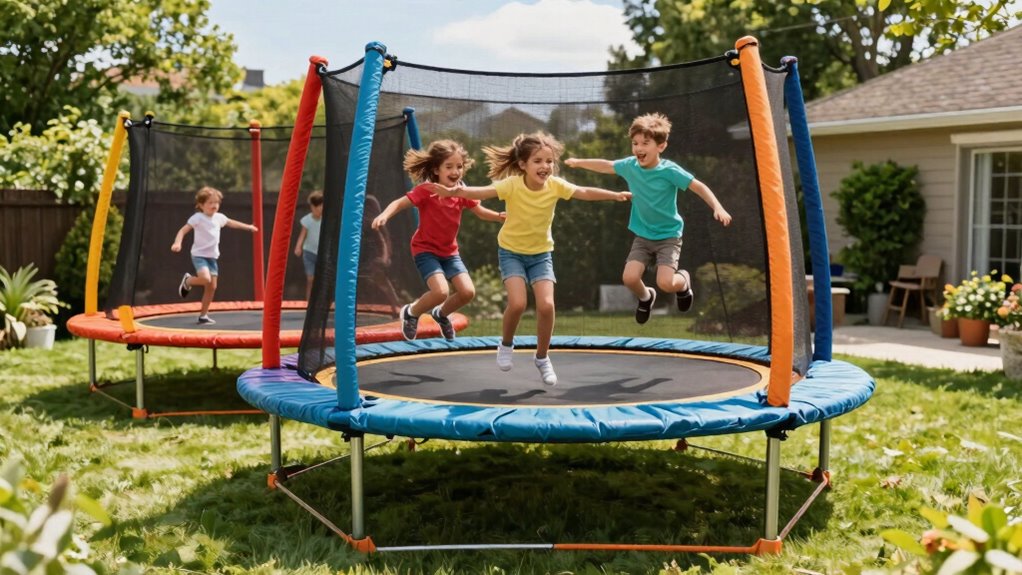
To prevent trampoline injuries, follow essential safety rules like supervising everyone closely, maintaining the equipment, and setting clear boundaries. Make certain the trampoline is on level, soft ground with secure safety netting and padding. Encourage controlled jumps, avoid risky moves, and teach proper etiquette. Using protective gear and designing separate zones for different ages also helps. Stick to these safety measures, and you’ll discover more ways to keep everyone safe and bouncing happily.
Key Takeaways
- Ensure trampoline is on level, soft ground and free of hazards, with secure safety netting and regular equipment inspections.
- Supervise all jumpers closely, enforcing rules like taking turns and avoiding risky flips or stunts.
- Use safety gear such as padding, enclosures, and shock-absorbing mats to protect against falls and collisions.
- Designate separate zones for different age groups to prevent risky interactions and collisions.
- Educate jumpers on proper etiquette, controlled landings, and emotional safety to promote responsible bouncing behavior.

14FT Trampoline Replacement Safety Enclosure Net for 6 Straight Poles Round Frame Trampolines, Breathable and Weather-Resistant Trampoline Net with Adjustable Straps (Net Only) Blue
Trampoline Replacement Netting – Fits for 14 Ft trampoline with 6 straight poles. NET ONLY / Poles Not…
As an affiliate, we earn on qualifying purchases.
As an affiliate, we earn on qualifying purchases.
What Causes Most Trampoline Injuries: And How Can You Prevent Them?
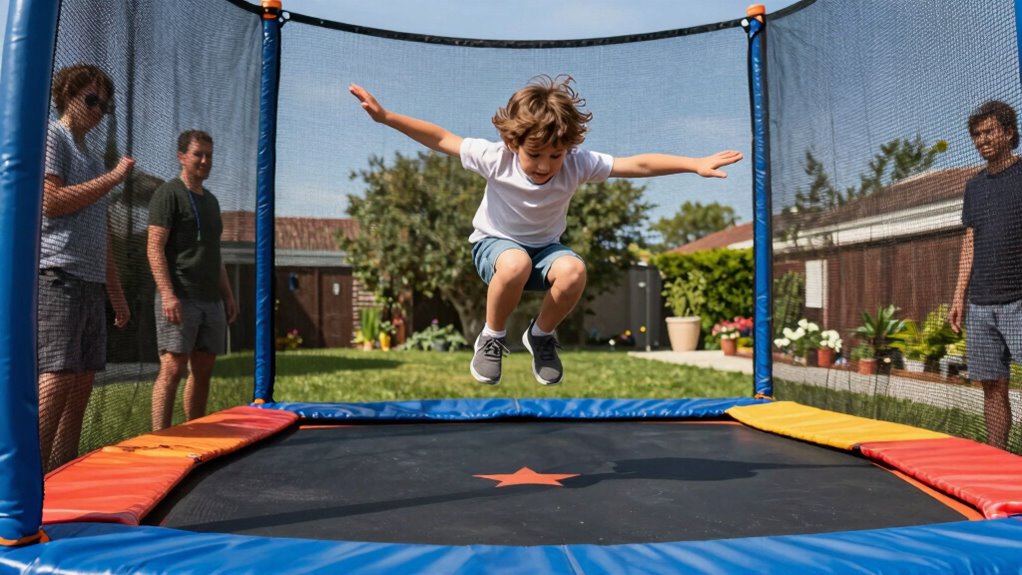
Most trampoline injuries occur when you lose control or collide with others, often because of improper supervision or risky behavior. Maintaining your trampoline properly is key to preventing accidents. Regular trampoline maintenance, like checking for tears, loose springs, or rust, ensures the equipment stays safe to use. Injury statistics show that many accidents happen due to equipment failure or unsafe conditions. Ensuring your trampoline is in good shape reduces the risk of unexpected falls or injuries. Avoid skipping routine inspections or ignoring signs of wear, as these can lead to dangerous situations. Routine inspections and proactive care are essential for safety. Staying vigilant about equipment safety and regular inspections can significantly reduce the likelihood of accidents. Additionally, understanding the importance of preventative maintenance helps ensure that potential hazards are caught early. Regularly reviewing manufacturer guidelines for your trampoline can further enhance safety measures. By prioritizing trampoline maintenance, you help create a safer environment, minimizing injury risks. Staying vigilant about equipment condition is a simple but effective way to protect everyone using the trampoline. Incorporating proper supervision during use is also critical to prevent accidents.

BestXD Treadmill Mat Pads – 6 PCS Shock Absorbing Rubber Pads for Treadmill and Fitness Equipment – Heavy Duty Floor Protector for Home Gym – Non-Slip Stability for Hardwood Floors – 3.94"x3.94"x0.5"
【INDUSTRIAL RUBBER STABILITY】 Engineered with premium high-density rubber, these treadmill mat pads support up to 1000 lbs. Unlike…
As an affiliate, we earn on qualifying purchases.
As an affiliate, we earn on qualifying purchases.
How Can You Set Up Your Trampoline to Keep Everyone Safe?
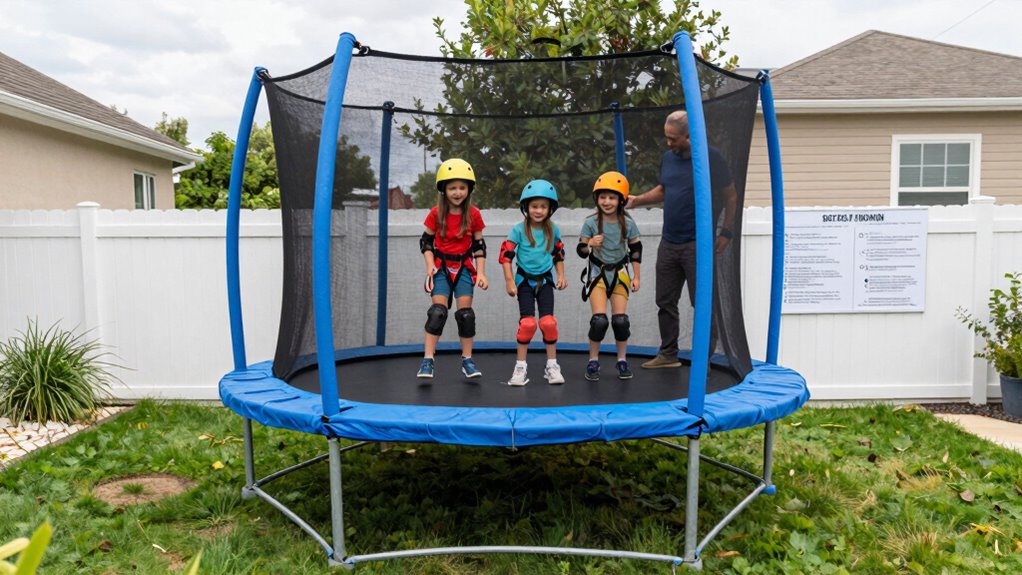
Setting up your trampoline correctly from the start is essential for ensuring everyone stays safe while having fun. First, focus on proper trampoline positioning; place it on level, soft ground away from trees, fences, or other hazards. This minimizes the risk of falls or collisions. Installing safety netting around the trampoline is crucial—ensure it’s securely anchored and free of tears or gaps. The netting creates a barrier that prevents jumpers from falling off, reducing injury risk. Keep the area underneath clear of objects and debris to prevent injuries if someone lands there. Regularly check that all parts, including safety netting and frame components, are in good condition. Proper setup not only enhances safety but also encourages confidence and fun during every jump. Additionally, understanding injury prevention rules can help you identify potential hazards and maintain a safer environment. Being aware of safe jumping practices can further reduce the likelihood of accidents and injuries during trampoline use. To promote ongoing safety, routine maintenance and inspections are essential for identifying wear and tear before they cause accidents. For example, proper supervision ensures that children follow safety guidelines and minimizes risky behavior.

ifeolo Hareyou Trampoline Patch Repair Kit 4"X 4" Square On Patches | Repair Trampoline Mat Tear or Hole in a Trampoline Mat
As an affiliate, we earn on qualifying purchases.
As an affiliate, we earn on qualifying purchases.
What Safety Rules Should Jumpers Follow to Stay Injury-Free?
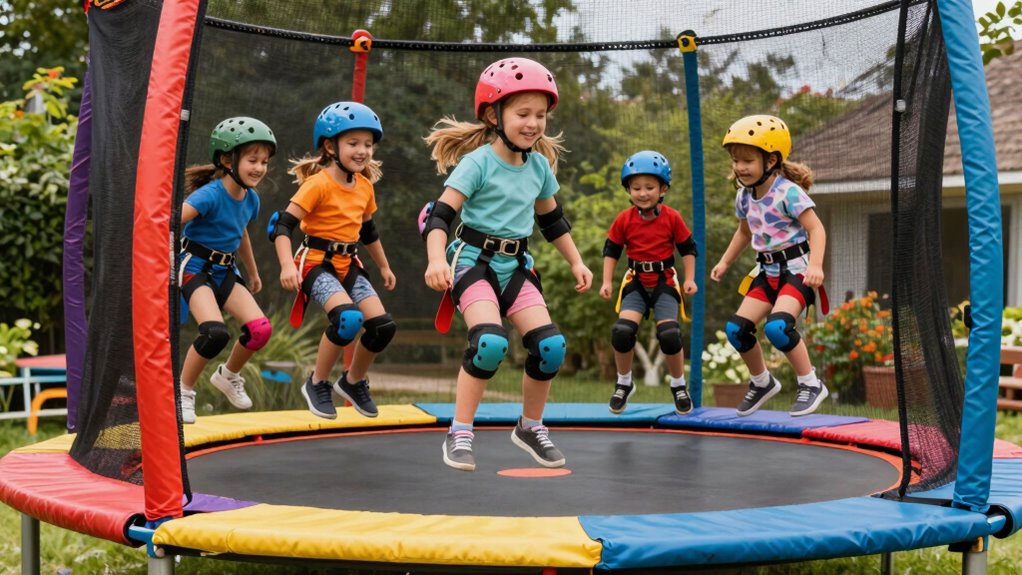
Once your trampoline is properly set up and secure, establishing clear safety rules for jumpers is essential to prevent injuries. Follow these key rules to stay safe:
- Practice proper jumping etiquette by taking turns and avoiding overcrowding on the trampoline.
- Always focus on your landing, ensuring it’s controlled and centered to prevent falls.
- Avoid risky moves like flips or somersaults unless you’re trained and supervised, to reduce injury risk.
- Maintaining appropriate trampoline safety measures helps ensure a fun and injury-free experience for everyone.
- Regularly inspecting the rug surface in high-traffic areas can prevent slips and falls that might lead to injuries.
- Educating jumpers about the twin flame connection can promote awareness of emotional safety and personal boundaries during play.
- Incorporating glycolic acid in skincare routines can help improve skin texture, which can be beneficial for recovery from skin injuries caused by falls.
- Ensuring proper safety equipment, such as padding and enclosure nets, is crucial for minimizing impact injuries and creating a secure environment.

CATPAN Trampoline Bungee Safety Harness for Kids : 3-Buckle Safety Harness for Bungee Jumping,Kids Bungee Safety Belts Protecting Chest, Waist and Thighs,Child Harness with 4PCS Elastic Ropes 1.2m
[Trampoline Harnesses for Bungee] : Our bungee fall protection harness is specially designed for bungee jumping. Safety harness…
As an affiliate, we earn on qualifying purchases.
As an affiliate, we earn on qualifying purchases.
How Do Supervision and Safety Equipment Help Prevent Accidents?
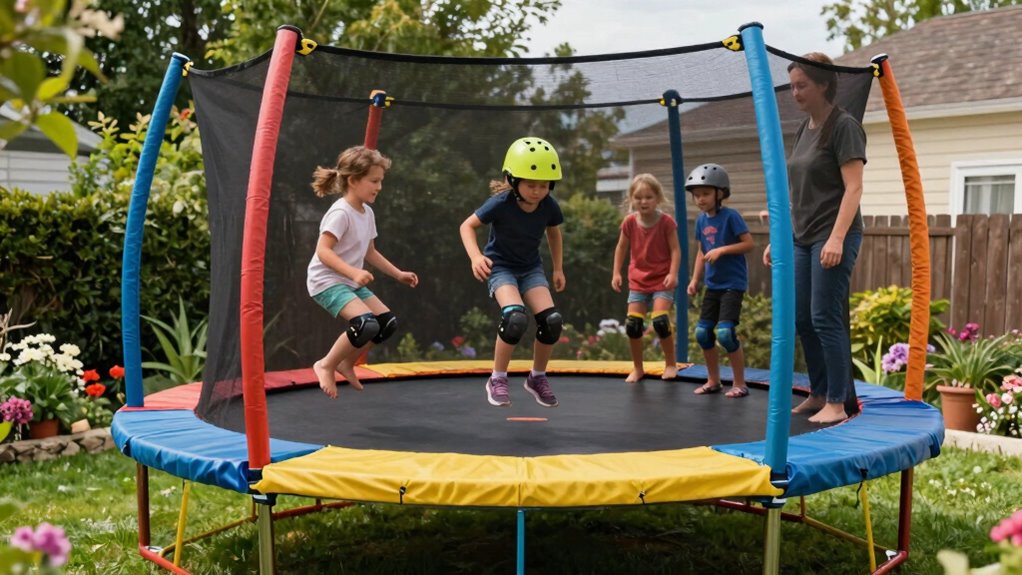
Supervision and safety equipment are essential for preventing trampoline accidents because they actively monitor and support safe jumping practices. Supervision can’t be overstated; a responsible adult ensures jumpers follow safety rules and intervenes when risky behavior occurs. Safety gear, such as padded enclosures, nets, and shock-absorbing mats, creates a protective barrier that minimizes injury risks. Proper supervision helps catch potential problems early, like overcrowding or unsafe tricks, while safety equipment reduces the impact of falls and collisions. Additionally, understanding projector contrast ratio helps in creating optimal viewing environments for movies and sports, similar to how safety measures improve trampoline safety. Introducing commercial kitchen equipment into safety planning can also provide durable, high-quality protective gear for added security. Incorporating hidden safety features can further enhance overall trampoline safety by integrating innovative protective elements. For example, using safety signage can remind users of important rules and precautions, reducing risky behavior. Together, they create a safer environment, encouraging confident bouncing while preventing accidents. By prioritizing supervision importance and investing in quality safety gear, you markedly lower the chances of injuries and make trampoline use safer for everyone involved.
How Can You Create a Safe Bouncing Environment for All Ages?

Creating a safe bouncing environment for all ages starts with understanding that different age groups have varying needs and abilities. To guarantee safety, focus on these key areas:
- Teach proper jumping etiquette to prevent collisions and unsafe behavior.
- Regularly perform trampoline maintenance to check for tears, rust, or broken springs.
- Design separate zones for different age groups to reduce risky interactions.
- Incorporate natural materials like foam pads and soft ground surfaces to enhance cushioning and safety. Using safety standards can further ensure the environment meets recommended guidelines for injury prevention. Additionally, adhering to injury prevention guidelines helps minimize accidents and promotes a safer bouncing experience.
Encourage kids to follow jumping etiquette, like waiting their turn and avoiding flips without supervision. Maintain the trampoline by inspecting it frequently and addressing issues promptly. Consider installing safety enclosures and padding to minimize injury risk. By tailoring the environment and promoting responsible bouncing, you create a safer space where everyone can enjoy the fun without unnecessary hazards.
Frequently Asked Questions
What Are the Most Common Injuries Associated With Trampoline Use?
You’re most likely to face injuries like sprains, fractures, and sprains when using a trampoline. Regular trampoline maintenance helps prevent accidents caused by equipment failure. According to injury statistics, many injuries happen due to improper supervision or unsafe tricks. Always follow safety rules, check the trampoline’s condition, and supervise closely to reduce risks. Staying vigilant can help you enjoy bouncing while minimizing injury chances.
How Can Trampoline Safety Rules Be Effectively Communicated?
You can effectively communicate trampoline safety rules by using clear safety signage placed prominently around the trampoline area. Incorporate visual aids like diagrams or pictures to illustrate proper use and potential hazards. Talk to users directly, emphasizing important rules, and encourage questions to guarantee understanding. Regularly update and reinforce safety messages, making sure everyone recognizes and follows the rules to prevent injuries and promote safe trampoline use.
Are There Specific Age Groups at Higher Risk of Injury?
You might think everyone faces the same risk, but age-related risks mean children under six are especially vulnerable due to developmental considerations. Young kids lack the coordination and strength needed to jump safely, increasing injury chances. Teens and older kids also face risks, but their physical development often provides better control. Always tailor safety rules to age groups, ensuring younger children are supervised closely and understand their limits.
What Role Does Trampoline Design Play in Injury Prevention?
You should consider how trampoline design impacts safety. A well-designed trampoline features a sturdy spring mechanism that reduces the risk of pinched or trapped fingers and toes, preventing injuries. Additionally, an enclosure safety net keeps jumpers contained, minimizing falls and fractures. Choosing a trampoline with these design elements helps protect users, especially children, and promotes safer bouncing experiences. Always inspect the design before use to guarantee maximum safety.
How Often Should Safety Equipment Be Inspected or Replaced?
Maintenance matters, so you should inspect your safety equipment monthly for damage or wear. Follow a consistent maintenance schedule to catch issues early. Replacement triggers, like torn mats or frayed cords, should prompt immediate action to prevent injury. Regular checks guarantee safety equipment remains secure and reliable, reducing risks. Don’t delay replacements—prompt action keeps your trampoline safe and sound, helping you bounce worry-free.
Conclusion
Did you know that over 100,000 trampoline injuries are treated in emergency rooms each year? By following safety rules, setting up your trampoline properly, and supervising jumpers, you can markedly reduce this risk. Remember, creating a safe bouncing environment isn’t just about equipment—it’s about awareness and responsible behavior. Stay vigilant, enforce safety guidelines, and enjoy bouncing fun without the worry of injuries. Your careful precautions make all the difference!