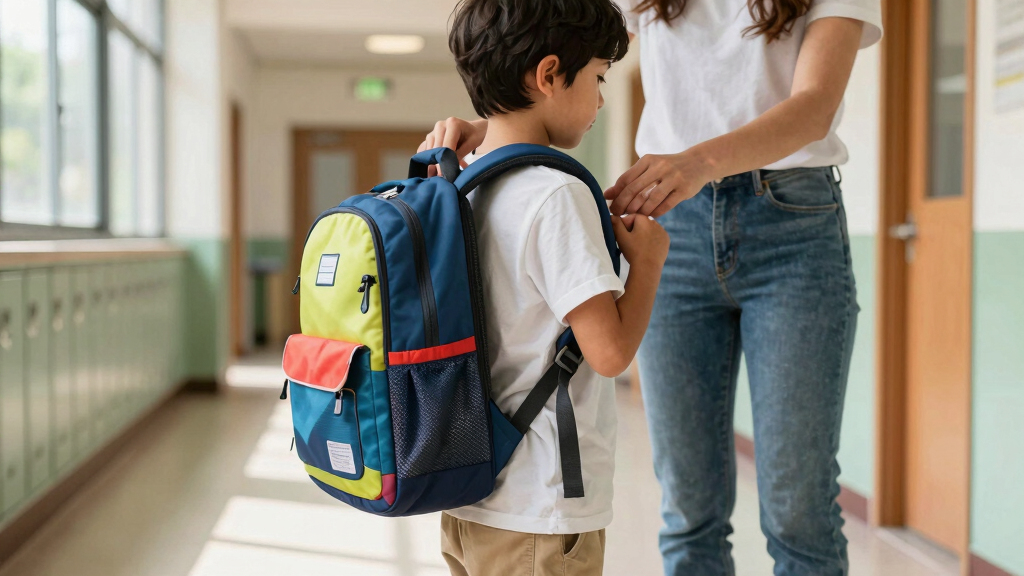

This guide walks parents and caregivers through the process of choosing and fitting a kids’ ergonomic backpack. The goal is to ensure the backpack promotes healthy posture, reduces strain, and provides comfort for children during daily use. This task requires basic knowledge of child ergonomics and some familiarity with backpack features. Follow these steps carefully to select the right backpack and fit it correctly for your child’s needs.

Turn the school run and nap time into listening time
- Thousands of audiobooks, podcasts and originals
- Listen on your phone, tablet or Echo — also offline
- Cancel anytime
Difficulty: Beginner | Time: 15-30 minutes
What You’ll Need
Tools & Materials:
- Measuring tape
- A mirror (optional)
- Pen and paper for notes
Knowledge:
- Basic understanding of ergonomic principles
- Awareness of your child’s height and weight
Measure your child’s torso length and shoulder width before shopping. Choose a backpack that is appropriately sized; it should not be too large or too small for your child.
As an affiliate, we earn on qualifying purchases.
Before You Start
Ensure your child is wearing comfortable clothing and can stand upright naturally. Have your measuring tools ready, and if possible, involve your child in the process to get accurate fitting. Avoid shopping for backpacks when your child is tired or hungry, as discomfort may influence their preferences.
Step-by-Step Instructions
Step 1: Measure your child’s torso length and shoulder width
Use the measuring tape to measure from the prominent bone at the base of your child’s neck (C7 vertebra) down to the top of the hips (iliac crest). Record this measurement as the torso length. Then, measure across the widest part of their shoulders. Write down these measurements for reference.
Tip: Use a mirror or ask your child to stand straight with arms relaxed at their sides for accurate measurements.
Check: Measurements are accurate and correspond with the child’s natural stance, providing a reliable basis for selecting the right backpack size.
Step 2: Choose a backpack with adjustable straps and proper size
Select a backpack that matches your child’s torso length, with the main compartment not exceeding the back length. Ensure it has adjustable padded shoulder straps and a waist belt for better weight distribution.
Tip: Test the backpack’s size by holding it against your child’s back; it should reach just below the shoulders without extending past the waist or hips.
Check: Backpack size fits the child’s torso comfortably, without overlapping shoulders or hanging below the hips.
Step 3: Pack the backpack with only essential items
Place books, supplies, and other items in the backpack, keeping the total weight below 10-15% of your child’s body weight. Distribute weight evenly across compartments.
Tip: Use lightweight materials for packing and avoid unnecessary items to prevent excessive weight.
Check: Backpack remains manageable in weight and maintains its shape when filled, indicating proper packing.
Step 4: Adjust the straps for a proper fit
Put the backpack on your child’s back, then tighten the shoulder straps so the pack sits snugly against the back without causing discomfort. Adjust the chest strap if available to stabilize the pack.
Tip: The backpack should sit high on the back, with the bottom about 1-2 inches below the waistline. Straps should be tight enough to prevent slipping but not so tight as to cause pressure or restrict movement.
Check: The backpack fits securely, with minimal movement when your child walks, and does not cause discomfort or slouching.
Step 5: Check the backpack fit during movement
Have your child walk, bend, and sit while wearing the backpack to ensure it stays in place and remains comfortable.
Tip: Observe if the backpack shifts excessively or causes discomfort during movement, and readjust straps as needed.
Check: During movement, the backpack remains stable, and your child reports no discomfort or pain.
Common Mistakes to Avoid
- Choosing a backpack that doesn’t fit your child’s torso size — Measure your child’s torso length accurately and select a backpack designed for that size; avoid one that is too large or too small.
- Overloading the backpack with unnecessary items — Pack only essential items and keep weight below 10-15% of your child’s body weight.
- Not adjusting straps properly — Always tighten shoulder straps snugly and adjust the chest and waist straps for stability.
- Allowing the backpack to hang below the hips — Ensure the backpack sits high on the back, just below shoulder blades and above hips.
Troubleshooting
Problem: Backpack causes discomfort or pain
Solution: Recheck fit, ensure straps are adjusted correctly, and lighten the load if necessary.
Problem: Backpack shifts excessively during walking
Solution: Tighten shoulder and chest straps further, and verify the backpack size matches your child’s torso.
Problem: Straps cause chafing or irritation
Solution: Ensure straps are padded, properly adjusted, and not too tight or loose.
Problem: Backpack is too heavy despite correct packing
Solution: Remove non-essential items, or consider a lighter backpack material.
What Success Looks Like
The backpack fits snugly against your child’s back, stays in place during movement, does not cause discomfort, and is loaded with an appropriate weight. The straps are fully adjustable, and your child can carry it comfortably for extended periods.
Next Steps
Regularly check the fit as your child grows, and update packing to keep weight manageable. Encourage proper carrying habits and reassess fit at least once per school term. Consider replacing the backpack if it shows significant wear or no longer fits well.
Frequently Asked Questions
How do I know if the backpack is too heavy for my child?
The total weight should not exceed 10-15% of your child’s body weight. Use a scale to weigh the packed backpack and compare it to your child’s weight for proper assessment.
Can I use any backpack for my child?
No. Choose a backpack specifically designed with ergonomic features, adjustable straps, and appropriate size for your child’s torso to reduce strain and promote good posture.
How often should I check the backpack fit?
Check the fit at least once each school term, or whenever your child experiences discomfort or growth spurts.
Halloween Picks
halloween
As an affiliate, we earn on qualifying purchases.




![Every Parent Dreads That Call From School… 📞😱 [Litterbox Comics]](https://motherbabykids.com/wp-content/uploads/2026/10/every-parent-dreads-that-call-from-school-litterbox-comics-featured-260x140.jpg)