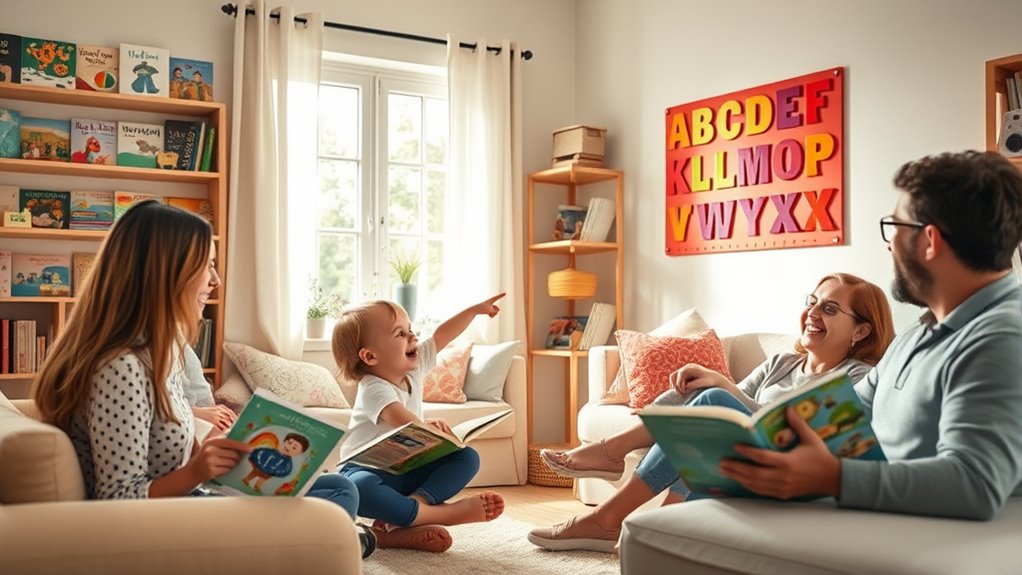

To create a language-rich environment at home, actively incorporate storytelling, books, songs, and conversations in both languages. Use expressive voices, gestures, and encourage your children to add their own twists or create stories. Engage them with cultural elements and varied vocabulary, fostering understanding and confidence. Consistent routines and dynamic interactions make learning fun and meaningful. Keep exploring different strategies to build a vibrant, bilingual space that nurtures your child’s love for words and communication skills.
Key Takeaways
- Incorporate daily storytelling in both languages, using expressive voices and gestures to engage children actively.
- Use a variety of bilingual books, songs, and conversations to expose children to diverse vocabulary and cultural nuances.
- Pause during activities to discuss new words and concepts in both languages, fostering understanding and language development.
- Create a consistent routine that includes interactive storytelling, encouraging children to add their own twists or create stories.
- Integrate cultural elements and real-life experiences into conversations to deepen meaning and promote cultural awareness.
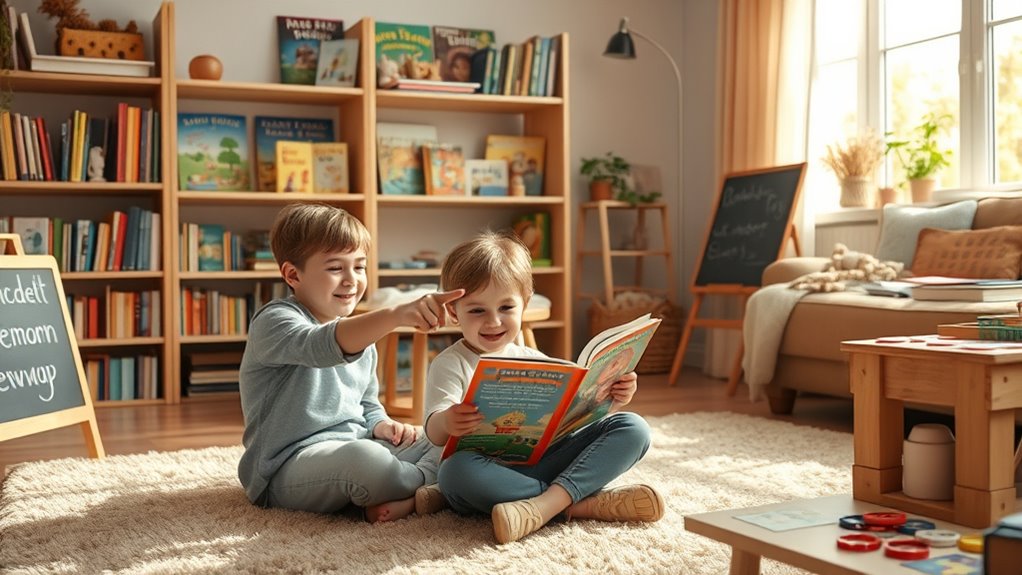
Creating a language-rich environment at home can markedly boost your child’s communication skills and overall development. One of the most effective ways to do this is through interactive storytelling, which actively engages your child in the narrative process. Instead of passively listening, they become participants by predicting what happens next, asking questions, or even creating their own stories alongside you. This not only enhances vocabulary but also improves comprehension and critical thinking. When you incorporate interactive storytelling into your routine, you’re fostering a love for language and encouraging your child to experiment with words and ideas. It’s a lively, dynamic way to connect and learn simultaneously.
Interactive storytelling boosts language, comprehension, and creativity through active participation and shared fun.
If your household is bilingual or you’re aiming to support bilingual development, this approach becomes even more impactful. Using interactive storytelling in both languages exposes your child to diverse vocabulary, idiomatic expressions, and cultural nuances, enriching their linguistic repertoire. Switch between languages thoughtfully, encouraging your child to express themselves in both, which strengthens their ability to think flexibly and adaptively across languages. As you tell stories, ask questions in both languages, prompting your child to respond in the language you’re practicing. This active participation helps solidify their bilingual skills and boosts confidence in using both languages in meaningful contexts.
Creating a bilingual environment involves more than just speaking two languages; it involves immersing your child in rich, engaging language experiences. Use books, songs, and conversation that reflect both languages, and encourage storytelling in each. When you read bilingual books together, pause to discuss vocabulary and concepts in both languages. During interactive storytelling, incorporate cultural elements from different backgrounds to make the experience more meaningful and memorable. Additionally, incorporating dynamic communication exercises can further enhance your child’s language development by fostering open dialogue and active listening. This not only supports bilingual development but also broadens your child’s understanding of the world.
Consistency is key. Make storytelling a daily habit, and vary the types of stories you tell—folktales, personal stories, imaginative tales—to keep your child engaged. Use expressive voice tones, gestures, and facial expressions to make the stories more enthralling. Encourage your child to add their own twists or even create their stories, fostering creativity and language use. Over time, this routine will help your child develop stronger language skills, greater confidence, and a deeper appreciation for both languages. Ultimately, by making your home a vibrant language environment through interactive storytelling and bilingual exposure, you’re providing a solid foundation for your child’s lifelong communication abilities and cultural understanding.

The Little Red Hen La Gallinita Roja Bilingual Storybook—Classic Children's Books With Illustrations for Young Readers, Keepsake Stories Collection (32 pgs)
THE LITTLE RED HEN: Featuring 32 pages of fresh, captivating illustrations, this 8" x 8" story book tells…
As an affiliate, we earn on qualifying purchases.
As an affiliate, we earn on qualifying purchases.
Frequently Asked Questions
How Can I Create a Language-Rich Environment on a Tight Budget?
You can create a language-rich environment on a tight budget by making DIY language games with household items and using storytelling techniques daily. Incorporate simple vocabulary, ask open-ended questions, and encourage your child to describe their day. Read aloud together, make up stories, and involve your child in conversations. These activities boost language skills without spending much, and they’re fun ways to foster a love for learning at home.
What Are Some Activities to Encourage Language Development at Home?
You can jump right in and boost language development by engaging in storytelling activities and labeling objects around your home. Encourage your child to tell stories or describe daily routines, making connections with familiar items. Label objects with simple words, pointing and naming as you go. These activities turn everyday moments into rich language experiences, helping your child build vocabulary and communication skills while having fun together.
How Does Screen Time Affect Language Exposure in Children?
Screen time can negatively impact your child’s language exposure because digital distraction often leads to less face-to-face interaction. Excessive screen dependency reduces opportunities for meaningful conversations, which are vital for language development. When your child spends too much time on devices, they miss out on rich verbal exchanges, gestures, and social cues. Limiting screen time encourages more active engagement and helps foster a more language-rich environment at home.
When Should I Start Introducing New Vocabulary to My Child?
You should start introducing new vocabulary as early as possible, even during everyday activities. The timing for vocabulary depends on your child’s age and interests, so choose age-appropriate words that match their developmental stage. Use simple, clear language and repeat words often. As your child grows, gradually introduce more complex words to expand their understanding. Consistent, engaging conversations help build a strong language foundation from the start.
How Do I Adapt Language-Rich Strategies for Bilingual Households?
You can adapt language-rich strategies for bilingual households by incorporating code switching naturally, which reflects everyday communication and enhances cultural relevance. Speak to your child in both languages, using rich vocabulary and meaningful conversations. Read books that represent your cultures, and encourage them to express ideas in either language. This approach promotes fluency, respects cultural identity, and creates a supportive, engaging environment that nurtures bilingual development.
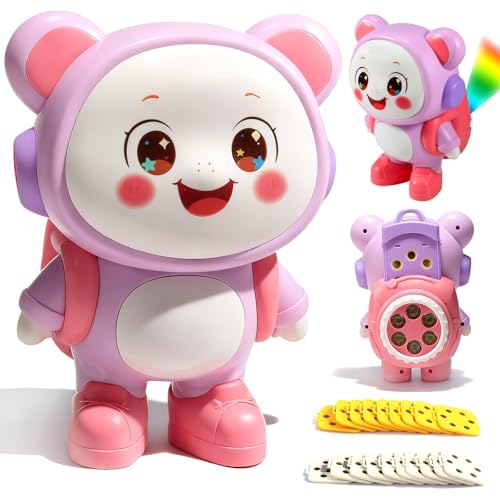
Story Projector for Kids – Bedtime Storytelling Projector with Clear Images & Adjustable Sound,Durable Early Learning Storybook Toy, Soft Night Light, Birthday Gifts for Boys & Girls Ages 2–6
Easy, Kid-Friendly Controls: Designed with intuitive, responsive buttons that are easy for children to use. Kids can switch…
As an affiliate, we earn on qualifying purchases.
As an affiliate, we earn on qualifying purchases.
Conclusion
Creating a language-rich environment at home is like planting seeds for your child’s future. When you talk, read, and sing with them regularly, you’re laying a strong foundation for their communication skills. Remember, it’s the little things that count—every word and story adds up. By making language a natural part of daily life, you’re opening doors to endless opportunities. Keep at it; it’s truly the gift that keeps on giving.

Kids Musical Instruments, 33Pcs 18 Types Wooden Percussion Instruments Tambourine Xylophone Toys for Kids Children, Preschool Education Early Learning Musical Toy for Boys and Girls
[A Complete Kids Musical Instrument Set] – Including 33pcs 18 types shaking, tapping, beating and blowing instruments. Better…
As an affiliate, we earn on qualifying purchases.
As an affiliate, we earn on qualifying purchases.

Children of God Storybook Bible
Great product!
As an affiliate, we earn on qualifying purchases.
As an affiliate, we earn on qualifying purchases.