
Want to boost independence in dressing and feeding? Start by choosing easy-to-use clothing with features like elastic waistbands and simple fasteners, gradually increasing complexity as skills grow. Practice mealtime routines with adaptive utensils and manageable foods to build confidence. Establish consistent routines to make daily self-help activities predictable and less stressful. With patience and routine, you’ll see progress in your or your child’s confidence and independence—keep exploring to find effective ways to support these important skills.

Get baby and family essentials delivered free — and shop member deals
- Fast, free delivery on millions of items
- Access to Prime Big Deal Days deals on October 6–7
- Prime Video, Amazon Music and more included
Key Takeaways
- Developing self-help skills in dressing and feeding fosters independence, confidence, and active participation in daily routines.
- Adaptive clothing with easy fasteners and elastic waistbands simplifies dressing and reduces frustration.
- Practicing simple dressing tasks gradually builds confidence and skill, leading to greater autonomy.
- Self-feeding skills are enhanced through routine practice, adaptive utensils, and structured mealtime activities.
- Consistent routines and patience support skill development, making dressing and feeding more manageable and less stressful.
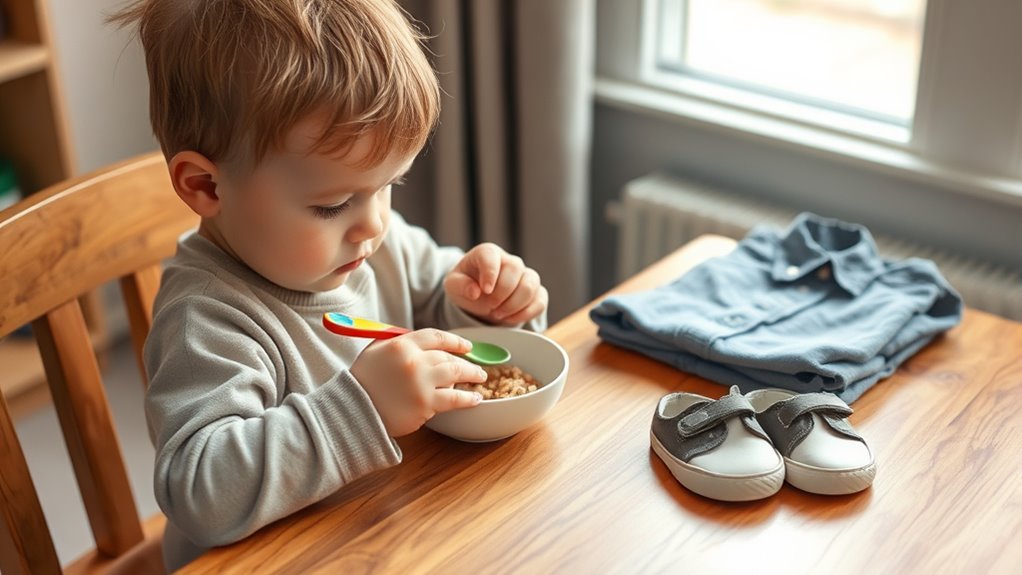
Have you ever wondered how developing self-help skills can boost your independence and confidence? When you learn to manage daily tasks like dressing and feeding yourself, you gain more control over your life and feel more capable. One way to make dressing easier is by exploring adaptive clothing. Adaptive clothing is designed specifically to help people with various needs, featuring easy-to-use fasteners, elastic waistbands, or tagless labels. These clothes can reduce frustration and physical strain, making dressing a smoother process. By choosing adaptive clothing, you can become more independent in your daily routines, as it minimizes the need for assistance and encourages you to take charge of your appearance. It’s important to start with simple clothing options, gradually building your confidence and skills. As you practice, you’ll learn how to select, put on, and take off different garments, which reinforces your independence. Incorporating specialized clothing can further enhance your comfort and ease during dressing routines.
When it comes to mealtime routines, developing self-help skills is just as vital. Learning to feed yourself not only satisfies your nutritional needs but also boosts your confidence and sense of accomplishment. Establishing a consistent mealtime routine helps create a structured environment where you can focus on becoming more self-sufficient. Begin with easy-to-eat foods and utensils that are comfortable to handle, such as those with ergonomic grips or non-slip surfaces. Using adaptive utensils, like those with larger handles, can make gripping and maneuvering easier if you have limited hand strength or coordination. As you become more comfortable, you can move on to more complex tasks, such as cutting or pouring, at your own pace. Consistency is key; practicing mealtime routines daily helps you develop muscle memory and confidence. You might also find that having a set routine, like washing hands before meals or sitting at the table in a specific order, makes the process feel more predictable and less stressful.
Both dressing and mealtime routines are essential self-help skills that foster independence. Using adaptive clothing and adaptive utensils can markedly ease these routines, making them more manageable and less frustrating. Remember, developing these skills takes time and patience, but each small step forward builds your confidence and autonomy. By embracing these tools and routines, you’re empowering yourself to handle daily challenges better and enjoy a greater sense of independence in your everyday life.
adaptive clothing with easy fasteners
As an affiliate, we earn on qualifying purchases.
As an affiliate, we earn on qualifying purchases.
Frequently Asked Questions
How Can I Encourage My Child to Try New Foods?
You can encourage your child to try new foods by making food presentation fun and colorful, which sparks their curiosity. Incorporate new foods gradually into mealtime routines, offering small tastes without pressure. Let your child participate in choosing or preparing meals, boosting their interest. Keep mealtime positive and relaxed, praising their efforts. Over time, these strategies help your child develop a willingness to explore and enjoy new foods.
What Are Signs My Child Is Ready for Dressing Independence?
Did you know that by age four, most children can dress themselves with minimal help? You’ll notice your child shows interest in clothing preferences and tries to put on simple items like shirts or pants. Signs they’re ready for dressing independence include showing enthusiasm during dressing routines, practicing fine motor skills, and wanting to choose their clothes. Encouraging these behaviors helps build confidence and promotes independence.
How Do I Handle Clothing Challenges With Sensory Sensitivities?
To handle clothing challenges with sensory sensitivities, pay attention to your child’s sensory processing needs. Offer clothing with soft, seamless textures and avoid rough or itchy fabrics. Let your child choose from options to give them a sense of control, and introduce new textures gradually. Use positive reinforcement and create a calm dressing environment. Over time, this helps your child build comfort and confidence with different clothing textures.
What Strategies Promote Positive Feeding Experiences?
Feeding can feel like a mountain you’re climbing, but with the right approach, you’ll conquer it! Use positive reinforcement to reward small successes and build confidence. Incorporate gradual exposure by introducing new foods slowly, allowing your child to become comfortable at their own pace. Patience and consistency make a huge difference—celebrate every step forward, no matter how tiny, and watch their willingness to try grow exponentially!
When Should I Seek Professional Help for Self-Help Skill Delays?
You should seek professional intervention if your child isn’t meeting developmental milestones related to dressing and feeding by age two or three. If progress stalls despite encouragement and practice, or if your child shows signs of frustration or refusal, consulting a specialist can help. Early support can address delays effectively, ensuring your child develops independence and confidence in self-help skills. Don’t hesitate to get expert guidance when concerns arise.
Conclusion
Mastering dressing and feeding skills can feel like conquering the world, but remember, every small step you take makes a huge difference. With patience and practice, you’ll turn everyday routines into moments of independence and confidence. Soon, these skills won’t just be tasks—they’ll become second nature, opening endless possibilities. Keep going—you’re not just teaching skills; you’re shaping a future where independence shines brighter than the stars!
Halloween Picks
halloween
As an affiliate, we earn on qualifying purchases.