
TL;DR

Turn the school run and nap time into listening time
- Thousands of audiobooks, podcasts and originals
- Listen on your phone, tablet or Echo — also offline
- Cancel anytime
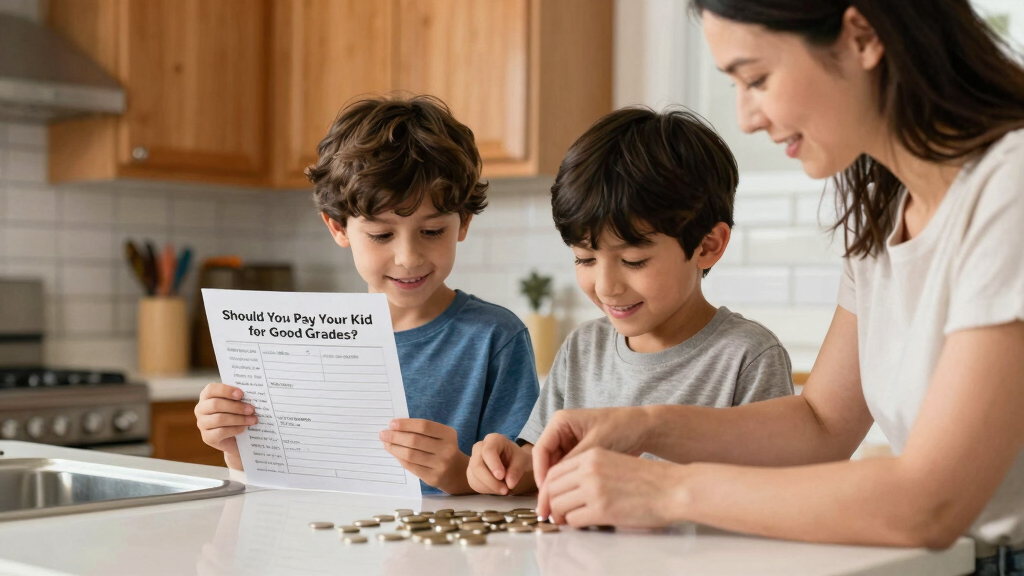
Parents are divided on paying children for good grades, with some seeing it as motivation and others warning of potential drawbacks. Experts also disagree, citing short-term benefits versus long-term motivation concerns.
Parents and experts remain divided on whether paying children for good grades is an effective motivation strategy. While some see it as a way to encourage effort, others warn it could undermine intrinsic motivation and learning values.
Recent discussions on Reddit’s r/Parenting reveal that many parents consider financial incentives for good grades, with amounts varying from $5 to $50 per A, depending on the child and context. Some argue that paying for grades aligns with adult work compensation, while others believe it fosters unfair expectations and discourages effort-based learning.
Experts are similarly split. Educational psychologist Erin Morris Miller states that rewards can be useful for short-term motivation and teaching life skills, especially for teens. Conversely, Cathy Chen emphasizes that rewarding effort and character fosters long-term motivation and resilience, warning that extrinsic rewards like money may only produce temporary compliance.
Why It Matters
This debate impacts how parents approach education and motivation, raising questions about fostering genuine learning versus extrinsic incentives. The long-term effects of paying for grades could influence children’s attitudes toward learning, effort, and resilience, with potential consequences for their future academic and personal success.
motivational reward charts for teens
As an affiliate, we earn on qualifying purchases.
As an affiliate, we earn on qualifying purchases.
Background
The discussion has persisted for years, with online forums and parenting groups examining the pros and cons. Historically, the focus on intrinsic motivation and effort has grown alongside concerns about over-reliance on external rewards. The debate reflects broader societal questions about capitalism’s influence on childhood development and education values.
“With teens, it is likely that they do not enjoy every single class or assignment. You want your teen to be willing to do something well, that they don’t want to do, in order to receive money. This is a key life skill.”
— Erin Morris Miller, PhD
“Parents should not reward good grades; they should reward the effort, character, and values a teen demonstrates when they do their best.”
— Cathy Chen, M.Ed
What Remains Unclear
It remains unclear whether paying for grades leads to sustained motivation or long-term academic success. The long-term impact on children’s attitudes toward learning and effort is still debated among educators and psychologists.
What’s Next
Research and longitudinal studies are needed to determine the long-term effects of financial incentives on motivation. Meanwhile, many parents and educators will continue to weigh the short-term benefits against potential drawbacks, with some possibly experimenting with alternative motivational strategies.
Key Questions
Does paying for grades improve academic performance?
There is no conclusive evidence that paying for grades improves long-term academic achievement. Some parents report short-term increases in motivation, but experts caution that intrinsic motivation and effort are more sustainable drivers of success.
Are there better ways to motivate children academically?
Yes. Experts recommend praising effort, perseverance, and character, and focusing on learning process goals rather than solely on outcomes like grades.
Is paying for grades fair to all children?
Many argue that financial incentives can create unfair disparities and pressure, especially for children who work hard without external rewards or those with different learning styles.
Does paying for grades affect children’s intrinsic motivation?
Research suggests that extrinsic rewards like money can diminish intrinsic motivation over time, potentially undermining a child’s natural desire to learn for its own sake.
Evergreen bestsellers Picks
bestsellers
As an affiliate, we earn on qualifying purchases.