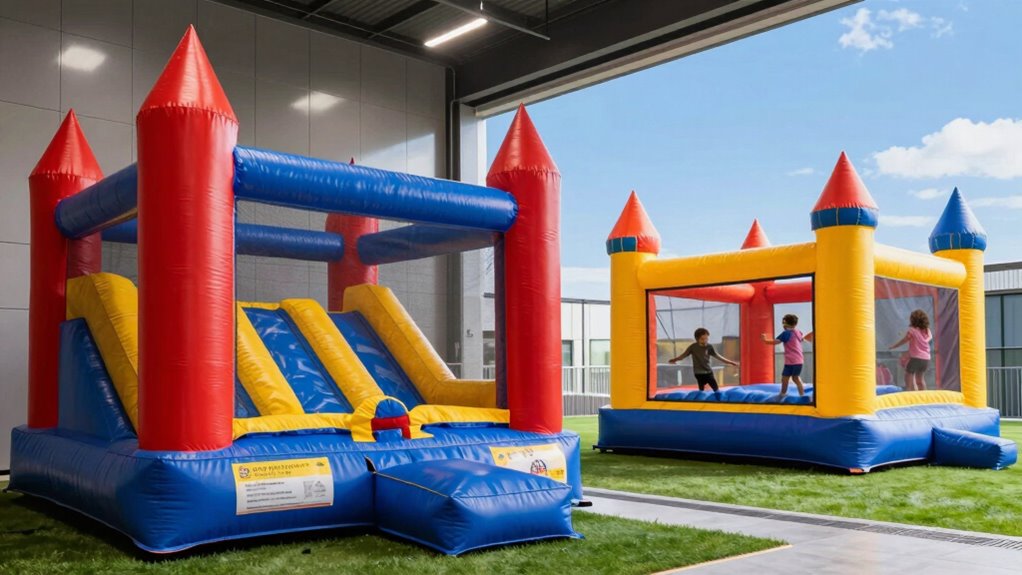

When deciding between indoor or outdoor bounce house setups, consider your space, weather, and safety. Outdoors, choose a flat, debris-free area on grass or paved surfaces, and secure the inflatable with stakes or weights. Indoors, ensure high ceilings, soft flooring, and enough room to prevent collisions, with proper anchoring. Both environments demand safety barriers, adequate supervision, and equipment maintenance. To guarantee a smooth, safe setup, you’ll find helpful tips if you continue exploring this guide.

Turn the school run and nap time into listening time
- Thousands of audiobooks, podcasts and originals
- Listen on your phone, tablet or Echo — also offline
- Cancel anytime
Key Takeaways
- Assess weather and ground conditions to determine suitable outdoor or indoor setup environments.
- Ensure sufficient space, ceiling height indoors or level, debris-free ground outdoors for safe installation.
- Use appropriate anchoring methods like stakes, weights, or tethers suited for each environment.
- Prepare safety barriers outdoors and padding indoors to prevent injuries and control participant areas.
- Regularly inspect and maintain inflatables and anchoring equipment to ensure ongoing safety and stability.
inflatable bounce house indoor outdoor
As an affiliate, we earn on qualifying purchases.
As an affiliate, we earn on qualifying purchases.
Indoor or Outdoor? How to Decide Where to Set Up Your Bounce House
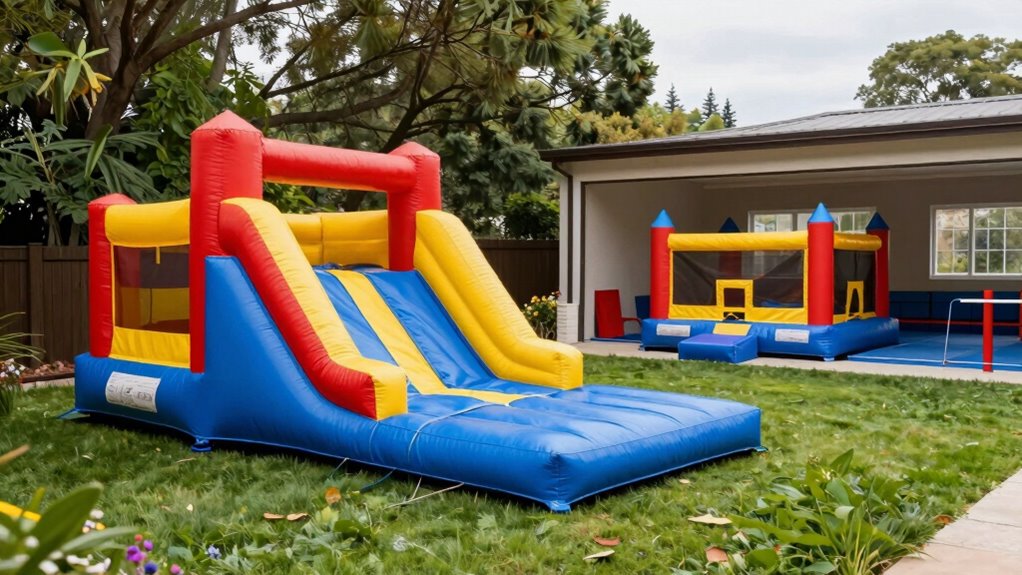
Deciding where to set up your bounce house depends on several practical factors. Bounce house placement is vital for safety and enjoyment. If you’re considering outdoor setup, weather considerations are key—avoid windy, rainy, or excessively hot days that could compromise stability or comfort. Clear, level ground is essential to prevent tipping or uneven bouncing. For outdoor setups, it’s also important to consider sun exposure to prevent overheating or sunburn. Additionally, ensure the area is free of sharp objects or debris that could pose a hazard. For outdoor locations, selecting a well-drained area can help prevent mud and water accumulation that might damage the bounce house or create slippery conditions. For indoor setups, ensure there’s enough ceiling height and space to avoid collisions with walls or fixtures. Outdoor locations offer fresh air and more space, but you must watch the weather closely. Indoor setups provide a controlled environment, reducing weather-related concerns. Additionally, weather conditions can significantly impact the safety and longevity of your bounce house—it’s crucial to plan accordingly. Ultimately, weigh the weather considerations and available space to choose the best spot for a safe, fun bounce house experience.
What Are the Key Factors for Safe Indoor Bounce House Setup?
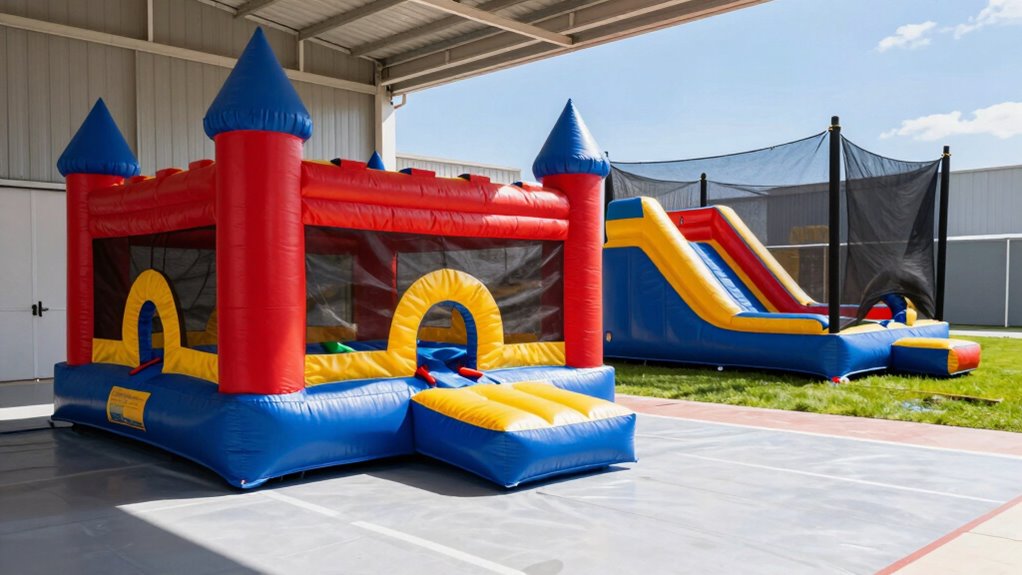
To guarantee a safe indoor bounce house setup, you need to focus on securing it properly and managing the available space. Proper anchoring techniques prevent the bounce house from shifting or tipping over, even during active use. Additionally, maintaining adequate space around the setup is essential to avoid collisions and ensure safe play. Incorporating support breakfast options can help provide energy for setup crews and participants. Ensuring the bounce house is compatible with your space and adhering to appliance safety standards can further enhance overall safety during setup and operation. Being aware of AI’s role in safety monitoring can also contribute to proactive safety measures. Additionally, understanding home design principles can help optimize space and safety considerations for indoor setups. Furthermore, utilizing appropriate essential oils can help create a calming environment for participants and staff, reducing stress during setup and operation.
Secure Anchoring Techniques
Ensuring secure anchoring is essential for a safe indoor bounce house setup, as it prevents shifting or tipping during use. You should focus on proper ground anchoring methods, even indoors, by using suitable securing techniques. Use heavy-duty straps, tethers, or weights designed for indoor environments to fasten the bounce house firmly to the floor or walls. Check that anchor points are stable and secure, avoiding loose connections that could cause movement. If your space has a smooth floor, consider extra weights or specialized indoor anchors to enhance stability. Always follow the manufacturer’s guidelines for anchoring, ensuring that your securing techniques are appropriate for the specific bounce house model. Proper anchoring minimizes risks, keeping everyone safe during play. proper ground anchoring methods are vital for maintaining stability and safety in indoor environments. Additionally, regularly inspecting the anchoring equipment can help identify wear or damage that might compromise safety. Regular inspections can also help to maintain anchoring integrity, which is crucial for ongoing safety.
Adequate Indoor Space Management
Having adequate indoor space is essential for a safe bounce house setup because it allows for proper clearance and reduces the risk of accidents. Guarantee the ceiling height is sufficient to prevent head injuries and accommodate the bounce house comfortably. The flooring type also matters; choose a soft, non-slip surface like foam tiles or mats for added safety. Additionally, selecting appropriate materials can help further minimize injury risks during active play. Being aware of digital distractions and minimizing screen time can also contribute to better supervision and safer play environments. Moreover, understanding the contrast ratio of the environment can be beneficial in ensuring proper lighting conditions that prevent glare and improve visibility inside the bounce area. Incorporating safety guidelines can help create a safer play environment and ensure compliance with safety standards.
How to Prepare the Outdoor Space for Your Bounce House
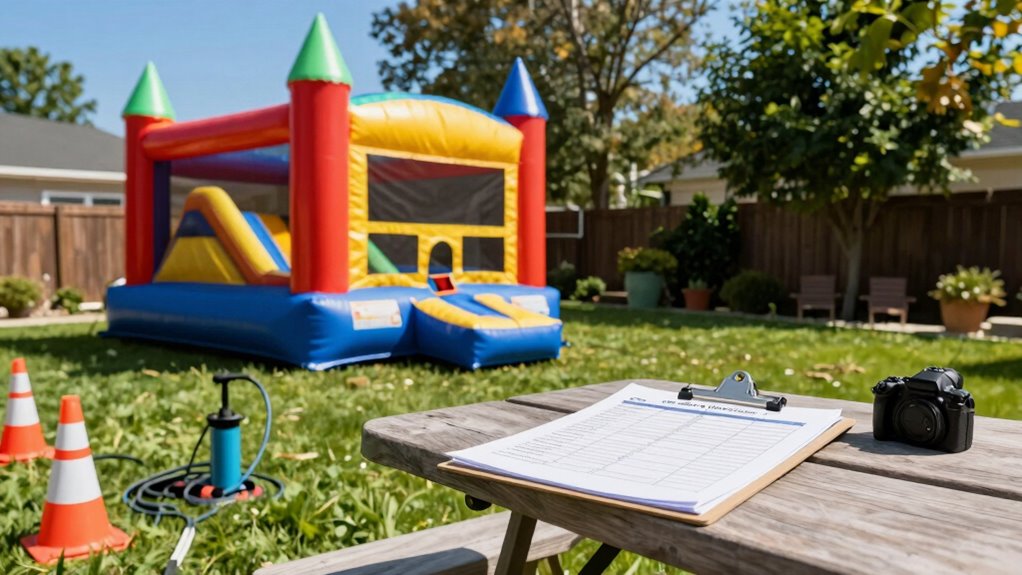
Before setting up your bounce house outdoors, you need to prepare the space thoroughly. First, assess the ground surface to ensure it’s level, firm, and free of debris, sharp objects, or rocks that could puncture the bounce house or cause injuries. Grass, concrete, or a paved surface work best, but always avoid asphalt or uneven terrain. Consider weather conditions, as wind, rain, or extreme heat can affect safety and setup. Check the forecast and choose a day with calm weather and mild temperatures. Clear the area of any obstacles like trees, fences, or furniture that could interfere with the bounce house or pose hazards. Properly preparing the outdoor space helps guarantee a safe, fun experience for everyone involved. Additionally, understanding the energetic alignment of the space can enhance the overall enjoyment and safety of the setup process. Ensuring the appropriate safety measures are in place, such as securing stakes and anchoring the bounce house properly, is essential for a secure setup. Taking the time to evaluate the outdoor environment can prevent potential accidents and make the experience more enjoyable for participants. It is also important to check the volume of the setup area to ensure there is enough space for safe and active play, avoiding overcrowding or restricted movement. Moreover, considering the proportions of the setup area can help optimize placement and maximize available space for active play.
Safety Tips for Indoor and Outdoor Bounce House Setups
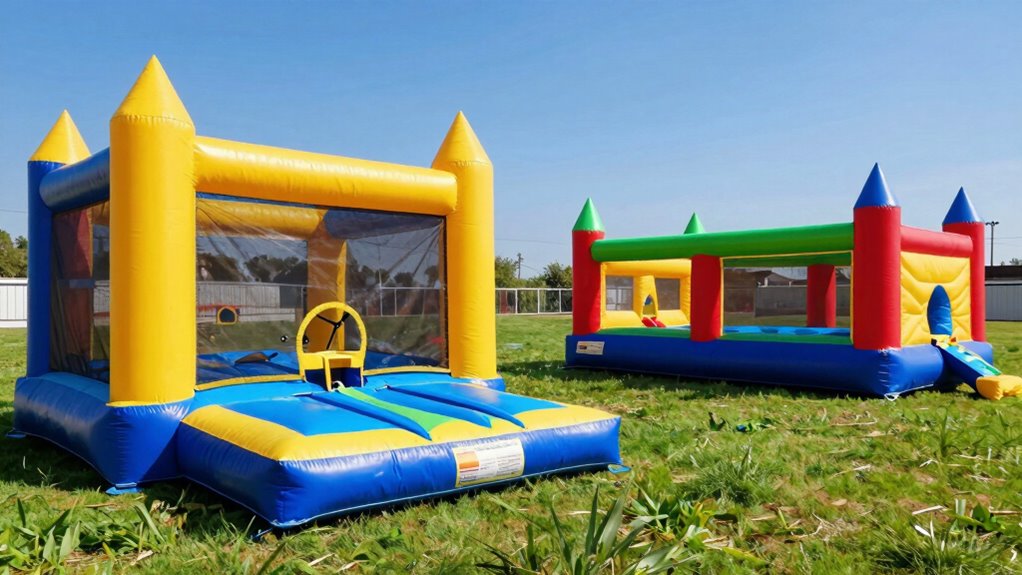
Safety should always be your top priority when setting up a bounce house, whether indoors or outdoors. Check the inflatable material for any tears or damage before inflating, guaranteeing it’s in good condition. For outdoor setups, consider weather conditions—avoid setting up in rain, strong winds, or extreme heat, as these can compromise safety. Make sure the surface underneath is flat, clean, and free of debris to prevent tipping or punctures. Indoors, ensure there’s enough space around the bounce house to prevent collisions or injuries. Always follow the manufacturer’s safety guidelines, including proper anchoring and securing methods. Regularly monitor weather updates if outdoors, and never set up the bounce house in adverse conditions. Keeping these safety tips in mind helps protect everyone enjoying the bounce house.
Troubleshooting Common Setup Challenges
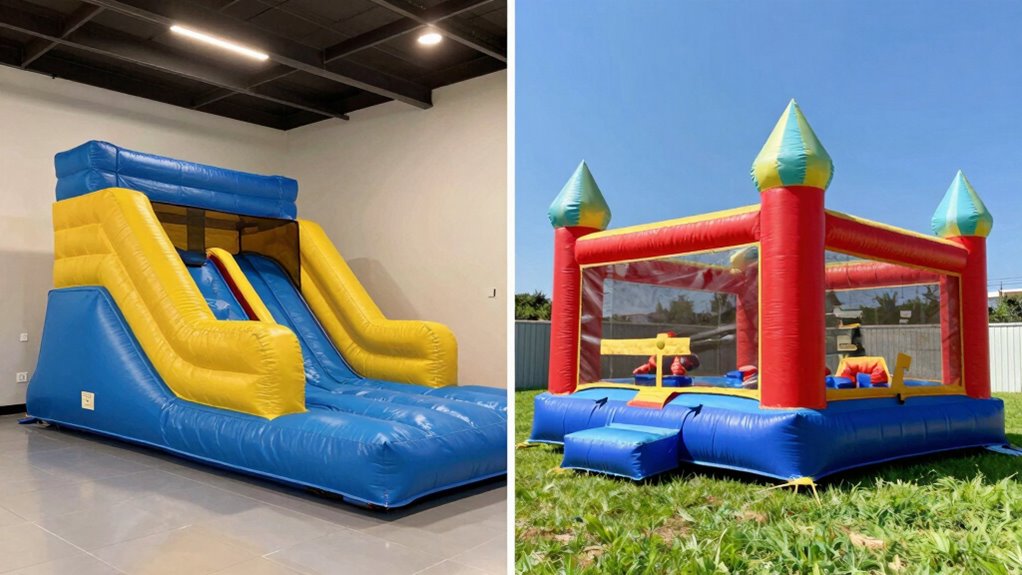
Setting up a bounce house can sometimes present unexpected challenges that disrupt your plans. One common issue is dealing with minor tears or holes, which may require inflatable patching to guarantee safety and proper inflation. Always carry a repair kit on-site for quick fixes. Another challenge involves inflatables storage; if the bounce house isn’t properly stored between uses, it can become difficult to set up or may develop damage. Inspect the inflatables thoroughly before setup, checking for leaks or debris that could cause issues. Proper storage helps prevent unnecessary repairs and keeps the inflatable in good condition. When troubleshooting these challenges, stay calm, address minor repairs promptly, and ensure your inflatable is stored correctly to make setups smoother and safer for everyone involved.
Essential Equipment and Accessories for Indoor and Outdoor Setups
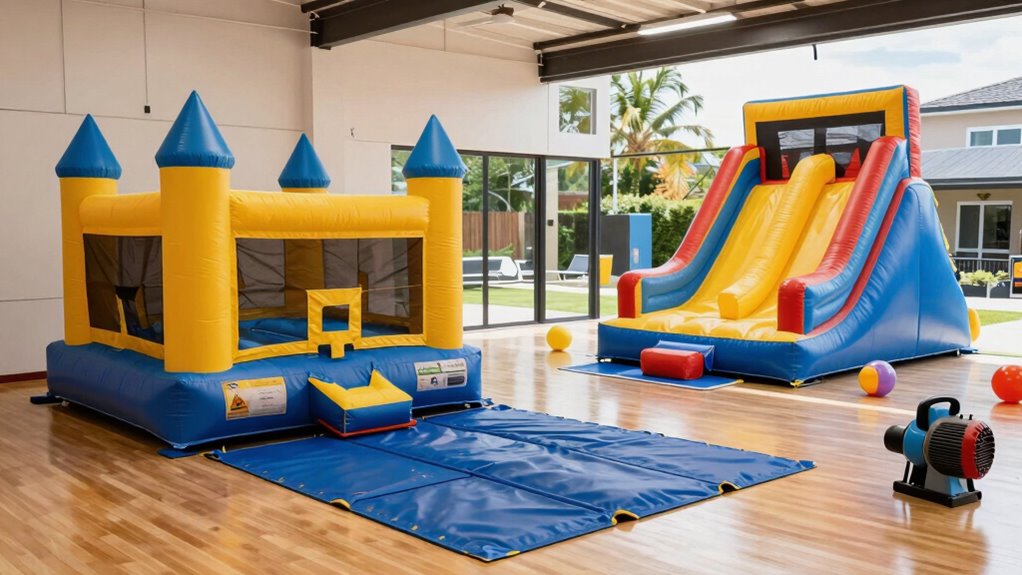
Having the right equipment and accessories is essential to guarantee your bounce house setup is both safe and successful, whether indoors or outdoors. You’ll need inflatable accessories like extension cords, blowers, and repair kits to ensure smooth operation and quick fixes. Safety barriers are vital for outdoor setups to keep kids within designated areas and prevent accidents. Indoor setups benefit from mats or padding around the bounce house to protect flooring and reduce injuries. Make sure you have ground stakes or weights suitable for your location to secure the bounce house firmly. Always check that all accessories are in good condition before inflating. Proper equipment not only enhances safety but also helps your bounce house function efficiently, creating a fun, worry-free environment for everyone.
Final Tips for a Safe, Fun Bounce House Experience
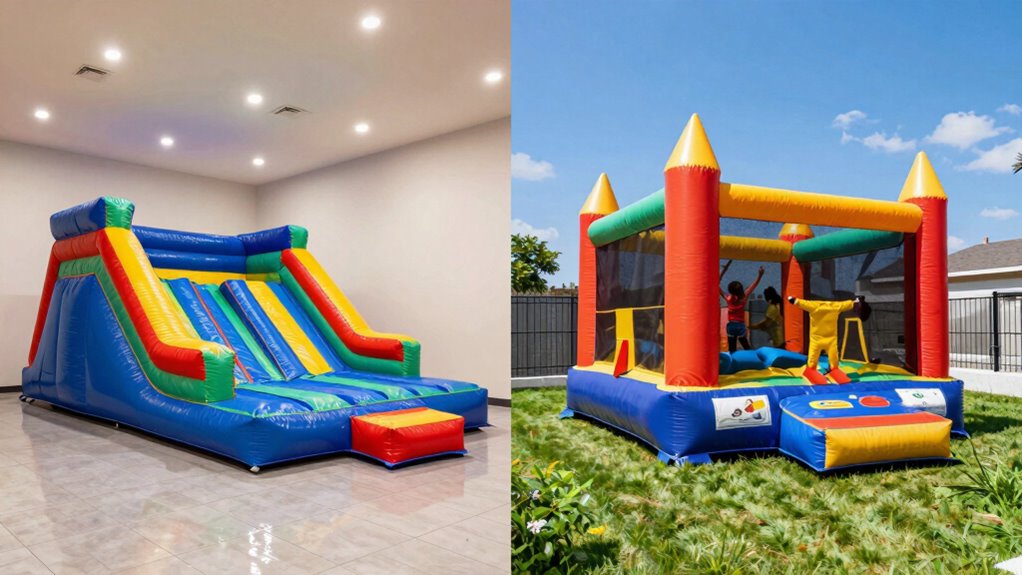
To guarantee everyone has a safe and enjoyable time, it’s important to follow a few final tips when hosting a bounce house event. First, regularly check inflatable maintenance before and during the event to prevent accidents. Ensure the bounce house is securely anchored, especially outdoors, and verify that the blower remains on throughout use. Tailor the party theme to match the bounce house’s design, creating a cohesive experience that excites guests. Remind participants of safety rules, like no flips or roughhousing. Keep an eye on the weather if outdoors, and have a plan for quick disassembly if needed. By prioritizing inflatable maintenance and aligning the theme with your party, you create a safer, more memorable, and fun bounce house experience for everyone involved.
Frequently Asked Questions
How Do Weather Conditions Impact Outdoor Bounce House Setups?
Weather conditions can considerably impact your outdoor bounce house setup. Weather hazards like rain, strong winds, or extreme heat can compromise equipment durability and safety. You should always check the forecast before setting up; if bad weather is expected, postpone or move indoors. High winds can cause instability, while moisture can lead to slipping or damage. Always prioritize safety and guarantee your equipment is prepared for varying weather conditions.
Can Indoor Bounce Houses Be Used Outdoors? Why or Why Not?
Indoor bounce houses are generally not suitable for outdoor use because they aren’t designed to withstand weather conditions like wind, rain, or direct sunlight. Using them outdoors could damage the material or compromise safety. If you want to set up a bounce house outside, opt for one specifically designed for outdoor suitability, ensuring it’s weather-resistant and equipped with proper anchors. This keeps everyone safe and protects your investment.
What Are the Power Source Options for Outdoor Bounce Houses?
For outdoor bounce houses, you have generator options like portable gas or diesel generators, which provide reliable power. You can also connect to an outdoor electrical outlet if nearby. Always consider safety considerations, such as ensuring the generator is placed on stable, level ground away from water and debris. Check that the power source supplies enough voltage and wattage to keep the bounce house safely inflated throughout your event.
How Long Does It Typically Take to Set up and Dismantle a Bounce House?
Like a well-oiled machine, your setup duration for a bounce house typically takes about 15-30 minutes, depending on size and experience. The dismantling process usually takes around 10-20 minutes. You’ll want to guarantee the area’s clear and follow safety checks. With preparation, you can swiftly inflate, secure, and enjoy the fun, then deflate and pack away efficiently, making your event seamless and stress-free.
Are There Size Restrictions for Bounce Houses in Different Indoor Venues?
Yes, indoor venues often have indoor space limitations and venue size restrictions that impact bounce house choices. You need to measure the available space carefully and compare it to the bounce house dimensions to guarantee it fits comfortably. Larger bounce houses may not be suitable for smaller spaces, so always check the venue’s maximum size restrictions before selecting a model. Proper planning helps prevent surprises on your event day.
Conclusion
Remember, a safe setup is the foundation for a fun bounce house experience. Whether indoors or outdoors, take the time to prepare and follow safety guidelines—after all, safety’s no accident. With the right planning, you’ll create a memorable, worry-free adventure for kids to enjoy. As the saying goes, “Prevention is better than cure,” so prioritize safety first, and everyone will bounce happily!
Cold & flu season Picks
humidifiers
As an affiliate, we earn on qualifying purchases.