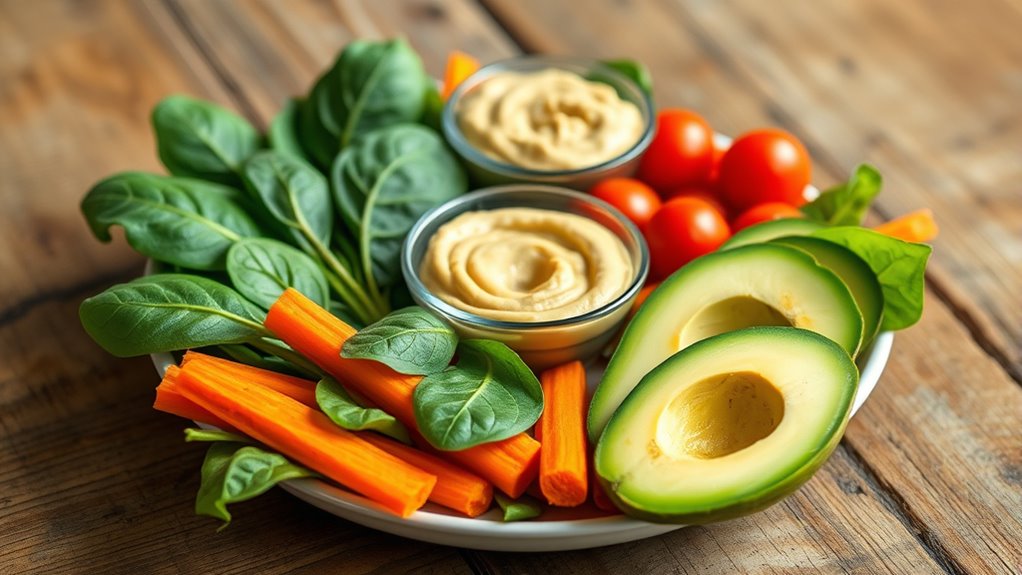

When you plan a plant-based diet for your kids, make sure they get enough key nutrients like iron, calcium, vitamin B12, and omega-3s. Include protein sources such as legumes, tofu, nuts, and seeds, and pair iron-rich foods with vitamin C to boost absorption. Guarantee they get fortified foods or supplements for B12, and promote sun exposure and calcium-rich options for healthy bones. Keep exploring to learn how to balance their diet perfectly.
Key Takeaways
- Ensure sufficient intake of iron-rich foods like spinach, lentils, and fortified cereals, paired with vitamin C sources to improve absorption.
- Incorporate plant-based proteins such as tofu, tempeh, legumes, quinoa, nuts, and seeds to meet growing children’s protein needs.
- Include fortified plant-based milks and cereals to provide essential vitamin B12 for brain development and red blood cell formation.
- Promote calcium sources like leafy greens, fortified plant milks, and tahini, along with adequate vitamin D from sunlight or fortified foods.
- Offer a variety of fruits, vegetables, whole grains, and legumes to supply fiber, vitamins, minerals, and support overall growth.
Essential Nutrients for Growing Children

Ensuring that kids get the right nutrients is crucial for their growth and development, especially when they follow a plant-based diet. Proper meal planning helps you incorporate essential nutrients like iron, calcium, vitamin B12, and omega-3s into their daily routine. Snack ideas can be both nutritious and appealing, making it easier to meet their needs between meals. For example, offer fortified plant-based milks or smoothies with leafy greens and seeds. Balancing meals with a variety of fruits, vegetables, whole grains, and legumes ensures your child gets enough fiber, vitamins, and minerals. By focusing on thoughtful meal planning and creative snack ideas, you support your child’s healthy growth and set the foundation for lifelong good eating habits.
Plant-Based Protein Sources

Plant-based diets can provide ample protein for growing kids when you choose the right sources. Plant protein sources are essential for supporting development and maintaining energy levels. To include diverse plant-based protein in your child’s diet, consider these options:
- Legumes – Think lentils, chickpeas, and black beans, packed with plant-based protein and fiber.
- Tofu and Tempeh – Versatile soy products that easily absorb flavors and boost protein intake.
- Quinoa – A complete plant protein, perfect as a grain substitute or side dish.
- Nuts and Seeds – Almonds, chia seeds, and hemp seeds are nutrient-dense options for snacking or toppings.
Incorporating these plant protein sources guarantees your child gets the protein they need without relying on animal products.
Ensuring Adequate Iron Intake

Since iron is essential for healthy growth and energy, it’s important to include iron-rich foods in your child’s plant-based diet. To maximize iron absorption, pair iron sources like spinach, lentils, and fortified cereals with vitamin C-rich foods such as citrus fruits, peppers, or tomatoes. This boosts absorption and ensures your child gets enough iron. Incorporating bioavailability factors can further optimize nutrient uptake. For example, understanding plant compound interactions can help you select foods that enhance iron absorption. If your child’s diet isn’t enough, consider plant-based supplements like iron drops or fortified foods to meet their needs. Be mindful that some plant compounds, like phytates and polyphenols, can inhibit iron absorption, so balancing intake and pairing foods correctly matters. Regularly include a variety of iron-rich plant foods and consult a healthcare professional if you’re unsure about your child’s iron levels or supplement needs. Additionally, understanding topical authority can help you create well-structured and engaging content that supports your child’s nutritional needs.
The Importance of Vitamin B12

While incorporating iron-rich foods is essential for your child’s growth, it’s equally important to pay attention to vitamin B12, which plays a key role in brain development and red blood cell formation. Since B12 is mainly found in animal products, vegans need to be proactive. Here are four ways to ensure adequate intake:
- Incorporate fortified foods like plant-based milks and cereals.
- Use vegan supplements specifically designed to provide B12.
- Check labels carefully to identify fortified options.
- Consult a healthcare provider for personalized advice on supplementation.
- Staying compliant with regulatory standards ensures the supplements and fortified foods you choose are safe and effective.
Supporting Healthy Bone Development

Supporting healthy bone development is essential for your child’s growth and overall strength. To boost calcium absorption, include plant-based sources like fortified plant milks, leafy greens, and tahini in their diet. Vitamin D is crucial, so ensure they get enough sunlight or consider fortified foods and supplements if needed. As their bones develop, increasing bone mineral density becomes vital, which depends on adequate calcium intake. Encourage regular physical activity, especially weight-bearing exercises, to strengthen bones. Avoid excessive intake of phytic acid from grains and beans, as it can hinder calcium absorption. Additionally, incorporating ergonomic workspace setup can support your child’s overall well-being during study and play. Proper nutrition planning and balanced meals also play a key role in supporting healthy bones. Consuming a variety of plant-based foods ensures a broad spectrum of essential nutrients for optimal bone health. By focusing on nutrient-rich, plant-based foods and proper sun exposure, you help your child build strong, healthy bones that support lifelong mobility and health.
Frequently Asked Questions
How Can I Ensure My Child’s Complete Amino Acid Profile Plant-Based?
To guarantee your child’s complete amino acid profile on a plant-based diet, focus on plant protein pairing. Combine foods like beans with grains or nuts with seeds, creating amino acid completeness naturally. Incorporate a variety of sources such as lentils, quinoa, tofu, and chickpeas daily. This strategy guarantees your child gets all essential amino acids, supporting healthy growth and development without supplements.
Are There Any Plant-Based Sources of Calcium Comparable to Dairy?
Think of plant calcium sources as the hidden gems in your child’s diet—just like finding a rare pearl. You can find dairy alternatives like fortified plant milks, tofu, and leafy greens such as kale and bok choy that contain calcium comparable to dairy. Including a variety of these in their meals ensures your kid gets enough calcium, supporting strong bones without relying on traditional dairy.
What Are Signs of Nutrient Deficiencies in Plant-Based Kids?
You might notice signs of nutrient deficiencies in your plant-based kid, like fatigue or pale skin, indicating iron deficiency. A sudden drop in energy or poor growth could signal protein deficiency. Keep an eye on their overall health, and if you notice these symptoms, consider boosting iron-rich foods like beans and leafy greens, and protein sources like tofu and lentils. Regular check-ups help catch deficiencies early.
How Often Should Children Be Tested for Vitamin B12 Levels?
You should have your child’s Vitamin B12 levels tested at least once a year through vitamin B12 testing, especially if they’re on a plant-based diet. Regular testing helps catch deficiencies early. Follow recommended supplementation schedules if needed, and consult your pediatrician to determine if more frequent testing is necessary based on your child’s diet and health. Staying proactive ensures your kid gets enough B12 for maximum growth.
Can Plant-Based Diets Support Athletic Growth in Active Kids?
Can a plant-based diet support athletic growth in active kids? Absolutely! With enough plant-based protein sources like beans, lentils, and tofu, your child can build muscle and boost athletic performance. Do you wonder if they’re getting enough nutrients? Monitoring their intake guarantees they thrive. A well-planned plant-based diet provides essential vitamins and minerals, helping your child excel in sports and stay energized for all their activities.
Conclusion
As you navigate your child’s plant-based journey, think of their nutrition as a vibrant garden needing careful tending. By nurturing with diverse proteins, iron-rich foods, and essential vitamins, you’re planting seeds for strong bones and bright minds. With each mindful choice, you’re crafting a colorful mosaic of health that will flourish through childhood and beyond. Embrace this journey—your dedication is the sunlight that helps your child’s future bloom beautifully.