

To practice safe knife skills as a parent, focus on proper handling techniques like curling your fingers inward and keeping the knife perpendicular to the cutting surface. Use sharp blades to reduce slipping and always store knives in designated spots away from children. Maintain a clutter-free, well-lit workspace and make certain all tools are clean and in good condition. Learning these practices helps prevent accidents and teaches your kids safe habits—discover more tips to keep everyone safe.
Key Takeaways
- Teach children to curl fingers inward and use a controlled slicing motion to prevent cuts.
- Always supervise kids during knife use and start with age-appropriate, plastic or dull knives.
- Store knives securely in blocks or magnetic strips out of children’s reach for safety.
- Maintain a clutter-free, well-lit kitchen workspace to reduce accidents during food prep.
- Regularly check and sharpen knives to ensure safe, effective cutting and minimize injury risk.
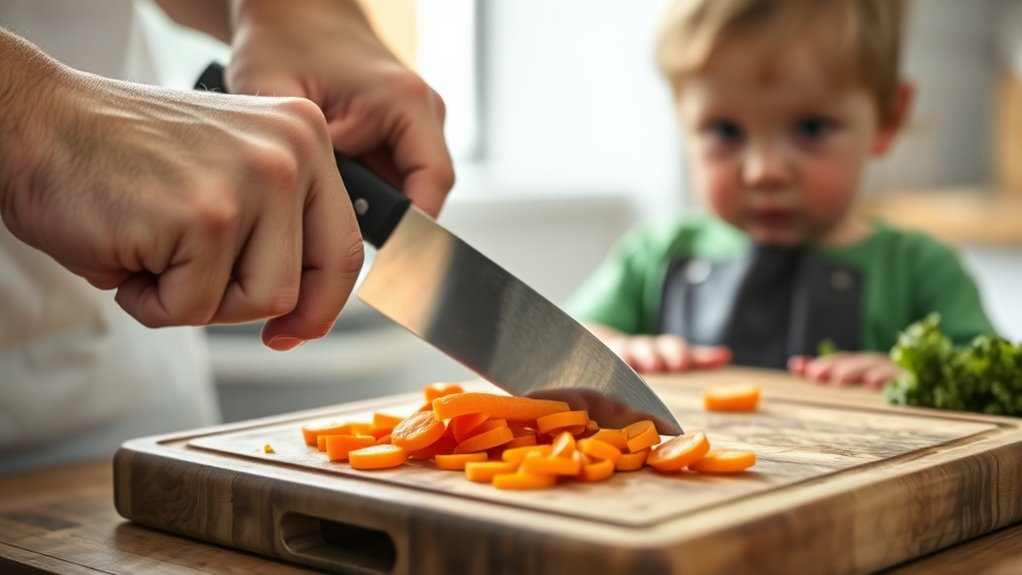
Mastering safe knife skills is essential for parents to ensure both their safety and their children’s during meal preparation. Always use a sharp knife, as dull blades require more force and are more likely to slip. Proper cutting techniques, such as curling fingers and using a stable cutting board, can prevent accidents. Keeping knives properly stored and out of children’s reach is crucial in maintaining a safe kitchen environment. Additionally, practicing effective filtration and pump protection for your kitchen tools and appliances can help maintain their efficiency and longevity, ensuring your equipment performs safely and reliably.
Frequently Asked Questions
What Are the Best Age-Appropriate Knives for Children?
You should choose child-friendly knives that are specifically designed for kids, typically around ages 4 to 8. Look for age-specific cutlery with rounded tips and dull blades to guarantee safety. These knives help children develop proper cutting skills while minimizing risks. As your child gains confidence and improves their coordination, you can gradually introduce more advanced knives, always supervising closely to keep safety a priority.
How Can I Teach My Child Knife Safety Effectively?
Think of teaching knife safety as guiding a ship through calm waters. You should start with clear safety demonstrations, showing how to handle knives properly. Then, practice knife handling together, emphasizing the importance of focus and slow movements. Reinforce rules regularly, praise good habits, and supervise closely. By making safety a routine, your child will develop responsible skills that keep everyone safe—like a captain steering with care.
What Should I Do if My Child Gets a Cut?
If your child gets a cut, stay calm and act quickly. First, stop any bleeding by applying gentle pressure with a clean cloth or bandage. Then, clean the wound with water and apply an antiseptic if available. If the cut is deep or won’t stop bleeding, seek emergency response immediately. For minor cuts, monitor for signs of infection and keep the wound clean and covered until it heals.
Are There Safe Alternatives to Traditional Knives for Kids?
Yes, there are child-safe utensils and beginner knife sets designed specifically for kids. These tools feature dull blades, rounded edges, and lightweight handles, making them much safer for children to use. You can introduce your child to basic cutting skills with these alternatives, reducing the risk of accidents. Always supervise your child closely and teach proper techniques to guarantee safety while they learn to handle knives responsibly.
How Can I Supervise My Child’s Knife Use Without Micromanaging?
Think of supervising your child’s knife use as guiding a small boat through calm waters. You stay close enough to steer away from danger but give them space to learn. Set clear safety boundaries, like always cutting on a non-slip surface and keeping fingers tucked in. Child supervision means staying present, watching their movements, and offering gentle corrections, so they develop confidence while staying safe without feeling micromanaged.
Conclusion
Practicing safe knife skills keeps your kids out of harm’s way and builds their confidence in the kitchen. Did you know that most childhood injuries from knives happen when kids are helping with meal prep? By setting clear boundaries, using proper techniques, and supervising closely, you create a safe environment for everyone. Remember, a little caution goes a long way in turning cooking time into a fun, educational experience for your family.