
TL;DR
A commentary published by The 74 argues that local leaders should protect and adequately fund school family liaison positions as immigrant families face heightened deportation fears. The essay describes liaisons’ work and reports that some roles have been underpaid, poorly resourced or cut; it does not provide national data on staffing or funding.
The 74 published an opinion essay urging newly elected local and national leaders to protect funding for school family liaisons, staff members who connect immigrant families with schools and community services as immigration enforcement creates fear and disruption. The essay presents the call as a practical local response, while its examples come from the author’s research and personal knowledge rather than a nationwide assessment.

Give the gift of listening to the whole family
- Choose a 1-, 3-, 6- or 12-month membership
- They pick the audiobooks they love
- Easy to send by email
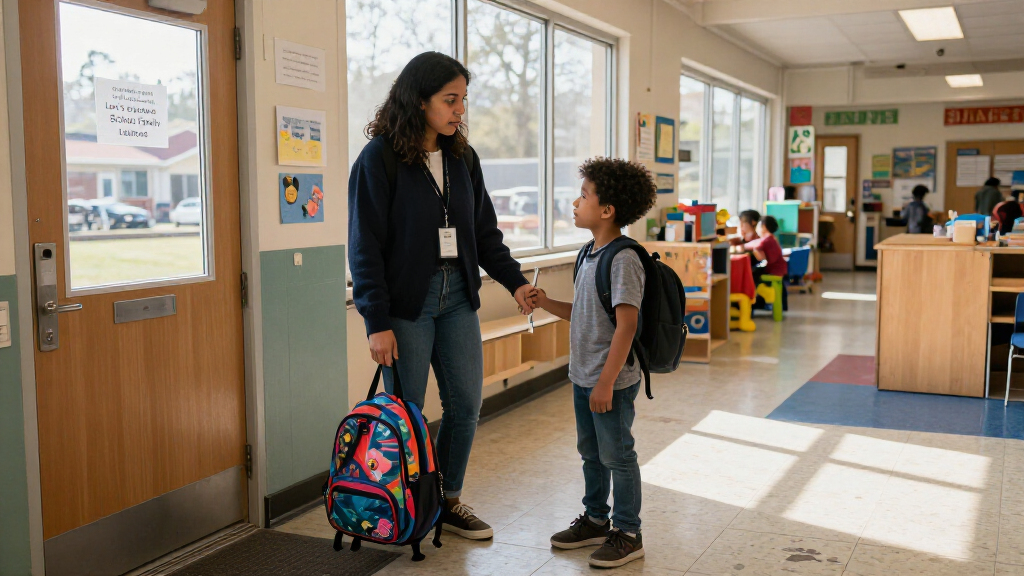
The author describes liaisons as a bridge between home and school. Their work can include helping parents find food assistance, understand English learner programs, enroll children in after-school activities, arrange transportation and address problems with landlords. The essay also says staff listen to families’ concerns about deportation and relatives abroad. These accounts are presented as observations from the author’s research for the book Holding On to Home: Immigrant Women and the Promise of Sanctuary.
One East Coast city studied by the author initially limited liaisons to 19 hours a week, just below the threshold for employee benefits, the essay says. Staff lacked district-issued phones and computers and had difficulty finding private space for sensitive conversations. The city later made the positions full time. According to the author, a liaison with seven years of experience earned $43,000, compared with a teacher of similar experience earning 40% more; the essay also gives the city’s average salary as about $125,000 and describes housing costs as among the country’s highest.
The commentary also recounts a long-serving district liaison’s layoff. The author says the employee had spent nearly three decades making home visits to immigrant mothers with newborns and connecting families to resources. The essay does not identify the district or provide records explaining the layoff. It argues that city councils and school committees can influence whether such positions receive continued funding.
How Liaisons Support School Access
The argument matters because school access alone does not guarantee a welcoming experience. The essay notes that students in the United States have a legal right to attend public school regardless of their own or their parents’ immigration status. It argues that staff who help families understand school systems and reach local services make that access more meaningful, particularly when parents are afraid or unfamiliar with available support.
For local governments, the proposed action is specific: maintain or increase funding for family liaisons and related positions. The essay frames this as one way to help families facing immigration-related uncertainty, while also supporting schools’ relationships with parents. It does not establish how many districts have liaisons, how widespread layoffs are, or what funding level would be sufficient.
Products Worth Considering

Graco TrueCoat 360 Drill-Powered Paint Sprayer

LEGO Speed Champions Ultimate Formula 1 Collector's Pack, 10 Sets, 2,601 Pieces

Graco SlimFit 3-in-1 Convertible Car Seat, Jarret
As an affiliate, we earn on qualifying purchases.
The Essay’s Local Staffing Examples
The source is an opinion piece, not a government announcement, district policy change or independently verified national report. Its case rests on the author’s research into immigrant women and sanctuary, including a study of one East Coast city, alongside accounts of people known to the author. The examples illustrate working conditions and duties but cannot establish that the same conditions apply across school systems.
The essay places its recommendation after an election in which, it says, voters elected Democrats in local and national contests. It urges those leaders to respond to immigration enforcement and pressure on local budgets. The source refers to federal funding cuts but does not detail the programs, amounts or dates involved. Its central proposal is that officials recognize liaison work as part of schools’ support for immigrant families, rather than treating it as expendable administrative labor.
““One place to start is in public schools.””
— The 74 opinion essay
Scale of Cuts Remains Unclear
The source provides no national figures for the number of school family liaisons, their pay, staffing levels or recent layoffs. It also does not identify the district where the long-serving liaison was laid off or state when the dismissal occurred. The reported salary and working conditions are tied to the author’s account of a particular city and should not be read as representative of all districts.
It is also unclear which federal funding reductions the essay refers to, how much local school budgets may be affected, or whether newly elected officials have proposed specific funding measures. The essay’s claims about the effects of immigration enforcement on families are part of its argument; the source does not include new enforcement statistics or responses from government agencies and school districts.
Local Budgets Are the Next Test
The next steps depend on decisions by city councils, school committees and other local officials, who the essay says can fund liaison roles. The source reports no pending vote, budget proposal or timetable for action. Readers seeking confirmation of changes in a particular district would need to check its staffing plans, budget documents and statements from school officials.
The broader question raised by the commentary is whether leaders who campaigned against the administration’s immigration approach will translate that position into local support for families. Any changes in liaison staffing or resources remain to be announced; the essay’s recommendation is a call to action, not a report of a policy already adopted.
Key Questions
What are school family liaisons?
They are school-based staff intended to connect families and schools. In the essay’s examples, they help parents reach services, understand school programs and communicate with educators.
What is the essay asking officials to do?
It urges local leaders to provide adequate funding for family liaisons and similar community support roles. It does not describe a specific funding plan that has been approved.
Does the report show that liaison positions are being cut nationwide?
No. The essay describes one layoff and working conditions in one East Coast city, but it provides no national staffing or layoff data.
Do students have a right to attend public school regardless of immigration status?
The essay states that students in the United States have a legal right to attend school regardless of their own or their parents’ immigration status. It argues that liaisons help families navigate school and community resources in practice.
Source: the74million.org