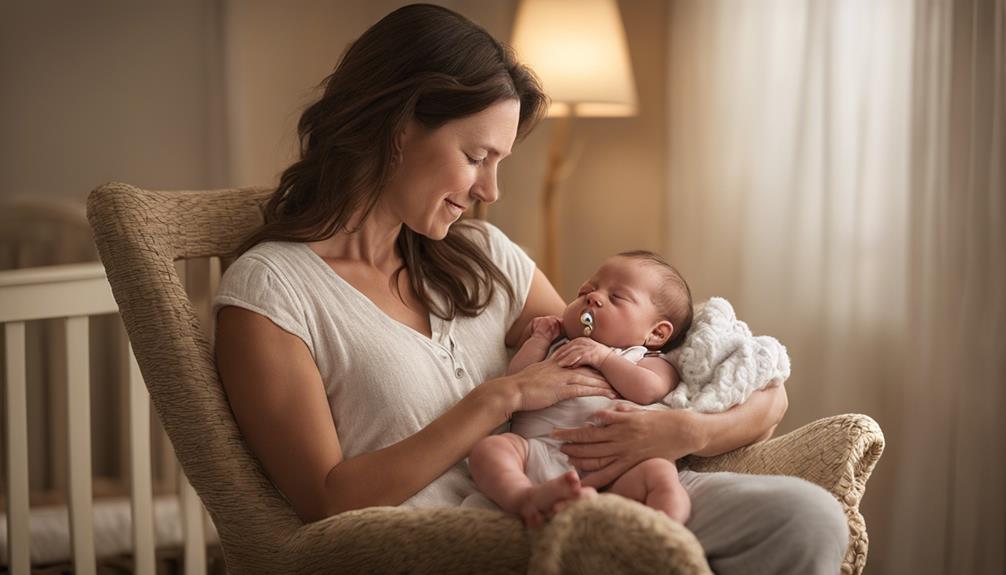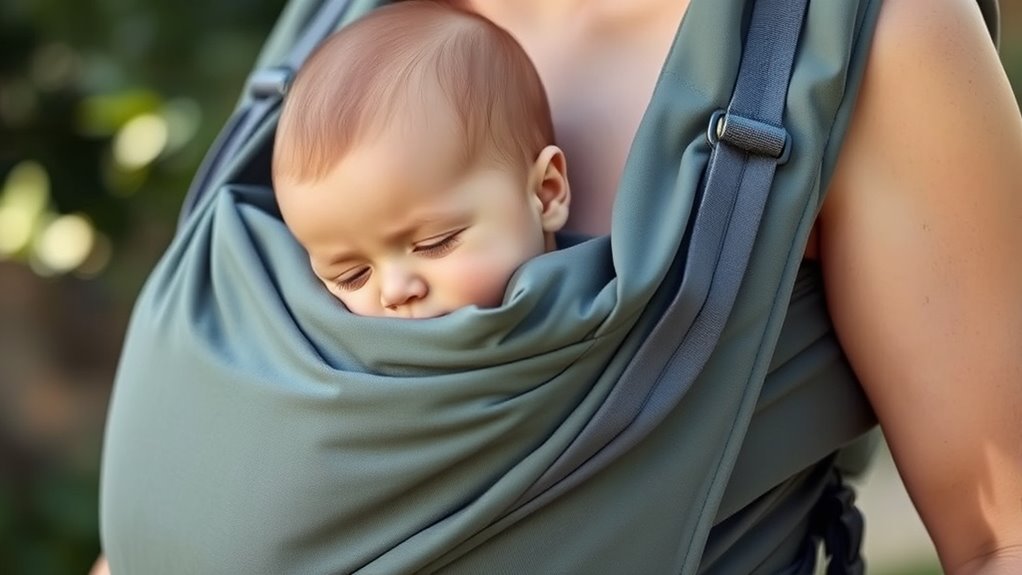

To guarantee babywearing safety and comfort, keep your baby close enough to kiss and support their hips in an ergonomic M-shape with knees higher than the bottom. Adjust the carrier so their face remains visible and chin isn’t pressed to the chest. Check all straps, buckles, and fastenings regularly for wear or damage. Monitoring your baby’s position and the carrier’s condition helps prevent discomfort and health issues—stay with us to learn more about perfecting your babywearing technique.
Key Takeaways
- Keep the baby close enough to kiss, supporting proper ergonomic positioning.
- Regularly inspect the carrier for wear, damage, and secure fastenings before each use.
- Ensure the baby’s hips are in an M-shape with knees higher than the bottom for healthy development.
- Maintain a straight back and relaxed shoulders during wear to support comfort and safety.
- Constantly monitor the baby’s face, back support, and hip position to ensure they are safe and comfortable.
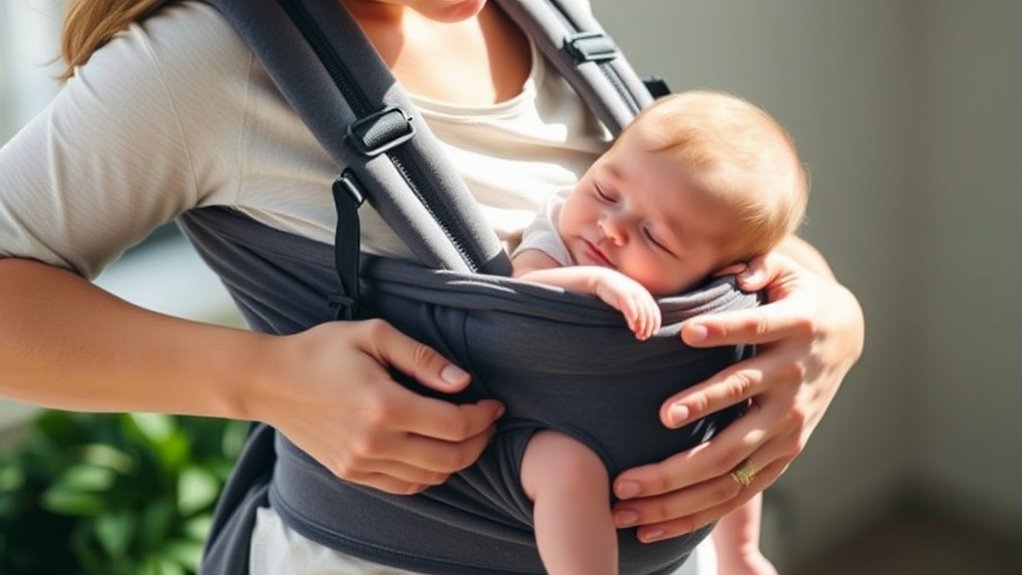
Have you ever wondered how to keep your baby safe while babywearing? One of the most important aspects is guaranteeing you maintain an ergonomic posture. When you wear your baby correctly, you support both your child’s developing body and your own comfort. An ergonomic posture means keeping your baby close enough to kiss, with their hips properly supported in an frog-leg position. This helps prevent hip dysplasia and promotes healthy muscle development. To achieve this, adjust your carrier so that your baby’s knees are higher than their bottom, creating an M-shape with their legs. Keep your back straight and shoulders relaxed, avoiding any hunching or leaning forward. This not only reduces strain on your back and shoulders but also promotes better circulation and comfort during extended wear. Incorporating proper ergonomic positioning can make a significant difference in safety and comfort. Equally vital is regularly inspecting your carrier before each use. Carrier inspection involves checking all straps, buckles, seams, and fastenings for signs of wear or damage. Over time, materials can weaken or become compromised, which could lead to accidental openings or tears while you’re wearing your baby. Make sure all buckles click securely into place and that straps are intact and free of fraying. If you notice any deterioration, replace the carrier immediately. It’s a good habit to do a quick visual and physical check every time you put your baby in, especially if you’ve used the carrier frequently or it’s been stored for a while. This guarantees safety and helps you catch any issues early before they become a problem. Proper positioning of your baby in the carrier is also part of this safety check. The baby’s face should be visible at all times, and their chin shouldn’t be pressed against their chest, which could restrict breathing. Make sure the carrier supports their back well and that their hips are in a healthy, ergonomic position. Additionally, always follow the manufacturer’s instructions for weight limits and age recommendations. Remember, a well-adjusted carrier not only keeps your baby safe but also makes your experience more comfortable.
ergonomic baby carrier for hip support
As an affiliate, we earn on qualifying purchases.
As an affiliate, we earn on qualifying purchases.
Frequently Asked Questions
Can I Wear My Baby While Sleeping?
Yes, you can wear your baby while sleeping, but make certain you’re comfortable and your baby’s airway stays clear. Wearing your baby during naps can support breastfeeding compatibility and help soothe them, especially if they have irregular infant sleep patterns. Always use a secure, ergonomic carrier, and avoid slouching or positions that could restrict breathing. Monitor your baby closely to keep them safe and comfortable during sleep.
How Long Can I Safely Babywear Each Day?
You can safely wear your baby for about 1-2 hours at a stretch, but don’t push your luck. While babywearing myths suggest longer is better, moderation is key, especially if you’re breastfeeding benefits or bonding. Listen to your baby’s cues and take breaks to prevent strain. Remember, quality time matters more than quantity, and keeping both of you comfortable helps ensure a positive experience.
Are There Age or Weight Limits for Babywearing?
You should follow age restrictions and weight guidelines for safe babywearing. Typically, carriers are suitable for infants from around 8 pounds, and many can be used up to 35 pounds, but always verify the manufacturer’s recommendations. Avoid using carriers for babies who are too young or below the weight limit, as this can compromise safety and comfort. Make certain your baby’s position supports healthy hip development and proper airway clearance.
What Should I Do if My Baby Gets Too Hot?
If your baby gets too hot, remove them from the carrier immediately and move to a cooler spot. Watch for signs of heat exhaustion, like sweating or fussiness. To prevent this, use breathable fabrics for babywearing and make certain your baby’s head and neck are well-ventilated. Keep the carrier loose and dress your baby in lightweight, breathable clothing, especially on hot days. Stay attentive to their comfort and safety at all times.
How Do I Prevent Back Pain From Babywearing?
To prevent back pain from babywearing, focus on maintaining an ergonomic posture and choosing a supportive carrier. Keep your back straight, shoulders relaxed, and hips aligned. Adjust the carrier so your baby is close enough to kiss and well-supported, reducing strain. Switch sides regularly if possible, and take breaks to stretch. Proper positioning and a supportive carrier will help you stay comfortable and avoid unnecessary back pain.
babywearing safety inspection kit
As an affiliate, we earn on qualifying purchases.
As an affiliate, we earn on qualifying purchases.
Conclusion
Remember, babywearing isn’t just a trend—it’s a lifesaver that keeps your little one close and your hands free. By following safety guidelines and choosing comfortable carriers, you can avoid mishaps and make every outing enjoyable. Think of it as your secret weapon for busy days! Always stay alert, stay informed, and trust your instincts. With proper care, you’ll turn every moment into an unforgettable bonding adventure. Your safety and your baby’s happiness depend on it!
adjustable baby carrier with secure buckles
As an affiliate, we earn on qualifying purchases.
As an affiliate, we earn on qualifying purchases.
baby carrier with visible face window
As an affiliate, we earn on qualifying purchases.
As an affiliate, we earn on qualifying purchases.