
When starting a formula feeding regimen for a 5-month-old, it’s essential to take into account their specific nutritional requirements and eating habits.

Turn the school run and nap time into listening time
- Thousands of audiobooks, podcasts and originals
- Listen on your phone, tablet or Echo — also offline
- Cancel anytime
Imagine the challenge of juggling multiple feedings while ensuring your little one stays content and well-fed throughout the day.
How can we strike a balance between fulfilling their hunger cues and maintaining a structured routine that works for both baby and caregiver?
Let's explore practical steps and strategies that can assist in creating a harmonious and effective feeding schedule for your 5-month-old.
Key Takeaways
- Feed every 3-4 hours with 6-8 ounces per feeding for a 5-month-old
- Recognize hunger cues promptly to establish a feeding routine
- Balance feedings with naps to prevent hunger disruptions
- Introduce solid foods gradually while monitoring growth and development cues
Establishing a Feeding Routine
When establishing a feeding routine for your 5-month-old baby, it's important to begin by feeding them every 3-4 hours during the day. This significant schedule helps in meeting your baby's nutritional needs and promoting healthy growth.
For each feeding, offer around 6-8 ounces of baby formula, adjusting the amount based on your baby's cues for hunger and fullness. It's recommended to aim for a total of 24-32 ounces of formula intake per day, spread out over multiple feedings to make certain adequate nutrition.
Always consult a health professional for guidance on the proper amount of formula and the introduction of solid foods at this stage. Monitoring your baby's growth, development, and response to the feeding routine is essential to making any necessary adjustments for their well-being.
Establishing a feeding routine sets the foundation for healthy eating habits and supports your baby's overall health and development at this stage of their life.
Understanding Baby's Hunger Cues

To guarantee your baby's nutritional needs are met and to promote healthy growth, it is crucial to recognize and respond to their hunger cues effectively. Early hunger cues such as rooting, sucking on fists, or making sucking sounds indicate that it's time to offer a bottle. Crying is a late hunger cue, so it's best to be proactive. Observing signs of fullness like turning away from the bottle or slowing down sucking can help you understand when your baby has had enough. Every baby may have unique hunger cues, so pay close attention to your little one's signals. Responding promptly to these cues not only helps in establishing a healthy feeding routine but also strengthens the bond between you and your baby.
| Hunger Cues | Signs of Fullness | Unique Signals |
|---|---|---|
| Rooting | Turning away | Sucking on clothes |
| Sucking sounds | Slowing down | Pulling ears |
| Fist sucking | Pushing bottle | Rubbing eyes |
Balancing Feedings and Naps
Incorporating a balanced routine of feedings and naps is essential for guaranteeing your 5-month-old receives adequate nourishment and rest throughout the day. At this age, your baby may typically consume around 5-6 ounces of formula per feeding, spread out over approximately 4-6 feedings each day.
To maintain a healthy feeding schedule, aim for intervals of about 3-4 hours between feedings to establish a consistent routine. Consider offering a feeding before naps to prevent hunger from disrupting sleep and encourage longer nap times. It's critical to pay close attention to your baby's cues and adjust the feeding schedule as needed to accommodate growth spurts or changes in appetite.
Tailoring Nutritional Needs
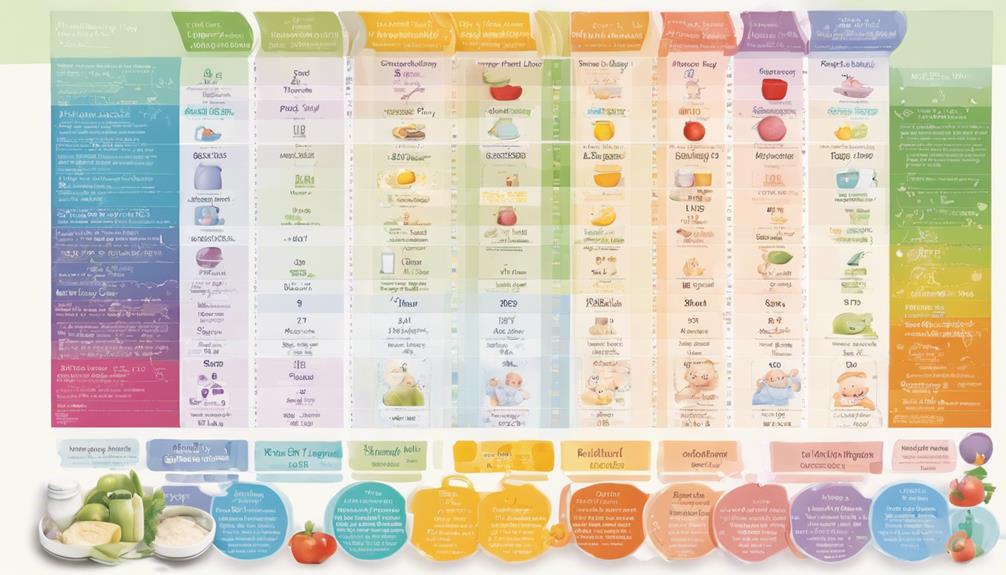
Tailoring a 5-month-old's nutritional needs involves gradually introducing solid foods while maintaining a consistent formula feeding schedule to support the baby's evolving dietary requirements. At this age, babies typically consume about 5-6 ounces of formula per feeding, approximately 4-6 times a day.
Monitoring your baby's growth, development, and appetite cues to adjust the formula feeding schedule accordingly is important. Additionally, consider offering water in a cup alongside formula feedings to encourage hydration and develop drinking skills.
Consulting with a pediatrician or healthcare provider is vital for personalized guidance on your 5-month-old's formula feeding schedule. By staying attentive to your baby's needs and seeking professional advice when necessary, you can make sure they receive the appropriate nutrition and hydration at this stage of their development.
Integrating Feeding Into Daily Routine
Establishing a consistent feeding routine for your 5-month-old is crucial to promote stability and support their growth and development. To integrate feeding into your daily routine effectively, consider the following:
- Follow a Feeding Schedule: Offer infant formula every 3-4 hours during the day to guarantee regular nourishment. This routine helps meet the baby's caloric requirements and supports their growth.
- Introduction of Solid Foods: Gradually introduce solid foods alongside formula feeds to accommodate the baby's increasing nutritional needs. This step aids in providing a diverse range of nutrients essential for their development.
- Monitoring Hunger Cues: Pay attention to your baby's hunger cues and adjust the feeding schedule accordingly. Being responsive to their signals can help in recognizing growth spurts or changes in appetite, ensuring their nutritional needs are met effectively.
Frequently Asked Questions
What Is the Routine for a 5 Month Old Formula Fed Baby?
We feed our 5-month-old formula-fed baby around 6-7 ounces 5-6 times a day. Solid foods may be introduced, but formula remains essential. Nightly, longer stretches of sleep occur, sometimes 10-12 hours. Watching cues helps establish a feeding routine beneficial for both baby and us.
How Do You Make a Formula Feed Step by Step?
Here's how we make a formula feed step by step: Wash hands, sterilize bottle, add water following instructions, measure formula accurately, shake well, test temperature on wrist. Validate it's body temperature before feeding baby.
What Is a Good Eating Schedule for a 5 Month Old?
We find that a good eating schedule for a 5-month-old involves feeding around 6-8 ounces of formula, 4-5 times daily. Our baby may have 3 main meals and 2 snacks, adjusting based on cues for best growth and development.
How Do I Prepare My 5 Month Old for Formula?
When preparing a 5-month-old for formula, consult a pediatrician to make sure it meets their needs. Gradually introduce it by mixing with current formula, monitoring for intolerance. Watch weight gain and overall well-being closely post-change.
Conclusion
To summarize, creating a 5-month-old formula feeding schedule requires attention to detail and consistency. By understanding your baby's hunger cues, balancing feedings with naps, and tailoring their nutritional needs, you can establish a successful routine.
Remember, Rome wasn't built in a day – it may take some time to find the perfect schedule that works for your little one. Stay patient and flexible, and you'll soon have a feeding routine that suits both you and your baby.
Halloween Picks
halloween
As an affiliate, we earn on qualifying purchases.