When constipation is a concern during tube feeding, the formula’s fiber content is only one part of the decision. I would compare fiber information, calorie concentration, package format, and whether the product is actually intended for tube administration—then ask the care team whether a formula change fits the individual feeding plan. Jevity 1.5 Cal RTH stands out for its stated 22 grams of fiber per liter and concentrated nutrition, while FiberSource HN in an 8.45-ounce container offers a smaller format for planned feeding schedules. Isosource 1.5 Cal with Fiber is another concentrated option for people whose calorie or fluid needs shape the decision. These products are not interchangeable constipation treatments: labels, serving sizes, and use instructions differ, and fiber alone may not resolve symptoms.

Get baby and family essentials delivered free — and shop member deals
- Fast, free delivery on millions of items
- Access to Prime Big Deal Days deals on October 6–7
- Prime Video, Amazon Music and more included
I ranked the five by how clearly their supplied details support a comparison for tube-fed people concerned about bowel regularity, while also weighing practical fit and stated limitations. I give priority to products with explicit fiber information and tube-feeding use, rather than assuming that a similar name or a small carton means the same product. Check the exact label and feeding plan with a clinician or dietitian before changing formula, water flushes, or delivery rate; constipation can have causes beyond formula.
Complete the kit


Key Takeaways
- Abbott Jevity 1.5 Cal RTH is the clearest pick for shoppers comparing stated fiber: its supplied details specify 22 grams per liter, but a clinician should match its concentrated nutrition to the feeding plan.
- Isosource 1.5 Cal combines fiber with a stated 1.5 Cal/mL density, a useful pairing when calorie needs or limited fluid tolerance matter; its supplied description does not quantify fiber.
- Fibersource HN 1500 mL ready-to-hang containers prioritize convenient setup and state 1800 calories per container, though large containers may be less practical after opening.
- The 8.45-ounce FiberSource HN has a compact package format, but the supplied listing does not state fiber grams or calorie density, so compare its full label before choosing it for constipation concerns.
- The Jevity 1.5 Cal 8-ounce cartons are described as an oral nutrition product, not a tube-feeding formula; do not substitute them for a tube-specific product without professional direction.
| Abbott Jevity 1.5 Cal RTH Tube Feeding Formula, Unflavored, Gluten-Free with Fiber (Case of 8) |  | Best Overall for Clearly Stated Fiber | Brand: Abbott | Formula: Jevity 1.5 Cal | Container volume: 1000 mL | VIEW ON AMAZON | See Our Full Breakdown |
| Isosource 1.5 Cal Complete Nutrition with Fiber, Unflavored, 8.45 Fl Oz, 24 Pack |  | Best for Calorie-Dense Feeding Plans | Brand: Isosource | Formula: Isosource 1.5 Cal | Unit volume: 8.45 fl oz | VIEW ON AMAZON | See Our Full Breakdown |
| Fibersource HN Tube Feeding Formula, Unflavored, 1500 mL Ready-to-Hang Container (4 Count) |  | Best Ready-to-Hang Format | Brand: Fibersource | Formula: HN Tube Feeding Formula | Flavor: Unflavored | VIEW ON AMAZON | See Our Full Breakdown |
| FiberSource HN High Nitrogen Complete Nutrition Formula, Unflavored, 8.45 Fl Oz | 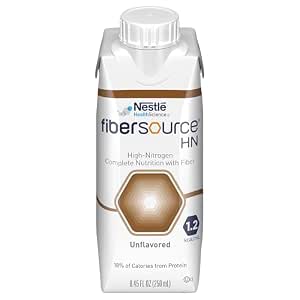 | Best Compact FiberSource HN Format | Brand: FiberSource | Formula: HN High Nitrogen Complete Nutrition | Flavor: Unflavored | VIEW ON AMAZON | See Our Full Breakdown |
| Jevity 1.5 Cal High Protein Nutrition, 8-Ounce Cartons, Pack of 24 |  | Best Only If an Oral Product Is Specifically Prescribed | Product: Jevity 1.5 Cal High Protein Nutrition | Carton size: 8 ounces | Pack quantity: 24 cartons | VIEW ON AMAZON | See Our Full Breakdown |
| tube feeding formula for constipation | Brand | Formula | Fiber | Flavor |
|---|---|---|---|---|
| Abbott Jevity 1.5 Cal RTH Tube | Abbott | Jevity 1.5 Cal | 22 grams per liter | Unflavored |
| Isosource 1.5 Cal Complete Nut | Isosource | Isosource 1.5 Cal | Contains fiber; amount not stated in supplied details | Unflavored |
| Fibersource HN Tube Feeding Fo | Fibersource | HN Tube Feeding Formula | Fiber-fortified; amount not stated in supplied details | Unflavored |
| FiberSource HN High Nitrogen C | FiberSource | HN High Nitrogen Complete Nutrition | — | Unflavored |
| Jevity 1.5 Cal High Protein Nu | — | — | Amount not stated in supplied details | — |
More Details on Our Top Picks
Abbott Jevity 1.5 Cal RTH Tube Feeding Formula, Unflavored, Gluten-Free with Fiber (Case of 8)
For a buyer who wants the most concrete fiber figure in this group, Jevity 1.5 Cal RTH is the clearest starting point: the supplied listing states 22 grams of dietary fiber per liter. That makes its label easier to compare with a dietitian’s target than the other listings, which say they contain fiber without giving a quantity. It is also a ready-to-use tube-feeding formula with 1.5 Cal/mL density, so it pairs the explicit fiber detail with concentrated nutrition rather than requiring preparation from powder.
Compared with the 1500 mL Fibersource HN, Jevity gives a smaller 1000 mL container and a stated fiber amount, while Fibersource’s listing highlights 1800 calories per container and ready-to-hang packaging. Which is more convenient depends on the prescribed daily volume, equipment, and storage routine. Jevity’s calorie concentration can help fit nutrition into a lower volume, but a concentrated formula is not automatically the better choice for someone whose hydration plan or tolerance calls for another approach. Its unflavored profile and tube-only instructions also make it a poor fit for someone seeking a drinkable supplement. Ask the care team to match fiber, calories, and fluids to the individual plan; the listed fiber figure is information for that discussion, not a guarantee of relief.
Pros:- Lists 22 grams of fiber per liter, the clearest quantified fiber information in this lineup.
- 1.5 Cal/mL density provides concentrated nutrition in a stated 1000 mL container.
- Ready-to-use carton format avoids mixing.
- Listing identifies gluten-free, Halal, and Kosher attributes.
Cons:- Unflavored and described for tube feeding, not oral consumption.
- Concentrated calories may not suit every hydration or tolerance plan.
- The case format and container handling may be less convenient than an individual compact carton.
Best for: Tube-fed buyers who want a stated fiber amount for comparison and whose clinician has approved a concentrated, ready-to-use formula.
Not ideal for: People who need an oral nutrition drink, cannot use the listed ingredients, or need a formula selected around a different hydration or tolerance plan.
- Brand:Abbott
- Formula:Jevity 1.5 Cal
- Container volume:1000 mL
- Case quantity:8 containers
- Fiber:22 grams per liter
- Format:Ready-to-use RTH tetra carton
- Dietary attributes:Gluten-free; Halal and Kosher certified
- Flavor:Unflavored
Our verdict“I rank Jevity 1.5 Cal RTH first because its explicit fiber figure makes it the most straightforward option to discuss with a clinician.”
Isosource 1.5 Cal Complete Nutrition with Fiber, Unflavored, 8.45 Fl Oz, 24 Pack
Isosource 1.5 Cal is the most direct match here for a buyer balancing fiber with a stated need for concentrated calories or limited fluid tolerance. The listing specifies 1.5 Cal/mL, calls the formula nutritionally complete, and says it contains fiber. That combination can make it relevant when a clinician is working within a set volume; it does not mean that a concentrated formula should be chosen without checking the person’s fluid prescription and tolerance.
Compared with Jevity 1.5 Cal RTH, Isosource shares the 1.5 Cal/mL density but the supplied details do not state fiber grams. Jevity therefore wins for measurable fiber comparison, while Isosource’s listing emphasizes support for lean body mass and its 8.45-ounce units. The smaller units may better suit a schedule built around individual portions than Fibersource HN’s 1500 mL ready-to-hang container, though package format alone cannot establish ease of use with a particular pump or tube. Confirm the exact fiber amount on the current label before comparing it with a prescribed target. The product is identified for tube feeding, so it is not a casual oral drink choice, and its unflavored profile may be unappealing if someone is considering oral use despite the stated intended route.
Pros:- Nutritionally complete formula with fiber.
- Stated 1.5 Cal/mL density for calorie-conscious volume planning.
- Listing identifies increased calorie needs and limited fluid tolerance as intended considerations.
- 24-pack of 8.45-ounce units offers a different portion format from large ready-to-hang containers.
Cons:- The supplied description does not state fiber grams per serving or liter.
- Tube-feeding product, not intended as an oral drink.
- Unflavored formula may be unattractive if considered for oral use.
Best for: People on a clinician-directed tube-feeding plan who need a complete, concentrated formula and want fiber included.
Not ideal for: Buyers who need a quantified fiber amount from the supplied product details, or anyone seeking an oral supplement.
- Brand:Isosource
- Formula:Isosource 1.5 Cal
- Unit volume:8.45 fl oz
- Pack size:24 units
- Caloric density:1.5 Cal/mL
- Fiber:Contains fiber; amount not stated in supplied details
- Intended use:Tube feeding
- Flavor:Unflavored
Our verdict“I place Isosource second for its useful combination of stated calorie density and fiber, while its unquantified fiber details keep it behind Jevity for constipation-focused comparison.”
Fibersource HN Tube Feeding Formula, Unflavored, 1500 mL Ready-to-Hang Container (4 Count)
When minimizing setup matters more than buying a compact unit, Fibersource HN 1500 mL stands out for its prefilled ready-to-hang container. The listing describes it as high-nitrogen and fiber-fortified, with 1800 calories in each container. Those details make it a plausible comparison point for people whose prescribed feeding plan calls for a larger container and meaningful calorie delivery, but the supplied information does not quantify fiber. I would not assume its fiber content matches Jevity’s stated 22 grams per liter.
Compared with Isosource’s 8.45-ounce units, this Fibersource package has a much larger container and a setup-oriented format; that can reduce container changes in a suitable routine, but opening and storing a large unit may create extra handling demands. The product’s stated calorie total is per container, so it should not be compared directly with per-milliliter values without calculating the equivalent and checking the label. Ask about the prescribed hang time and storage instructions, especially since the supplied listing notes refrigeration after opening may be needed. Its unflavored formula is designed for tube feeding, not as a flavored oral supplement. For constipation specifically, its fiber-fortified description is relevant, but buyers who need a precise fiber figure may prefer Jevity’s more explicit listing.
Pros:- Prefilled ready-to-hang container can simplify setup.
- Fiber-fortified formula is relevant to a bowel-regularity discussion.
- Each 1500 mL container is listed as providing 1800 calories.
- High-nitrogen positioning may suit plans with elevated protein needs, subject to clinician guidance.
Cons:- Fiber quantity is not provided in the supplied details.
- Large container can require refrigeration after opening and careful storage.
- Unflavored tube-feeding formula is not an appealing oral supplement option.
Best for: Tube-fed people whose prescribed plan suits a large ready-to-hang container and who value a prefilled setup.
Not ideal for: Those who need a small single-serving format, want a stated fiber quantity, or have limited refrigerator space after opening.
- Brand:Fibersource
- Formula:HN Tube Feeding Formula
- Flavor:Unflavored
- Container volume:1500 mL
- Calories per container:1800
- Pack size:4 containers
- Container type:Prefilled ready-to-hang
- Fiber:Fiber-fortified; amount not stated in supplied details
Our verdict“I recommend Fibersource HN for buyers prioritizing ready-to-hang convenience, not for those who need the most transparent fiber measurement.”
FiberSource HN High Nitrogen Complete Nutrition Formula, Unflavored, 8.45 Fl Oz
This 8.45-ounce FiberSource HN earns a place for buyers who prefer a smaller container over the 1500 mL ready-to-hang Fibersource package. The listing calls it nutritionally complete, tube-feeding only, and suitable for normal or elevated calorie and protein requirements. It also says the formula contains fiber and is appropriate for people with lactose intolerance and gluten sensitivities. That can make its dietary attributes useful to check, but they do not replace a full ingredient and allergen review.
The main tradeoff against its larger Fibersource counterpart is practical scale: a compact unit may fit a portion-based routine better, while the larger ready-to-hang container offers prefilled administration and states calories per container. The supplied compact-product details do not list calories per unit or grams of fiber, so it is harder to compare on the two numbers most relevant to a carefully managed feeding schedule. Compared with Jevity RTH, it also lacks a quantified fiber statement. Verify the complete nutrition panel before treating it as a match for an established prescription. The listing says it is not suitable for people with galactosemia and is not for IV administration. Its clear tube-only designation makes it a poor choice for someone shopping for an oral nutrition drink.
Pros:- Compact 8.45-ounce container format.
- Described as nutritionally complete and containing fiber.
- Listing identifies suitability for lactose intolerance and gluten sensitivities.
- Kosher designation is included in the supplied details.
Cons:- Fiber quantity and calorie density are not stated in the supplied details.
- Tube-feeding use only; not for IV administration.
- Not suitable for individuals with galactosemia.
Best for: Tube-fed buyers who want a compact FiberSource HN package and have checked the full label against their nutrition plan.
Not ideal for: People who need fiber grams or calories stated upfront, those with galactosemia, or anyone seeking an oral formula.
- Brand:FiberSource
- Formula:HN High Nitrogen Complete Nutrition
- Flavor:Unflavored
- Volume:8.45 fl oz
- Dietary attributes:Gluten-free; Kosher
- Stated suitability:Lactose intolerance
- Intended use:Tube feeding only
- Caution:Not suitable for galactosemia; not for IV administration
Our verdict“I rank this as the compact FiberSource choice, but buyers should verify its fiber and calorie figures before selecting it for a constipation-focused plan.”
Jevity 1.5 Cal High Protein Nutrition, 8-Ounce Cartons, Pack of 24
This listing is the outlier, and that is why I rank it fifth for a roundup about tube feeding formula. The supplied description identifies Jevity 1.5 Cal in 8-ounce cartons as a product for oral feeding that can serve as supplemental or sole-source nutrition. It is described as lactose-free and gluten-free, while containing milk and soy. Those characteristics may matter in a separate oral-nutrition comparison, but they do not make this the same choice as Jevity 1.5 Cal RTH, which is specifically listed as a ready-to-use tube-feeding formula and includes a stated fiber amount.
Compared with the RTH carton, this product’s listing does not provide a fiber figure or clearly establish tube administration. The similar Jevity name should not be taken as proof that products share the same route, instructions, or nutrition details. Its carton size may suit an oral supplement routine if that use is approved, but buyers concerned about constipation during tube feeding should not select it based on brand resemblance or the phrase high protein. Check the route on the package and ask the prescribing clinician before any use through a feeding tube. The presence of milk and soy also means it is unsuitable for people who must avoid those ingredients. I include it chiefly to clarify the distinction between an oral carton and a tube-specific formula.
Pros:- Described for supplemental or sole-source oral nutrition.
- Listing identifies lactose-free and gluten-free attributes.
- 8-ounce cartons provide a compact oral-product format.
- High-protein positioning may be relevant when a clinician has specified that nutrition approach.
Cons:- Supplied description says oral feeding, not tube feeding.
- Fiber amount is not stated in the supplied details.
- Contains milk and soy ingredients.
Best for: People who have been directed to use an oral Jevity nutrition product and have confirmed the ingredients fit their needs.
Not ideal for: Anyone shopping specifically for a tube-feeding formula or needing a listed fiber amount for constipation-related comparison.
- Product:Jevity 1.5 Cal High Protein Nutrition
- Carton size:8 ounces
- Pack quantity:24 cartons
- Stated use:Supplemental or sole-source oral nutrition
- Dietary attributes:Lactose-free and gluten-free
- Contains:Milk and soy
- Fiber:Amount not stated in supplied details
- Tube-feeding status:Not identified as tube feeding in supplied description
Our verdict“I place this last because its supplied description is for oral nutrition, making it a poor match for buyers specifically seeking tube-feeding formula for constipation.”
How We Picked
I compared the five listings against the specific question behind this guide: which options give a tube-fed buyer useful, verifiable information when constipation is a concern? My ranking favors products explicitly described for tube feeding and with stated fiber details, but I do not treat fiber as a proven constipation cure or infer results the supplied information does not support. The strongest evidence in this set is the Jevity RTH listing’s quantified fiber content. Isosource and both FiberSource HN formats are described as fiber-containing, yet their supplied details do not give a fiber amount. That difference matters for label comparison and makes the claims less directly comparable.
I also weighed calorie density and packaging because a formula that fits a nutrition plan can still be inconvenient to administer or store. Ready-to-hang packaging may simplify setup, while smaller cartons can be easier to portion within a prescribed schedule; neither format by itself predicts bowel outcomes. I gave each product a distinct role rather than treating the list as five equivalent choices. The Jevity oral cartons rank last for this specific roundup because their description says oral feeding, unlike the tube-specific entries. Use the product label and clinician’s instructions to verify route, water needs, fiber amount, and storage after opening. I have not ranked these by personal testing or clinical outcomes, and people should not alter a prescribed feeding plan based only on this comparison.
| tube feeding formula for constipation | Brand | Formula | Dietary attributes |
|---|---|---|---|
| Abbott Jevity 1.5 Cal RTH Tube | Abbott | Jevity 1.5 Cal | Gluten-free; Halal and Kosher certified |
| Isosource 1.5 Cal Complete Nut | Isosource | Isosource 1.5 Cal | — |
| Fibersource HN Tube Feeding Fo | Fibersource | HN Tube Feeding Formula | — |
| FiberSource HN High Nitrogen C | FiberSource | HN High Nitrogen Complete Nutrition | Gluten-free; Kosher |
| Jevity 1.5 Cal High Protein Nu | — | — | Lactose-free and gluten-free |
Factors to Consider When Choosing Tube Feeding Formula For Constipation
I would treat formula selection as one part of a constipation conversation with the feeding team, not as a stand-alone fix. Use the points below to compare labels and practical fit, then confirm any change with the clinician or dietitian responsible for the feeding plan.
Start with the fiber amount, not just the word “fiber”
Among these five listings, Jevity 1.5 Cal RTH is the only one that gives a numerical fiber figure: 22 grams per liter. The Isosource and FiberSource/Fibersource descriptions say the formulas contain or are fortified with fiber but do not provide an amount in the supplied details. That does not establish that one has more fiber than another; it means the comparison is incomplete. I would check the current package label for fiber per serving and per daily volume, then ask the care team what amount is appropriate. More fiber is not automatically better for every person, and increasing formula fiber without considering fluids, medications, and the cause of constipation may not help.
Match calorie density to the prescribed volume
Jevity 1.5 Cal RTH and Isosource 1.5 Cal state a density of 1.5 Cal/mL, while the Fibersource HN 1500 mL listing gives 1800 calories per container. Density matters because some feeding plans prioritize delivering calories in a limited volume. It does not determine which formula will improve bowel regularity, and a concentrated feed can require particular attention to the individual fluid plan. The compact FiberSource listing does not state its density in the supplied details. I would compare equivalent units from the nutrition labels rather than judging a product by a large per-container calorie total.
Choose packaging around the actual feeding routine
The ready-to-hang Fibersource HN container is designed to simplify setup, but its 1500 mL size can mean more storage attention after opening. Jevity RTH comes in 1000 mL cartons, while Isosource and compact FiberSource are listed in 8.45-ounce units. Smaller containers may fit portion-based schedules, yet the correct choice depends on the prescribed delivery method, pump compatibility, hang-time directions, and handling instructions. I would not decant, reuse, or store formula beyond the label guidance to make a package fit a routine.
Confirm route, ingredients, and dietary claims
Do not rely on a familiar brand name alone. The Jevity RTH product is described as tube feeding, but the Jevity 1.5 Cal 8-ounce carton in this list is described for oral feeding. The latter also contains milk and soy. FiberSource HN is identified as tube-feeding only, and its listing cautions against use for galactosemia. Gluten-free, lactose-related, Halal, and Kosher statements can narrow a search, but a buyer should check the actual package for ingredients, allergens, and the intended route. Never use a product by a different route unless a qualified clinician has confirmed that use.
Look beyond formula when constipation appears
Constipation can relate to fluid intake, medications, activity, illness, feeding rate, or other factors, as well as formula composition. A formula change may not address the underlying cause. Contact the care team for guidance on symptoms and whether the current feeding plan needs review. Do not independently change water flushes, dilute formula, add fiber products, or adjust feeding volume or rate. If symptoms are severe, persistent, or accompanied by concerning changes, seek prompt medical advice. The product comparisons here help organize questions; they do not diagnose constipation or prescribe treatment.
Frequently Asked Questions
Which formula in this roundup lists the most specific fiber information?
Abbott Jevity 1.5 Cal RTH is the only product here whose supplied details state a numeric amount: 22 grams of dietary fiber per liter. The other tube-feeding listings describe fiber as present or fortified but do not give a quantity in the information provided. I would use the current package label and a dietitian’s advice for a true like-for-like comparison, since serving sizes and daily feeding volumes affect the total.
Can a fiber-containing tube formula relieve constipation?
Fiber may be relevant to bowel regularity, but no product in this roundup can be promised to relieve constipation. Symptoms may have several causes, including fluid intake, medicines, illness, and the feeding schedule. Ask the clinician managing the feeding plan whether the person’s current formula and fiber intake are appropriate. Do not add fiber, change formula, or adjust water flushes without professional direction.
Is Jevity 1.5 Cal RTH the same as the Jevity 1.5 Cal 8-ounce cartons?
The supplied listings describe them differently. Jevity 1.5 Cal RTH is identified as a ready-to-use tube-feeding formula and lists 22 grams of fiber per liter. The 8-ounce Jevity cartons are described as an oral nutrition product and do not give a fiber amount in the supplied details. Do not assume they can be used by the same route; check the package and get clinician approval.
Does a higher calorie density mean a formula is better for constipation?
No. Calorie density describes calories delivered in a given volume; it does not show that a formula will improve constipation. Jevity and Isosource are listed at 1.5 Cal/mL, while other details are presented in different units, so compare labels alongside the prescribed calorie and fluid plan. The care team can advise whether a concentrated formula is suitable for the individual’s needs and tolerance.
When should I contact a clinician about constipation during tube feeding?
Contact the clinician or dietitian responsible for the feeding plan when constipation is persistent, new, worsening, or affecting feeding tolerance. Seek prompt medical advice for severe symptoms or other concerning changes. Keep track of the feeding schedule, water flushes as prescribed, medications, and bowel pattern to share with the care team. Do not independently change the formula, feeding rate, or fluid plan while waiting for advice.
Conclusion
For buyers who want the clearest fiber figure to discuss with a clinician, I would start with Abbott Jevity 1.5 Cal RTH. If the plan prioritizes concentrated calories and a compact unit, Isosource 1.5 Cal is worth comparing, while its fiber amount should be confirmed from the package. For ready-to-hang convenience, Fibersource HN 1500 mL has the most setup-oriented format; choose compact FiberSource HN only after checking its full nutrition panel and fit with the prescribed routine. I would skip the Jevity 8-ounce cartons when shopping specifically for tube feeding unless the clinician confirms the intended route, since that listing describes oral use. The best match depends on the person’s full nutrition and hydration plan, not just the presence of fiber.
Cold & flu season Picks
humidifiers
As an affiliate, we earn on qualifying purchases.