
When choosing a bottle nipple flow, match it to your baby’s age and sucking strength, starting with a slow flow for newborns and upgrading gradually as they grow. Consider materials like silicone for durability and safety, avoiding harmful chemicals. Pay attention to features like venting systems that reduce colic. Proper flow guarantees comfort, prevents choking, and promotes healthy feeding habits. Keep exploring to discover tips on selecting the safest and most comfortable options for your baby.
Key Takeaways
- Match the nipple flow rate to your baby’s age and sucking strength, starting with slow for newborns.
- Consider the material—silicone is durable and safe, while latex offers a softer feel but may cause allergies.
- Observe your baby’s feeding cues; switch to faster flows gradually as they grow and become more efficient.
- Ensure the nipple has venting features to reduce gas and colic, enhancing comfort during feeding.
- Prioritize easy-to-clean, dishwasher-safe nipples to maintain hygiene and prevent bacterial buildup.
Choosing a Bottle Nipple Flow
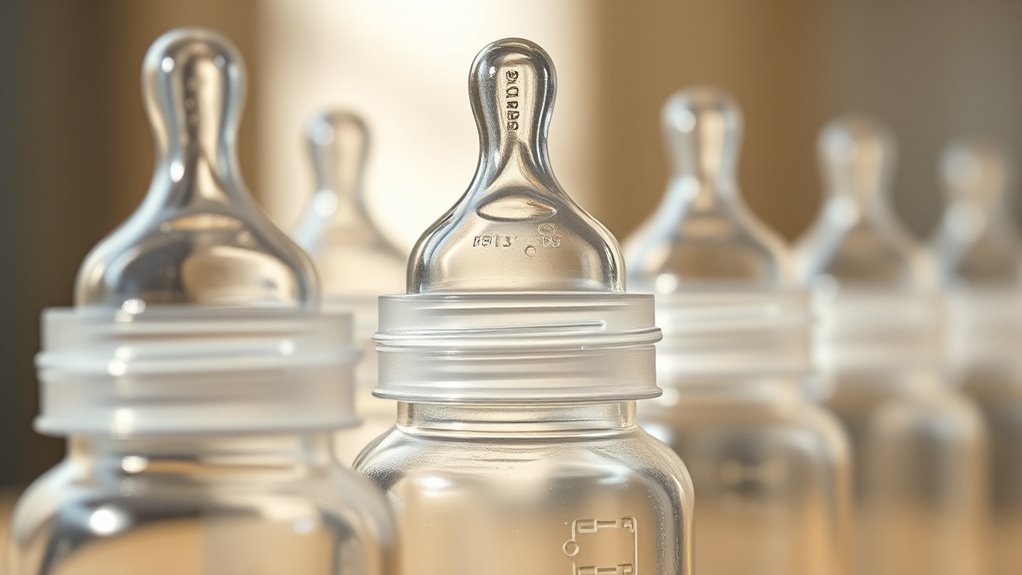
Choosing a bottle nipple flow is vital to guarantee your baby feeds comfortably and safely. When selecting a nipple, safety considerations should be your top priority. You want to guarantee the nipple is made from materials that are free of harmful chemicals like BPA, phthalates, and other toxins. Opting for nipples made from silicone is often a wise choice because it’s durable, flexible, and generally free from harmful substances. Silicone nipples tend to be more resistant to chewing and biting, reducing the risk of tearing or breaking during use, which could pose a choking hazard. Some parents prefer latex nipples because they feel softer and mimic natural breastfeeding more closely, but they can wear out faster and may cause allergic reactions in sensitive babies. Understanding these material preferences helps you make an informed choice aligned with your baby’s safety and comfort.
In addition to safety considerations and materials, you should think about how the flow rate impacts your baby’s feeding experience. Nipples come in various flow levels, typically labeled slow, medium, fast, or variable. For newborns or babies who are just starting to bottle-feed, a slow flow nipple is usually best, as it mimics the natural sucking pace and minimizes the risk of choking or overfeeding. As your baby grows and gets stronger, you might notice they become frustrated with a slow flow or tire quickly during feeds, indicating that it’s time to switch to a faster flow. However, be cautious not to rush this transition; feeding too fast can lead to gagging, choking, or discomfort. Always observe your baby’s reactions during feeds—if they seem to struggle or swallow air frequently, it might be time to adjust the nipple flow.
Choosing a nipple that is compatible with your baby’s sucking strength and developmental stage can also help promote safe feeding. Another important aspect is how the material and flow rate work together to guarantee safety and comfort. For instance, some silicone nipples come with venting systems designed to reduce colic and gas by minimizing air intake. This feature can markedly improve your baby’s comfort and lessen fussiness after feeds. When choosing a nipple, consider how easily it can be cleaned and sterilized, especially if you prioritize safety and hygiene. Make sure the materials are dishwasher-safe or easy to hand wash thoroughly, preventing bacterial buildup that could affect your child’s health.
Ultimately, selecting the proper nipple flow involves balancing safety considerations, material preferences, and your baby’s individual needs. Be attentive to their cues and consult with your pediatrician if you’re unsure about the best options. With a thoughtful approach, you’ll find a nipple that supports safe, comfortable, and effective feeding, giving you peace of mind and your little one the best start.
baby bottle nipple flow slow medium fast
As an affiliate, we earn on qualifying purchases.
As an affiliate, we earn on qualifying purchases.
Frequently Asked Questions
How Do I Know When to Change Nipple Flow Rates?
You should change nipple flow rates when your baby seems frustrated, coughs, or struggles to feed, indicating the flow is too slow or fast. Pay attention to the nipple material, as some materials might wear down faster, affecting flow speed. If your baby consistently chokes or pulls away, try a different flow speed or material. Regularly check the nipple for signs of wear, and replace it to guarantee comfortable, safe feeding.
Are Certain Nipple Flows Better for Premature Babies?
Think of nipple selection as finding the perfect key for a delicate lock. For premature babies, a slower flow nipple often acts as a gentle stream, easing their fragile feeding journey. These babies benefit from specialized nipple flows designed for premature feeding, helping them coordinate swallowing and breathing. Using the right flow guarantees comfort and safety, nurturing your tiny miracle with every gentle sip, and supporting their growth with care.
Can Switching Nipple Flows Help With Feeding Difficulties?
Switching nipple flows can help with feeding difficulties by allowing you to better match your baby’s pace. If you notice frustration or tiring during feeding, try changing the nipple’s flow restriction or material. A softer, flexible nipple may be easier for your baby to latch onto, while adjusting flow restriction guarantees milk flows at a comfortable speed. Experimenting with different nipple materials and flow options can make feeding smoother and more comfortable for both of you.
Do Different Brands Have Compatible Nipple Flow Options?
Yes, different brands often have compatible nipple flow options, but it’s important to verify brand compatibility and nipple interchangeability before mixing them. Some brands design their nipples to fit only their bottles, which can limit interchangeability. To guarantee a smooth feeding experience, check the compatibility details on packaging or manufacturer websites. Using compatible nipples can prevent leaks and ensure your baby gets the right flow.
How Does Nipple Flow Affect a Baby’s Feeding Pattern?
Like a gentle current guides a boat, nipple flow directs your baby’s feeding pattern. If the flow is too slow, your little one might struggle with sucking strength, leading to frustration. Conversely, a fast flow can cause feeding fatigue, as your baby works harder than necessary. Finding the right nipple flow helps your baby feed comfortably and efficiently, promoting a better feeding experience and healthier development.
silicone baby bottle nipples BPA free
As an affiliate, we earn on qualifying purchases.
As an affiliate, we earn on qualifying purchases.
Conclusion
Remember, choosing the right nipple flow is like planting a seed—you nurture it carefully, and it blooms into a happy, well-fed baby. Trust your instincts, and don’t rush the process; patience helps you find the perfect fit. Just as a gentle stream guides a leaf on its journey, your thoughtful choice can lead your little one toward comfort and contentment. With each small decision, you’re shaping a future filled with love and nourishment.
vented baby bottle nipples for colic
As an affiliate, we earn on qualifying purchases.
As an affiliate, we earn on qualifying purchases.
baby bottle nipples for newborns
As an affiliate, we earn on qualifying purchases.
As an affiliate, we earn on qualifying purchases.