

To set up a sleep-friendly room, you should prioritize soft, dimmable lighting with warm tones to create a calming atmosphere. Keep your space cool, quiet, and dark, using blackout curtains if needed. Choose a comfortable mattress with proper support and breathable sheets, and add supportive pillows. Organize your environment to promote relaxation, making it inviting and free of distractions. The more you refine these elements, the more peaceful your nights will become.
Key Takeaways
- Use dim, warm-toned lighting and dimming options to promote relaxation before bedtime.
- Ensure the room has blackout curtains and a comfortable temperature for optimal sleep conditions.
- Select a supportive mattress and pillows suited to your sleeping position and preferences.
- Keep noise levels low and incorporate soothing sounds or white noise to reduce disruptions.
- Create an inviting, clutter-free space that encourages relaxation and signals winding down.
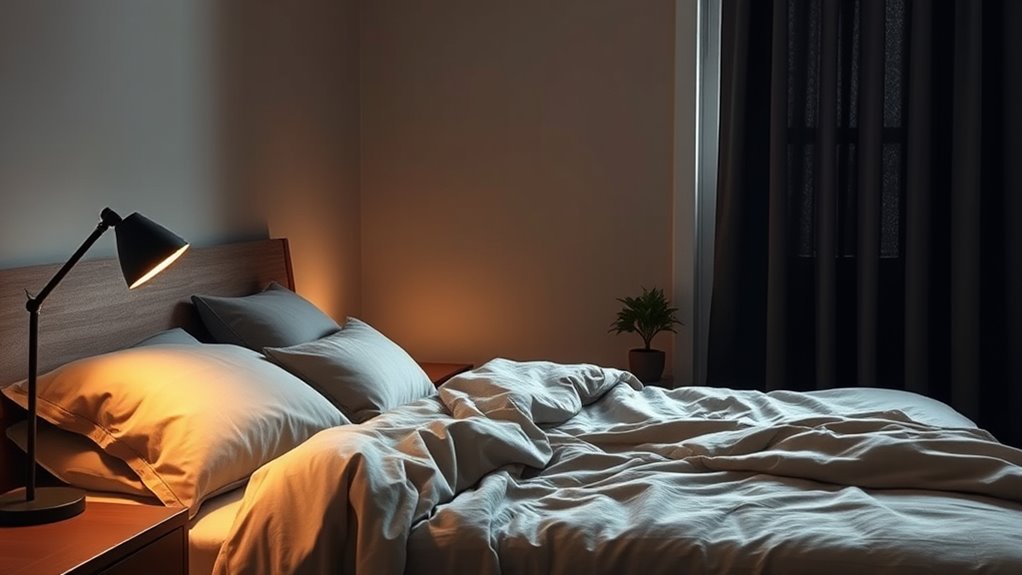
Creating a sleep-friendly room is essential for achieving restful nights and waking up refreshed. The environment you create plays a significant role in how well you sleep, so paying attention to details like lighting options and mattress selection can make all the difference. Start by evaluating your lighting choices. Bright, harsh lights can interfere with your body’s natural sleep cycle, so opt for softer, dimmable lights in your bedroom. Use warm-toned bulbs instead of cool, white ones to promote relaxation. Consider blackout curtains or shades to block out external light, especially if you live in a busy area or tend to sleep during daylight hours. Dimming the lights an hour before bed can also signal to your body that it’s time to wind down, helping you fall asleep more easily. Additionally, incorporating a comfortable sleeping environment with appropriate temperature and noise levels can further improve sleep quality.
Next, focus on choosing the right mattress. Your mattress is the foundation of your sleep environment, and selecting the right one can drastically improve your sleep quality. Look for a mattress that offers adequate support for your body type and sleeping position. If you tend to sleep on your side, prioritize a mattress with enough cushioning to alleviate pressure points. If you’re a back or stomach sleeper, a firmer option might provide better support. Don’t just go by price—test out different options if possible, and consider materials like memory foam or hybrid mattresses that conform to your body shape and reduce tossing and turning. Remember, a good mattress should feel comfortable but also support spinal alignment, so it’s worth investing in quality.
Additionally, keep in mind that your mattress should be replaced every 7-10 years, or sooner if it shows signs of sagging or discomfort. Pair your mattress with comfortable pillows and breathable sheets to enhance the overall sleep experience. When your sleep environment feels inviting and tailored to your needs, it’s easier to relax and drift into a restful sleep. The right lighting options help you transition smoothly from wakefulness to sleep, while a supportive, comfortable mattress ensures you wake up feeling rested and pain-free. By paying attention to these details, you’re setting yourself up for nights of uninterrupted sleep and mornings filled with energy and alertness. Creating a sleep-friendly room isn’t complicated, but it requires intentional choices that prioritize comfort and tranquility. When you get these elements right, sleeping becomes less of a chore and more of a restorative ritual you look forward to every night.
Frequently Asked Questions
How Can I Improve Air Quality in My Bedroom?
You can improve air quality by using an air purifier, which benefits your health by removing dust, allergens, and pollutants. Additionally, implement mold prevention strategies like controlling humidity and fixing leaks to prevent mold growth. Regularly ventilate your bedroom and keep it clean. These steps help create a healthier environment, ensuring you breathe cleaner air, sleep better, and wake up refreshed every morning.
What Are the Best Plants for a Sleep-Friendly Environment?
Imagine your bedroom as a peaceful forest, where sleep-enhancing greenery thrives. Aloe Vera, Snake Plant, and Lavender are excellent choices for plant benefits, as they purify the air and promote relaxation. These plants improve air quality, reduce stress, and create a calming atmosphere, making it easier to fall asleep. Incorporate them into your space, and you’ll turn your room into a serene sanctuary for restful nights.
How Does Room Temperature Affect Sleep Quality?
You’ll find that room temperature greatly impacts your sleep quality. Cooler temperatures, around 60-67°F, promote better rest by helping your body’s temperature regulation strategies. Using cooling mattresses can also keep you comfortable throughout the night. If it’s too warm, you might wake up feeling restless; if it’s too cold, you’ll struggle to fall asleep. Maintaining a suitable room temperature creates the perfect environment for restful sleep.
Can Specific Colors Promote Better Sleep?
Think of your room as a canvas for sleep, where colors paint your dreams. Soft blues and gentle greens, rooted in color psychology, promote calmness and relaxation, aiding sleep enhancement. These hues evoke serenity and reduce stress, helping you unwind faster. By choosing calming colors for your bedroom, you set the stage for restful nights and refreshed mornings, turning your space into a sanctuary that whispers tranquility and invites peaceful slumber.
What Noise Levels Are Ideal for Sleeping?
You should aim for a noise level of around 30 decibels or lower, which is similar to a quiet library. White noise can help mask disruptive sounds, creating a consistent background that promotes sleep. Soundproofing your room further reduces external noise, making it easier to fall asleep and stay asleep. Keep the environment peaceful by minimizing sudden loud sounds and using white noise machines or fans if needed.
Conclusion
Now that you’ve set up your sleep-friendly room, you’re practically on the path to the best sleep of your life—better than a five-star hotel! Keep your space cool, dark, and quiet, and your sleep quality will skyrocket. Remember, your environment plays a huge role in how rested you feel, so don’t underestimate the power of a cozy, calming room. With these simple tweaks, you’ll be waking up refreshed and ready to conquer the day like a true sleep superstar!