To minimize jet lag, adjust your sleep schedule to your destination’s time zone before flying, and get plenty of sunlight upon arrival to reset your internal clock. Use blackout curtains and keep your room cool for better sleep, and avoid caffeine or alcohol close to bedtime. Taking short naps can help manage fatigue, but don’t disrupt your nighttime sleep. Keep hydration high and explore natural remedies—if you keep going, you’ll discover more ways to stay rested during your trip.
Key Takeaways
- Adjust your sleep schedule to match the destination’s time zone before departing.
- Use blackout curtains, eye masks, and white noise to create a conducive sleep environment during travel.
- Maximize sunlight exposure upon arrival to help reset your internal clock quickly.
- Avoid caffeine and alcohol close to bedtime to improve sleep quality after travel.
- Take short naps (15-30 minutes) to reduce fatigue without disrupting nighttime sleep.
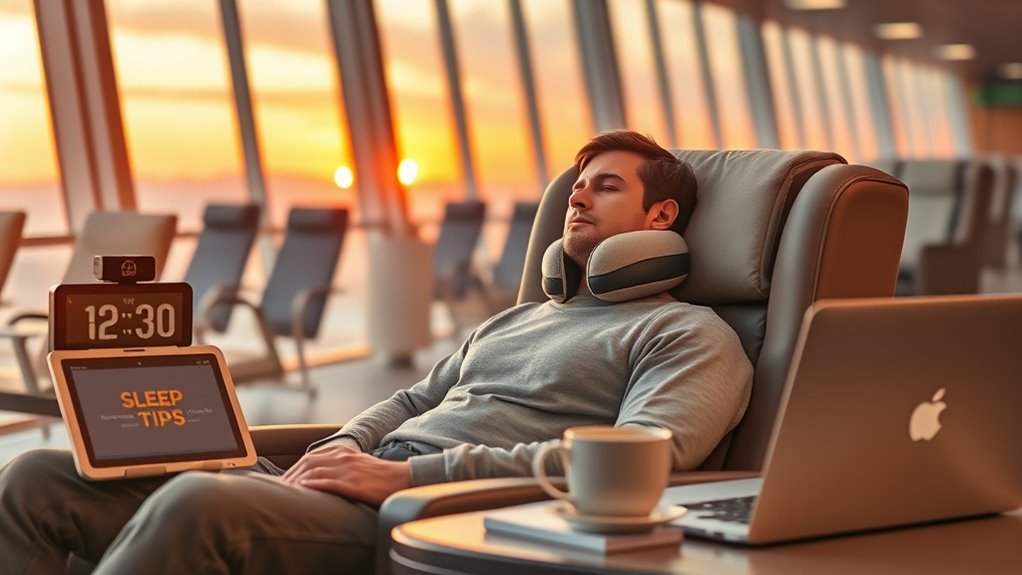
Traveling across time zones can disrupt your sleep schedule, leaving you tired and jet-lagged. To combat this, you need effective jet lag remedies that help your body adjust more quickly to the new schedule. One of the most important aspects is optimizing your sleep environment, because a comfortable, dark, and quiet space can make a huge difference in how well you rest. Before you even board your flight, consider packing earplugs and an eye mask to block out noise and light, creating a more conducive sleep environment. Once you arrive, focus on maintaining this environment by controlling the room temperature and minimizing disturbances.
Adjusting your sleep environment is essential because it signals to your body that it’s time to rest, regardless of external cues like daylight or noise. If possible, choose accommodations with blackout curtains or use a sleep mask to simulate nighttime, even if you arrive during daylight hours. Keep the room cool and comfortable, as cooler temperatures often promote better sleep. White noise machines or apps can mask unfamiliar sounds, helping you fall asleep faster and stay asleep longer. This creates a more consistent sleep environment that mimics your usual sleeping conditions, making it easier for your body to settle into a new time zone. Incorporating natural remedies such as herbal teas or supplements can also support your sleep quality during this transition.
Optimizing your sleep environment with blackout curtains, white noise, and cool temperatures helps your body adapt faster to new time zones.
In addition to optimizing your sleep environment, consider natural jet lag remedies such as exposure to sunlight during the day. Sunlight helps reset your internal clock, so spend time outside or near windows to aid your adjustment. If you’re feeling particularly tired, avoid caffeine and alcohol close to bedtime, as they can interfere with your sleep quality. Staying hydrated is also essential, as dehydration can worsen feelings of fatigue. Use these strategies alongside a well-curated sleep environment to enhance your chances of adapting quickly.
As you plan your trip, think proactively about your sleep needs. Establishing a sleep routine that aligns with your destination’s time zone before departure can ease your transition. When you arrive, try to synchronize your sleep schedule with local times as soon as possible, even if you’re initially exhausted. Napping can help, but keep naps short—15 to 30 minutes—to prevent disrupting your nighttime sleep. By combining effective jet lag remedies with a carefully crafted sleep environment, you give yourself the best shot at overcoming fatigue and enjoying your trip fully. Remember, a good night’s sleep isn’t just about comfort; it’s about helping your body adapt and thrive in new surroundings.
Frequently Asked Questions
How Can I Prevent Jet Lag From Affecting My Sleep?
To prevent jet lag from affecting your sleep, you should adjust your light exposure before and during your trip, aligning it with your destination’s time zone. Keep your sleep environment comfortable, dark, and quiet to promote better sleep. Staying active during the day and avoiding caffeine late can also help reset your internal clock. These steps work together to minimize jet lag’s impact and help you adapt faster.
Are There Specific Foods That Help Adjust to New Time Zones?
Ever wonder if certain foods can help you adjust faster? Incorporate healthy snacks like nuts, yogurt, and fresh fruits into your diet, as they provide essential nutrients that support your body’s adaptation to new time zones. Stay hydrated with water and herbal teas to combat dehydration and fatigue. These hydration tips, combined with a balanced diet, can make your shift easier and help reset your internal clock more quickly.
What Are the Best Sleep Aids for Travel?
You should consider using sleep aids like melatonin or natural supplements for sleep enhancement during travel. These can help you fall asleep faster and improve sleep quality, making it easier to adapt to new time zones. For travel relaxation, lightweight, portable options like eye masks, white noise apps, and calming teas can also promote rest. Always check with a healthcare professional before trying new aids to confirm safety and effectiveness.
How Do I Manage Sleep When Traveling With Children?
Imagine turning travel chaos into cozy moments. You manage your sleep by sticking to child-friendly routines, like reading a bedtime story or gentle rocking, even on the go. Pack essentials like favorite blankets, sleep masks, and calming snacks to create a familiar environment. You can also synchronize routines with your destination’s time zone gradually. By doing this, you help your children relax, making sleep easier and travel more enjoyable for everyone.
Can Exercise Before or After Flights Improve Sleep Quality?
Yes, exercising before or after flights can improve your sleep quality. You should try light exercise routines or stretching techniques to help relax your muscles and reduce stress. Doing gentle yoga or walking after your flight can help you decompress and reset your internal clock. Just avoid vigorous workouts right before bed, as they might make it harder to fall asleep. Incorporating these habits can make your travel experience more restful.
Conclusion
So, next time you jet off across time zones, remember that adjusting your sleep isn’t rocket science—though it might feel like it. Embrace the chaos, fake a good night’s sleep, and pretend you’re a seasoned time traveler. After all, who needs a steady circadian rhythm when you can master the art of pretending to be rested? Bon voyage, and may your sleep be as flexible as your travel plans.