
TL;DR

Turn the school run and nap time into listening time
- Thousands of audiobooks, podcasts and originals
- Listen on your phone, tablet or Echo — also offline
- Cancel anytime
California districts facing falling K-12 enrollment are expanding infant, toddler and preschool care in underused school buildings. The programs address a shortage of affordable childcare and may introduce families to district schools, but the source report says that later kindergarten enrollment is not guaranteed.
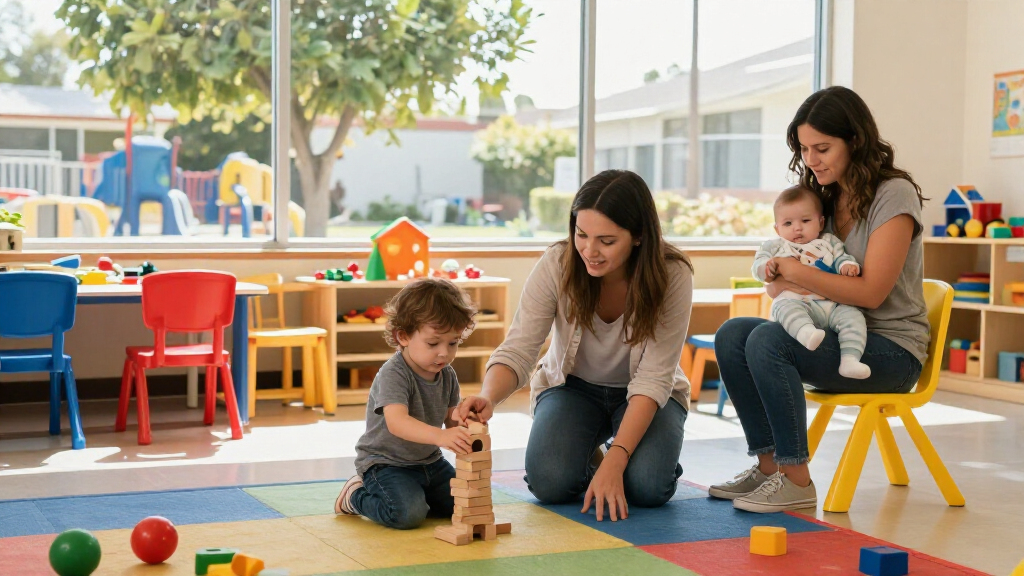
California school districts losing K-12 students are turning some underused campuses into infant, toddler and preschool centers, seeking both to meet demand for affordable childcare and build relationships with families before their children reach school age. Berryessa Union School District opened its Toyon Early Learning Center for 150 young children less than a year after declining enrollment led it to close three elementary schools; Los Angeles Unified has also voted to expand early education.
At Berryessa’s Toyon campus, the district added child-sized sinks and toilets to accommodate infants, toddlers and preschoolers. The district leased the site to Kidango, a nonprofit childcare provider serving about 4,000 children in the East Bay region. Superintendent Roxane Fuentes said the district wanted to reach families before their children turn four and hopes families who use its schools will remain with the district.
Los Angeles Unified’s board voted earlier this year to expand early education. The plan calls for using empty elementary classrooms for more preschool and reopening previously closed district childcare centers, while doubling the district’s infant-care programs. Board members said the effort responds to unmet childcare demand as well as the district’s interest in connecting with families early.
The scale of that need is reflected in a 2024 research finding cited by the source report: in Los Angeles County, 11% of children eligible for subsidized childcare were enrolled in a program. That figure describes eligible children’s enrollment in subsidized care, not the share of all children receiving childcare. The report does not give a comparable statewide enrollment rate.
Childcare as Enrollment Strategy
For districts, early-learning centers can put otherwise underused buildings to work while offering families a service that can be difficult to afford. The potential school-enrollment benefit is less certain. More childcare access does not automatically mean more kindergarten students, and families may move, choose another school or stop using a district program.
Urban Institute senior fellow Erica Greenberg told the source publication that public pre-kindergarten programs in Washington, D.C., Boston and Tulsa helped boost enrollment by addressing cost and convenience. She said affordable care in public buildings could help families remain in Los Angeles if housing costs are a reason they might leave or not enroll. That is a possible effect, not a result established for the California programs described.
The approach also comes with financial and operational demands. Childcare facilities require adaptations for young children, and the districts must identify local demand and manage enrollment pathways. Those costs matter particularly when school systems are already contending with falling enrollment and, in Los Angeles, a reported $3.6 billion deficit.
convertible crib that transitions to toddler bed
As an affiliate, we earn on qualifying purchases.
As an affiliate, we earn on qualifying purchases.
From School Closures to Early Learning
Berryessa’s Toyon project followed three elementary-school closures prompted by declining enrollment. District leaders cannot control many drivers cited in the report, including lower birth and immigration rates and the rising cost of raising a family. Early childhood programs are one way some districts are responding to those pressures while using space that might otherwise sit empty.
Kidango CEO Scott Moore said the organization has often leased unused classrooms from districts as school enrollment fell over the past two decades. He pointed to a 2021 state investment that added 200,000 subsidized childcare slots and increased hourly reimbursement for caregivers as a major factor enabling providers to expand. The source report notes that converting school buildings still requires costly work, including installing small sinks and toilets; its supplied text ends while describing other possible building changes.
Berryessa has not adopted an admissions eligibility rule for Toyon families that would guarantee or prioritize later district school enrollment. Fuentes said the district could use parenting events and the spring open-enrollment period to present its transitional kindergarten and kindergarten programs to families at the campus.
“It was really about trying to find another avenue of getting to families before age four.”
— Roxane Fuentes, Berryessa Union School District superintendent
Enrollment Gains Remain Unproven
The report does not establish whether the new or expanded programs will reverse district enrollment declines. Greenberg cautioned that attracting families with young children does not necessarily result in more kindergarten enrollment. It also does not provide updated enrollment figures for either district or a forecast of how many children using the programs might later enter district schools.
Los Angeles Unified is still working to identify where childcare demand is highest. The report does not specify the planned sites, timeline, costs or number of additional children the expansion will serve. In Berryessa, Toyon has no admissions guideline connecting participation in its childcare program to future enrollment in district schools. The source material also does not detail all facility-conversion requirements or the full cost of adapting campuses.
Sites, Costs and Enrollment Plans
Los Angeles Unified’s next steps include identifying areas with the greatest childcare need and carrying out its plan to use empty classrooms and reopen closed childcare centers. Board member Tanya Ortiz-Franklin said facilities freed through school consolidations could eventually be considered; those consolidations were expected to be on the table as the district addressed its deficit. The source report gives no decision date or implementation schedule.
At Toyon, Berryessa leaders said they can use parenting events and spring open enrollment to explain the district’s transitional kindergarten and kindergarten programs to families. Whether that outreach leads to later enrollment, and whether the expanded childcare programs measurably affect student counts, remains to be seen.
Key Questions
Why are California school districts adding infant and toddler care?
Districts are responding to demand for affordable childcare and using underused school buildings. Some leaders also hope that connecting with families early may encourage them to enroll their children in district schools later.
How many children can Berryessa’s Toyon center serve?
The report says Toyon Early Learning Center serves 150 infants, toddlers and preschoolers. It does not provide a breakdown by age group.
Will childcare programs bring more students into district schools?
That outcome is not established. Urban Institute researcher Erica Greenberg said early programs do not necessarily lead to later kindergarten enrollment, even though districts may use them to build relationships with families.
What is Los Angeles Unified planning to do?
The district plans to use empty elementary classrooms for more preschool, reopen previously closed childcare centers and double its infant-care programs. It is still identifying where demand is greatest, and the report gives no rollout timetable.
Source: rss
Fall Picks
fall essentials
As an affiliate, we earn on qualifying purchases.