
Traveling while pregnant can be safe and enjoyable if you plan carefully. The best time to travel is often during your second trimester when your energy is higher and morning sickness has eased. Make sure to consult your healthcare provider beforehand, pack essentials like prenatal records, comfortable clothes, and snacks, and choose destinations with good healthcare access. To learn more about ensuring safety, comfort, and tips throughout your trip, keep exploring these helpful guidelines.

Turn the school run and nap time into listening time
- Thousands of audiobooks, podcasts and originals
- Listen on your phone, tablet or Echo — also offline
- Cancel anytime
Key Takeaways
- The second trimester (weeks 14-27) is generally safest for pregnancy travel due to fewer complications.
- Always consult your healthcare provider before planning travel to ensure safety and discuss any restrictions.
- Pack essential items like prenatal records, supportive clothing, snacks, and comfort accessories for a smooth trip.
- Choose destinations with good healthcare facilities, avoid high altitudes, and prioritize relaxing, stress-free activities.
- Monitor for symptoms like swelling or pain, stay hydrated, take breaks, and seek medical help if any health issues arise during travel.
As an affiliate, we earn on qualifying purchases.
Best Time During Pregnancy to Travel

The best time to travel during pregnancy is generally the second trimester, when morning sickness has usually subsided and energy levels are higher. During this period, you’re less likely to encounter complications, making travel safer and more enjoyable. Before you go, confirm your travel insurance covers pregnancy-related issues, so you’re protected in case of emergencies. It’s also important to schedule your prenatal checkups before departure to confirm that everything is progressing smoothly and to get your doctor’s approval for travel. Planning your trip during this window allows you to relax and explore without the fatigue or discomfort common in the first trimester. Always consult your healthcare provider to confirm that travel is safe for your specific situation. Additionally, understanding environmental innovations can help you choose eco-friendly travel options that reduce your carbon footprint during your trip. Incorporating prenatal health considerations into your planning can further ensure a safe and enjoyable journey. Being aware of emergency preparedness can also help you respond effectively to any unexpected health issues while traveling.
Essential Safety Precautions for Expectant Travelers

Traveling while pregnant requires taking specific safety precautions to guarantee both your well-being and your baby’s health. First, consult your healthcare provider before your trip to discuss any restrictions and assure you’re fit to travel. Incorporate gentle prenatal exercise to maintain your strength and reduce discomfort during travel. Always carry your prenatal records and a list of emergency contacts. Invest in extensive travel insurance that covers pregnancy-related issues and medical emergencies. Stay hydrated, avoid long periods of sitting, and take frequent breaks to prevent blood clots. Wear comfortable, supportive shoes and choose seats with extra legroom when possible. Keep essentials like snacks, water, and medications handy. Understanding prophetic dreams can offer guidance and reassurance during stressful times, including travel. Additionally, being aware of the contrast ratio in your travel accommodations can help you select environments with better lighting and comfort, enhancing your overall experience. To further ensure safety, consider using a vacuums for pet hair to keep your luggage and travel gear free from allergens and hair, especially if you have pets at home.
Choosing the Right Destination for Pregnancy Travel

Choosing the right destination can make your pregnancy trip safer and more enjoyable. When selecting a destination, consider factors like healthcare quality, climate, and safety. Opt for places with good medical facilities nearby, just in case. Think about activity planning as well—choose destinations that offer relaxing options like spa visits, scenic walks, or cultural sights, rather than strenuous adventures. Avoid high-altitude locations or areas with poor sanitation. A calm, familiar environment can reduce stress and health risks. Research local healthcare services and ensure reliable transportation options. Your goal is to find a destination that minimizes travel stress and maximizes comfort. With careful destination selection, you’ll set the foundation for a smooth, memorable pregnancy travel experience.
Preparing Your Travel Documents and Medical Records

Preparing your travel documents and medical records is essential to guarantee a smooth and safe pregnancy trip. Confirm your travel insurance covers pregnancy-related issues and emergencies, so you’re protected in case of unexpected complications. Carry a copy of your prenatal records, including ultrasounds, test results, and your healthcare provider’s contact information. Having these documents easily accessible can expedite care if needed. Also, compile a list of emergency contacts, including your healthcare provider, partner, and local medical facilities at your destination. Keep both digital and printed copies of all important documents. Being prepared helps you stay confident and ready for any situation, ensuring your trip remains enjoyable and stress-free. Proper documentation is a key step toward traveling safely while pregnant. Additionally, understanding essential oils for health concerns can help you manage minor discomforts naturally during your journey. Being aware of pregnancy-safe travel tips can further enhance your safety and comfort on the road. To stay ahead, familiarize yourself with travel health advisories relevant to your destination to avoid potential health risks.
Packing Must-Have Items for Traveling While Pregnant

Having your travel documents and medical records organized sets the stage for a smooth journey, but packing the right items keeps you comfortable and prepared on the road. First, include nursery essentials like comfortable maternity clothes and supportive shoes to ease fatigue. Second, don’t forget a travel journal to track your experiences and any pregnancy symptoms or questions for your healthcare provider. Third, pack extras of daily necessities such as prenatal vitamins, snacks, and hydration bottles to stay energized. Consider bringing a small pillow or cushion for added comfort during long trips. Additionally, including sauna-related comfort items like soothing aromatherapy or relaxation accessories can help you unwind during travel. Incorporating RMD management strategies can help you plan your travel schedule around your distribution requirements, ensuring you stay compliant. Staying mindful of pregnancy-specific health considerations can further enhance your safety and comfort throughout the journey. These items help manage your comfort and health, ensuring a safer, more enjoyable trip. Being prepared with these essentials makes traveling while pregnant more manageable and less stressful.
Tips for Managing Discomfort and Fatigue on the Road
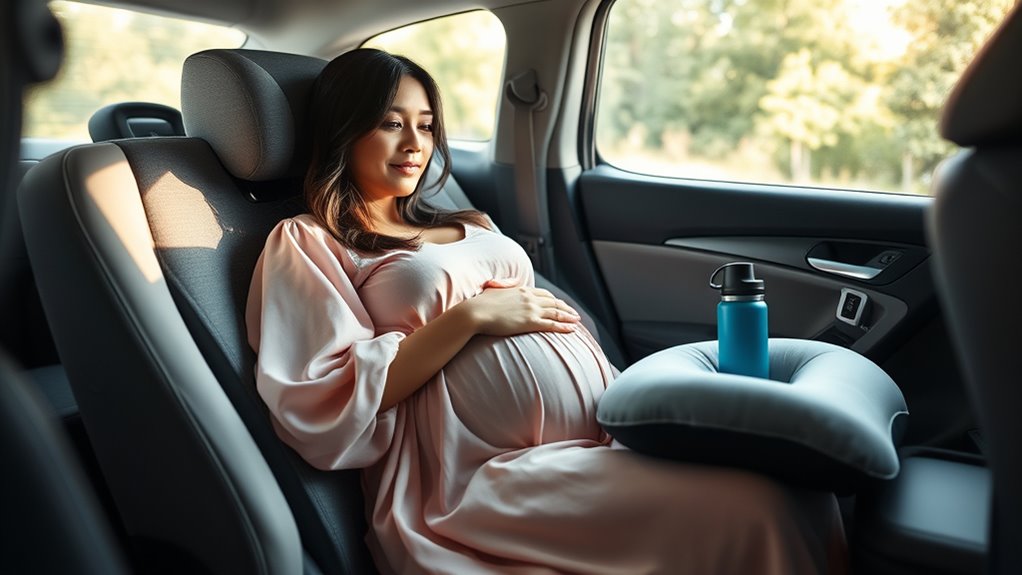
Traveling while pregnant can be tiring, but managing discomfort and fatigue is essential for a safe and enjoyable trip. To improve circulation and reduce swelling, wear compression stockings, especially during long journeys. Take regular breaks to stretch your legs and move around, which helps prevent stiffness and boosts circulation. Staying hydrated is vital; use hydration strategies like drinking water frequently and avoiding caffeine or sugary drinks. Listen to your body—rest when needed and don’t push yourself too hard. Packing a supportive pillow or cushion can help ease discomfort during travel, and maintaining good posture reduces strain. Be mindful of your pregnancy health precautions to ensure safety throughout your trip. Incorporating gentle movement through cultural intelligence can also help keep you comfortable and energized. By integrating these tips, you’ll make your trip more comfortable and preserve your energy for the exciting journey ahead.
Air Travel Considerations and Airline Policies

Air travel during pregnancy requires careful planning, as airline policies and safety considerations can vary. Before booking, check with your airline about their specific guidelines for pregnant travelers, especially regarding the last safe week of flying. When choosing your seat, consider these options:
- Aisle seats for easy access to the restroom and movement.
- Extra legroom seats to reduce swelling and increase comfort.
- Seats near the front for quicker boarding and deplaning.
Remember to stay hydrated and move around periodically to prevent blood clots. Also, take advantage of in-flight entertainment to stay relaxed and distracted. Make sure your seat has enough space for comfort and easy access. Being aware of airline policies and planning accordingly helps make your flight safer and more enjoyable. Additionally, selecting a seat that allows for easier movement can help enhance your comfort during the flight. Incorporating precautionary measures based on your pregnancy stage can further improve your travel experience. Proper hydration and movement are essential to reduce the risk of complications during your flight.
Road Trips: Staying Safe and Comfortable

Planning a road trip while pregnant offers the flexibility to customize your journey for comfort and safety. Ensure your car seat is properly installed and adjusted for ideal car seat safety, providing both support and security. Take frequent breaks to stretch, walk around, and improve circulation, reducing discomfort and swelling. Stay hydrated by drinking water regularly, following hydration strategies that prevent dehydration and fatigue. Keep healthy snacks on hand to maintain energy levels. Wear your seatbelt correctly, positioning the lap belt below your belly and the shoulder strap across your chest. Dress in comfortable, loose clothing, and bring pillows for extra support. Listening to your body and prioritizing rest will help keep you comfortable and safe throughout the trip. Remember to use headphones if you want to enjoy entertainment without disturbing fellow travelers, ensuring your comfort and safety are maintained. Additionally, being aware of optimal angles for pinball machines can serve as a fun mental break during longer journeys.
Recognizing and Responding to Travel-Related Health Issues

Being alert to your body’s signals is essential when traveling while pregnant, as recognizing early signs of health issues can prevent complications. If you notice symptoms like severe headaches, sudden swelling, or persistent abdominal pain, take action immediately. Here are key steps:
- Monitor hydration strategies—drink plenty of water to stay hydrated and avoid dehydration, which can cause contractions.
- Know when to seek medical help—if symptoms worsen or new issues arise, contact a healthcare provider or visit a nearby clinic.
- Prepare travel insurance that covers medical emergencies, ensuring you’re protected if urgent care becomes necessary.
Staying vigilant helps you respond promptly, keeping both you and your baby safe during your trip.
Post-Travel Care and Monitoring for Expectant Mothers

After your trip, taking time to monitor your health helps guarantee both you and your baby stay on track. Pay attention to any signs of post-travel fatigue, like exhaustion or dehydration, and rest as needed. Staying hydrated and eating nutritious foods support your postpartum recovery process. If you notice any unusual symptoms such as bleeding, cramping, or decreased fetal movement, contact your healthcare provider promptly. Keep track of your blood pressure and overall well-being during this period. Adequate rest and gentle activity help you regain energy and recover fully. Remember, your body needs time to adjust after travel, especially during pregnancy. Prioritize self-care and don’t hesitate to seek medical advice if anything feels off. Your health is essential for a healthy pregnancy.
Frequently Asked Questions
Can I Travel Internationally During Pregnancy Without Restrictions?
You can usually travel internationally during pregnancy without restrictions, but it’s crucial to check your airline’s policies and your destination’s entry requirements. Keep your travel documentation, including prenatal health records, handy in case you need medical care or proof of your pregnancy. Always consult your healthcare provider before planning your trip to ensure your prenatal health is stable and safe for travel, especially during later stages.
Are There Specific Travel Insurance Policies for Pregnant Travelers?
Yes, there are specific travel insurance policies for pregnant travelers. These policies often include pregnancy coverage, helping you manage potential complications or emergencies. However, you should watch out for insurance exclusions, such as pre-existing conditions or certain stages of pregnancy. Always read the policy details carefully, and consider contacting the insurer to confirm coverage for your pregnancy, ensuring you’re protected during your trip.
How Do I Handle Travel Disruptions or Emergencies While Pregnant?
If you face travel disruptions or emergencies while pregnant, stay calm and contact your healthcare provider immediately. Keep your pregnancy travel insurance details handy, and review your policy for emergency coverage. Always carry essential documents, including your insurance info and medical records. Practice emergency preparedness by knowing local healthcare facilities at your destination. Staying informed and prepared helps you handle unexpected situations confidently and safely during your trip.
Are There Recommended Travel Restrictions for High-Risk Pregnancies?
Did you know that nearly 10% of pregnancies are considered high-risk? If you’re pregnant, it’s best to follow travel safety guidelines and consult your healthcare provider before flying. High-risk pregnancies often have restrictions on travel, especially during the first and third trimesters, due to risks during flights like preterm labor or complications. Always get personalized advice to make certain your journey stays safe for you and your baby.
What Should I Do if I Experience Contractions While Traveling?
If you experience contractions while traveling, you should immediately stop and assess if the signs of labor are present. If they are, follow emergency procedures by calling for medical help or heading to the nearest hospital. Keep track of the timing and intensity of your contractions, stay hydrated, and have your prenatal records ready. Don’t delay seeking professional care, as early intervention can be essential for you and your baby.
Conclusion
Traveling while pregnant can be a wonderful adventure if you plan wisely. Remember to choose the right time, prioritize safety, and listen to your body—think of it as your own personal odyssey. By staying prepared and cautious, you’ll avoid any pitfalls along the way. So, embrace the journey ahead; after all, with a little foresight, you’ll be creating memories that are worth more than a knight’s tale. Safe travels, and enjoy every moment!
Cold & flu season Picks
humidifiers
As an affiliate, we earn on qualifying purchases.