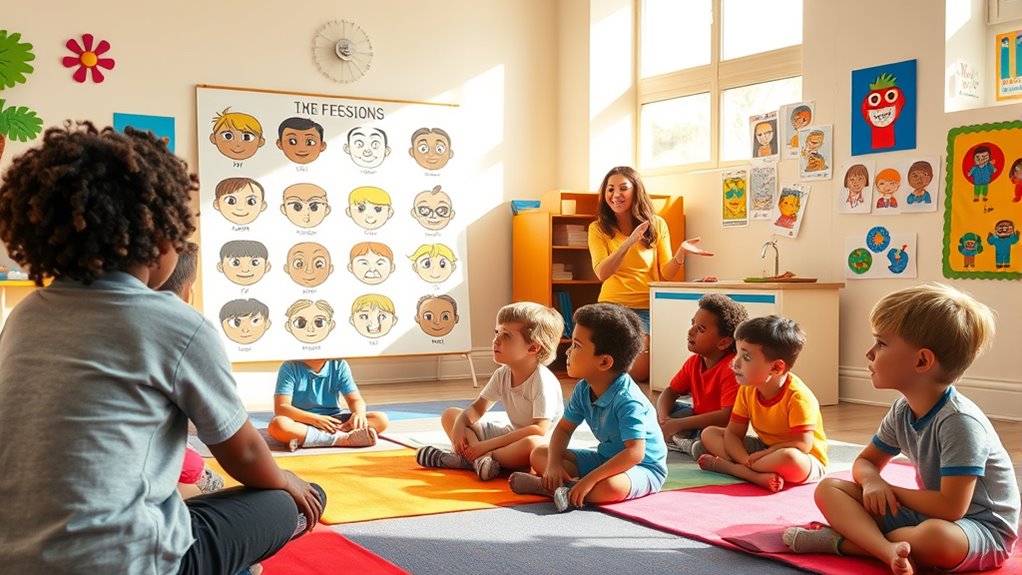

When teaching words for big feelings, focus on helping children identify and name their emotions precisely. Use real-life examples and ask guiding questions to encourage deeper understanding beyond basic words like sad or mad. Introduce calming strategies to manage intense feelings and support emotional growth patiently. Building this vocabulary empowers kids to express themselves clearly and develop empathy. Keep exploring ways to strengthen their emotional skills, and you’ll support their lifelong emotional well-being.
Key Takeaways
- Use real-life situations to introduce and practice specific emotion words beyond basic terms.
- Encourage children to describe their feelings with precise vocabulary like frustrated, overwhelmed, or disappointed.
- Model and demonstrate calming strategies to help children manage intense emotions effectively.
- Ask guiding questions to help children identify and articulate the reasons behind their big feelings.
- Reinforce the importance of emotional vocabulary for better self-awareness, empathy, and healthy communication skills.

Understanding and expressing big feelings can be challenging for children, but teaching them the right words makes a significant difference. When kids learn to identify their emotions accurately, they gain better control over their reactions and feel more understood. This process, known as emotion recognition, helps children connect their feelings with specific words, which is essential for healthy communication. As you guide them through this, you also teach calming strategies that can help manage overwhelming emotions. These strategies act as tools children can use to soothe themselves when big feelings arise, making it easier for them to navigate emotional ups and downs.
Start by helping your child put a name to what they’re experiencing. Instead of just saying they’re sad or mad, encourage them to explore more precise words like frustrated, disappointed, or overwhelmed. Use real-life situations to illustrate these emotions, asking questions like, “Are you feeling angry because you can’t find your toy?” This approach promotes emotion recognition by making feelings concrete and relatable. When children practice naming their emotions, they build a vocabulary that empowers them to express themselves clearly. This clarity reduces confusion and helps prevent misunderstandings.
Once your child can identify their feelings, introduce calming strategies to help them manage those emotions. Techniques like deep breathing, counting to ten, or taking a break can make a big difference. Show them how to take slow, deep breaths when they’re upset, emphasizing that this helps their body relax. Teach them to recognize when they’re starting to feel overwhelmed, and then guide them through calming exercises. Reinforce that it’s okay to ask for space or time to cool down—this is a crucial part of emotional regulation. These calming strategies become valuable tools that your child can rely on whenever big feelings surface.
Throughout this process, be patient and consistent. Celebrate small victories when your child correctly names an emotion or successfully uses a calming strategy. Remember, building emotional intelligence takes time, and your support makes a huge impact. By focusing on emotion recognition and teaching calming strategies, you’re giving your child essential skills that will serve them throughout life. They’ll not only better understand their own feelings but also develop empathy for others. Teaching words for big feelings isn’t just about vocabulary; it’s about fostering emotional resilience, self-awareness, and healthy communication that will benefit your child long into the future.
Frequently Asked Questions
How Can Parents Model Emotional Vocabulary Effectively?
You can model emotional vocabulary effectively by sharing stories that highlight feelings, using storytelling to illustrate different emotions clearly. Incorporate visual aids like emotion charts or facial expressions to help your child recognize and understand feelings better. When you talk about your own emotions openly and describe them vividly, you set a powerful example, encouraging your child to express their feelings confidently and develop a rich emotional vocabulary.
What Age Is Best to Introduce Advanced Feeling Words?
You can start introducing advanced feeling words around age four or five, as children begin developing their emotional literacy and vocabulary. Coincidentally, this is when kids become more expressive and curious about their feelings. By expanding their vocabulary development early, you help them better understand and articulate complex emotions. It’s a perfect time to introduce richer words, fostering empathy and emotional intelligence that will grow alongside their language skills.
How Do Cultural Differences Impact Emotional Language Teaching?
You need to recognize that cultural differences markedly impact emotional language teaching. Cultural expression shapes how emotions are communicated and understood, affecting emotional nuance. When teaching, you should adapt your approach to respect these variances, using examples that resonate with your learners’ backgrounds. This helps students grasp emotional concepts more effectively, fostering deeper understanding and empathy for diverse ways of expressing feelings across cultures.
Are There Specific Activities to Reinforce New Emotional Words?
You can kill two birds with one stone by using storytelling to reinforce emotional words—share stories that highlight different feelings and ask students to identify and discuss them. Incorporate emotion matching games where students pair words with facial expressions or scenarios. These activities make learning engaging and memorable, helping students internalize new emotional vocabulary while having fun. This hands-on approach guarantees they truly grasp and use feelings words confidently.
How Can Teachers Assess a Child’s Emotional Vocabulary Development?
You can assess a child’s emotional vocabulary development through ongoing vocabulary assessment by observing how they use new emotional words in conversations and activities. Engage them in discussions about feelings, and note their ability to identify and label emotions accurately. Incorporate simple checklists or visual aids to track progress in emotional literacy, ensuring you’re tailoring your support to enhance their understanding and expression of big feelings effectively.
Conclusion
Teaching words for big feelings is like giving your child a toolbox filled with colorful tools. When they can name and express their emotions, they build bridges instead of walls. You’re helping them navigate their inner world with confidence and clarity. Remember, each new word is a stepping stone on their journey to understanding themselves better. With patience and practice, you’re guiding them across the river of big feelings, helping them reach the other side with strength and resilience.