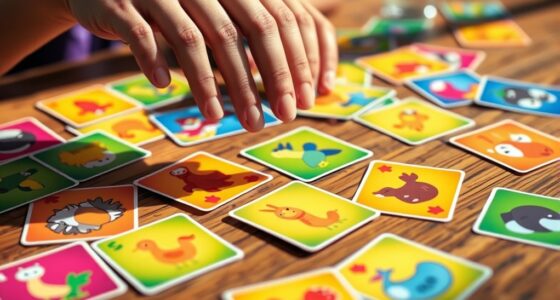
Choosing educational toys for a toddler often means choosing between two kinds of learning: play the child directs and activities a toy guides. Open-ended wooden toys, such as blocks, nesting cups, and shape sorters, invite repeated experiments and pretend play. Electronic learning toys, such as talking books and music tables, respond with lights, sounds, or prompts that can hold a young child’s attention.

Give the gift of listening to the whole family
- Choose a 1-, 3-, 6- or 12-month membership
- They pick the audiobooks they love
- Easy to send by email

LeapFrog Learning Friends 100 Words Book
- ✔ Age range: 18 months–4 years
- ✔ Vocabulary: Over 100 words
- ✔ Languages: English and Spanish

Airbition Talking Flash Cards for Toddlers, 224 Words, Blue
- ✔ Age range: 1–5 years
- ✔ Word set: 224 illustrated cards
- ✔ Audio: Standard American English and real animal sounds

LeapFrog 2-in-1 LeapTop Touch Learning Laptop
- ✔ Age range: 2–5 years
- ✔ Formats: Laptop and touch tablet
- ✔ Modes: ABCs, numbers, games, music, and messages
The main tradeoff is flexibility versus built-in direction. A wooden toy can support many kinds of play as a toddler grows, but it may call for an adult to demonstrate an idea or join in. An electronic toy can make letters, numbers, or cause and effect easy to explore, but its lessons and play patterns are usually more fixed. Families seeking durable, imaginative play may prefer wooden toys; families wanting clear prompts and music may find an electronic toy more engaging.
Neither category guarantees learning on its own. A toddler benefits most when a toy suits their current interests, is safe for their age, and leaves room for interaction with caregivers. The comparisons below focus on what each type offers in everyday use, what it asks of parents, and when paying more for particular features makes sense.
At a Glance
| Criteria | Open-ended wooden toys | Electronic learning toys | Winner |
|---|---|---|---|
| Play flexibility | Many possible uses; child invents the activity | Activities follow the toy’s buttons, prompts, or programmed responses | A |
| Learning and skills | Supports spatial reasoning, motor practice, and pretend play through repetition | Can introduce sounds, words, songs, and simple matching tasks | Depends |
| Adult involvement | Often benefits from an adult joining, modeling, or naming what the child does | Can prompt independent button pressing, with shared play still valuable | Depends |
| Engagement and sensory features | Quiet, tactile, and usually visually simple | Lights, sounds, and music may attract attention; volume and stimulation vary | B |
| Durability and upkeep | Few mechanisms to fail; inspect finishes, edges, and small parts | Batteries and electronic parts add upkeep; inspect the product’s age guidance | A |
| Price and long-term value | Can remain useful for years, especially in sets that expand | Features can be appealing, though interest may fade when content is limited | Depends |
LeapFrog Learning Friends 100 Words Book
The Learning Friends 100 Words Book makes the clearest case as an all-around educational toy for toddlers because it turns familiar pictures into a simple cause-and-effect activity: touch an image and hear its word, a sound effect, or a fact. Its categories include animals, colors, food, and opposites, giving caregivers several everyday topics to revisit without needing to set up a separate activity. Compared with Airbition’s card-by-card routine, the book keeps the vocabulary in one bound format, which may be easier for a toddler to browse independently.Its most distinctive advantage is the English and Spanish language switch. Families can use it for bilingual exposure or simply choose one language for a play session. That gives it a broader language role than the English-only LeapTop and Airbition options described here. The learning friends, songs, and audio feedback also offer variety within the fixed collection, although the core word set remains finite and may feel repetitive once a child knows it well.We rank it ahead of the other picks because it balances accessible interaction, topic variety, and bilingual play for children listed from 18 months to 4 years. The tradeoffs are practical: it needs two AA batteries, and the included batteries are for demonstration, so regular play calls for replacements. It is also designed for one child at a time. Choose it when early vocabulary is the priority; choose the LeapTop for more letter and number activities, or Airbition if a larger set of individual picture cards better fits your routine.
Pros:
- Touch-activated words, sounds, and facts connect pictures with spoken vocabulary.
- English and Spanish modes support bilingual exposure.
- Covers several everyday categories, including animals, food, colors, and opposites.
- Songs and learning characters add variety to repeated vocabulary play.
Cons:
- Requires two AA batteries, and the included demo batteries may need replacement for regular use.
- Offers single-player interaction and a fixed set of 100 words.
Best for: Families seeking an interactive first vocabulary toy, especially those who want an English and Spanish mode.
Not ideal for: Children who need open-ended or multiplayer play, or families who prefer a rechargeable toy with a vocabulary set that can be changed.
Bottom line: We recommend the 100 Words Book for toddlers who will benefit most from guided picture-based vocabulary practice, particularly when bilingual audio matters.
“We recommend the 100 Words Book for toddlers who will benefit most from guided picture-based vocabulary practice, particularly when bilingual audio matters.”
Airbition Talking Flash Cards for Toddlers, 224 Words, Blue
Airbition takes a more focused approach than the LeapFrog book: rather than tapping pictures on a page, children select from 224 illustrated cards and insert them into a reader to hear the word. This gives families a larger stated vocabulary collection than the book’s 100 words, with an interaction centered on matching a physical picture prompt to spoken audio. For toddlers who enjoy handling and sorting objects, that step can become part of the learning activity rather than just a way to start the sound.The reader adds animal sounds, a repeat button, and five volume levels, so caregivers can adjust listening and replay a word without restarting the activity. Its screen-free design and rechargeable battery also suit travel better than a toy that depends on replaceable AA batteries, though the stated battery life is up to four hours per charge. Compared with the LeapTop, Airbition keeps the goal narrow: vocabulary and listening, not letters, numbers, games, or music.We rank it second because the word count and rechargeable design are compelling, but the card workflow asks for more dexterity and organization than the book’s touch-to-hear format. Cards can be misplaced, and inserting them may require adult help for younger toddlers. The product lists an age range of 1–5 years, but families should consider the child’s ability to handle the cards. Choose Airbition when a broad set of spoken words and screen-free portability matter most; pick the book for bilingual exposure or the LeapTop for varied early-learning activities.
Pros:
- Includes 224 illustrated word cards for a broad vocabulary set.
- Spoken words and real animal sounds connect listening with pictures.
- Repeat control and five volume levels support flexible listening.
- Rechargeable design avoids routine AA battery replacement.
Cons:
- Children need to insert cards into the reader, which can take practice and adult help.
- Battery life is listed as up to four hours per charge.
Best for: Caregivers who want a screen-free vocabulary activity with many illustrated prompts and rechargeable audio.
Not ideal for: Toddlers who are not ready to insert cards, or families seeking bilingual modes or letter-and-number activities.
Bottom line: We would choose Airbition when a large, screen-free vocabulary set and rechargeable audio outweigh the extra work of managing and inserting cards.
“We would choose Airbition when a large, screen-free vocabulary set and rechargeable audio outweigh the extra work of managing and inserting cards.”
LeapFrog 2-in-1 LeapTop Touch Learning Laptop
The LeapTop Touch is the lineup’s best fit for toddlers who are beginning to recognize letters and numbers and enjoy copying grown-up routines. Its laptop converts into a touch tablet, while the A–Z keyboard and number buttons lead into activities for ABCs, numbers, games, music, and messages. Compared with the two vocabulary-first picks, this is the broadest shift in learning focus: children can practice early academic concepts and role-play using a device, rather than mainly naming objects or listening to individual words.A practical detail is the option to customize the toy so a child can practice spelling their name. That can make the activity feel personally relevant, while the carry handle and convertible form support moving it between rooms or taking it along. It is the only pick here that directly introduces keyboard-style play, but its listed age range begins at 2 years, older than Airbition’s stated starting age and the book’s 18-month guidance. It is therefore less suited to the youngest toddlers in this comparison.We rank it third for this particular roundup because its activities are less centered on building everyday vocabulary than the book and cards. That ranking does not make it the weaker toy for every child: for a two-to-five-year-old interested in letters, numbers, and pretend computer use, it may be the most relevant choice. The main compromises are three AA batteries, a defined set of modes, and fewer explicit vocabulary details than the other products provide. Choose it for early keyboard play; choose the book for bilingual words or Airbition for a larger card-based vocabulary set.
Pros:
- Converts between laptop and tablet formats for two styles of play.
- Combines ABCs, numbers, games, music, and messages.
- Can be customized to help children spell their name.
- Carry handle makes it easier to move between play spaces.
Cons:
- Requires three AA batteries, with new batteries recommended for regular use.
- Its listed age range starts at 2 years, so it is not aimed at the youngest toddlers in this roundup.
- Learning activities are less focused on broad spoken vocabulary than the book or flash cards.
Best for: Children ages 2–5 who enjoy role-play and are ready to explore letters, numbers, and keyboard-style activities.
Not ideal for: Younger toddlers or families whose main goal is bilingual vocabulary practice or a large, explicit word collection.
Bottom line: We recommend the LeapTop for toddlers ready for early letters and numbers through pretend play, rather than for families prioritizing vocabulary-first learning.
“We recommend the LeapTop for toddlers ready for early letters and numbers through pretend play, rather than for families prioritizing vocabulary-first learning.”
As an Amazon Associate we earn from qualifying purchases.
Key Differences
The clearest distinction is who sets the agenda. With blocks or cups, a toddler can stack, knock down, sort, carry, or turn the pieces into pretend food. The same toy supports new experiments as coordination and imagination develop. An electronic toy offers a more directed loop: press a button, hear a response, and try another. That can make cause and effect easy to grasp, though the play possibilities depend on what the toy has been programmed to do.
These differences shape the learning experience, but they do not make one category educational and the other merely entertaining. Blocks give practice with movement, space, and persistence; a musical toy can invite listening, imitation, and early word play. In either case, a caregiver can add value by talking, taking turns, and following the child’s attention. Families should judge the specific toy, its safety guidance, and its fit with the child rather than relying on claims that a product will teach a whole subject.
For value, simple toys often have the advantage when a child can use them in many ways or share them with siblings. An electronic toy may earn its cost if its content holds the toddler’s interest and offers a feature the family will use, such as music or a responsive story. A higher price alone does not mean stronger learning. The useful question is whether the added features support play your child already enjoys.
Detailed Comparison
Play flexibility (Open-ended wooden toys wins — moderate)
Open-ended wooden toys win by a moderate margin for flexibility. A set of blocks can become a tower, a road, or a pretend meal; the child chooses the goal and can change it at any moment. An electronic toy generally steers play toward its buttons, sounds, or prompts. That direction can be helpful when a toddler needs a simple activity to start, but it limits the range of uses. In practice, choose A when you want one toy to support many kinds of play over time; choose B when a predictable activity is part of the appeal.
Learning and skills (moderate difference)
There is no universal winner; the better fit depends on the skill and the particular toy. Wooden blocks and sorters naturally invite grasping, stacking, matching, and spatial experiments. Electronic books and music toys can expose a child to sounds, songs, spoken words, or simple prompts. The gap is moderate because the learning opportunities differ rather than one type covering every need. Check what the toddler can actually do with the toy, and favor opportunities to respond, repeat, and explore over grand promises on the package.
Adult involvement (moderate difference)
This is a genuine tradeoff, so the winner depends on the household’s needs. Wooden toys often reward an adult who names colors, builds alongside the child, or turns a shape sorter into a game. Electronic toys can supply prompts and responses without an adult setting up each turn, which may suit a caregiver who needs a brief hands-free moment nearby. That does not make a toy a substitute for supervision or shared interaction. The difference is moderate: choose based on whether you want a more open invitation to play together or a toy that starts the activity itself.
Engagement and sensory features (Electronic learning toys wins — minor)
Electronic toys usually win for immediate sound-and-light appeal, by a minor to moderate margin. Music or a spoken response can catch a toddler’s attention and make pressing a button rewarding. Wooden toys are quieter and rely on texture, movement, and the child’s own ideas, which may suit families seeking calmer play. A noisy toy can become tiring if volume cannot be adjusted, while a quiet toy may not draw every child’s interest at first. Compare the actual sound controls and the child’s response instead of assuming brighter or louder means better.
Durability and upkeep (Open-ended wooden toys wins — moderate)
Open-ended wooden toys usually win by a moderate margin because a simple piece has fewer mechanisms, batteries, or switches to maintain. A well-made toy can be passed between children, though its finish and construction still need inspection, and wood can chip or crack. Electronic toys add components that may stop working and batteries that need replacing or charging. Build quality varies in both categories. Check the manufacturer’s age guidance and care instructions, especially for toddlers who still mouth toys; durability does not replace age-appropriate safety.
Price and long-term value (moderate difference)
Neither category automatically offers better value. A modest set of cups or blocks can serve many purposes and stay interesting as play changes, giving open-ended toys an advantage when versatility matters. An electronic toy can be worth paying more for if its songs, story, or interactive responses are used regularly; a feature-heavy toy that loses its appeal quickly is harder to justify. The gap is moderate and depends on the individual product. Compare expected use, repair or battery needs, and whether the toy adds something your child lacks before paying a premium.
Open-ended wooden toys: Pros and Cons
Pros:
- Supports child-led play and many possible uses.
- Can encourage stacking, sorting, movement, and pretend play.
- Simple designs often need little upkeep.
- A versatile toy may remain useful as interests grow.
Cons:
- May need an adult to demonstrate a way to begin.
- Offers no built-in songs, spoken prompts, or automatic responses.
- Some toddlers may initially prefer toys with sound or motion.
- Quality and age suitability still vary; check for damage and small parts.
Electronic learning toys: Pros and Cons
Pros:
- Sounds, lights, and responses can attract attention.
- Prompts can make cause-and-effect play easy to start.
- Songs and spoken content may invite listening and imitation.
- Can provide a defined activity without an adult inventing each step.
Cons:
- Programmed activities may limit how the child can use the toy.
- Batteries or electronic mechanisms add upkeep.
- Sound levels and stimulation may not suit every family.
- A higher price may buy features a toddler rarely uses.
Who Should Choose What
Choose Open-ended wooden toys if:
- You want a toy that can support several kinds of play as your toddler grows.
- Your child enjoys stacking, sorting, carrying, or pretending with everyday objects.
- You prefer quieter play and want fewer electronic parts to maintain.
- You want to join play by talking, modeling, and following your child’s ideas.
Choose Electronic learning toys if:
- Your toddler is drawn to music, spoken stories, lights, or button responses.
- You want a toy with prompts that can help start a short, structured activity.
- A specific sound, story, or interactive feature will get regular use in your home.
- You have checked the volume, age guidance, and safety details for the specific product.
Skip both if: Skip both categories if a particular toy is outside your child’s age guidance, has unsafe or damaged parts, or duplicates toys your child already ignores. Everyday household play and time with a caregiver can also be meaningful without buying a new educational toy.
Value for Money
Pay more for an electronic toy only when its specific features match your toddler’s interests and your family’s routine. Music, clear spoken prompts, or a story your child asks to hear may justify the extra cost if the toy is used often and its sound can be managed. If the appeal rests mainly on a long feature list, the added price may not translate into more play.
For many families, a well-made open-ended toy is the stronger value because it can support different activities without batteries or a fixed script. That does not mean every wooden toy is durable or every electronic toy is short-lived. Check construction, care instructions, age guidance, and how the toy can be used before comparing prices. A lower-cost toy that gets regular use is better value than either category’s premium option left on the shelf.
Final Verdict
For most families choosing one first educational toy, start with a versatile open-ended option such as blocks, cups, or a simple sorter. Its range of uses makes it easier to adapt as a toddler’s play changes, and it does not depend on a battery or a programmed activity. Choose an electronic learning toy when your child is strongly drawn to music, spoken stories, or responsive buttons and you have identified a feature worth paying for.
The deciding factor is how your toddler likes to play, not the category label. If your child invents games with ordinary objects, open-ended wooden toys are the clearer fit. If a specific sound or prompt reliably invites participation, an electronic toy can earn a place. Either way, look for age-appropriate construction and join in when you can: the toy provides the activity, while shared attention makes it personal.
Frequently Asked Questions
Are wooden toys more educational than electronic toys?
Not by category alone. Wooden blocks can invite movement, spatial experiments, and pretend play; an electronic book or music toy can support listening, imitation, and cause-and-effect exploration. Look at what the particular toy lets your toddler do, and whether the child is interested in using it.
Should toddlers use electronic learning toys on their own?
A toy’s prompts may help a toddler start an activity, but adult supervision still matters. Shared play also gives caregivers a chance to respond to the child’s attention, talk about what is happening, and take turns. Follow the product’s age and safety guidance.
Are expensive educational toys worth the extra cost?
Sometimes, when a useful feature gets regular use. Pay more for an electronic toy if its story, music, or responses suit your child’s interests and the controls work for your household. For open-ended toys, a sturdy set with several possible uses can be a sound value. A high price or a long feature list alone does not show that a toy will be a good fit.
What should I check before buying an educational toy for a toddler?
Read the age guidance, inspect the size and construction of pieces, and check for damage, loose parts, or sharp edges. For electronic toys, check sound controls and the battery requirements. Consider whether your child can use the toy safely and whether its activity matches interests they already show.