
When your child starts climbing out of their crib, resisting bedtime routines, or shows interest in a big kid bed, those are clear signs they’re ready for a switch. Look for increased independence and their ability to stay in bed without constant reminders. Creating a safe, inviting environment helps the progression go smoothly. Using calming routines and reassurance can ease their nerves. Keep going, and you’ll discover more tips for a successful move.
Key Takeaways
- Look for signs like climbing out or resistance during bedtime routines to gauge readiness.
- Prepare a safe, child-friendly sleeping environment with guardrails and calming lighting.
- Explain the transition clearly and establish a consistent bedtime routine for security.
- Use gradual steps and reassurance to help your child adjust comfortably to the new bed.
- Maintain patience and safety measures to ensure a smooth, successful transition.
Recognizing the Signs Your Child Is Ready for a Bed

Knowing when your child is ready to shift from a crib to a bed can be tricky, but there are key signs to watch for. One major indicator is increased sleep independence; if your child is climbing out of the crib or trying to avoid bedtime routines, it’s a sign they’re ready for a change. They may also express a desire for a “big kid” bed or show interest in the idea of sleeping in a different space. Consistent bedtime routines becoming harder to maintain can also signal it’s time to move on to the transition. When your child demonstrates they can stay in bed and follow bedtime routines without frequent reminders, it shows they’re prepared for the next step. Additionally, understanding essential oils for sleep can help create a calming environment to ease the transition. Using sleep-friendly lighting can further promote a sense of security and relaxation during this change. Incorporating a digital device-free zone before bedtime can also support better sleep habits and help your child adapt more easily. Recognizing these signs helps guarantee a smoother, safer transition.
Tips for a Smooth and Safe Transition
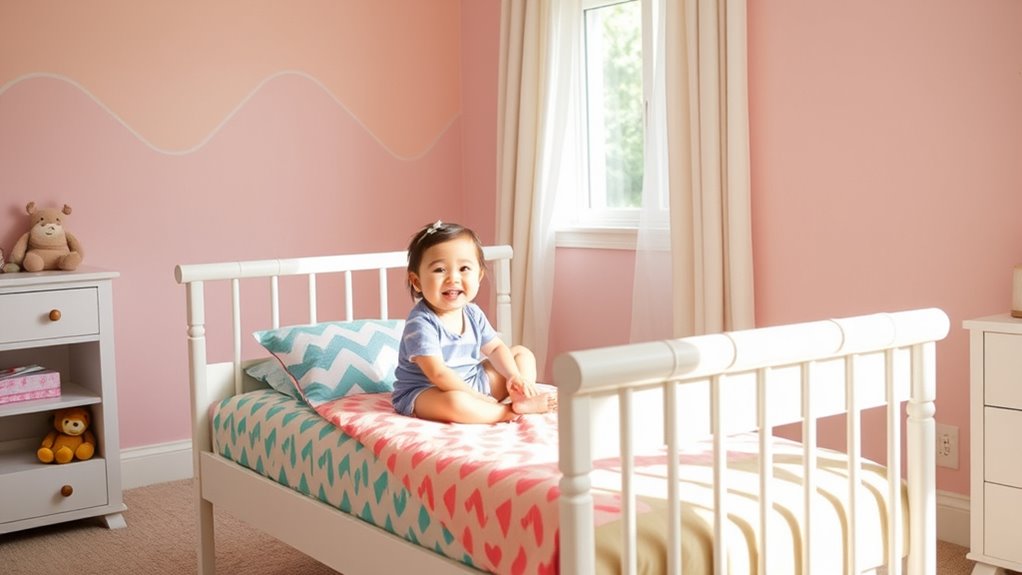
To guarantee a smooth and safe shift from crib to bed, preparation is key. Begin by creating a child-friendly sleep environment, ensuring the bed has guardrails and the mattress is firm. Encourage sleep independence by establishing a consistent bedtime routine that promotes security and comfort. Safety precautions are essential; remove any hazards like cords, small objects, or sharp edges. Explain the new sleeping arrangement calmly, so your child understands what to expect. Maintain patience and offer reassurance as they adjust to the new bed. Keep the transition gradual if needed, allowing your child to explore the new space during the day. These steps help foster confidence, making the move safer and more comfortable for both of you.
Frequently Asked Questions
What Are Common Sleep Regressions During the Transition?
During the shift, you might notice sleep regressions around 18 months or 2 years, often caused by developmental milestones. Your child may resist bedtime routines or wake frequently, disrupting their nap schedule and nighttime sleep. Keep consistent routines, maintain a calming environment, and be patient. These regressions are temporary, and sticking to familiar bedtime routines helps your child adjust more smoothly to their new bed.
How Can I Handle Nighttime Fears in a New Bed?
To handle nighttime fears in a new bed, you can introduce a nightlight comfort to make the room feel less scary and more inviting. Stick to calming bedtime routines, like reading or singing, to create a sense of security. Reassure your child with gentle words, and avoid rushing when they express fears. Consistency helps them feel safe, and over time, their nighttime fears will diminish.
Should I Involve My Child in Choosing Their Bed?
Did you know that involving children in decision making can boost their confidence and cooperation? You should definitely involve your child in choosing their bed. By considering their preferences, they feel more ownership and excitement about the new bed. Let them pick the color, style, or bedding. This involvement makes the progression smoother, helping your child feel empowered and more willing to embrace their new sleeping space.
What Safety Measures Are Essential for a Toddler Bed?
For safe toddler sleep, you should guarantee the bed safety by choosing a sturdy, low-profile toddler bed with guardrails. Keep the mattress snug to prevent gaps, and avoid pillows, heavy blankets, or stuffed animals that could cause suffocation. Regularly check for loose screws or sharp edges. Always place the bed away from windows, cords, or furniture that might pose hazards. These safety measures create a secure environment for your child’s sleep progression.
How Long Should I Expect the Transition to Take?
Think of the shift as planting a seed; it can take a few days to a few weeks. You’ll want to stay consistent with sleep training and bedtime routines, which act as the nourishing sunlight helping your toddler adjust. During this period, patience is key—some nights may be smoother than others. Keep offering reassurance, and gradually, your child will settle into their new bed, creating a cozy, confident sleep space.
Conclusion
So, when your little one finally waves goodbye to their crib, don’t be surprised if bedtime turns into a circus act. Just remember, patience is your best trick, and safety should always be your spotlight. Embrace the chaos with a smile, because soon enough, you’ll be the proud owner of a toddler who’s mastered the art of sleeping in a big kid bed—until the next adventure, of course. Happy shifting!