
The best screen-free toys make it easy for kids to get absorbed in play without a display, whether they’re at home or on the move. My best overall pick is the Chuckle & Roar Magnetic Dot Art Designer, which offers a focused creative activity without a large mess or setup. For travel, the HABA Town Maze Magnetic Busy Board suits younger toddlers, while the Wikki Stix Doodler is a flexible choice for kids who like hands-on making. The main tradeoffs are age fit, how much adult help or space a toy needs, and whether a child prefers quiet, creative, sensory, or active play. Read on for the full breakdown and help matching a toy to your child’s routine.

Turn the school run and nap time into listening time
- Thousands of audiobooks, podcasts and originals
- Listen on your phone, tablet or Echo — also offline
- Cancel anytime
Complete the kit


Key Takeaways
- Creative play gives the strongest all-around fit: the Magnetic Dot Art Designer offers a clear activity without relying on electronic effects or a large play area.
- Travel picks differ by age and play style: HABA’s maze suits toddlers, while Wikki Stix and the plush Seek & Find Bear offer different ways to occupy older preschoolers on the go.
- Quiet does not always mean independent: shape matching, coin sorting, and pixel art can invite adult participation, especially when children are new to the activity.
- Sensory needs call for distinct formats: Pushpeel is designed for quiet repetitive fidgeting; MagMen’s magnetic figures offer more open-ended manipulation but need magnetic-piece awareness.
- The RC stunt car is the outlier: it brings active, high-energy play, but needs room and batteries, making it less suitable for quiet travel than the compact non-powered picks.


| screen-free toy | Brand |
|---|---|
| Chuckle & Roar Magnetic Dot Ar | Chuckle & Roar |
| HABA Town Maze Magnetic Busy B | HABA |
| Wikki Stix Doodler Travel Toy | Wikki Stix |
| QUNREDA Remote Control Car for | — |
| Pushpeel Sensory Activity Boar | Pushpeel |
| Castle Coin Drop Montessori To | Pluspace |
| Lartoys Rope Untangling Puzzle | Lartoys |
| Chuckle & Roar Wooden Shape Ma | Chuckle & Roar |
| Chuckle & Roar Sensory Seek & | — |
| Learning Resources Pixel Art C | — |
| MagMen Magnetic Fidget Figures | MAGMEN |
More Details on Our Top Picks
Chuckle & Roar Magnetic Dot Art Designer
The Magnetic Dot Art Designer is a strong fit for preschoolers who want to make pictures without crayons, loose paper, or cleanup. Its 50 activity prompts give children a starting point, while the magnetic beads can be arranged and rearranged on the cards. Compared with the more open-ended Wikki Stix Doodler, this kit offers clearer direction, which can help younger children get started but may feel less freeform over time. Its travel-friendly, mess-free format also suits car rides when a full art kit would be awkward. The tradeoff is a narrow play style: children who prefer movement or tactile fidgeting may get more from the HABA Town Maze or Pushpeel board. Small beads also call for supervision around younger children.
Pros:- Fifty guided activities help children begin without an adult inventing prompts
- Magnetic bead pieces keep the activity contained and reduce cleanup
- Portable format suits car rides and other on-the-go quiet time
- Combines creative choices with fine-motor practice
Cons:- Magnetic bead art is a specific play style that may not hold every child’s interest
- Small parts require supervision for younger children
- Guided activities may feel repetitive after repeated use
Best for: Caregivers of preschoolers who enjoy picture-making and want a contained, guided activity for travel or quiet time
Not ideal for: Children who lose interest in repeated art prompts, prefer active play, or still mouth small pieces
- Brand:Chuckle & Roar
- Model:Dot Art Designer
- Age guidance:Ages 3 and up
- Included components:Magnet cards and beads
- Guided activities:50
- Toy type:Magnet board
- Manufacturer:Buffalo Games
Our verdict“Choose it for a preschooler who likes guided art and needs a tidy travel activity; pick the Wikki Stix Doodler for more open-ended making.”
HABA Town Maze Magnetic Busy Board & Travel Toy for Toddlers Ages 2 & Up
The HABA Town Maze earns its place for toddlers who need a simple, hands-on task during travel. Moving pieces through the maze gives children a clear goal and practices fine-motor control and focus without batteries, screens, or a pile of parts to manage. Its wood construction and compact board make it a more structured choice than the Wikki Stix Doodler, which invites more free-form creating but can scatter across a seat or table. The distinction matters: this is a focused, single-player activity, not a shared game or a broad creative set. It may also be less compelling for children ready for more varied challenges, such as the Chuckle & Roar Magnetic Dot Art Designer’s collection of activity cards. The product information notes that the balls are metal and not magnetic, which may be confusing if a child expects magnetic movement.
Pros:- Manual maze play builds fine-motor practice and problem-solving
- Wood construction suits repeated handling
- Compact dimensions make it practical for travel
- Requires no batteries
Cons:- Designed for one player, so it offers little shared-play value
- The balls are metal but not magnetic, which may confuse children
- The single-maze format may offer less variety than the Dot Art Designer’s activity cards
Best for: Caregivers of toddlers who want a durable, self-contained maze board for car rides or quiet one-child play
Not ideal for: Families looking for a multiplayer toy, a flexible creative activity, or a maze that relies on magnetic balls
- Brand:HABA
- Age guidance:2 years and up
- Material:Wood
- Dimensions:10 x 8.75 inches
- Weight:1.2 pounds
- Players:1
- Power:Manual; no batteries required
- Educational objective:Motor skill development
Our verdict“Pick the HABA Town Maze for a toddler who enjoys focused, one-player puzzles and needs a sturdy travel board.”
Wikki Stix Doodler Travel Toy for Kids
For children who would rather invent than follow a template, the Wikki Stix Doodler is the most open-ended art option in this group. Its 24 reusable wax-and-yarn sticks bend and reposition into shapes, giving kids a tactile activity without wet materials or paper scraps. That makes it more flexible than the Chuckle & Roar Magnetic Dot Art Designer, whose 50 prompts provide useful structure but keep play centered on bead pictures. The storage tube and small format are handy for travel, though the sticks still need to be gathered and put away. Designs tend toward simple shapes, so older children seeking detailed projects may want the Pixel Art Challenge instead. The stated age range is broad, but younger children still need adult supervision, and this toy may not hold attention for kids who prefer a clear objective.
Pros:- Reusable sticks support open-ended designs rather than a single fixed activity
- No glue, paint, or wet materials means less mess during travel
- Storage tube keeps the pieces together between uses
- Encourages creativity, dexterity, and hand-eye coordination
Cons:- Simple construction may not satisfy older children seeking more complex projects
- Sticks need to be collected and stored after play
- Younger children require adult supervision
Best for: Families seeking a compact, reusable, low-mess creative activity for preschool and elementary-age children on trips
Not ideal for: Older children who want detailed, goal-driven projects or young children who need close supervision with small craft pieces
- Brand:Wikki Stix
- Model:101
- Age range listed:3 months to 9 years
- Sticks included:24
- Included components:24 Wikki Stix, instructions, reusable storage tube
- Educational objectives:Creativity, dexterity, hand-eye coordination, sensory play, spatial awareness
- Material description:Wax and yarn
Our verdict“Choose Wikki Stix for a child who likes inventing their own tactile designs; choose the Dot Art Designer for guided picture-making.”
QUNREDA Remote Control Car for Kids Ages 6-12
The QUNREDA RC stunt car brings a different kind of screen-free play to this lineup: instead of quiet tabletop focus, it asks kids to steer, experiment, and make room for movement. Its four-wheel drive and stunt moves give children a reason to try turns and flips indoors or outside, while the 2.4GHz control and listed 50-meter range suit play in a larger open area. Compared with the HABA Town Maze, this is livelier and better for active kids, but it needs more space and adult attention around furniture, pets, or other people. Two modular rechargeable batteries are included, though the remote still needs two AA batteries that are not supplied. Children seeking a silent activity for a car ride will be better matched with the Pushpeel board or Wikki Stix Doodler.
Pros:- Four-wheel drive and all-terrain tires support play on more than one surface
- Nine listed stunt actions add variety beyond basic forward-and-back driving
- Two rechargeable modular batteries support extended play and swaps
- 2.4GHz control with a listed 50-meter range suits larger play areas
Cons:- Remote control requires two AA batteries that are not included
- Needs open space and is less suited to quiet settings than the Pushpeel board
- Remote buttons may limit children seeking more advanced stunt control
Best for: Families with children ages 6–12 who have room for active driving and want a hands-on alternative to screen-based entertainment
Not ideal for: Caregivers seeking a quiet, compact travel activity or children who lack a safe open area to drive and perform stunts
- Age range:6–12 years
- Drive:4WD
- Batteries included:2 x 500mAh, 3.7V lithium batteries
- Charging interface:USB-C
- Control frequency:2.4GHz
- Control range:50 meters
- Stunts:9 listed stunts, including 360-degree flips
- Material and tires:ABS plastic; all-terrain tires
Our verdict“Choose this car for an older child with space to drive and a taste for active stunts, not for quiet travel or confined play.”
Pushpeel Sensory Activity Board
The Pushpeel Sensory Activity Board is the quietest pick here for children who want something tactile to handle in public spaces. Its silicone board and 11 silicone strings invite pressing, pulling, and arranging, with the travel bag making the pieces easier to carry than loose craft supplies. Compared with the HABA Town Maze, Pushpeel offers sensory exploration rather than a clear puzzle to solve; compared with the QUNREDA stunt car, it trades movement and excitement for calm, contained play. That makes it useful for waiting rooms and travel, but not a stand-in for a varied creative set or a goal-based game. The activity centers on tactile input, so children who need changing challenges may tire of it. String durability may vary with frequent use.
Pros:- Silent play suits public spaces and shared rooms
- Silicone board and strings provide hands-on tactile interaction
- Included travel bag helps keep the components together
- Supports concentration, dexterity, and fine-motor practice
Cons:- Tactile play is the main activity, with little variety beyond the board and strings
- Children who want a puzzle goal may prefer the HABA Town Maze
- String durability may vary with repeated handling
Best for: Caregivers of children ages 3 and up who want quiet, portable tactile play for waiting rooms, travel, or calm breaks
Not ideal for: Children seeking complex puzzles, imaginative story play, or an activity with changing challenges and more than one play mode
- Brand:Pushpeel
- Age guidance:3 years and up; also listed for adults
- Toy type:Fidget toy
- Included components:Silicone board, 11 silicone strings, travel bag
- Educational objectives:Concentration, dexterity, fine-motor skills, spatial awareness
- Model:PPAB001
- Play characteristics:Silent and mess-free
Our verdict“Choose Pushpeel for quiet, contained sensory play on the go; skip it if your child needs a more varied or goal-driven activity.”
Castle Coin Drop Montessori Toy, Color Sorting Math Game for Ages 3-6
I’d choose the Castle Coin Drop for preschoolers who enjoy guided, hands-on games with a learning goal. Its color sorting, counting, and memory activities offer more variety than the Chuckle & Roar Wooden Shape Matching Game, which stays focused on shapes. The castle setup and included cards give adults ways to introduce each activity, while the storage bag makes it easier to bring along than a larger tabletop activity.
The tradeoff is that this set asks for more adult involvement than a simple independent toy: younger children may need help understanding the rules, and feeding too many coins at once can cause jams. Small parts also call for supervision. I’d pick it for shared play and early skill practice, but skip it if you want a low-guidance toy children can use without setup.
Pros:- Combines sorting, counting, and memory activities in one set
- Cards give adults a clear way to introduce different games
- Storage bag supports portable play
- BPA-free materials and smooth edges
Cons:- Coin slots may jam when too many pieces are inserted at once
- Younger children may need adult help with rules and initial play
- Small coins require supervision
Best for: Adults looking for a portable, guided activity that introduces color sorting, counting, and memory games to children ages 3–6.
Not ideal for: Families seeking a mostly independent toy for younger preschoolers or an activity with no small pieces to supervise.
- Brand:Pluspace
- Recommended age:3+
- Model number:GBCB-1
- Included components:Castle base, leg supports, game board, game pens, fruit cards, math cards, color cards, blue coins, sticker sheets, storage bag
- Number of packs:1
- Warranty:1 year
Our verdict“Choose it for adult-guided early math and sorting play; skip it if independent, no-fuss play is the priority.”
Lartoys Rope Untangling Puzzle Game for Kids & Adults
The Lartoys Rope Untangling Puzzle is the most direct logic challenge in this group: players manipulate colorful ropes through board holes rather than sort pieces or follow picture cards. That makes it a different kind of screen-free break from the Learning Resources Pixel Art Challenge, which adds a creative, build-from-a-pattern element. At 9 by 7.6 inches and only 34 grams, this puzzle is easy to pack for a short wait or trip, and it needs no batteries.
Its compactness comes with limits. Play is designed for one or two people, and untangling requires dexterity and patience, so younger children may get stuck without help. The stated play time is brief, which suits a quick activity but may not hold attention as long as the 40 challenges in Pixel Art Challenge. I’d favor it for portable problem-solving, not extended group play.
Pros:- Compact, lightweight board is easy to carry
- Prompts spatial reasoning and problem-solving through hands-on play
- Offers multiple difficulty levels
- Requires no batteries
Cons:- Untangling may frustrate younger players without guidance
- Limited to one or two players
- Short stated playing time may not sustain a longer activity
Best for: Families wanting a lightweight, battery-free puzzle for one child or a quick parent-child challenge while traveling.
Not ideal for: Children who struggle with small hand movements, or groups looking for a longer activity that lets several players participate.
- Brand:Lartoys
- Genre:Puzzle
- Players:1–2
- Recommended minimum age:36 months
- Dimensions:9 × 7.6 inches
- Weight:34 g
- Material:Plastic
- Estimated playing time:3 minutes
- Power:No batteries required
Our verdict“Pick this for a portable, quick logic challenge, but choose Pixel Art Challenge for a longer activity with more creative variety.”
Chuckle & Roar Wooden Shape Matching Game for Kids Ages 3-6+
I’d place the Chuckle & Roar Wooden Shape Matching Game among the easiest options here to introduce: its four play modes reuse a clear focus—matching and sorting shapes—so children can start without learning a complicated set of rules. That simplicity makes it a better fit for early independent play than the Castle Coin Drop, which adds coin handling, cards, and more adult-guided activities. The wood construction also gives it a sturdy feel suited to regular use at home or in a classroom.
The focus is also its main limitation. Children looking for changing themes or more advanced building may outgrow shape matching, while Learning Resources Pixel Art Challenge offers a broader creative task and 40 prompts for older kids. I’d choose this for a calm first puzzle, not for a child already seeking complex challenges. The product data lists a 90-day warranty against manufacturer defects.
Pros:- Four play modes add some variety to a focused activity
- Wood construction is suited to repeated play
- Simple shape tasks can support independent practice
- Works for home, classroom, or travel use
Cons:- Activities remain centered on shapes and sorting
- May feel too simple for older children seeking harder puzzles
- The product data specifies a 90-day defect warranty
Best for: Caregivers and preschool teachers seeking a straightforward, reusable shape activity for children beginning to play independently.
Not ideal for: Older children who want layered logic puzzles, open-ended construction, or activities beyond shape matching and sorting.
- Brand:Chuckle & Roar
- Recommended age:3 years and up
- Material:Wood
- Play modes:4
- Model number:62031
- Set name:4
- Number of packs:1
- Warranty:90 days against manufacturer defects
Our verdict“Choose it as an approachable first matching game, but look to Pixel Art Challenge for more varied challenges as skills grow.”
Chuckle & Roar Sensory Seek & Find Scavenger Hunt Bear – Plush Travel Toy with Hidden Objects and 40 Challenge Cards for Kids Ages 3+
The Sensory Seek & Find Scavenger Hunt Bear is the most tactile, low-reading option in this group. Children search for hidden items through the bear’s see-through belly, using 40 challenge cards that don’t require reading. Compared with the Castle Coin Drop, it asks less of a child’s early math skills and puts the emphasis on noticing and finding; compared with the compact Lartoys rope puzzle, its plush character may feel more inviting to younger travelers.
The bear’s appeal is specific rather than broad: it centers on basic seek-and-find play, so older children may tire of it sooner than they would of Pixel Art Challenge’s varied building prompts. The hidden pieces are also a supervision concern for young children. I’d choose it for quiet travel and sensory searching, but not as a complex puzzle or a toy to leave with a toddler unattended.
Pros:- Forty no-reading challenge cards support accessible play
- Soft bear format is easy to bring on trips
- Hidden objects encourage focus and visual searching
- Manual play requires no electronic setup
Cons:- Basic seek-and-find play may not hold older children’s interest
- Small hidden items require supervision around young children
- Activities offer less creative range than Pixel Art Challenge
Best for: Caregivers seeking a soft, portable search activity with picture-based prompts for children ages 3 and up during travel or quiet time.
Not ideal for: Families wanting advanced puzzles, open-ended building, or an activity suitable for unsupervised play with children who may mouth small pieces.
- Recommended age:3 years and up
- Materials:Cotton, plastic
- Hidden items:25
- Challenge cards:40, no-reading
- Dimensions:8 × 5.5 inches
- Weight:0.3 kg
- Color:Multicolor
- Operation mode:Manual
Our verdict“Choose the bear for supervised, quiet travel play with picture prompts, not for older kids seeking deeper challenges.”
Learning Resources Pixel Art Challenge – STEM and Art Activity Set for Kids Ages 5+
For children ready to follow a pattern and build from it, the Learning Resources Pixel Art Challenge offers the richest structured challenge in this batch. Its 400 foam pixels and 40 challenges turn spatial reasoning into a hands-on art task, giving it more progression than the Chuckle & Roar Wooden Shape Matching Game’s simpler sorting focus. The small tray keeps the activity contained, while placing pieces one by one gives children fine-motor practice without a screen.
This is a better match for ages 5 and up than for preschoolers who need larger, less fiddly pieces. It also makes flat, two-dimensional designs rather than 3D builds, and confident users may want new prompts after completing the included challenges. Compared with the Lartoys rope puzzle, Pixel Art provides more guided creative variety, but takes more pieces and setup. I’d pick it for patient builders who enjoy visual patterns.
Pros:- Forty challenges provide structured tasks at different levels
- 400 foam pieces support repeated pattern-building
- Combines creative play with spatial and fine-motor practice
- Compact tray helps define the work area
Cons:- Small pieces may require supervision for younger children
- Flat designs may not satisfy children seeking 3D building
- Advanced users may want additional challenges after finishing the included set
Best for: Families looking for a screen-free art-and-STEM activity for children ages 5+ who enjoy following visual challenges and placing small pieces.
Not ideal for: Younger preschoolers, children who prefer large 3D construction pieces, or buyers seeking an activity with an expanding supply of new prompts.
- Recommended age:5+
- Pieces:400 foam pixel pieces
- Challenge count:40
- Tray size:5.5 × 5.5 inches
- Pixel size:1 cm cubed
- Model number:LER9463
- UPC:765023094633
Our verdict“Choose Pixel Art Challenge for structured, screen-free creative problem-solving, especially for a child ready for small-piece pattern work.”
MagMen Magnetic Fidget Figures | 10-Piece Opaque Travel Toys for Kids
MagMen’s ten poseable figures suit children who want tactile, open-ended play in a small travel-friendly set. Their flexible TPE bodies bend and reconnect magnetically, offering a quiet activity that can move between car rides, desks, and waiting rooms. Compared with the HABA Town Maze Magnetic Busy Board, MagMen has no set path or puzzle to complete, so it gives kids more freedom to invent characters and arrangements, but less structure for a child who prefers a clear task. The included storage tin helps keep the pieces together on the go. The tradeoffs are limited opaque color choices and small figures that need supervision around younger children; repeated bending may also weaken their magnetic connections over time. This is a compact fidget-and-imagination pick, not a substantial building or learning set.
Pros:- Ten flexible figures invite repeated posing and imaginative play.
- Quiet play suits shared spaces and travel.
- Storage tin helps keep the pieces organized on the go.
- Compact figures work for desk or waiting-room play.
Cons:- Opaque color variety is limited.
- Small figures require supervision around children who may put toys in their mouths.
- Frequent bending may weaken magnetic connections over time.
Best for: Families with children ages 3 and up who want a quiet, compact toy for travel, desk play, and open-ended character posing.
Not ideal for: Caregivers seeking a structured puzzle, a wide range of colors, or a toy for children who still mouth small objects.
- Brand:MAGMEN
- Set size:10 figures
- Age range:3 years and up
- Material:Flexible TPE
- Figure height:3 inches
- Figure type:Magnetic play figures
- Color style:Opaque
- Included storage:Storage tin
Our verdict“Choose MagMen for quiet, portable, open-ended fidget play; pick a magnetic maze instead if your child wants a defined challenge.”
How We Picked
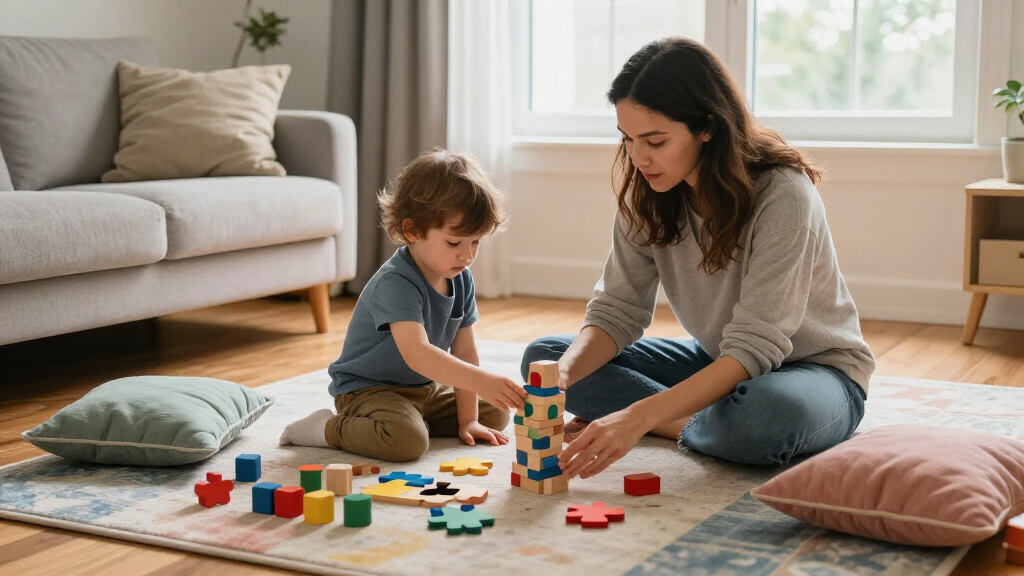
I compared the 11 options by how reliably they provide screen-free engagement, how well their design matches the stated age range, and how easy they are to start, carry, store, and reset. I also looked at the kind of play each encourages—creative, problem-solving, sensory, pretend, or active—because a toy that suits a child’s interests is more likely to hold attention than one with a long feature list.
The ranking favors broad usefulness, straightforward play, and a manageable balance of engagement and upkeep. That puts the Magnetic Dot Art Designer first as a versatile creative activity, while travel-focused and specialist toys rank higher for particular needs than for universal appeal. I weighed tradeoffs such as small pieces, adult setup, space requirements, and how much a toy depends on a specific play style. The products are not interchangeable: a quiet fidget, a matching game, and a remote-control car solve different screen-free moments.
Factors to Consider When Choosing Best Screen-free Toys
To choose well, match the toy to the moment when you want it to help: independent downtime, a trip, shared play, or a sensory break. These broader checks can prevent a toy from being appealing on paper but awkward in your household.
Match the Activity to Your Child’s Attention Style
Some children enjoy a clear goal, such as matching shapes or sorting coins; others prefer open-ended making or repeated sensory movement. A structured toy can be easier to start, but it may lose appeal once the challenge feels familiar. Open-ended materials offer more ways to play, though a child may need an adult to suggest a first idea. Avoid choosing only by age label: interest in drawing, puzzles, movement, or tactile play often predicts engagement better. If you are unsure, choose a toy with a simple first step and room for the child to invent their own variations.
Think About Where the Toy Will Be Used
A toy that works at a table may be a poor fit for a car seat, waiting room, or airplane tray. For travel, check whether pieces stay attached or contained, whether the activity can be paused, and whether it needs a flat surface. Compact size alone does not make a toy travel-ready if loose parts are easy to lose. At home, larger or more active toys can work well if there is a safe play area and somewhere to store them. Decide on the main setting before buying rather than expecting one toy to handle every situation.
Check Piece Size, Supervision, and Age Fit
Age guidance is a starting point, not a substitute for checking small parts and how a child handles them. Magnetic pieces and game components may call for closer supervision, particularly around younger siblings who could put objects in their mouths. Also think about the child’s patience with rules, sorting, or fine-motor tasks; a toy can be age-appropriate yet still feel frustrating. Choose activities with a manageable first challenge, then add difficulty when the child is ready. If several children share a play space, store smaller pieces securely between sessions.
Balance Independent Play With Adult Involvement
Some screen-free toys occupy a child after a quick introduction; others work best as a shared activity. A parent’s brief demonstration can turn a puzzle or art set from confusing to inviting, but a toy that always needs adult direction may not solve the need for independent downtime. Consider when you will be available and how much help the child typically wants. Challenge cards and sorting goals can give structure, while open-ended toys may need an occasional prompt. Do not assume that more activities automatically mean less adult involvement.
Account for Cleanup, Storage, and Durability
Creative and manipulative toys can involve many small components, so count the cleanup as part of the play experience. Reusable or self-contained designs may be easier to bring out regularly than activities that require a dedicated surface and careful sorting afterward. Check how parts are stored and whether the toy can be packed away without losing the pieces that make it work. For frequent travel, a compact storage solution can matter more than extra activity variations. A slightly simpler toy that is easy to reset may see more use than a complicated set that stays in its box.
Choose the Right Kind of Stimulation
Screen-free does not always mean quiet or calming: a remote-control car is active and exciting, while a fidget board is built around repetitive tactile input. Think about whether you want to redirect restless hands, encourage focused problem-solving, or burn off energy. No one format suits every child or setting, and sensory preferences vary. A toy with sound, movement, or many visual details may be enjoyable at home but distracting in a quiet waiting area. For shared spaces, consider noise, movement, and whether the activity affects nearby people as well as the child using it.
Frequently Asked Questions
Which of these toys is the best choice for a long car ride?
For a younger toddler, the HABA Town Maze is the most directly travel-oriented option because its activity is built around a compact busy-board format. Wikki Stix and the plush Seek & Find Bear offer different travel play for children who enjoy making or searching. Pick based on whether your child likes tactile creativity or finding hidden objects, rather than assuming one format will suit every trip. Before buying, check how the pieces are contained and whether the child can use the toy safely while seated. A toy that needs a broad surface or active movement is a weaker fit for a car ride.
Are magnetic toys a good choice if younger siblings are in the house?
They can be, but the household setup matters as much as the intended user’s age. Check the manufacturer’s age guidance, inspect the size and construction of each piece, and store the toy out of reach when play is over. Young children who mouth objects should not have access to loose magnetic pieces. An older child may still need a defined play area if a sibling is nearby. If close supervision and secure storage are not realistic, a toy with fewer loose parts may be a more practical choice.
Which option is better for a child who gets frustrated by puzzles?
Look for an activity with open-ended play or a low-pressure first step rather than a single right answer. Wikki Stix can suit children who prefer shaping and experimenting, while the Magnetic Dot Art Designer gives creative play a more defined activity. A child who dislikes solving a challenge may find matching games, maze tasks, or untangling puzzles less inviting. You can also introduce structured toys as a shared activity and stop before frustration builds. The best fit is the one that leaves room to succeed in more than one way.
Do screen-free toys need an adult to keep children engaged?
Some children start independently, while others need a short demonstration or a first prompt. Activity cards, sorting tasks, and matching games can make the goal clear, but a new set of rules may still require adult help. Open-ended toys reduce rule learning yet can leave a child unsure what to do at first. If independent play is the main goal, favor a toy your child can understand quickly and return to without resetting it for them. A brief introduction can be a reasonable tradeoff for longer-term independent use.
Should I choose one versatile toy or several toys for different situations?
Start with the situation you need to solve most often rather than buying for every possible occasion. A creative toy may cover quiet home play, but it will not replace a travel busy board or an active toy when a child needs movement. A small mix of distinct play styles can be more useful than several toys that all ask for the same kind of attention. Storage and cleanup matter too: a larger collection only helps if the toys are easy to access and put away. If you are uncertain, begin with one well-matched option and add a second format when a clear need appears.
Conclusion
For the broadest mix of accessible creative play and manageable setup, I’d choose the Chuckle & Roar Magnetic Dot Art Designer as the best overall. The strongest value-style choice is Wikki Stix Doodler for families seeking reusable, portable creative play, while the HABA Town Maze is my best pick for beginners and younger toddlers who benefit from a clear, hands-on activity. For a premium-style specialist choice, the QUNREDA RC stunt car makes sense for an older child who wants movement and has room to play; it is not the pick for quiet outings. Choose Pushpeel for repetitive, quieter fidgeting, the Seek & Find Bear for search-and-discover travel play, or the Learning Resources Pixel Art Challenge for a child drawn to structured art and STEM tasks. The right choice depends less on having the most features and more on matching the toy’s play style to the child and setting.
Cold & flu season Picks
humidifiers
As an affiliate, we earn on qualifying purchases.