The best active learning video game systems combine movement with games that encourage learning, rather than simply keeping kids in front of a screen. I name the Nex Playground Active Play System my best overall pick for family-friendly active play, while the VTech LeapMOVE and LeapFrog LeapMove stand out for younger children who need more learning-focused activities. The main tradeoff is between broad motion-game variety and structured early-learning content, with setup, age fit, and room to move also shaping the choice. This roundup compares 14 systems across those differences. Read on for the full breakdown and guidance on which type best suits your household.

Turn the school run and nap time into listening time
- Thousands of audiobooks, podcasts and originals
- Listen on your phone, tablet or Echo — also offline
- Cancel anytime
Complete the kit


Key Takeaways
- Nex Playground leads the roundup for households seeking active play that can include more than one family member, while LeapMove models place greater emphasis on age-targeted learning.
- The VTech LeapMOVE and three LeapFrog LeapMove listings are the clearest fit for younger learners; buyers should compare the exact age range and game approach instead of assuming similarly named systems are interchangeable.
- The lineup includes several generic AR and motion-console listings with overlapping descriptions, so buyers should verify what games, sensors, and accessories are actually included before choosing by appearance or color.
- The Blackview PlayPop 8 appears twice with different audience descriptions; the listing and included content matter more than the family-oriented wording alone.
- Motion play needs usable floor space and adult-friendly setup. A system with more movement options may be a weaker fit than a compact, learning-led console in a crowded room.
| Vividora AR Motion Game Console for Kids Ages 3–9 |  | Best for Simple Offline Play | Recommended age: 3–9 years | Built-in games: 20+ | Players: Up to 2 | VIEW LATEST PRICE | See Our Full Breakdown |
| KINHANK MotionX AI Motion Game Console for Kids and Families |  | Best for Controller-Free Group Play | Players: 1–4 | Controller type: Camera-based motion sensing | Built-in games: 46 | VIEW LATEST PRICE | See Our Full Breakdown |
| MetFut Motion-Sensing Gaming Console for Kids and Families, White and Pink |  | Best for Mixing Active Games with Puzzles | Age range: 3 years and up | Motion-sensing games: 11 | Controller games: 10 puzzle games | VIEW LATEST PRICE | See Our Full Breakdown |
| FWFX AR Motion Gaming Console for Kids, White and Pink |  | Best for School-Age Variety | Age range: 4–12 years | Preloaded games: 21 | Play modes: Motion and button | VIEW LATEST PRICE | See Our Full Breakdown |
| Acelufly AR Motion Game Console for Kids |  | Best for a Balanced Game Mix | Model: S009 | Games included: 24 | Motion games: 13 sports and action games | VIEW LATEST PRICE | See Our Full Breakdown |
| Nex Playground Active Play System for Kids and Families | 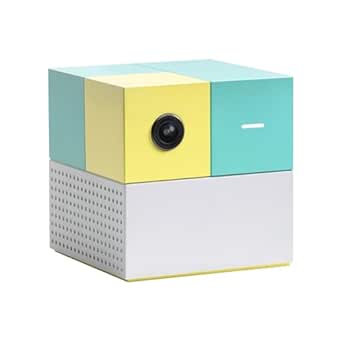 | Best for Large Family Gatherings | Included Games: 5 | Max Players: 4 | Storage: 64 GB | VIEW LATEST PRICE | See Our Full Breakdown |
| VTech LeapMOVE Movement Game Console for Kids |  | Best for Early Childhood Education | Pre-installed Games: 30 | Players: 1 | Connectivity: HDMI, USB-C | VIEW LATEST PRICE | See Our Full Breakdown |
| Blackview PlayPop 8 Motion Gaming Console for TV |  | Best Premium Hardware | Processor: Octa-core Rockchip RK3576 | RAM: 8GB LPDDR4X | Storage: 128GB | VIEW LATEST PRICE | See Our Full Breakdown |
| HUUCH Motion Bundle: AI Full-Body Motion Gaming Console |  | Best No-Subscription Value | Included Games: 10 | Players: 1-4 | Tracking: On-device 3D | VIEW LATEST PRICE | See Our Full Breakdown |
| AR Motion Gaming Console for Kids, Cyan |  | Best Budget Starter | Games: 34 | Players: 1-2 | Storage: 3 GB | VIEW LATEST PRICE | See Our Full Breakdown |
| WASTDE AR Motion Game Console for Kids, Rose Gold |  | Best Budget All-Rounder | Age Range: 3 years and up | Game Count: 20+ built-in games | Connectivity: HDMI | VIEW LATEST PRICE | See Our Full Breakdown |
| LeapFrog LeapMove Motion-Based Learning Game Console for Ages 4–7 |  | Best for Preschool Skill Building | Recommended Age: 4–7 years | Preloaded Games: 25 | Learning Levels: 3 | VIEW LATEST PRICE | See Our Full Breakdown |
| Blackview PlayPop 8 Motion Gaming Console for Families |  | Best for Multi-Media Families | Max Players: 1–4 | Storage Capacity: 128 GB | Video Decoding: H.265, VP9, AV1; supports 4K | VIEW LATEST PRICE | See Our Full Breakdown |
| LeapFrog LeapMove Active Learning Video Game System |  | Best for School-Ready Skills | Recommended Age: 4–7 years | Preloaded Games: 25 games and adventures | Storage Capacity: 4 GB | VIEW LATEST PRICE | See Our Full Breakdown |
More Details on Our Top Picks
Vividora AR Motion Game Console for Kids Ages 3–9
Vividora suits families who want an easy-to-start mix of movement and button games without accounts, downloads, or an internet connection. Its 20-plus built-in games and two-player support give siblings a way to take turns or play together, while the choice of motion or controller play can help younger children ease into active games. Compared with the KINHANK MotionX, Vividora is less focused on controller-free, camera-tracked movement and has a smaller stated game count, but it avoids that system’s optional subscription for access to the full catalog. The tradeoffs are practical: its wireless controllers need four AAA batteries that are not included, and play is intended for indoors with a TV, monitor, or projector. I’d pick it for straightforward offline variety, not advanced motion tracking.
Pros:- Includes more than 20 built-in games
- Offers both motion-controlled and button-controlled play
- Works without internet, downloads, or subscriptions
- Supports two players
Cons:- Two wireless controllers require four AAA batteries, which are not included
- Designed for indoor play and requires a connected display
Best for: Families with children ages 3–9 who want a two-player, offline TV game system with both movement and button-based games.
Not ideal for: Buyers seeking controller-free full-body tracking, outdoor play, or a system that includes controller batteries.
- Recommended age:3–9 years
- Built-in games:20+
- Players:Up to 2
- Play modes:Motion and controller
- Display platform:TV
- Internet required:No
- Controller batteries:4 AAA batteries, not included
- Use:Indoor
Our verdict“Choose Vividora for uncomplicated offline play across motion and controller games; skip it if camera-based, controller-free movement is your priority.”
KINHANK MotionX AI Motion Game Console for Kids and Families
KINHANK MotionX is the strongest fit here for families who want players to move without holding controllers or wearing sensors. Its built-in camera tracks full-body movement on the device, and support for up to four players makes it better suited to group sessions than the two-player Vividora or MetFut systems. The 46 built-in games also provide a substantial starting library, with a physical camera cover and on-device tracking addressing privacy more directly than a basic motion console. The compromise is catalog access: the included Fun Pass lasts one month, and continued access to the full catalog requires an optional paid subscription. It also needs an HDMI-connected TV, monitor, or projector and corded power. I’d favor it over the controller-based FWFX when hands-free movement and larger groups matter more than avoiding a subscription option.
Pros:- Tracks full-body movement without handheld controllers or wearables
- Supports one to four players
- Includes 46 built-in games playable without a subscription
- Uses on-device tracking and has a physical camera cover
Cons:- Access to the full game catalog after the trial requires an optional paid Fun Pass
- Requires an HDMI-connected display and corded power
Best for: Families with a suitable HDMI display who want controller-free movement games for as many as four players.
Not ideal for: Buyers who want a permanently subscription-free full catalog, lack an HDMI display, or prefer games controlled with handheld buttons.
- Players:1–4
- Controller type:Camera-based motion sensing
- Built-in games:46
- Connection:HDMI
- Power source:Corded electric
- Subscription:One-month Fun Pass trial; optional paid subscription
- Dimensions:3.15 × 3.15 × 2.36 in
- Weight:10.88 oz
Our verdict“Pick KINHANK MotionX for controller-free group movement, provided its built-in games and optional subscription model suit your family.”
MetFut Motion-Sensing Gaming Console for Kids and Families, White and Pink
MetFut makes a clear split between 11 motion-sensing games for active play and 10 controller-based puzzle games, giving families a way to shift from movement to quieter problem-solving without changing systems. That mix is more explicit than the broad motion-and-button modes listed for Vividora, and its two wireless controllers support shared puzzle play. HDMI connection and no internet requirement keep the setup straightforward, while the product description also specifies facial blur and no ads. The library is smaller than KINHANK MotionX’s 46 built-in games, and MetFut does not offer KINHANK’s four-player support: it is better framed as a two-controller household pick. It also depends on a TV or projector, and the four required AAA batteries are not included. I’d choose it when puzzle variety matters alongside movement, rather than for motion games alone.
Pros:- Combines 11 motion games with 10 controller-based puzzle games
- Includes two wireless controllers
- Connects by HDMI without requiring internet
- Features facial blur and no ads, according to the product description
Cons:- Requires four AAA controller batteries, which are not included
- Needs a TV or projector for play
- Offers fewer listed games than KINHANK MotionX
Best for: Families with children ages 3 and up who want a compact mix of active movement games and controller-based puzzles for two players.
Not ideal for: Households seeking four-player motion sessions, a large game catalog, or a system that does not need an external display.
- Age range:3 years and up
- Motion-sensing games:11
- Controller games:10 puzzle games
- Controllers:2 wireless controllers
- Connection:HDMI
- Internet required:No
- Batteries:4 AAA batteries, not included
- Dimensions:9.37 × 8.03 × 2.76 inches
Our verdict“MetFut is a good match for families who value a defined mix of movement and puzzles more than a large library or four-player support.”
FWFX AR Motion Gaming Console for Kids, White and Pink
FWFX is aimed at a wider and slightly older age span than Vividora, with games listed for children ages 4–12 across sports, rhythm, math, and puzzles. That range gives it a useful learning-and-activity angle: kids can switch between moving, tapping buttons, and working through more seated challenges. Its plug-and-play setup needs no internet, apps, or accounts, and the product states that it is ad-free and does not store or transmit camera images. Compared with MetFut, FWFX lists 21 games without breaking them into separate motion and puzzle counts, so buyers get less detail about how the library is divided. It is also limited to one or two players and requires a TV and four AAA batteries. I’d choose it for a simple, broad-age household setup, not for controller-free multiplayer like KINHANK MotionX.
Pros:- Includes 21 preloaded games across several activity and learning categories
- Offers both motion and button-based play
- Works without internet, apps, or accounts
- Product states that it is ad-free and does not store or transmit camera images
Cons:- Requires four AAA batteries
- Needs a TV and is designed for indoor play
- Supports only one or two players
Best for: Families with children ages 4–12 who want offline TV games spanning movement, basic learning activities, rhythm, and puzzles.
Not ideal for: Buyers seeking controller-free play, more than two-player support, or a system that includes required AAA batteries.
- Age range:4–12 years
- Preloaded games:21
- Play modes:Motion and button
- Players:1–2
- Platform:TV
- Setup:Plug and play
- Batteries:4 AAA batteries required
- Warranty:2-year limited warranty
Our verdict“Choose FWFX for an offline, mixed-category game system for school-age children, but choose KINHANK MotionX for hands-free play or larger groups.”
Acelufly AR Motion Game Console for Kids
Acelufly offers a clearly divided library: 13 motion-sensing sports and action games for active play, plus 11 controller-based casual and puzzle games for a slower change of pace. Its 24 games give it a larger stated total than MetFut’s 21, while the split between movement and controller play is more specific than FWFX’s general category list. That makes Acelufly a practical option for families who want both physical activity and seated games in one TV-connected system. The description promises plug-and-play use without downloads or internet, but provides less information about age range, player capacity, power, or privacy than KINHANK MotionX and FWFX. It also requires a TV, so it is not a standalone play device. I’d select it for the game-mode balance, while buyers who need clearly documented group size should look elsewhere.
Pros:- Includes 24 games split between motion and controller play
- Provides 13 motion-sensing sports and action games
- Adds 11 controller-based casual and puzzle games
- Requires no downloads or internet connection
Cons:- Requires a TV for play
- Product details do not specify player capacity or a recommended age range
- Power source and included controller batteries are not specified
Best for: Families wanting a TV-connected console with a substantial mix of motion-based sports and action games plus controller puzzles.
Not ideal for: Buyers who need a clearly specified age range, player capacity, privacy features, or a system that works without a TV.
- Model:S009
- Games included:24
- Motion games:13 sports and action games
- Controller games:11 casual and puzzle games
- Input device:Motion controller
- Internet required:No
- Display:TV
- Software updates:Supported; update date unknown
Our verdict“Acelufly is a sensible pick for families seeking a defined active-and-puzzle game mix, but FWFX offers clearer age and warranty details.”
Nex Playground Active Play System for Kids and Families
This system stands out for its ability to engage up to four players simultaneously without handheld controllers, making it ideal for busy households. Compared to the HUUCH Motion Bundle, which requires significant floor space for multiplayer, the Nex Playground’s design is more forgiving in typical living rooms. It includes five starter games, but the heavy reliance on a paid Play Pass for the full catalog is a notable drawback. While it processes data locally for privacy, the subscription model means the initial purchase price does not cover the full experience. This option is best suited for families who already own a subscription service and want a seamless, controller-free entry into active gaming.Pros:- Supports up to four players simultaneously with no controllers
- Privacy-focused with local motion processing
- Compact design fits easily behind most TVs
Cons:- Full game library requires a separate Play Pass subscription
- Requires a TV or projector for setup
Best for: Families with multiple children who want a polished, controller-free experience and are comfortable with ongoing subscription costs.
Not ideal for: Budget-conscious buyers who prefer a one-time purchase model without monthly fees for game access.
- Included Games:5
- Max Players:4
- Storage:64 GB
- Connection:HDMI
- Age Range:5+
- Weight:13.76 oz
Our verdict“Choose this if you prioritize multi-player social play and don’t mind a subscription for extended content.”
VTech LeapMOVE Movement Game Console for Kids
This console prioritizes structured learning over pure entertainment, offering 30 pre-installed games focused on vocabulary and math. Unlike the Nex Playground, which requires a subscription for most titles, the VTech LeapMOVE works entirely offline with no internet connection needed. This makes it a safer, more contained option for younger children aged 4–12. However, it is limited to single-player use, which reduces its appeal for group play. The built-in playtime control is a standout feature for parents who want to manage screen time strictly. It is less robust than premium systems but excels in delivering targeted educational content without hidden costs.Pros:- 30 pre-installed educational games with no internet required
- Built-in parental playtime controls
- Focuses on motor skills and cognitive development
Cons:- Single-player only
- Inconsistent age range labeling on packaging
Best for: Parents seeking a controlled, offline educational tool for preschoolers and early elementary students.
Not ideal for: Older children or adults looking for high-energy, multi-player active gaming experiences.
- Pre-installed Games:30
- Players:1
- Connectivity:HDMI, USB-C
- Internet Required:No
- Weight:0.48 kg
- Learning Levels:3
Our verdict“Ideal for young learners who need a focused, offline educational gaming environment.”
Blackview PlayPop 8 Motion Gaming Console for TV
The PlayPop 8 distinguishes itself with high-end internal specs, including an octa-core processor and 8GB of RAM, which surpasses the hardware found in most competitors like the Nex Playground. Its 12MP wide-angle camera with 17-point AI tracking offers superior motion accuracy. While it shares the subscription model with the Nex Playground, the hardware quality justifies the premium positioning for tech-savvy buyers. The inclusion of a physical camera cover adds a layer of privacy reassurance that many competitors lack. However, the requirement for a separate 15W charger and strict lighting conditions can complicate setup. This system is for those who want the best possible tracking performance and are willing to pay for the hardware.Pros:- High-spec hardware with 8GB RAM and 128GB storage
- 17-point AI body tracking for precise movement
- Physical camera cover for added privacy
Cons:- Requires a separate 15W+ power charger
- Full game library requires a paid GamePass
Best for: Tech enthusiasts who value high-performance motion tracking and robust hardware specifications.
Not ideal for: Users with limited living room space or poor lighting conditions, as tracking requires clear visibility.
- Processor:Octa-core Rockchip RK3576
- RAM:8GB LPDDR4X
- Storage:128GB
- Camera:12MP, 176°
- Connectivity:HDMI, Wi-Fi 6
- Warranty:2 Years
Our verdict“A top-tier choice for those demanding the most accurate motion tracking and powerful hardware.”
HUUCH Motion Bundle: AI Full-Body Motion Gaming Console
This console offers a compelling alternative to subscription-heavy models by including 10 games with no mandatory ongoing fees. While it does offer an optional Game Pass, the base package is more complete out-of-the-box than the Nex Playground or Blackview PlayPop 8. The inclusion of a travel case and haptic handle makes it unique, appealing to families who want portability. However, the space requirements for multiplayer are substantial, needing up to 2×6 meters for four players. This contrasts with the Nex Playground’s more compact footprint. It is the best choice for buyers who want immediate access to a decent library of games without committing to a monthly service.Pros:- 10 games included with no subscription required
- Includes a travel case and haptic handle
- On-device data processing for privacy
Cons:- Requires large floor space for multiplayer modes
- Optional Game Pass needed for additional titles
Best for: Buyers who prefer a one-time purchase model and need portability features like a travel case.
Not ideal for: Families with smaller living rooms who plan to play with more than two people.
- Included Games:10
- Players:1-4
- Tracking:On-device 3D
- Space Required:2x2m to 2x6m
- Included Accessories:Travel case, handle
- Weight:16 oz
Our verdict“Perfect for those who want a solid game library and portability without forced subscriptions.”
AR Motion Gaming Console for Kids, Cyan
This entry-level system provides a no-frills introduction to active gaming with 34 preloaded games and no subscription costs. Compared to the HUUCH, it lacks advanced features like a travel case or haptic feedback, but it delivers a substantial amount of content immediately. The limitation to two players and the use of button controls for some interactions makes it less immersive than the Nex Playground. It is an excellent choice for casual users who want to test the waters of motion gaming without a significant financial commitment. The lack of clarity on whether an HDMI cable is included is a minor inconvenience for a device in this price range.Pros:- 34 games included with no subscription fees
- Works offline with no internet required
- Simple plug-and-play setup
Cons:- Limited to two players
- Mixed control schemes (motion and buttons)
Best for: Casual users and first-time buyers looking for a low-cost, low-commitment introduction to active gaming.
Not ideal for: Serious gamers who want high-fidelity motion tracking or multi-player support beyond two people.
- Games:34
- Players:1-2
- Storage:3 GB
- Connection:HDMI
- Internet:Not required
- Weight:16 oz
Our verdict“A cost-effective entry point for families wanting to try active gaming without recurring costs.”
WASTDE AR Motion Game Console for Kids, Rose Gold
This console stands out for its simplicity and immediate usability, making it a strong contender for families who want to start playing without technical hurdles. Unlike the Blackview PlayPop 8, which leans into multimedia features and a subscription model for expanded content, the WASTDE unit focuses strictly on gaming with over 20 titles preloaded. The inclusion of two wireless remotes is a significant advantage for sibling play, though buyers should note that these remotes require four AAA batteries that are not included, adding a minor ongoing cost. The motion tracking is functional but lacks the advanced AI precision found in pricier units like the KINHANK MotionX, meaning it is better suited for casual fun than competitive sports simulations. Its compact, rose gold design fits easily into most living rooms, and the offline capability ensures privacy and no subscription fatigue, though the limited library may feel thin for older children compared to more robust systems.Pros:- Includes 20+ preloaded games with no subscription fees
- Comes with two wireless remotes for immediate two-player play
- Works entirely offline, ensuring privacy and no connectivity issues
- Compact, lightweight design fits easily on small entertainment units
Cons:- Remotes require four AAA batteries not included in the box
- Limited game library may bore older children quickly
- Motion tracking is less precise than premium AI-driven consoles
Best for: Parents seeking an affordable, no-subscription entry point into motion gaming for two children.
Not ideal for: Gamers who want a large library or advanced AI motion tracking for competitive play.
- Age Range:3 years and up
- Game Count:20+ built-in games
- Connectivity:HDMI
- Storage:512 MB
- Weight:1.8 pounds
- Power Source:AC adapter
- Remote Batteries:4 AAA batteries required (not included)
Our verdict“Choose this if you want a simple, offline, two-player motion gaming experience without ongoing subscription costs.”
LeapFrog LeapMove Motion-Based Learning Game Console for Ages 4–7
This system is engineered specifically for early childhood development, distinguishing itself from general entertainment consoles like the WASTDE AR Motion Game Console. While the WASTDE offers a broader variety of casual games, the LeapMove focuses on 25 preloaded educational titles that adapt to three distinct learning levels, ensuring the content grows with the child. The motion-based controls are designed to strengthen motor skills alongside cognitive development, a feature less emphasized in purely entertainment-focused units. However, this educational focus comes with spatial requirements; players need about six feet of clearance from the TV, which is more demanding than the tighter setup allowed by some compact alternatives. Unlike the Blackview PlayPop 8, which prioritizes 4K video playback and family-wide gaming, the LeapMove is strictly a learning tool, making it ideal for parents prioritizing curriculum-aligned play over high-fidelity graphics or extensive multiplayer options.Pros:- Includes 25 educational games with three adaptive learning levels
- Combines physical movement with core preschool skill development
- Supports up to three players, encouraging cooperative learning
- Designed specifically for ages 4–7 with age-appropriate content
Cons:- Requires significant space (approx. 6 feet from TV) for motion tracking
- Battery life and specific battery type are not clearly specified
- Limited to a narrow age range, potentially outgrown by age 8
Best for: Parents of preschoolers who prioritize structured educational play over general entertainment.
Not ideal for: Families looking for a versatile gaming system for older children or adults.
- Recommended Age:4–7 years
- Preloaded Games:25
- Learning Levels:3
- Max Players:Up to 3
- Power Source:Battery
- Educational Focus:Preschool skills development
- Included Components:Console, quick start guide, USB power cable, HDMI cable
Our verdict“This is the definitive choice for parents who want a motion-based system focused strictly on early childhood educational development.”
Blackview PlayPop 8 Motion Gaming Console for Families
The PlayPop 8 differentiates itself by blending active gaming with robust media playback capabilities, a feature largely absent in dedicated learning units like the LeapFrog LeapMove. While the LeapMove restricts its utility to educational software, the Blackview supports 4K video decoding and local motion processing, turning the device into a central entertainment hub. It supports up to four players, offering a more social experience than the two-player limit of the WASTDE AR Motion Game Console. However, the out-of-the-box experience is sparse; with only five games preinstalled, users must rely on the GamePass subscription for a meaningful library, which contrasts sharply with the offline-ready nature of competitors. The physical camera shutter is a standout privacy feature, addressing concerns that arise with always-on camera systems in other motion consoles. This device is best for tech-savvy households that value versatility and are comfortable managing subscriptions for expanded content.Pros:- Supports up to four players for larger family gaming sessions
- Includes 4K video decoding for high-quality media playback
- Physical camera shutter provides tangible privacy control
- Compact cube design with RGB lighting fits modern aesthetics
Cons:- Only five games included; requires GamePass for broader library
- Limited to indoor use and requires HDMI-compatible display
Best for: Tech-oriented families who want a combination of motion gaming and 4K media streaming.
Not ideal for: Users who want a large library of games without ongoing subscription commitments.
- Max Players:1–4
- Storage Capacity:128 GB
- Video Decoding:H.265, VP9, AV1; supports 4K
- Dimensions:76 × 76 × 76 mm
- Weight:343.2 g
- Warranty:2 years
- Included Accessories:HDMI cable, 15 W USB-C power adapter, remote
Our verdict“Select this console if you need a device that doubles as a 4K media player and supports four-player motion gaming.”
LeapFrog LeapMove Active Learning Video Game System
This iteration of the LeapMove system refines the educational formula by explicitly targeting math, spelling, phonics, and reading, offering a more rigorous academic focus than the broader preschool skills of the earlier LeapFrog LeapMove Motion-Based Learning Game Console. While both units share similar hardware constraints, this model includes downloadable content options, allowing the curriculum to expand beyond the 25 preloaded titles. This flexibility is a key advantage over offline-only devices like the WASTDE AR Motion Game Console, which cannot update its library. However, the reliance on downloads means it requires internet access for full functionality, a trade-off for those seeking a purely offline solution. The USB-powered design is convenient but less portable than battery-operated alternatives. It is designed for children who need targeted practice in specific school-readiness areas, making it a superior choice for parents concerned about academic gaps rather than just general physical activity.Pros:- Covers specific school skills: math, spelling, phonics, and reading
- Supports downloadable games to expand the educational library
- USB-powered for consistent performance without battery changes
- Includes HDMI and USB-C cables for easy setup
Cons:- Requires internet connection to download additional content
- Limited to ages 4–7, with no content for older children
Best for: Parents focused on reinforcing specific academic skills like reading and math through play.
Not ideal for: Households without reliable internet access, as additional games require downloads.
- Recommended Age:4–7 years
- Preloaded Games:25 games and adventures
- Storage Capacity:4 GB
- Power Source:USB powered
- Connections:HDMI, USB Type-C
- Dimensions:2.6 x 2.6 x 2.8 inches
- Weight:0.29 kg
Our verdict“This system is the best option for parents who need a motion-based tutor for core elementary school skills.”
How We Picked
I ranked these systems around how well they serve the active-learning use case: movement should be central to play, and the games should offer a useful learning or developmental angle for the intended age group. I also weighed the clarity of the age fit, family suitability, likely ease of getting play started, and how much a buyer can tell about the included experience from the product information. Systems with a clear audience or educational focus rank ahead of listings that leave core details less clear.
The order reflects differences in purpose, not a claim that every product offers the same kind of play. Nex Playground takes the lead as the broad family active-play choice, while established learning-focused lines such as VTech LeapMOVE and LeapFrog LeapMove rank highly for younger children. The remaining motion-console listings offer potential flexibility, but their overlapping descriptions make verification of game libraries, setup requirements, and included hardware especially important. I treat similarly named or repeated listings as separate options only where the listing presents a distinct audience or configuration.
Factors to Consider When Choosing Best Active Learning Video Game Systems
Choosing an active learning system is less about finding the biggest game library and more about matching the play style to your child, your room, and the amount of adult support you can provide. I recommend checking these factors before settling on a model.
Match the learning style to the child
“Learning” can mean very different things across these systems: one may focus on early academic practice, while another gets children moving through general play. Think about whether your child enjoys following prompts, practicing a particular skill, or inventing their own movement challenges. A structured learning console may suit a child who benefits from clear goals, but feel repetitive to one who wants variety and free play. The reverse is true for a broad motion-game system: flexibility can be appealing, though it may offer less targeted practice. Check the listed ages and game examples rather than relying on the word “educational” in a product name. The right match is the one your child will return to without constant adult encouragement.
Check the actual game library and what comes in the box
For motion systems, the included games define the experience more than the console label does. Before buying, look for a clear list of included activities and separate any mention of optional content, subscriptions, or accessories. A large-sounding library is not automatically a better fit if most games do not suit your child’s age or interests. Check whether the console needs a controller, camera, sensor, or other part that may be sold separately. Listings in this roundup often use similar terms for AR and motion play, so confirm what the system detects and how games respond. This quick check can prevent a mismatch between the advertised concept and the play experience you expected.
Measure the play area before choosing a motion system
Active play requires room to move safely, even when a system connects to a television. Measure the clear space in front of the screen and check whether furniture, pets, or other people routinely pass through it. A camera-based system may need an unobstructed view, while a more contained movement game may fit a smaller room. Consider where children will stand and whether the screen can be positioned at a comfortable height. Families with limited space may get more use from a system with short, easy-to-start sessions than one that calls for a larger play zone. Do not assume that a living room setup shown in a listing will work in your home.
Factor in adult setup and supervision
Some families want a system a child can start with minimal help; others are comfortable managing setup and choosing activities together. Check how the console connects to the TV, whether accounts or updates are needed, and how children move between games. For younger players, clear prompts and simple controls can matter as much as the educational content. Supervision also affects placement: cords, nearby furniture, and siblings sharing the space deserve attention before play begins. A product with more capabilities may demand more adult involvement, which can reduce its usefulness during busy routines. Choose for the support your household can realistically provide, not an idealized amount of free time.
Decide whether the system is for solo play or shared family time
Some buyers want an activity for one child, while others want siblings or adults to join in. Check how many players can take part, whether games support turn-taking, and whether the age range works across the children who will use it. A system aimed at a narrow age band can be a better learning fit for one child but less flexible for a household with different ages. Family play can add motivation, yet it may also create waiting turns or competition that does not suit every child. Look for activities that allow different skill levels to participate without one player dominating. Choose shared play only if the available games and your household’s routines support it.
Prioritize clarity over broad feature claims
When listings use similar phrases such as “AI,” “AR,” and “motion sensing,” those labels alone do not tell you how reliably a game responds or what a child will learn. Look for concrete information about the sensor, setup, supported ages, included games, and any ongoing requirements. A named learning series can make its intended age and style easier to identify, while a less detailed listing may need more buyer verification. Do not pay extra for features your child is unlikely to use or that depend on unclear add-ons. If two systems seem alike, compare the practical details rather than color, branding, or broad promises. Clear product information is part of a good buying decision because it helps set realistic expectations.
Frequently Asked Questions
Should I choose a learning-focused LeapMove system or a broader motion-game console?
Choose a learning-focused LeapMove when age-targeted activities and structured prompts matter more than variety across a wide range of play styles. A broader motion-game console may suit a household looking for movement-led entertainment that siblings or adults can also join. Compare the actual included games and age guidance, since product names alone do not establish how much academic practice a system provides. If your child tires quickly of repeated lessons, prioritize variety; if they prefer clear goals, structured activities may hold attention better. The best choice depends on what kind of play your child will use consistently.
Can these systems work in a small apartment or bedroom?
Some may, but you should check the movement area and sensor placement before buying rather than assuming every TV-based system is compact in practice. Clear a safe space and confirm that the camera or motion sensor has an unobstructed view of the player. A smaller room can limit games that ask children to move side to side or step back from the screen. Avoid placing the play area near sharp furniture, breakables, or a busy walkway. If you cannot provide a predictable open area, favor short activities with modest movement demands.
Do I need to buy extra games or accessories for a child to get started?
That depends on the specific listing, so check the included-content section and product details before ordering. Confirm whether the console comes with its required sensor, controller, cables, and playable games, and whether any additional content requires a separate purchase or subscription. Similar-looking motion systems can differ in what arrives in the box. If the listing does not clearly identify the included games or hardware, treat that as an unresolved question and seek clarification before choosing. Knowing the full setup helps you compare the real experience rather than the headline feature.
Are the Blackview PlayPop 8 listings the same system?
The roundup includes two Blackview PlayPop 8 listings with different audience descriptions, so I would not assume they are identical or meaningfully different based on the titles alone. Compare the exact model details, included games, accessories, and any stated age guidance on each listing. A family-oriented label may describe positioning rather than a different hardware package. If the product information does not show a clear distinction, use the seller’s item details to verify the configuration before choosing. This is a case where checking the listing matters more than relying on the name.
How do I choose between similarly described AR motion consoles?
Start by comparing what each one includes: game titles, sensor or camera details, supported ages, TV connection requirements, and any extra hardware. Color names and broad phrases such as “AI motion” or “AR” are weak ways to distinguish systems. Look for clear instructions about how a child interacts with the games and whether the console can support the ages in your household. If those details are missing, do not assume that overlapping product descriptions mean equal capabilities. Favor the option with the clearest, most relevant information for your child’s play style.
Conclusion
For most households seeking a shared active-play experience, I recommend the Nex Playground Active Play System as the best overall choice. For a learning-led pick for younger children, compare the VTech LeapMOVE with the LeapFrog LeapMove models and choose by age fit and game style; the clearest value is the system whose included activities match your child without requiring unclear extras. I would treat HUUCH Motion Bundle as the premium-style option only if its listing confirms the full-body setup and included content you want, since the product details should support that decision. For beginners, a clearly age-targeted LeapMove is the easiest type to shortlist. If your specific need is a broader motion-console alternative, review the Vividora, KINHANK, MetFut, FWFX, Acelufly, AR Motion, WASTDE, and Blackview listings side by side, verifying games, hardware, and room requirements before committing. The strongest choice is the one that fits your child’s age, your available space, and the play routine your family can sustain.