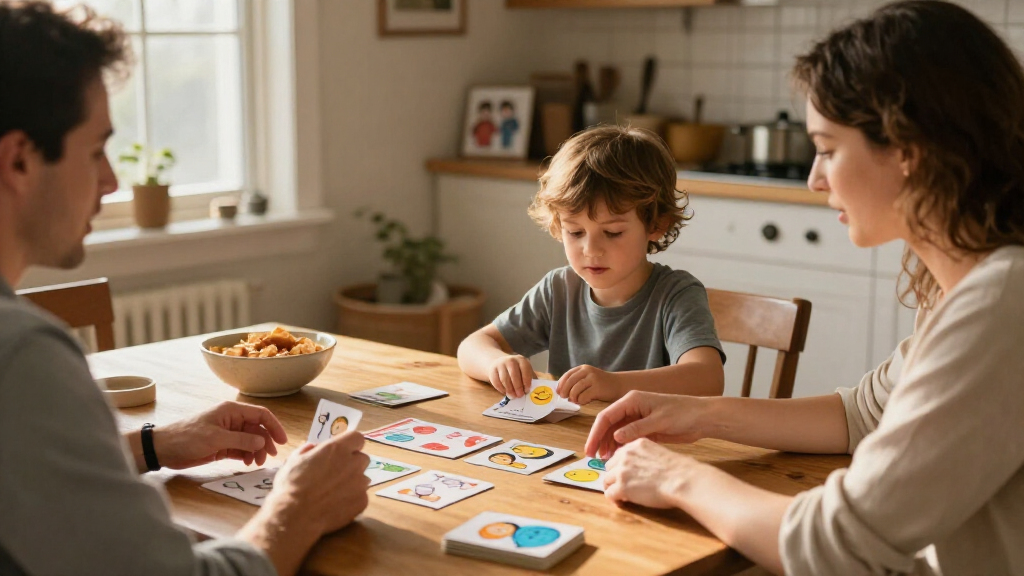

Tell Me More Conversation Starter Game is my best overall pick for people who want a flexible way to spark conversation without locking the group into one mood. Prompta 600 Conversation Cards for Families stands out for its large family-focused prompt collection, while We’re Not Really Strangers suits groups ready for more personal exchanges. The main tradeoff is between light prompts that work with almost anyone and deeper questions that can feel awkward with the wrong crowd. Deck size, age range, and whether you want playful conversation or emotional discovery also shape the choice. Read on for the full breakdown and a guide to matching a deck to your gathering.

Turn the school run and nap time into listening time
- Thousands of audiobooks, podcasts and originals
- Listen on your phone, tablet or Echo — also offline
- Cancel anytime
Complete the kit


Key Takeaways
- Tell Me More earns the overall lead because a broadly useful conversation format suits more kinds of gatherings than a deck built around one audience or mood.
- Prompta 600 puts breadth first: a large family-oriented prompt pool can help groups avoid repeating questions, though volume alone does not guarantee every prompt fits every age.
- We’re Not Really Strangers and Don’t Overthink It serve different social appetites, so buyers should distinguish a more personal exchange from a lighter, lower-pressure one.
- TableTopics Original and TableTopics Family Gathering make audience fit the deciding factor: the adult deck is not a substitute for a family-focused set when children are joining.
- After Dinner Amusements: Which Would You Choose? and Best Story Wins lean on playful choices or storytelling, offering more activity than a straightforward question deck but less of a neutral conversation tone.
| Tell Me More Conversation Starter Game |  | Best for Conversations That Change Over Time | Brand: Compendium | Number of cards: 52 | Age range: Adult | VIEW LATEST PRICE | See Our Full Breakdown |
| Prompta 600 Conversation Cards for Families |  | Best for Families with Mixed Ages | Brand: Prompta | Number of cards: 600 double-sided prompts | Categories: Ask Everyone; Ask the Kids; Ask the Adults; Questions About Family; Fun Questions | VIEW LATEST PRICE | See Our Full Breakdown |
| We’re Not Really Strangers Conversation Card Game |  | Best for Deeper One-on-One Conversations | Players: 2–6 | Recommended age: 15 years and up | Cards: 150 conversation cards and wildcards | VIEW LATEST PRICE | See Our Full Breakdown |
| Hygge Games Time Together Family Game – Conversation Starters Card Game |  | Best for Multigenerational Gatherings | Brand: Hygge Games | Players: 2 or more | Age range: 14 years and up | VIEW LATEST PRICE | See Our Full Breakdown |
| After Dinner Amusements: Which Would You Choose? – 50 Amusing Dilemmas Card Game |  | Best Compact Icebreaker | Brand: Chronicle Books | Age range: 8 years and up | Included components: 50 trivia cards | VIEW LATEST PRICE | See Our Full Breakdown |
| Start That Convo Conversation Cards: 120 Questions for Friends, Families, and Couples |  | Best Compact Pick | Included cards: 120 conversation cards | Players: 2–5 | Age range: Teen | VIEW LATEST PRICE | See Our Full Breakdown |
| TableTopics Original Conversation Cards for Adults |  | Best for Large Gatherings | Included cards: 135 conversation cards | Players: 2–20 | Age range: 12 years and up | VIEW LATEST PRICE | See Our Full Breakdown |
| Tales Family Edition Conversation Cards, 150-Card Deck |  | Best for Family Storytelling | Number of cards: 150 | Players: 2 | Age range: 16 months–16 years (as listed) | VIEW LATEST PRICE | See Our Full Breakdown |
| The Hygge Game: Cozy Conversation in Pleasant Company |  | Best for Long-Running Conversation Sessions | Number of questions: More than 300 | Players: 2+ | Age range: 14 years and up | VIEW LATEST PRICE | See Our Full Breakdown |
| Substance Card Game – 90 Conversation Cards for Couples, Friends, Co-Workers, Strangers (2–6 Players) |  | Best for Deeper Conversations | Number of cards: 90 | Players: 2–6 | Age recommendation: 15 years and up | VIEW LATEST PRICE | See Our Full Breakdown |
| TableTopics Family Gathering Conversation Cards |  | Best for Multigenerational Family Gatherings | Brand: TableTopics | Number of questions: 135 | Number of players: 2–20 | VIEW LATEST PRICE | See Our Full Breakdown |
| Best Story Wins: Party Game with 150 Prompt Cards for Juicy Conversation Starters |  | Best for Lively Storytelling Parties | Brand: DSS Games | Model: BSWv1 | Prompt cards: 150 | VIEW LATEST PRICE | See Our Full Breakdown |
| Habit Real Talk Conversation Starter Card Game |  | Best for Deeper Small-Group Conversations | Brand: Habit | Number of cards: 50 | Number of prompts: 100 | VIEW LATEST PRICE | See Our Full Breakdown |
| Don’t Overthink It Conversation Card Game by We’re Not Really Strangers |  | Best for Flexible Adult Game Nights | Product name: Don’t Overthink It | Brand: We’re Not Really Strangers | Conversation starter cards: 150 | VIEW LATEST PRICE | See Our Full Breakdown |
| Small Talk Conversation Starter Cards, 200 Prompts |  | Best for Low-Pressure Conversation and Travel | Brand: Talking Point Cards | Model: Small Talk | Card count: 200 | VIEW LATEST PRICE | See Our Full Breakdown |
| conversation starter card game | Material | Brand | Age range | Players |
|---|---|---|---|---|
| Tell Me More Conversation Star | — | Compendium | Adult | — |
| Prompta 600 Conversation Cards | Paper | Prompta | 5 years and up | 2 or more |
| We’re Not Really Strangers Con | Cardstock | — | — | 2–6 |
| Hygge Games Time Together Fami | Cardboard, cardstock | Hygge Games | 14 years and up | 2 or more |
| After Dinner Amusements: Which | Paper | Chronicle Books | 8 years and up | — |
| Start That Convo Conversation | Cardstock | Game That Song | Teen | 2–5 |
| TableTopics Original Conversat | — | — | 12 years and up | 2–20 |
| Tales Family Edition Conversat | — | — | 16 months–16 years (as listed) | 2 |
| The Hygge Game: Cozy Conversat | Cardboard | — | 14 years and up | 2+ |
| Substance Card Game | Cardstock | — | — | 2–6 |
| TableTopics Family Gathering C | Plastic | TableTopics | — | — |
| Best Story Wins: Party Game wi | Cardstock | DSS Games | 17+ | — |
| Habit Real Talk Conversation S | — | Habit | — | — |
| Don’t Overthink It Conversatio | Cardstock | We’re Not Really Strangers | — | — |
| Small Talk Conversation Starte | Cardboard and paper | Talking Point Cards | Adults and teens | — |
More Details on Our Top Picks
Tell Me More Conversation Starter Game
Tell Me More earns its place for groups who want prompts that can work for both easygoing chat and more thoughtful exchanges. Its 52 cards keep the format simple: draw a question, talk, and, if the group wants more structure, play for points. Compared with Prompta 600 Conversation Cards for Families, this deck offers far fewer prompts, so it is easier to pick up without sorting through categories but less suited to frequent sessions with the same group. Its distinctive advantage is the invitation to revisit answers over time, making it a good fit for friends or relatives who meet regularly. The tradeoff is that it is conversation-led rather than a varied game, and it needs willing participants; anyone seeking substantial rules or solo play should choose another format.
Pros:- Prompts can support both light conversation and more reflective exchanges.
- Questions can be revisited to compare how answers change over time.
- Can be used casually or with a points-based format.
- The 52-card deck is a straightforward option for dinners, trips, and game nights.
Cons:- Only 52 cards, fewer prompts than Prompta 600 Conversation Cards for Families.
- Conversation is the main activity, with limited gameplay variety.
- Requires at least one other person willing to participate.
Best for: Friends and adult family members who want a small, reusable deck for dinners, road trips, and catching up over time.
Not ideal for: Groups wanting hundreds of prompts, a highly structured game, or an activity that works without other players.
- Brand:Compendium
- Number of cards:52
- Age range:Adult
- Number of packs:1
- Included components:Cards
- Model year:2022
Our verdict“Choose Tell Me More if you value a compact, repeatable set of prompts more than a large deck or a rules-heavy game.”
Prompta 600 Conversation Cards for Families
Prompta 600 is the clearest pick here for households that need prompts suited to both children and adults. Its five categories—including questions for kids, adults, and the whole family—make it easier to find a comfortable starting point than with the more open-ended Tell Me More Conversation Starter Game. The sizable 600 double-sided prompts also give families more variety for repeat dinners and trips, while the compact cards can travel to relatives or fit into a bag. The tradeoff is the paper construction, which may wear faster with frequent handling than a sturdier format. Its family focus is useful when ages vary, but the content may not suit every household’s interests or dynamics. I’d skip it for adults seeking a specifically intimate or challenging conversation experience.
Pros:- 600 double-sided prompts provide substantial variety for repeat play.
- Five categories help groups choose questions for kids, adults, or everyone.
- Compact card size is easy to pack for trips or visits.
- Designed for family participation from age 5 and up.
Cons:- Paper cards may be less durable than coated or plastic alternatives.
- Family-focused questions may not match every household’s interests or dynamics.
- The large prompt count can be more than a group needs for occasional conversation.
Best for: Families with children ages 5 and up who want categorized questions for meals, travel, or calls with relatives.
Not ideal for: Adults looking for a focused, emotionally probing deck, or households that need cards built for heavy, long-term handling.
- Brand:Prompta
- Number of cards:600 double-sided prompts
- Categories:Ask Everyone; Ask the Kids; Ask the Adults; Questions About Family; Fun Questions
- Card size:2.5 x 1.75 inches
- Material:Paper
- Age range:5 years and up
- Players:2 or more
- Item weight:11.2 ounces
- Theme:Family
Our verdict“Pick Prompta for a broad, age-spanning family deck, especially if variety matters more than durable card stock or adult-focused depth.”
We’re Not Really Strangers Conversation Card Game
We’re Not Really Strangers stands apart for players who want a guided progression from impressions to personal reflection, rather than a stack of unrelated icebreakers. Its three levels—Perception, Connection, and Reflection—give a date night or small gathering a natural arc. Compared with Hygge Games Time Together Family Game, this deck is aimed at older players and more emotionally candid conversation, not broad family use. The 150 cards and wildcards, plus Dig Deeper cards and writing materials, add structure and invite follow-up instead of letting a question end at the first answer. That depth also creates its main tradeoff: some prompts may bring up strong feelings, and the 15-and-up audience excludes younger family groups. I’d choose it for intentional connection, not casual, low-stakes table chatter.
Pros:- Three levels create a guided path from first impressions to reflection.
- 150 conversation cards and wildcards provide more structure than a simple prompt deck.
- Dig Deeper cards encourage follow-up when players want to continue a conversation.
- Works for two to six players and includes a notepad and two pencils.
Cons:- Recommended for ages 15 and up, limiting use with younger families.
- Some prompts may bring up strong feelings or require more openness than a casual group wants.
- Its intentional, personal format is less suited to quick, light icebreakers than Hygge Games Time Together.
Best for: Adults and older teens planning a date night or small gathering where participants are comfortable with personal questions.
Not ideal for: Families with younger children, casual groups wanting light-only prompts, or anyone avoiding emotionally charged topics.
- Players:2–6
- Recommended age:15 years and up
- Cards:150 conversation cards and wildcards
- Levels:Perception, Connection, Reflection
- Included components:WNRS notepad, 2 pencils, 2 transparent Dig Deeper cards
- Material:Cardstock
- Language:English
- Container type:Box
Our verdict“Choose this deck for a date night or small group ready for guided, personal conversation, and skip it if you want an easygoing family icebreaker.”
Hygge Games Time Together Family Game – Conversation Starters Card Game
Time Together suits groups who want thoughtful conversation without the more personal, staged progression of We’re Not Really Strangers. With 160+ questions and a recommended age of 14 and up, it is a practical fit for family dinners, reunions, and road trips where older teens and adults can take turns answering. The compact box—4 x 3 x 2 inches—is easy to bring along, and the straightforward question format keeps the focus on talking rather than learning rules. It has less prompt variety than Prompta 600 Conversation Cards for Families, and its age guidance makes it a weaker choice for households with younger children. Cardboard and cardstock may also be less resistant to wear than sturdier card materials. I’d pick it for an older, mixed-generation group seeking a simple shared activity.
Pros:- More than 160 questions offer variety for repeated family gatherings.
- Suitable for groups of two or more players.
- Compact box is easy to carry to dinners and trips.
- Simple question-led play keeps the emphasis on conversation.
Cons:- Recommended for ages 14 and up, so it is not as inclusive of younger children as Prompta 600.
- Cardboard and cardstock may wear with frequent handling.
- Requires at least two players and does not provide a solo activity.
Best for: Families with teens and adults who want an uncomplicated question game for meals, reunions, or travel.
Not ideal for: Households with children under 14, solo players, or buyers seeking a large prompt library or especially durable cards.
- Brand:Hygge Games
- Players:2 or more
- Age range:14 years and up
- Number of questions:160+
- Material:Cardboard, cardstock
- Dimensions:4 x 3 x 2 inches
- Item weight:0.1 kg
- Language:English
- Model year:2020
Our verdict“Choose Time Together for straightforward conversation among older family members, but choose Prompta if younger children need to join.”
After Dinner Amusements: Which Would You Choose? – 50 Amusing Dilemmas Card Game
Which Would You Choose? takes a lighter route than Tell Me More Conversation Starter Game: instead of open-ended prompts, it gives players two comic or awkward scenarios to choose between. That forced choice makes it easier for shy guests and children to join in, while the 50-card tin is small enough to tuck into a travel bag or bring to a dinner gathering. Its age range of 8 and up also makes it more accessible to younger players than Hygge Games Time Together. The tradeoff is a narrower format and a relatively small deck, so repeat groups may run through the dilemmas quickly. These cards are better for sparking quick reactions than building sustained, personal conversations. Choose it as a portable icebreaker, not as a deep conversation game.
Pros:- Either-or dilemmas give quieter players an easy way into conversation.
- Compact tin is convenient for travel and gatherings.
- Age range of 8 and up accommodates children as well as adults.
- Humorous scenarios can loosen up a group faster than open-ended questions.
Cons:- The 50-card deck offers less replay variety than larger options such as Hygge Games Time Together.
- Would-you-rather choices are narrower than open-ended conversation prompts.
- Paper cards may be less durable than coated or plastic alternatives.
Best for: Hosts, travelers, and families with children ages 8 and up who want quick, funny questions to get a group talking.
Not ideal for: Players seeking emotionally deep discussion, extensive replay variety, or a longer game with multiple kinds of prompts.
- Brand:Chronicle Books
- Age range:8 years and up
- Included components:50 trivia cards
- Material:Paper
- Dimensions:2.5 x 1.25 x 2.5 inches
- Item weight:60 g
- Theme:Trivia
- Operation mode:Manual
Our verdict“Pick this tin for portable, family-friendly laughs and quick icebreaking, not for long or deeply personal conversations.”
Start That Convo Conversation Cards: 120 Questions for Friends, Families, and Couples
Start That Convo is a good fit when I want a straightforward deck that can move between a family visit, a classmate hangout, and a small gathering without taking up much room. Its 120 questions offer a useful range for getting people talking, while prompts aimed at reflection and communication give the deck more purpose than a simple list of icebreakers. At 2–5 players, though, it suits a small table better than TableTopics Original, which accommodates much larger groups. The compact 2.6 x 1.5 x 3.6-inch format is easy to pack, but the player limit reduces its usefulness at parties. I’d choose it for intimate conversations and travel, not as the main activity for a crowded gathering.
Pros:- 120 prompts provide variety across repeat sessions.
- Designed for use with friends, family, coworkers, and classmates.
- Small dimensions make it convenient to carry.
- Prompts support communication and self-reflection.
Cons:- Limited to 2–5 players, so it is a poor fit for larger gatherings.
- The description does not specify how prompts are divided by topic or intensity.
Best for: Families, friends, or classmates who want a portable deck for small-group conversations with up to five players.
Not ideal for: Hosts planning a larger party or work event, since the listed player range stops at five.
- Included cards:120 conversation cards
- Players:2–5
- Age range:Teen
- Material:Cardstock
- Dimensions:2.6 x 1.5 x 3.6 inches
- Brand:Game That Song
- Educational objectives:Critical thinking, communication, and self-reflection
Our verdict“Choose Start That Convo if portability and small-group flexibility matter more than accommodating a crowd.”
TableTopics Original Conversation Cards for Adults
For a dinner party, team gathering, or mixed group where people may not know one another, TableTopics Original has a clear advantage: its listed range reaches 2–20 players. That makes it more adaptable than Start That Convo, which caps play at five, and the acrylic cube gives the cards a visible place on a table so guests can pick up the activity naturally. The 135 prompts are intended for adults and social settings, including work events, so this is the most crowd-ready choice in this set. The tradeoff is that the adult focus may not suit every family or younger group, and the cube is less packable than a compact deck like Start That Convo. I’d favor it for indoor hosting over travel or age-mixed play.
Pros:- Listed for groups from two to 20 players.
- 135 prompts give a host plenty of conversation options.
- Acrylic cube keeps the deck accessible on a shared table.
- Suitable for meals, parties, meetings, and one-on-one conversations.
Cons:- Adult-oriented prompts may not fit every age group or setting.
- The cube takes up more room than the portable format of Start That Convo.
- Specified for indoor use, limiting its fit for outdoor gatherings.
Best for: Hosts, facilitators, and adults who need conversation prompts for dinners, parties, or work gatherings of up to 20 people.
Not ideal for: Travelers seeking a small deck or families looking for prompts clearly suited to younger children.
- Included cards:135 conversation cards
- Players:2–20
- Age range:12 years and up
- Container:Acrylic cube
- Dimensions:3.82 x 3.82 x 3.94 inches
- Edition:Original
- Language:English
Our verdict“Pick TableTopics Original when you need a shared, easy-to-access deck for a large indoor group.”
Tales Family Edition Conversation Cards, 150-Card Deck
Tales Family Edition is aimed at households that want prompts about familiar parts of life—such as school, friendships, hobbies, and goals—rather than the adult-oriented social icebreakers in TableTopics Original. Its 150 cards offer plenty of prompts for family dinners or road trips, and the compact box supports taking the deck along. There is a meaningful uncertainty in the listing, however: it calls the product Family Edition but also refers to a Teens Edition, while the age range runs from 16 months to 16 years. That makes it harder to judge whether the prompts will suit a particular child or family. The player specification also lists two players, which may narrow its appeal for a full household. I’d choose it for family storytelling, but check audience fit before buying.
Pros:- 150 prompts cover a range of family-life topics.
- Compact box is suited to dinners, trips, and gatherings.
- Family-focused theme distinguishes it from adult-oriented icebreakers.
- Prompts are intended to support social and emotional learning.
Cons:- The listing alternates between Family Edition and Teens Edition, leaving the intended audience unclear.
- The player specification lists two players, which may not fit a whole-family activity.
- Only one item dimension is supplied, limiting a clear sense of the box size.
Best for: Families seeking a portable prompt deck centered on everyday topics like school, hobbies, friendships, and goals.
Not ideal for: Buyers who need a clearly defined age fit or a deck explicitly specified for larger groups.
- Number of cards:150
- Players:2
- Age range:16 months–16 years (as listed)
- Edition:Family Edition
- Container:Box
- Theme:Family
- Listed dimension:3.8 inches
- Educational objective:Social and emotional learning through meaningful conversations
Our verdict“Choose Tales for family-centered storytelling if the unclear edition and age details match your household’s needs.”
The Hygge Game: Cozy Conversation in Pleasant Company
With more than 300 questions, The Hygge Game is the strongest choice here for groups that want a substantial supply of prompts rather than a brief icebreaker. It is listed for 2 or more players, so it can work for a quiet evening with one other person or a small dinner gathering. Compared with Start That Convo’s 120 cards, the larger question pool gives a group more room to keep talking across repeat sessions. The tradeoff is that this is a conversation-focused activity, not a game with varied mechanics; players who want competitive turns or changing challenges may prefer a more structured party game such as Best Story Wins. Its age recommendation of 14+ also limits use with younger children. I’d pick it for relaxed, story-led evenings with teens or adults.
Pros:- More than 300 questions support repeat sessions.
- Listed for two or more players, suiting both pairs and groups.
- Designed for storytelling with friends and family.
- Compact card format is easy to use at home or dinner.
Cons:- Recommended for ages 14 and up, so it is not aimed at younger children.
- Focuses on conversation rather than varied gameplay.
- The listing gives an approximate playing time, which may not suit groups seeking a short, fixed activity.
Best for: Friends, families with older teens, and dinner guests who want a large pool of prompts for relaxed storytelling.
Not ideal for: Groups with younger children or players who want varied mechanics, challenges, or a competitive game structure.
- Number of questions:More than 300
- Players:2+
- Age range:14 years and up
- Playing time:Approximately 30 minutes
- Included components:Cards
- Material:Cardboard
- Language:English
- Package weight:0.249 kg
Our verdict“Choose The Hygge Game when your group wants an extensive prompt pool and conversation matters more than game mechanics.”
Substance Card Game – 90 Conversation Cards for Couples, Friends, Co-Workers, Strangers (2–6 Players)
Substance is the most deliberately personal option in this group. Its 90 prompts are organized into Vulnerable, Intimacy, and Mind levels, giving a group a clearer route into deeper discussion than the broad, general-purpose prompts in TableTopics Original. That structure can help couples or friends choose how personal they want the conversation to become, while simple draw-and-answer rules make setup easy. The tradeoff is that the approach depends on participants being willing to share; a casual group of coworkers or strangers may prefer the lighter, more open-ended feel of The Hygge Game. At 2–6 players, Substance also fits a small table rather than a large party, and its 15+ recommendation excludes younger players. I’d choose it for willing adults seeking intentional dialogue, not casual crowd entertainment.
Pros:- Three prompt levels provide a progression from thought-focused to more personal discussion.
- Designed for different relationships, including couples, friends, coworkers, and strangers.
- Simple draw-and-answer rules make it easy to begin.
- Small-group format suits date nights and intimate game nights.
Cons:- Personal prompts may feel uncomfortable for participants who prefer light conversation.
- Limited to 2–6 players, making it unsuitable for larger gatherings.
- Age recommendation of 15 years and up rules out younger players.
Best for: Couples and small groups of friends or coworkers aged 15 and up who are comfortable discussing personal topics.
Not ideal for: Large parties, younger players, or groups of strangers who want light prompts and low-pressure answers.
- Number of cards:90
- Players:2–6
- Age recommendation:15 years and up
- Prompt levels:Vulnerable, Intimacy, and Mind
- Material:Cardstock
- Container:Box
- Language:English
- Model year:2022
Our verdict“Pick Substance for a small, willing group that wants guided personal dialogue rather than broad party icebreakers.”
TableTopics Family Gathering Conversation Cards
TableTopics Family Gathering is the family-focused choice here: its 135 questions are intended to get relatives of different ages sharing stories at dinners, reunions, and holiday gatherings. The 2–20 player range gives it more room for a large table than Habit Real Talk, which lists a maximum of eight players. Its acrylic cube also keeps the deck visible and easy to reach between courses. The tradeoff is a gentler, turn-based format rather than a story contest like Best Story Wins; the cards prompt conversation but do not add much game structure. The 13+ age recommendation also makes it a poor fit when younger children are part of the gathering, and everyone needs to be willing to take a turn answering.
Pros:- 135 questions offer a substantial selection for recurring family gatherings
- Supports groups of 2 to 20, making it suitable for a large dinner table
- Acrylic cube keeps the cards together and accessible
- Questions are designed to prompt stories across generations
Cons:- Recommended for ages 13 and up, excluding many younger family members
- Relies on players taking turns asking and answering rather than offering structured gameplay
- Story sharing may feel slow for guests who prefer short, competitive rounds
Best for: Families hosting dinners, reunions, or holiday gatherings with teenagers and adults around the table
Not ideal for: Households with younger children or groups seeking competitive rules, fast rounds, or a high-energy party game
- Brand:TableTopics
- Number of questions:135
- Number of players:2–20
- Recommended age:13 years and up
- Container:Acrylic cube
- Material:Plastic
- Language:English
- Dimensions:4 × 4 × 4 inches
Our verdict“Choose this deck for a large family gathering of teens and adults, but pick a more game-driven option if your group wants competition or quick turns.”
Best Story Wins: Party Game with 150 Prompt Cards for Juicy Conversation Starters
Best Story Wins turns conversation prompts into a group performance: players tell true stories, then vote for the most engaging one. That added contest gives it more momentum than Small Talk Conversation Starter Cards, which offer open-ended prompts without a defined way to play. Its 150 cards provide variety, while the compact box is easy to bring to a party. The main tradeoff is that the fun depends on guests being willing to share personal stories and speak to a group; quieter players may prefer the lower-pressure format of TableTopics Family Gathering. The 17+ age recommendation also rules it out for younger teens, and it is not a solo activity.
Pros:- 150 prompts provide variety across repeated game nights
- Storytelling and group voting give the conversation a clear party-game structure
- Works with two or more players and can accommodate a group
- Compact cardstock deck is portable for gatherings
Cons:- Recommended for ages 17 and up because of mature content
- Requires players to share stories and perform for the group
- Voting can make the experience less comfortable for guests who prefer casual conversation
Best for: Adult friend groups and party hosts whose guests enjoy telling personal stories and voting on standout answers
Not ideal for: Mixed-age gatherings, reserved players, or groups looking for a quiet, low-pressure prompt deck
- Brand:DSS Games
- Model:BSWv1
- Prompt cards:150
- Number of players:2+
- Age range:17+
- Material:Cardstock
- Language:English
- Item dimensions:4.53 × 1.26 × 5.28 inches
Our verdict“Pick this for a lively adult party where guests enjoy telling stories, and skip it for a quieter or mixed-age gathering.”
Habit Real Talk Conversation Starter Card Game
Habit Real Talk suits a small group that wants prompts to move past routine catch-up. Its 100 questions across 50 cards span experiences, relationships, and dreams, with a mix of lighter and more personal topics; the simple pick-and-answer format means hosts do not need to teach rules. The wooden display stand makes the deck easy to leave out for an informal visit, unlike Best Story Wins, which is built around a more performative contest. That simplicity is also a limit: there is no scoring or activity beyond answering, and frequent players may revisit prompts sooner than with Small Talk’s 200-card deck. Its 17+ recommendation narrows the audience, while the listed two-to-eight-player range makes it less suited to a large family table.
Pros:- 100 prompts range from lighter icebreakers to more personal topics
- Simple draw-and-answer format needs little explanation
- Wooden stand makes the cards easy to display at home
- Designed for small groups of two to eight players
Cons:- Recommended for ages 17 and up
- A 100-prompt pool may feel repetitive with frequent use
- No competitive or structured activity beyond taking turns answering
Best for: Adults hosting a small gathering who want easy-to-start prompts that can lead from light conversation to personal topics
Not ideal for: Families with younger teens, large groups, or frequent players who want a larger prompt pool or structured gameplay
- Brand:Habit
- Number of cards:50
- Number of prompts:100
- Number of players:2–8
- Estimated playing time:30 minutes
- Recommended age:17 years and up
- Included components:Cards, instruction card, wooden display stand
- Materials:Cardstock, paper, wood
Our verdict“Choose Habit Real Talk for a small adult group seeking easy, more personal conversation, but opt for a larger deck for frequent gatherings.”
Don’t Overthink It Conversation Card Game by We’re Not Really Strangers
Don’t Overthink It is a flexible pick for adult game nights, date nights, and parties where the group wants conversation without a stated player cap. The listing identifies 150 conversation starter cards and a 2+ player count, so it can suit a pair or a larger gathering. Unlike Best Story Wins, its supplied details do not describe voting or a storytelling contest; that makes it a more straightforward prompt-based option, though buyers seeking clear game mechanics have less to go on. The product information also highlights holiday occasions, but gives no prompt breakdown or age recommendation to help hosts judge the tone for a particular group. Compared with Habit Real Talk, it offers a larger stated card count, but fewer usable details about the prompts and included components.
Pros:- 150 conversation starter cards are listed
- 2+ player count allows use by couples or larger groups
- The listing names several settings, including date nights, parties, and holiday gatherings
- Cardstock construction is specified
Cons:- Product details do not provide an age recommendation or a breakdown of prompt topics
- No gameplay structure beyond conversation prompts is described
- The supplied information does not specify the box contents beyond the card deck
Best for: Adults looking for a 150-card prompt deck that can work for a couple, a friend group, or a party
Not ideal for: Buyers who need a confirmed age range, detailed prompt themes, or clearly described rules before choosing a game for a mixed group
- Product name:Don’t Overthink It
- Brand:We’re Not Really Strangers
- Conversation starter cards:150
- Number of players:2+
- Container type:Box
- Material:Cardstock
- Item dimensions:6 × 4 × 3 inches
- Item weight:12.32 ounces
Our verdict“Choose this for a flexible adult prompt deck when the 150-card count and 2+ player format suit your group, but skip it if detailed content guidance matters.”
Small Talk Conversation Starter Cards, 200 Prompts
Small Talk Conversation Starter Cards is the variety pick for adults and teens who want plenty of open-ended prompts without a competitive game format. Its 200 questions across eight categories give hosts more options than Habit Real Talk’s 100 prompts, and the questions are described as low-pressure, which can make it easier to bring out with guests who do not know one another well. The water-resistant coating, sturdy box, and FSC-certified paper also suit travel and regular handling. The tradeoff is that these cards start conversations rather than provide rounds, scoring, or other gameplay; Best Story Wins is a better match when the group wants a defined party activity. Card dimensions are not listed, so buyers cannot check their exact size before choosing.
Pros:- 200 open-ended prompts across eight topic categories offer variety
- Low-pressure question style can suit mixed social settings
- Water-resistant coating and sturdy carrying box support travel and repeated handling
- FSC-certified paper and compostable wrapping are specified
Cons:- Prompts are conversation starters rather than a structured game
- Card dimensions are not provided
- The supplied age information says adults and teens but does not give a specific minimum age
Best for: Hosts who want a broad, low-pressure prompt selection for casual visits, travel, or gatherings with adults and teens
Not ideal for: Groups seeking a competitive game with rules, scoring, or a specific play time
- Brand:Talking Point Cards
- Model:Small Talk
- Card count:200
- Topic categories:8
- Age range:Adults and teens
- Material:Cardboard and paper
- Coating:Water-resistant
- Packaging:Sturdy carrying box; compostable wrapping
- Certification:FSC-certified paper
Our verdict“Pick Small Talk for a portable, varied prompt deck that keeps conversation easygoing, not for groups wanting a rules-based party game.”
How We Picked
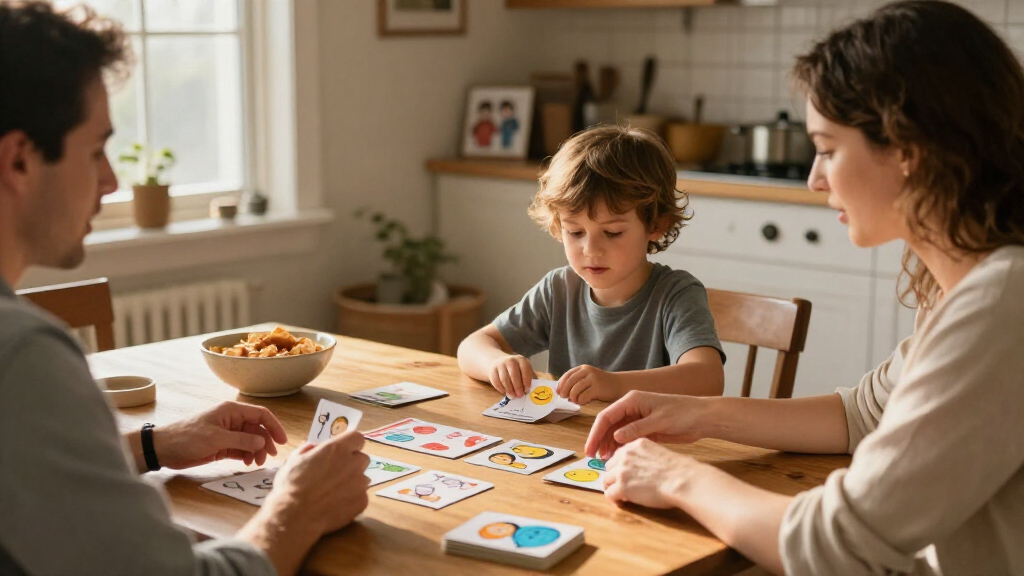
I compared the 15 decks by how well their prompts can get a group talking, how clearly each option suits its intended audience, and how much flexibility it offers across settings. I also weighed the social intensity of the questions: a personal prompt can create a memorable exchange among close friends, but it may stall a mixed group that wants easy conversation. Card count and stated player range helped indicate variety and group fit, but I treated them as supporting details rather than proof of quality.
The ranking favors decks that appear usable across more than one social situation while still giving each pick a distinct reason to choose it. Audience-specific family sets rank for their fit with family gatherings, while couple-focused or more emotionally direct decks are better for narrower needs. I also account for format: dilemma and story prompts can make play feel more active, while open-ended question decks leave more room for conversation. No single deck is right for every group, so the order reflects versatility first and specialized strengths after that.
| conversation starter card game | Material |
|---|---|
| Tell Me More Conversation Star | — |
| Prompta 600 Conversation Cards | Paper |
| We’re Not Really Strangers Con | Cardstock |
| Hygge Games Time Together Fami | Cardboard, cardstock |
| After Dinner Amusements: Which | Paper |
| Start That Convo Conversation | Cardstock |
| TableTopics Original Conversat | — |
| Tales Family Edition Conversat | — |
| The Hygge Game: Cozy Conversat | Cardboard |
| Substance Card Game | Cardstock |
| TableTopics Family Gathering C | Plastic |
| Best Story Wins: Party Game wi | Cardstock |
| Habit Real Talk Conversation S | — |
| Don’t Overthink It Conversatio | Cardstock |
| Small Talk Conversation Starte | Cardboard and paper |
Factors to Consider When Choosing Best Conversation Starter Card Games
A good deck is not simply the one with the most cards or the boldest questions. Match the prompts to the people at the table, the time you have, and how much structure the group wants. These choices can prevent a well-intended game from feeling like an interview or putting someone on the spot.
Match the prompt depth to the group
Think about how well the players know one another before choosing a deck built around personal questions. New acquaintances and mixed-age gatherings often need prompts that let people answer briefly or keep details private. Close friends or couples may welcome questions that invite stories and reflection. A common mistake is choosing the deepest-sounding deck because it promises a memorable night; a mismatch can make players withdraw instead. If the group is mixed, favor questions that allow both a funny answer and a more thoughtful one.
Check the audience, not just the label
“Family” can mean anything from adults around a holiday table to children and grandparents playing together. Before buying, check the intended ages and whether the prompts assume shared adult experiences. A family deck may still need an adult to guide turns or skip questions that do not fit younger players. For gatherings with coworkers, relatives, and friends together, neutral prompts are usually easier to answer than questions tailored to couples or close relationships. Audience fit often matters more than having a large deck.
Choose between open conversation and a game-like format
Some decks mainly supply a question and let the conversation take its own path; others use dilemmas, storytelling, or a more defined activity. Open prompts work well when people already enjoy chatting, while a structured format can help a quieter group get started. That structure may also limit how far a conversation wanders, which can be a drawback for buyers seeking long personal discussions. Decide whether you want the cards to guide an activity or simply offer a nudge. The right format can reduce the pressure to invent entertainment on the spot.
Treat card count as variety, not a quality score
A bigger deck can provide more options for recurring game nights, but the number of cards does not tell you whether the questions suit your group. A smaller set with a clear theme may be easier to pick up and finish in one sitting. Large collections can also feel less manageable if you want to choose prompts quickly or bring just a few cards along. Look at the stated count alongside the deck’s audience and purpose. Buy for the kind of variety you will use, not a number by itself.
Plan for comfort, skipping, and different answers
Conversation games work best when players can pass without having to explain why. That matters especially when prompts touch on relationships, values, or personal memories. Before play, agree that brief answers and skipped questions are acceptable; this keeps the cards from feeling like an obligation. Avoid treating a prompt as a demand for disclosure or assuming everyone will want to answer at the same level. A considerate group can make a more personal deck feel inviting, while a casual group may prefer lighter questions.
Consider how and where you will use the deck
A deck for a planned dinner can be different from one you want to carry for travel or bring to an informal gathering. Compact, simple formats can be easier to pull out for a few minutes, while larger collections may suit repeat use at home. Also think about group size: a prompt that works well around a small table may be harder to hear or discuss in a noisy party. If you expect to use the cards in several settings, prioritize broad audience fit over a highly specific theme. The most useful deck is the one that fits your real routines.
Frequently Asked Questions
Which conversation starter card game is safest for a mixed group that does not know each other well?
Choose a deck with broadly approachable prompts rather than one centered on intimate relationships or personal disclosure. Tell Me More is the strongest starting point in this roundup for general use, while a light, playful format can also help a new group relax. Let players pass or answer briefly so nobody feels pressed to share. If the gathering includes coworkers or new acquaintances, preview a few cards before play and set aside anything that feels too personal.
Should I buy a family deck if children and adults will play together?
A family label is a useful starting signal, but it does not confirm that every card will suit every age. Check the stated audience and plan for an adult to choose or skip prompts when younger players are present. Prompta 600, Tales Family Edition, and TableTopics Family Gathering are the family-oriented options in this lineup, but their specific formats and prompt styles still differ. If children vary widely in age, use the cards flexibly rather than requiring every player to answer every question.
Is a larger deck a better choice for regular game nights?
A larger collection can offer more variety across repeated gatherings, which is one reason Prompta 600 may appeal to frequent family users. It is not automatically the better buy: a smaller deck can be easier to browse and may have a tighter, more consistent feel. Think about how often the cards will come out and whether your group enjoys switching prompts or prefers a focused set. The audience match and prompt style matter more than the total count alone.
Which type of deck should I choose if my group dislikes serious questions?
Look for playful choices, funny hypotheticals, or storytelling prompts instead of a deck whose appeal depends on emotional openness. After Dinner Amusements: Which Would You Choose? gives the group a clear dilemma to react to, while Best Story Wins adds a more story-led activity. These formats can still lead to personal conversation, but they give players an easier starting point than a direct question about feelings. If your group wants very casual play, agree that silly or short answers count.
Can one conversation card game work for both couples and parties?
It can, if the prompts are broad enough for both intimate and casual settings, but a deck designed for couples may not suit a party of acquaintances. A flexible general-purpose deck is a safer single-deck choice than one built around relationship depth. For parties, choose prompts that do not assume shared history; for couples, you can select more personal cards or spend longer discussing each answer. If you host both kinds of gatherings often, two distinct decks may serve those groups better than asking one set to do everything.
Conclusion
For the broadest range of gatherings, I recommend Tell Me More Conversation Starter Game as the best overall choice. Prompta 600 is my value-oriented pick for families who want a large supply of prompts, while We’re Not Really Strangers is the premium-style choice for groups seeking more personal conversations. Beginners and mixed groups should start with a flexible, approachable deck such as Tell Me More rather than a set that expects players to share deeply. For family tables, look at Tales Family Edition or TableTopics Family Gathering; for light party play, choose After Dinner Amusements or Best Story Wins. Let your group’s comfort and the kind of evening you want decide the final pick.