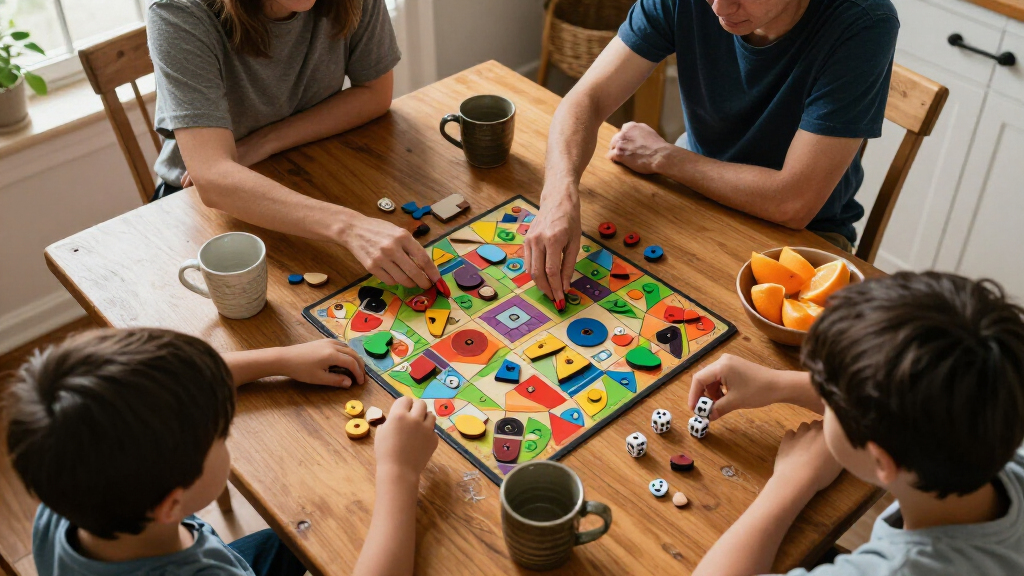
The best family board game overall in this roundup is Ticket to Ride, which balances straightforward rules with satisfying planning for mixed-age groups. For quick, lively rounds, Taco Cat Goat Cheese Pizza is a simpler party pick, while Azul suits families who want more thoughtful choices and a polished abstract strategy game. The main tradeoffs are how much explanation a game needs, whether it works for your group size, and whether your family prefers luck, wordplay, teamwork, or strategy. Some games are easier to bring to the table but offer less depth, while heavier choices reward repeat play but may leave younger players behind. Read on for the full comparison and help matching a game to your family.

Turn the school run and nap time into listening time
- Thousands of audiobooks, podcasts and originals
- Listen on your phone, tablet or Echo — also offline
- Cancel anytime
Complete the kit


Key Takeaways
- Ticket to Ride is the strongest all-around fit because its route-building gives families meaningful decisions without the rules burden of CATAN.
- Fast party games and strategy games serve different nights. Taco Cat Goat Cheese Pizza and Herd Mentality get groups playing quickly; Azul and CATAN ask for more patience and planning.
- Age and reading ability can matter more than the box’s player count. Word and trivia games such as Blank Slate, Tapple, and Do You Really Know Your Family? depend on the group’s comfort with language or personal prompts.
- Short setup does not always mean low pressure. The Chameleon and Hedbanz are easy to explain, but guessing and performance can feel awkward for shy players.
- Versatility separates the leading picks from niche options. Ticket to Ride, Sequence, and Sorry! can suit a broad range of family occasions, while Trekking The National Parks is a better match for families who enjoy its outdoors theme and older-age guidance.
| Blank Slate Word Association Party Game |  | Best for Word-Association Fans | Players: 3–8 | Recommended age: 8 years and up | Playing time: Approximately 30 minutes | VIEW LATEST PRICE | See Our Full Breakdown |
| Ticket to Ride Board Game (2025 Refresh) |  | Best for Family Strategy | Players: 2–5 | Recommended age: 8 years and up | Playing time: 60 minutes | VIEW LATEST PRICE | See Our Full Breakdown |
| Trekking The National Parks – Award-Winning Family Board Game for Ages 12+, 1‑5 Players |  | Best for Older Kids and Geography Fans | Players: 1–5 | Recommended age: 12 years and up | Estimated playing time: 45 minutes; sessions described as 30–60 minutes | VIEW LATEST PRICE | See Our Full Breakdown |
| The Uzzle 3.0 Family Board Game |  | Best for Mixed-Age Puzzle Play | Players: 1–4 | Recommended age: 4 years and up | Challenges: 100 | VIEW LATEST PRICE | See Our Full Breakdown |
| Taco Cat Goat Cheese Pizza Card Game | 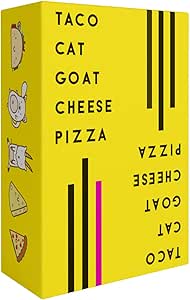 | Best Quick Family Game | Players: 2–8 | Recommended age: 7 years and up | Playing time: 10–15 minutes | VIEW LATEST PRICE | See Our Full Breakdown |
| Azul Board Game |  | Best for Strategic Family Play | Players: 2–4 | Play time: 30–45 minutes | Age range: 8+ years | VIEW LATEST PRICE | See Our Full Breakdown |
| Sorry! Classic Board Game for Kids Ages 6 and Up |  | Best for Classic, Kid-Friendly Competition | Players: 2–4 | Recommended age: 6 years and up | Included components: Gameboard, 12 Sorry! pawns, 45 cards, and instructions | VIEW LATEST PRICE | See Our Full Breakdown |
| Herd Mentality Board Game |  | Best for Big Family Gatherings | Players: 4–20 | Recommended age: 10 years and up | Playing time: 20 minutes | VIEW LATEST PRICE | See Our Full Breakdown |
| USAOPOLY The Original Tapple Family Word Game |  | Best for Fast Wordplay | Players: 2–8 | Age range: 8+ years | Playing time: 15 minutes | VIEW LATEST PRICE | See Our Full Breakdown |
| Do You Really Know Your Family? Family Card Game |  | Best for Conversation and Family Bonding | Players: 3–8 | Age range: 8 years and up | Included components: Cards | VIEW LATEST PRICE | See Our Full Breakdown |
| The Chameleon Board Game |  | Best for Quick Bluffing | Players: 3–8 | Recommended age: 12 years and up | Playing time: 15 minutes | VIEW LATEST PRICE | See Our Full Breakdown |
| Spin Master Games Hedbanz Classic Edition Picture Guessing Game |  | Best for Younger Kids | Players: 2–6 | Recommended age: 6 years and up | Edition: Classic Edition | VIEW LATEST PRICE | See Our Full Breakdown |
| Hues and Cues – Vibrant Color Guessing Board Game |  | Best for Creative Clue-Giving | Players: 3–10 | Recommended age: 8 years and up | Playing time: 30 minutes | VIEW LATEST PRICE | See Our Full Breakdown |
| Sequence: Original Board Game with Folding Board, Cards, and Chips |  | Best for Flexible Group Sizes | Players: 2–12 | Recommended age: 7 years and up | Game mechanics: Area control, hand management, team-based gameplay | VIEW LATEST PRICE | See Our Full Breakdown |
| CATAN Board Game, 6th Edition |  | Best for Longer Strategy Nights | Players: 3–4 | Recommended age: 10 years and up | Edition: 6th Edition | VIEW LATEST PRICE | See Our Full Breakdown |
| family board game | Players | Recommended age | Included components | Playing time |
|---|---|---|---|---|
| Blank Slate Word Association P | 3–8 | 8 years and up | Scoreboard, 8 dry-erase slates, cue cards, rules | Approximately 30 minutes |
| Ticket to Ride Board Game | 2–5 | 8 years and up | — | 60 minutes |
| Trekking The National Parks | 1–5 | 12 years and up | — | — |
| The Uzzle 3.0 Family Board Gam | 1–4 | 4 years and up | 4 sets of 10 blocks | — |
| Taco Cat Goat Cheese Pizza Car | 2–8 | 7 years and up | Cards | 10–15 minutes |
| Azul Board Game | 2–4 | — | — | — |
| Sorry! Classic Board Game for | 2–4 | 6 years and up | Gameboard, 12 Sorry! pawns, 45 cards, and instructions | — |
| Herd Mentality Board Game | 4–20 | 10 years and up | — | 20 minutes |
| USAOPOLY The Original Tapple F | 2–8 | — | 1 Tapple wheel with built-in timer, 36 cards (144 categories), instructions | 15 minutes |
| Do You Really Know Your Family | 3–8 | — | Cards | — |
| The Chameleon Board Game | 3–8 | 12 years and up | Cards and rulebook | 15 minutes |
| Spin Master Games Hedbanz Clas | 2–6 | 6 years and up | — | — |
| Hues and Cues | 3–10 | 8 years and up | Game board, 100 color cards, 30 player pieces, scoring frame, rulebook | 30 minutes |
| Sequence: Original Board Game | 2–12 | 7 years and up | 1 folding game board, 2 decks of cards, 135 playing chips, instructions | — |
| CATAN Board Game | 3–4 | 10 years and up | 19 terrain hexes, 6 sea frame pieces, 18 number discs, 4 player aids, 2 bonus victory point tiles, 96 wooden player pieces, 2 card trays, 2 dice, 120 cards, and rules | 60–90 minutes |
More Details on Our Top Picks
Blank Slate Word Association Party Game
Blank Slate is a lively choice for families who enjoy guessing how other people think. Players fill in a word cue and try to match someone else’s answer, so the fun comes from shared associations rather than trivia knowledge or complicated strategy. Its 500 cues and dry-erase slates support repeat plays, while the rules are quick to pick up. Compared with Herd Mentality, another group-focused guessing game in this roundup, Blank Slate centers on matching a specific word response instead of finding the crowd’s majority view. That makes answers feel personal, but it also means the game needs at least three players and works best when everyone is comfortable writing and sharing answers. At about 30 minutes, it takes longer than a quick card game like Taco Cat Goat Cheese Pizza.
Pros:- 500 word cues give the game plenty of variety across repeat sessions.
- Dry-erase slates make it easy for everyone to submit an answer at once.
- Rules are straightforward, so new players can join without a long explanation.
- Supports groups of three to eight, suiting larger family gatherings.
Cons:- It requires at least three players, so it cannot fill a two-player game night.
- The writing-and-matching format may appeal less to families seeking movement or board-based strategy.
- At approximately 30 minutes, it is less suited to a very brief play session.
Best for: Families with at least three players who enjoy wordplay, predicting relatives’ answers, and a sit-down party game.
Not ideal for: Families with only two players, children under eight, or groups looking for a very short, active game with little writing.
- Players:3–8
- Recommended age:8 years and up
- Playing time:Approximately 30 minutes
- Game mechanics:Word association, guessing, deduction
- Cue cards:250 double-sided cards with 500 cues
- Included components:Scoreboard, 8 dry-erase slates, cue cards, rules
- Language:English
- Batteries:Not required
Our verdict“Choose Blank Slate for a medium-length family gathering where matching each other’s word associations is the main appeal.”
Ticket to Ride Board Game (2025 Refresh)
Ticket to Ride is my pick for families ready for a game with more planning than a word or reflex challenge. Players collect train cards, claim routes across North America, and complete destination tickets; the rules stay accessible while route choices give each turn a purpose. Compared with Azul, which focuses on selecting and arranging tiles, Ticket to Ride makes players weigh visible network opportunities against opponents who may take a route first. That competition creates meaningful tension, but it can frustrate players whose plans are blocked. The 60-minute playtime also asks for more attention than a quick game such as Taco Cat Goat Cheese Pizza. With support for two to five players, it can suit smaller households, though its route contest is most engaging when players enjoy planning and a bit of rivalry.
Pros:- Route building introduces strategic choices without requiring complicated rules.
- Destination tickets give players different goals to pursue from game to game.
- Supports two to five players, including smaller households.
- A North American map gives the shared board a clear geographic theme.
Cons:- A session can last up to 60 minutes, making it a longer commitment than the quick party games here.
- Players compete for routes, so a key connection can disappear before someone claims it.
- The strategy and route-blocking may be a poor fit for families who prefer fully cooperative play.
Best for: Families with children aged eight and up who want an accessible strategy game, have time for a longer session, and enjoy competing over shared routes.
Not ideal for: Families seeking a quick, low-conflict game or players who dislike having a planned route blocked by opponents.
- Players:2–5
- Recommended age:8 years and up
- Playing time:60 minutes
- Genre:Strategy
- Train pieces:225 plastic trains in 5 colors
- Cards and tickets:110 train cards and 33 tickets
- Other components:Game board, longest path bonus card, 5 wooden scoring markers, rules booklet
- Model number:DOW7201N
Our verdict“Pick Ticket to Ride for a family that wants approachable route-building strategy and is happy to spend about an hour at the table.”
Trekking The National Parks – Award-Winning Family Board Game for Ages 12+, 1‑5 Players
Trekking the National Parks suits families who want geography woven into a strategy game rather than presented as a separate lesson. Its park theme, illustrated cards, and wooden pieces give the subject a tangible place on the table, while area control, card drafting, and movement ask players to make choices as they play. Compared with Ticket to Ride, it shifts the focus from building a rail network to exploring and competing around national parks; the two offer different strategic textures, and Trekking is the more direct fit for families drawn to U.S. geography. The 12-and-up age guidance makes it less accessible to younger children than The Uzzle 3.0, and sessions run about 30–60 minutes. A solo mode is a useful extra, but small pieces call for care around young children.
Pros:- National park theme gives the strategy a strong geography and learning angle.
- Wooden pieces and illustrated cards provide tactile, themed components.
- Solo mode supports play when a full family group is unavailable.
- Accommodates one to five players.
Cons:- Its recommended age of 12 and up limits its fit for families with younger children.
- Play can take 30–60 minutes, longer than compact games such as Taco Cat Goat Cheese Pizza.
- Small parts may pose a choking hazard around young children.
Best for: Families with players aged 12 and up who enjoy geography, national parks, and a more educational strategy game that can also be played solo.
Not ideal for: Households with mostly younger children, or families looking for a very short game with simple, fast turns.
- Players:1–5
- Recommended age:12 years and up
- Estimated playing time:45 minutes; sessions described as 30–60 minutes
- Edition:3rd Edition
- Theme:National Parks
- Game mechanics:Area control, card drafting, piece movement
- Item dimensions:11.6 × 11.5 inches
- Item weight:770 g
Our verdict“Choose Trekking the National Parks for older children and adults who want geography and strategy together, with solo play as a bonus.”
The Uzzle 3.0 Family Board Game
The Uzzle 3.0 is the strongest fit here for families who want visual problem-solving rather than word guessing or route strategy. Players flip, spin, and arrange blocks to match puzzle cards, with 100 challenges across four difficulty levels offering a way to vary the task for different ages and abilities. It also supports solo play, unlike group-dependent options such as Blank Slate. Compared with Ticket to Ride, rounds focus on solving a pattern, not building a long-term plan or competing for shared routes; that makes the format easy to introduce, though less suited to players who want a deeper strategy arc. The age guidance starts at four, but the highest difficulty levels can challenge adults too. It accommodates just one to four players, so it is less suitable for a large family gathering.
Pros:- 100 challenges provide many patterns to solve.
- Four difficulty levels give families options for different puzzle abilities.
- Supports solo play as well as groups of up to four.
- Ages four and up can join, making it more accessible to younger children than Trekking the National Parks.
Cons:- The player limit of four excludes larger groups from playing together.
- The highest difficulty levels may be extremely challenging even for adults.
- Its pattern-solving format may not satisfy players who want route-building or broad strategic choices.
Best for: Families with children as young as four who want a hands-on visual puzzle game with solo, cooperative-feeling, or small-group use.
Not ideal for: Large families needing space for more than four players, or strategy fans who want a shared board and longer-term competitive planning.
- Players:1–4
- Recommended age:4 years and up
- Challenges:100
- Difficulty levels:4
- Included components:4 sets of 10 blocks
- Block size:1.7 × 0.8 inches
- Dimensions:8 × 8 × 4 inches
- Material:Plastic
Our verdict“Choose The Uzzle 3.0 for a small family that wants adjustable, hands-on puzzles accessible to young children and adults alike.”
Taco Cat Goat Cheese Pizza Card Game
Taco Cat Goat Cheese Pizza is the easy choice when family game night needs to fit into a short break. Players say the words in sequence and race to slap the pile when a spoken word matches the card, with action cards adding sudden twists. At 10–15 minutes and for two to eight players, it is simpler to bring to a gathering than Ticket to Ride, which asks for a longer session and more planning. The tradeoff is its reliance on physical reflexes: slower players may be at a disadvantage, and repeated rounds can start to feel similar. Unlike Blank Slate, it does not depend on written answers or word associations; it asks for quick attention and hand speed instead. That makes it energetic, but not the best pick for a calm, thoughtful game.
Pros:- Short rounds make it easy to fit in between other activities.
- Supports two to eight players, including larger family groups.
- Simple rules make it quick to teach to new players.
- Compact card format is suitable for travel and play away from home.
Cons:- Fast slapping can disadvantage players with slower reflexes or limited hand mobility.
- Repeated rounds may feel similar over extended play.
- The physical reaction mechanic offers less strategic planning than Ticket to Ride.
Best for: Families with children aged seven and up who want a portable, energetic game that can fit into a 10–15-minute break.
Not ideal for: Players with limited hand mobility or slower reflexes, and families seeking strategic depth or long-term variety.
- Players:2–8
- Recommended age:7 years and up
- Playing time:10–15 minutes
- Included components:Cards
- Game format:Card game
- Language:English
- Manufacturer:Dolphin Hat Games
- Brand:Taco Cat Games
Our verdict“Pick Taco Cat Goat Cheese Pizza for fast, portable family fun if everyone is comfortable competing on reflexes.”
Azul Board Game
Azul is my pick for families ready for more than a simple race or word challenge. Players draft tactile resin tiles and place them to build a mosaic, with choices that reward planning while staying approachable for ages 8 and up. Compared with Sorry!, its turns involve more deliberate decisions and less sudden reversal; compared with Ticket to Ride, the board stays compact and the focus is on tile placement rather than route building. Changing tile availability gives repeat plays a different shape. The tradeoff is that taking too many tiles can bring penalties, which may feel harsh to newcomers, and the four-player limit rules it out for bigger gatherings. I’d choose it for a small group that enjoys learning a strategy together.
Pros:- Tactile resin tiles make drafting and placing pieces satisfying
- Accessible rules leave room for meaningful tactical choices
- Changing tile availability supports replay across family game nights
- Works for two to four players
Cons:- Penalties for leftover tiles can hit new players hard
- A four-player maximum excludes larger family groups
Best for: Families of two to four who want an approachable strategy game with satisfying components and lasting replay value
Not ideal for: Large families or younger children who may find penalty scoring discouraging
- Players:2–4
- Play time:30–45 minutes
- Age range:8+ years
- Components:100 resin tiles, 4 player boards, 9 factory displays, 4 scoring markers, 1 starting player marker, 1 linen bag
- Brand:Azul
- Award:2018 Spiel des Jahres
Our verdict“Choose Azul for a small family that wants thoughtful tile strategy, but pick a larger-group game for gatherings beyond four.”
Sorry! Classic Board Game for Kids Ages 6 and Up
Sorry! suits families who want straightforward rules and a lively race to the finish. Players draw cards to move pawns, slide along the board, and sometimes send an opponent back to start, so turns can quickly change who is ahead. Compared with Azul, it asks less planning from players and is easier to introduce to younger kids; unlike Herd Mentality, it works for a smaller family of two to four. The same swingy take-that mechanic is also its main drawback: a pawn sent back can feel like a major setback, especially for children who dislike losing progress. I’d choose it for families who enjoy playful rivalry, not for groups seeking a calm or strategy-heavy session.
Pros:- Simple card-driven movement is approachable for younger players
- Pawn collisions and slides keep the race lively
- Supports a small group of two to four
- Familiar classic format is easy to bring to family game night
Cons:- A pawn can be sent back to start, which may frustrate younger players
- The luck of card draws can limit players’ control over their plans
Best for: Families with children ages 6 and up who want an easy-to-teach race game for two to four players
Not ideal for: Players who dislike having progress erased or families looking for deeper strategy and less direct take-that play
- Players:2–4
- Recommended age:6 years and up
- Included components:Gameboard, 12 Sorry! pawns, 45 cards, and instructions
- Brand:Hasbro Gaming
- Language:English
- Edition:Standard
Our verdict“Pick Sorry! for a family that enjoys light, unpredictable competition, but skip it if setbacks tend to spoil the fun.”
Herd Mentality Board Game
When relatives and friends outnumber the seats around a standard board, Herd Mentality has the clearest fit in this group: it accommodates 4–20 players and plays in about 20 minutes. Everyone answers a prompt, and the fun comes from matching the group rather than supplying the most original response. That makes it a better choice for mixed-age gatherings than Azul, which caps at four, while Tapple puts more pressure on each player’s speed and word recall. The pink cow gives an uncommon answer a comic consequence, but it can also make players who think differently feel singled out. With an age recommendation of 10+, it is not the best fit for a family with only young children.
Pros:- Accommodates groups as large as 20 players
- Quick rules and a roughly 20-minute playing time suit casual gatherings
- Majority-matching prompts encourage conversation across the group
- Includes 20 extra questions
Cons:- Requires at least four players
- The pink cow penalty may embarrass players whose answers differ from the group
- Recommended for ages 10 and up, limiting its fit for younger children
Best for: Families and mixed-age groups of four to twenty who want a quick, conversation-led game for a gathering
Not ideal for: Families with fewer than four players, children under 10, or anyone who dislikes being singled out for an unusual answer
- Players:4–20
- Recommended age:10 years and up
- Playing time:20 minutes
- Game mechanics:Social deduction
- Edition:Kids Edition
- Included content:Main game with 20 extra questions
- Material:Cardboard
- Dimensions:7.4 × 5.8 × 0.04 inches
Our verdict“Choose Herd Mentality for a large group that enjoys matching answers and can take the odd-player-out joke lightly.”
USAOPOLY The Original Tapple Family Word Game
Tapple is the lively word-game choice here: players have 10 seconds to name something that fits a category and starts with a letter that has not already been used. Its quick rounds and built-in wheel make it easier to carry and set up than a larger board game such as Ticket to Ride. It also suits more people than Azul, supporting up to eight players, though Herd Mentality is the better fit for very large groups. The timer adds energy, but it can put younger or slower-thinking players under pressure; the 8+ age guidance does not mean every child will enjoy the pace. The timer requires batteries, so check the package details before game night.
Pros:- Compact wheel stores the category cards for easier transport
- Fast rounds keep turns moving during family gatherings
- 144 categories provide variety across repeat plays
- Supports two to eight players
Cons:- The 10-second timer can pressure younger players or anyone who needs more thinking time
- The timer requires batteries, which may need to be supplied separately
- Its eight-player limit is less suitable for large gatherings than Herd Mentality
Best for: Families with children around age 8 and up who enjoy quick word challenges and want a portable game for two to eight players
Not ideal for: Players who need extra time to think, younger children who find timers stressful, or groups larger than eight
- Players:2–8
- Age range:8+ years
- Playing time:15 minutes
- Included components:1 Tapple wheel with built-in timer, 36 cards (144 categories), instructions
- Material:Paper, plastic
- Model year:2022
- Color:Blue
Our verdict“Pick Tapple for a portable, high-energy word game if everyone at the table is comfortable thinking against the clock.”
Do You Really Know Your Family? Family Card Game
Do You Really Know Your Family? puts family stories and silly challenges ahead of board tactics, making it a different kind of game-night pick. It is designed for ages 8 and up and works with three to eight players, so it can bring children, teens, and adults into the same conversation. Compared with Tapple, there is no 10-second word race; compared with Herd Mentality, the focus is more on learning about the people at the table than matching a group answer. That conversational style depends on players being willing to share and join in, so it may fall flat with a quiet or reserved group. The three-player minimum also leaves out smaller households, and the supplied details describe cards but do not specify a play time.
Pros:- Prompts family conversation and helps players learn about one another
- Silly challenges add variety beyond question-and-answer play
- Age range includes children, teens, and adults
- Compact tin keeps the card game together
Cons:- Requires at least three players
- Enjoyment depends on players being comfortable sharing and joining the conversation
- No playing time is provided in the product details
Best for: Families of three to eight with children, teens, and adults who enjoy personal questions and lighthearted challenges
Not ideal for: Two-player households, reserved groups that prefer objective strategy, or buyers who need a specified short play time
- Players:3–8
- Age range:8 years and up
- Included components:Cards
- Material:Cardstock
- Language:English
- Container type:Tin
- Dimensions:2 × 4.7 × 6.7 inches
- Battery required:No
- Manufacturer:ASM Holdings LLC
Our verdict“Choose this card game when the goal is family conversation and shared laughs, not competitive board-game strategy.”
The Chameleon Board Game
The Chameleon is a strong fit for families with teens who enjoy reading each other as much as solving a puzzle. Everyone but one player knows the secret word, and the group uses brief clues and hidden codes to spot who is bluffing. At around 15 minutes per game, it is easier to fit in between longer games than CATAN, and its 3–8 player range suits a lively family gathering. The tradeoff is that the fun depends on social deduction: younger children may find the deception or coded clues harder to follow, and players who dislike bluffing may feel put on the spot. It also needs at least three people, while Sequence can accommodate two. I’d choose it for short, repeatable rounds rather than a strategic game night centerpiece.
Pros:- Short playtime makes it easy to fit into a busy family evening
- Hidden roles and changing secret words give rounds strong replay potential
- Simple core rules suit teens and adults with different gaming experience
Cons:- The 12-and-up age recommendation makes it a weaker fit for younger children
- Requires at least three players, unlike Sequence, which supports two
- Bluffing and social deduction may not appeal to quieter or less competitive players
Best for: Families with teens and groups of at least three who want a fast game of bluffing and deduction
Not ideal for: Families with children under 12, two-player households, or anyone who prefers open information over deception
- Players:3–8
- Recommended age:12 years and up
- Playing time:15 minutes
- Genre:Word / social deduction
- Brand:Big Potato
- Dimensions:7.4 x 5.8 x 2.2 inches
- Materials:Cardboard and plastic
- Included components:Cards and rulebook
Our verdict“Choose The Chameleon for quick, lively deduction rounds with older children and a group of at least three.”
Spin Master Games Hedbanz Classic Edition Picture Guessing Game
Hedbanz Classic Edition gives younger children a clear way into family game night: wear a picture card, ask yes-or-no questions, and work out what you are. Its ages 6 and up guidance and straightforward turn structure make it a more accessible choice for early readers than The Chameleon, which asks players to follow hidden clues and bluff. Six headbands support a family-sized group, while the timer and badges give each round a simple finish line. The main tradeoff is repetition: the game relies on picture guessing and the same question format, so frequent play may lose its freshness. It also stops at six players, whereas Hues and Cues supports up to ten. I’d pick Hedbanz for a low-friction game with younger kids, not for a group seeking layered strategy.
Pros:- Yes-or-no questions make the basic play easy for younger children to grasp
- Six headbands support play with a family-sized group
- Timer and scoring badges give rounds a clear pace and goal
- Picture cards let players participate without relying on reading ability
Cons:- The repeated picture-guessing format may feel familiar after many plays
- A two-player minimum rules out solo play
- Supports fewer players than Hues and Cues, which accommodates up to ten
Best for: Families with children ages 6 and up who want a simple guessing game that adults can join without a long rules explanation
Not ideal for: Large families with more than six players or groups looking for strategic depth and varied gameplay
- Players:2–6
- Recommended age:6 years and up
- Edition:Classic Edition
- Model year:2023
- Headbands:6
- Picture cards:69
- Scoring badges:16
- Other included components:6 headplates, 1 timer, 3 sample question cards, instructions
Our verdict“Choose Hedbanz when younger children need an easy, visual game that the whole family can learn quickly.”
Hues and Cues – Vibrant Color Guessing Board Game
Hues and Cues turns color perception into the puzzle: one player gives a one- or two-word clue, and others try to locate the intended shade among 480 color squares. That open-ended prompt makes it more imaginative than Hedbanz, where players narrow down a picture with yes-or-no questions, and its 3–10 player range can bring a bigger gathering into the same game. The rules are quick to learn, but the clues are subjective; family members may interpret the same word or color differently, which can lead to lively debate or mild frustration. It also needs at least three players, so Sequence is the more flexible pick for a pair. I’d favor Hues and Cues when conversation and creative interpretation matter more than precise strategy.
Pros:- A large field of 480 color squares supports varied clues and repeat plays
- One- or two-word clues keep the main rules easy to explain
- Supports up to ten players, making it a better fit for larger groups than Hedbanz
- Prompts communication and creative interpretation across ages
Cons:- Requires at least three players and cannot serve a pair
- Subjective color perception can make scoring feel debatable
- The 30-minute playtime is longer than a quick round of The Chameleon
Best for: Families with at least three players, including children ages 8 and up, who enjoy creative clues and discussing different interpretations
Not ideal for: Two-player households or players who want objective answers, tactical planning, or a quiet game
- Players:3–10
- Recommended age:8 years and up
- Playing time:30 minutes
- Genre:Creative / party game
- Color squares:480
- Included components:Game board, 100 color cards, 30 player pieces, scoring frame, rulebook
- Dimensions:10 x 10 x 2.5 inches
- Language:English
Our verdict“Choose Hues and Cues for a larger family group that enjoys creative clues more than exact answers.”
Sequence: Original Board Game with Folding Board, Cards, and Chips
Sequence earns its place through flexibility: it supports 2–12 players, so the same game can work for a pair, a family team, or a larger gathering. Players use cards to place chips and make five-in-a-row sequences, giving the game more planning than the quick word and picture guessing in The Chameleon or Hedbanz. The basic goal is accessible, but deciding which spaces to claim and when to block opponents gives adults and older kids room to think. The wide player range is its main advantage, though larger groups can make turns and team coordination feel less direct. The chips are small, so this is not a worry-free choice around toddlers. I’d select Sequence for households that need one adaptable game with a strategic layer, rather than a purely social party activity.
Pros:- Player range of 2–12 covers more group sizes than the other games in this batch
- Five-in-a-row objective is easy to explain while leaving room for tactical decisions
- Card-driven placements let players plan and react to opponents
- Folding board supports storage between family game nights
Cons:- Small playing chips pose a choking hazard around young children
- Larger groups may involve less direct decision-making while players wait for turns
- The listed components include no manufacturer warranty
Best for: Families who want one board game that works for two players, family teams, and larger gatherings, with an easy-to-learn strategic goal
Not ideal for: Households with toddlers who may handle small chips, or groups seeking a short, high-energy party game
- Players:2–12
- Recommended age:7 years and up
- Game mechanics:Area control, hand management, team-based gameplay
- Board dimensions:19.75 x 15.25 inches
- Included components:1 folding game board, 2 decks of cards, 135 playing chips, instructions
- Brand:Jax
- Material:Paper
Our verdict“Choose Sequence if your family needs a flexible, moderately strategic game that can serve anywhere from two to twelve players.”
CATAN Board Game, 6th Edition
CATAN is the most involved option in this group: players gather resources, trade with one another, and build toward ten victory points across a modular island. The changing layout gives repeated games a different map, while resource choices create a longer strategic arc than Sequence’s five-in-a-row contest or Hues and Cues’ short clue rounds. That depth comes with a real commitment: the estimated playtime is 60–90 minutes, and the base game supports only three or four players. Families with a larger group need the separately sold 5–6 Player Extension, while households seeking a quick activity may prefer The Chameleon. Its age recommendation of 10 and up also makes it less suitable for younger children. I’d choose CATAN when the family wants a dedicated, longer game night built around trading and planning.
Pros:- Modular terrain layout changes the board between games
- Resource gathering, trading, and building create several connected decisions
- A clear ten-point goal gives the longer session direction
- Wooden player pieces and a broad set of cards and terrain components support the island-building theme
Cons:- The 60–90 minute playtime is a bigger commitment than the other games in this batch
- The base game supports only 3–4 players, unlike Sequence’s 2–12 range
- Playing with five or six requires a separately sold extension
Best for: Families with three or four players, including children ages 10 and up, who enjoy resource choices, negotiation, and longer strategic games
Not ideal for: Families with children under 10, groups larger than four who do not want a separate extension, or anyone seeking a short game
- Players:3–4
- Recommended age:10 years and up
- Edition:6th Edition
- Playing time:60–90 minutes
- Language:English
- Resources:Brick, wood, wheat, ore, and sheep
- Included components:19 terrain hexes, 6 sea frame pieces, 18 number discs, 4 player aids, 2 bonus victory point tiles, 96 wooden player pieces, 2 card trays, 2 dice, 120 cards, and rules
- Expansion compatibility:5–6 Player Extension sold separately
Our verdict“Choose CATAN for a three- or four-person family ready to spend a longer evening trading and building toward a shared strategic goal.”
How We Picked
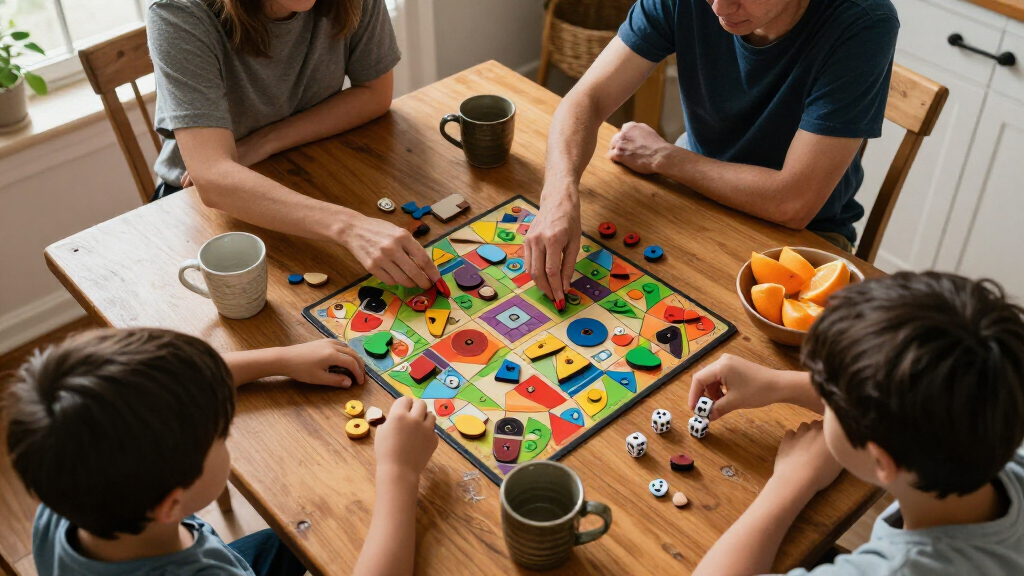
I compared all 15 games by how readily a mixed-age family can learn and play them, how much involvement they offer across a full round, and whether their central activity works for different personalities. I also weighed stated age guidance, player-count fit, setup and handling demands, replay appeal, and whether the game’s theme or mechanics narrow its audience. Those factors matter more for family use than complexity or novelty alone: a game can be clever but still be a poor shared choice if younger players cannot participate meaningfully.
The ranking gives priority to broad group fit, accessible rules, and repeatable play. Ticket to Ride leads as a balanced choice; lighter, more situational games rank lower not because they lack appeal, but because their wordplay, speed, guessing, or theme suits fewer family preferences. More demanding options such as CATAN and Trekking The National Parks can be rewarding for the right household, but their narrower age or commitment fit keeps them from the top. I treat each pick as a different kind of game night rather than assuming one style works for every family.
Factors to Consider When Choosing Best Family Board Games
Before choosing a box, think about the family that will actually sit down to play: its youngest regular player, patience for rules, preferred pace, and tolerance for friendly competition. A game that fits those habits is more likely to reach the table than one chosen for complexity or theme alone.
Match the Game to the Youngest Regular Player
Use the youngest person who will play often as your starting point, not the oldest person on the box. Age guidance can reflect reading, memory, attention, and comfort with strategic choices, so a child who can follow the rules may still struggle to influence the outcome. Look for a game where younger players can make meaningful decisions rather than simply take turns. Avoid buying a more involved game on the assumption that an adult can permanently coach one player; that can slow play and reduce everyone’s independence. If your group spans a wide age range, simple turn structure often matters more than a theme designed for children.
Choose Your Preferred Kind of Interaction
Families do not all enjoy the same kind of attention. Word association, personal questions, quick reactions, deduction, and strategic competition each create a different social mood. A loud, fast game can energize an outgoing group but frustrate players who need time to think or dislike being put on the spot. Cooperative-feeling discussion can be more comfortable for some households, while others prefer clear competition and a winner. Think about how your family behaves at the table already, and avoid choosing a game whose main mechanic turns a common discomfort into the whole activity.
Check Group Size and Who Can Join
A listed player range is only part of the fit: consider whether everyone stays engaged while waiting for a turn and whether the game works well with the number of people who usually gather. Some games feel best with a lively group, while others offer more satisfying choices with fewer players. Also account for guests, siblings who may come and go, and whether a round can tolerate interruptions. A game that requires a fixed group for its central mechanic may be less practical than one that scales across different family nights. Confirm the player guidance for the edition you plan to buy rather than assuming every version is alike.
Balance Game Length Against Setup and Attention
Families often compare play time but overlook the minutes spent sorting pieces, explaining rules, and clearing the table. For weeknights, a quick-start game may be a better fit even if its play is lighter; longer sessions can work when your group has time to settle in. Consider whether a game can be paused or whether stepping away disrupts the round. Small cards and pieces may be easy to store but harder for young children to manage, while larger boards can need more table space. Check the component layout and storage needs before buying if your play area is limited.
Decide How Much Strategy Your Family Wants
More strategic games can offer richer decisions and continued interest, but they also ask players to remember rules, weigh options, and accept setbacks. A family that enjoys planning may welcome that learning curve; a group looking for casual conversation may prefer a game with less downtime and fewer consequences for a mistake. Avoid equating complexity with quality: the right level is the one that keeps every regular player involved. If you are unsure, favor clear basic rules with choices that become more interesting over repeat plays. That gives the group room to grow without making the first session feel like homework.
Pay for Fit and Replay, Not Just a Big Box
A larger component set or a familiar license does not automatically make a game a better family purchase. Think about how many different people will want to replay it, whether its theme has staying power in your household, and whether it fills a gap in your collection. A focused party game can be worthwhile if your family regularly hosts groups, while a versatile board game may be a stronger choice for a household that plays in changing combinations. Check what is included and whether the game depends on add-ons before making a decision. The best value is the game your family will bring out repeatedly, not the one with the most elaborate presentation.
Frequently Asked Questions
Which game is the safest first choice for a family with mixed ages?
Ticket to Ride is the strongest starting point in this lineup for families seeking a balance of approachable rules and meaningful play. Still, the best fit depends on the youngest player’s ability to follow the route-planning decisions and stay engaged through a full game. If your group wants something faster and less strategic, Taco Cat Goat Cheese Pizza offers a very different, quick-play option. Families who prefer familiar turn-taking may also find Sorry! easier to introduce. Choose based on the youngest regular player and the kind of pace your household enjoys.
Which options work best when we have only a short time to play?
Look first at the quick party and card games, such as Taco Cat Goat Cheese Pizza, Blank Slate, or Herd Mentality, rather than assuming every board game fits a short window. Their play styles differ: one depends on fast reactions, while others rely on shared answers and group discussion. Actual session length can shift with player count, familiarity, and how much your family talks between turns. A game with a simple explanation can save more time than one with a short advertised round but a lengthy first teach. Check the edition’s play guidance and leave room for setup and cleanup.
Are word and guessing games a good choice for children who are still learning to read?
They can be, but reading is only one part of the challenge. Word association and category games may ask children to retrieve vocabulary quickly, while guessing games can rely on clues, social confidence, or knowledge of familiar topics. Picture-based play may be more accessible, but younger players can still need help understanding the clue rules. Think about whether an adult is willing to support the child without giving away answers or slowing the whole group. For a family with a wide reading range, choose a game where a child can contribute through choices or visual reasoning as well as words.
Should I choose a party game or a strategy game for a family gathering?
Choose a party game when people will be joining in casually, talking between turns, or rotating in and out. A strategy game is a better match when the group can set aside time, learn rules together, and stay with one session. Party games are not automatically easier for everyone: fast reactions, personal prompts, or public guessing can be uncomfortable for some guests. Strategy games can also leave less experienced players behind if the experience gap is large. Consider the group’s energy and willingness to learn before choosing a format.
How can I tell whether a game will still get played after the first few sessions?
Look for a central activity your family enjoys repeating, rather than relying on a theme or an initial novelty. Games with different choices, changing group dynamics, or flexible play can remain appealing across more occasions, while focused word or guessing games may be strongest for particular moods. Ask whether the game can still work when the group size changes and whether younger players can grow into it. A demanding game is more likely to stay in use if someone in the household genuinely enjoys teaching and planning it. If possible, try a borrowed copy or play a demonstration before committing.
Conclusion
For the best overall fit, choose Ticket to Ride if your family wants accessible rules with enough planning to reward repeat play. For best value in flexibility, consider Sequence or Sorry! when familiar, direct turn-taking is more useful than a specialized party format. For a premium-feeling strategy night, Azul offers a more considered puzzle, while CATAN is better for households ready for a longer learning curve. For beginners or short, lively gatherings, Taco Cat Goat Cheese Pizza is the easiest style of play to bring out quickly. For wordplay, deduction, color clues, or outdoors themes, choose Blank Slate, The Chameleon, Hues and Cues, or Trekking The National Parks according to your group’s interests. The right pick is the one that matches your family’s ages, attention, and preferred way of playing—not simply the game with the broadest appeal on paper.
Halloween Picks
halloween
As an affiliate, we earn on qualifying purchases.