For the best family card games across ages and play styles, I’d put UNO first for its familiar rules, flexible group play, and quick rounds. Taco Cat Goat Cheese Pizza is a livelier pick for families who want a physical, laugh-filled game, while Monopoly Deal suits players who enjoy tactical choices in a compact format. The main tradeoffs are speed versus strategy, easy rules versus more involved play, and broad age appeal versus humor or competition that suits some families better than others. Player count and tolerance for noisy, fast-moving rounds can matter as much as the game’s theme. Read on for the full breakdown and a guide to matching a game to your household.

Give the gift of listening to the whole family
- Choose a 1-, 3-, 6- or 12-month membership
- They pick the audiobooks they love
- Easy to send by email
Complete the kit


Key Takeaways
- UNO is the most flexible starting point: Its familiar color-and-number play suits mixed-experience groups better than games built around speed, wordplay, or specialized rules.
- Fast games ask for more than quick setup: Taco Cat Goat Cheese Pizza and Dutch Blitz bring lively competition, but their pace can be a poor fit for younger players or anyone who prefers thinking time.
- Compact strategy is a distinct lane: Monopoly Deal, Flip 7, and Cover Your Assets add hand management or risk-taking without the footprint of a board game.
- Group size changes the shortlist: Piles and Dutch Blitz are built for larger groups, while Elimino is specifically listed for two to five players; check the player range before buying.
- Family-friendly humor is not one-size-fits-all: Cards Against Humanity: Family Edition and What Do You Meme? Family Edition lean on jokes and prompts, while Do You Really Know Your Family? centers on conversation.
| Taco Cat Goat Cheese Pizza Card Game, Ages 7+, 2–8 Players | 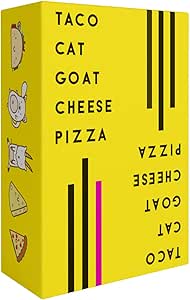 | Best for Energetic Groups | Age range: 7 years and up | Players: 2–8 | Play time: 10–15 minutes | VIEW LATEST PRICE | See Our Full Breakdown |
| Monopoly Deal Card Game | 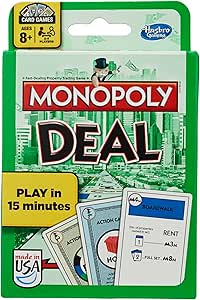 | Best for Property-Game Fans | Brand: Hasbro Gaming | Game type: Card game | Players: 2–5 | VIEW LATEST PRICE | See Our Full Breakdown |
| Piles Fast-Paced Card Game for 2–8 Players |  | Best for Wordless, Fast-Reaction Play | Brand: Lost Boy Entertainment | Players: 2–8 | Recommended age: 8 years and up | VIEW LATEST PRICE | See Our Full Breakdown |
| Play Nine: The Card Game of Golf |  | Best for Strategic Family Play | Players: 2–6 | Recommended age: 8 years and up | Included components: 108 cards, scorecards, pencil, and game instructions | VIEW LATEST PRICE | See Our Full Breakdown |
| Mattel Games UNO Card Game |  | Best Overall for Mixed-Age Families | Brand: Mattel Games | Players: 2–10 | Recommended age: 7 years and up | VIEW LATEST PRICE | See Our Full Breakdown |
| Happy Camper Trio Card Game |  | Best for Short, Team-Friendly Rounds | Players: 3–6 | Recommended age: 8+ | Playing time: 15 minutes | VIEW LATEST PRICE | See Our Full Breakdown |
| Cards Against Humanity: Family Edition Card Game |  | Best for Big Groups and Joke-Loving Families | Players: 4–20+ | Recommended age: 8 years and up | Cards: 600 | VIEW LATEST PRICE | See Our Full Breakdown |
| Five Crowns Collectible Tin Card Game |  | Best for Rummy Fans and Flexible Player Counts | Players: 1–7 | Recommended age: 8 years and up | Game type: Rummy-style card game | VIEW LATEST PRICE | See Our Full Breakdown |
| Elimino Family Card Game for 2–5 Players, Ages 7+ |  | Best for Quick, Interactive Family Play | Players: 2–5 | Recommended age: 7 years and up | Playing time: 15 minutes | VIEW LATEST PRICE | See Our Full Breakdown |
| Magilano SKYJO Card Game |  | Best for Casual Number Play Across a Wide Age Range | Players: 2–8 | Recommended age: 8 years and up | Playing time: Approximately 30 minutes | VIEW LATEST PRICE | See Our Full Breakdown |
| Flip 7 Press-Your-Luck Card Game |  | Best for Press-Your-Luck Strategy | Players: 3 or more | Recommended age: 8 years and up | Cards: 94 | VIEW LATEST PRICE | See Our Full Breakdown |
| Grandpa Beck’s Cover Your Assets Card Game |  | Best for Competitive Set Collection | Players: 2–6 | Recommended age: 7 years and up | Playing time: 20–40 minutes | VIEW LATEST PRICE | See Our Full Breakdown |
| What Do You Meme? Family Edition |  | Best for Shared Laughs | Players: 3 or more | Recommended age: 8 years and up | Caption cards: 300 | VIEW LATEST PRICE | See Our Full Breakdown |
| Do You Really Know Your Family? Family Card Game |  | Best for Conversation and Challenges | Players: 3–8 | Age range: 8 years and up | Components: Cards | VIEW LATEST PRICE | See Our Full Breakdown |
| Dutch Blitz Original Fast-Paced Family Card Game, 160 Cards |  | Best for High-Energy Family Play | Players: 2–4 | Recommended age: 8 years and up | Cards included: 160 | VIEW LATEST PRICE | See Our Full Breakdown |
| family card game | Players | Included components | Recommended age | Material |
|---|---|---|---|---|
| Taco Cat Goat Cheese Pizza Car | 2–8 | Cards | — | — |
| Monopoly Deal Card Game | 2–5 | 110 cards and instructions | — | Plastic |
| Piles Fast-Paced Card Game for | 2–8 | 200 cards and rulebook | 8 years and up | Cardstock |
| Play Nine: The Card Game of Go | 2–6 | 108 cards, scorecards, pencil, and game instructions | 8 years and up | — |
| Mattel Games UNO Card Game | 2–10 | — | 7 years and up | — |
| Happy Camper Trio Card Game | 3–6 | 36 cards and rules of play | 8+ | Paper |
| Cards Against Humanity: Family | 4–20+ | — | 8 years and up | Paper |
| Five Crowns Collectible Tin Ca | 1–7 | Cards, custom scorecard, and collectible tin | 8 years and up | — |
| Elimino Family Card Game for 2 | 2–5 | Cards | 7 years and up | Cardstock |
| Magilano SKYJO Card Game | 2–8 | 150 game cards, 1 game notepad, and 1 manual | 8 years and up | Cardstock |
| Flip 7 Press-Your-Luck Card Ga | 3 or more | Cards and rules | 8 years and up | Paper |
| Grandpa Beck’s Cover Your Asse | 2–6 | Cards | 7 years and up | Paper |
| What Do You Meme? Family Editi | 3 or more | Caption cards, photo cards, instructions, and easel | 8 years and up | Paper |
| Do You Really Know Your Family | 3–8 | — | — | Cardstock |
| Dutch Blitz Original Fast-Pace | 2–4 | Four decks of cards and rules | 8 years and up | — |
More Details on Our Top Picks
Taco Cat Goat Cheese Pizza Card Game, Ages 7+, 2–8 Players
Quick rules and reaction-based play make Taco Cat Goat Cheese Pizza a lively choice when a family wants a short game with little setup. Players chant the game’s name and slap the pile when a spoken word matches the card, so children and adults can join without learning a long strategy system. At 10–15 minutes per round, it is easier to fit into a busy evening than a longer sit-down game. Compared with UNO, this game relies less on planning card plays and more on speed and coordination; that makes it a better fit for high-energy groups, but a weaker pick for anyone who prefers calm turns. The action cards add surprise, though the central slap mechanic can feel hectic and may frustrate players who have difficulty reacting quickly.
Pros:- Simple rules let new players join quickly.
- Action cards add variation to the matching-and-slapping routine.
- Supports groups of 2–8 players.
- Compact card format suits travel and brief game sessions.
Cons:- Fast reactions and hand coordination are central to play.
- The group activity can feel hectic for players who prefer a calmer pace.
Best for: Families with children ages 7 and up who want a compact, high-energy game for short rounds, parties, or travel.
Not ideal for: Families seeking a quiet, turn-based game or players who find fast reactions and hand coordination uncomfortable.
- Age range:7 years and up
- Players:2–8
- Play time:10–15 minutes
- Included components:Cards
- Edition:Original
- Manufacturer:Dolphin Hat Games
Our verdict“Choose Taco Cat Goat Cheese Pizza for short, energetic family rounds, but pick UNO if your group prefers turns with more time to think.”
Monopoly Deal Card Game
Monopoly Deal brings property collecting and rent-taking into a compact card game, giving families a quicker way to enjoy familiar Monopoly-style tactics. Players aim to complete three property sets, while action cards let them collect rent, swap cards, or disrupt another player’s plans. At about 15 minutes per game, it moves faster than a traditional board-game session and travels more easily than a box full of pieces. Compared with Play Nine, which mixes luck with card-value decisions, Monopoly Deal puts more emphasis on building sets and interacting directly with opponents. That interaction is its main appeal—and its main tradeoff: an action card can undo progress, so players who dislike having plans disrupted may find it frustrating. Reference cards help with learning, but the set-collection goal still takes a little attention to track.
Pros:- Familiar property-set objective gives Monopoly fans an easy entry point.
- Action cards create direct interaction through rent, swaps, and property theft.
- About 15 minutes of play suits shorter family game sessions.
- Reference cards help players learn and follow the rules.
Cons:- Players must track progress toward three complete property sets.
- Action cards can disrupt plans and take properties from other players.
- Supports 2–5 players, so it accommodates fewer people than UNO or Taco Cat Goat Cheese Pizza.
Best for: Families with children ages 8 and up who enjoy property trading, set collection, and direct player interaction in a short game.
Not ideal for: Players who want a predictable, low-conflict card game or who dislike seeing completed plans disrupted by action cards.
- Brand:Hasbro Gaming
- Game type:Card game
- Players:2–5
- Age range:8 years and up
- Playing time:About 15 minutes
- Included components:110 cards and instructions
- Material:Plastic
- Model:B0965
Our verdict“Pick Monopoly Deal for a quick, interactive property game, but choose Play Nine for a less confrontational focus on card values.”
Piles Fast-Paced Card Game for 2–8 Players
Piles suits families looking for a quick visual challenge that does not depend on reading cards aloud or speaking during play. Its 200-card set, 2–8-player range, and rounds of about 10 minutes make it a flexible option for groups that want to play briefly and move on. Like Taco Cat Goat Cheese Pizza, it depends on fast reactions, but Piles is described as a visual spotting game rather than a chant-and-slap game. That distinction may appeal to players who want quick recognition without spoken prompts, though it does not remove the coordination demands. Compared with UNO, Piles offers less emphasis on choosing a card to change the game and more on noticing and reacting promptly. The tradeoff is a narrower fit for mixed-ability groups: players who need extra time to scan cards may struggle to keep pace.
Pros:- Supports groups of 2–8 players.
- Rounds take about 10 minutes.
- No text or speaking is required to play.
- Includes 200 cards and a rulebook in a portable box.
Cons:- Fast reactions and hand-eye coordination are central to gameplay.
- Recommended for ages 8 and up, making it less suited to younger children than UNO or Taco Cat Goat Cheese Pizza.
Best for: Families with children ages 8 and up who want a short, visual reaction game for groups of two to eight and prefer not to rely on spoken prompts.
Not ideal for: Families with players who need a slower pace or find rapid visual scanning and hand-eye coordination challenging.
- Brand:Lost Boy Entertainment
- Players:2–8
- Recommended age:8 years and up
- Included components:200 cards and rulebook
- Estimated playing time:10 minutes
- Material:Cardstock
- Language:English
- Game style:Dexterity, family, and party
Our verdict“Choose Piles for a brief, wordless visual race, but opt for UNO if your family wants more deliberate card choices.”
Play Nine: The Card Game of Golf
Play Nine offers a more measured kind of family competition than the reaction games in this lineup. Players draw, flip, discard, or trade cards to finish with the lowest score, combining luck with choices about which values to keep or replace. Card values from -5 to 12 give players a reason to weigh risk rather than simply match colors or react first. Compared with UNO, Play Nine asks players to think more about score management; compared with Monopoly Deal, it has less direct disruption between players. That makes it a better fit for families who enjoy decisions without property stealing, though the draw-and-trade format still leaves outcomes partly to chance. Its 2–6-player limit also makes it less flexible for larger gatherings than UNO or Taco Cat Goat Cheese Pizza.
Pros:- Combines strategic choices with luck rather than relying only on speed.
- Low-score goal is easy to follow once play begins.
- Card values from -5 to 12 create varied scoring decisions.
- Includes scorecards, a pencil, and instructions.
Cons:- Requires at least two players and supports no more than six.
- Chance remains part of the draw-and-trade gameplay.
- Scorekeeping adds a step that faster games such as UNO avoid.
Best for: Families with players ages 8 and up who enjoy golf or score-based games and want a mix of tactical choices and luck.
Not ideal for: Larger families needing a game for more than six players, or players seeking a purely skill-based contest with little chance involved.
- Players:2–6
- Recommended age:8 years and up
- Included components:108 cards, scorecards, pencil, and game instructions
- Card values:-5 to 12
- Game theme:Golf
- Goal:Finish with the lowest score
Our verdict“Choose Play Nine for a calmer, score-focused family game, but select UNO for a larger group and simpler card matching.”
Mattel Games UNO Card Game
UNO is the most flexible all-round family pick in this group: its color-and-number matching is straightforward, while action and wild cards give players ways to change the flow. Its 2–10-player range works for a wider mix of family sizes than Monopoly Deal or Play Nine, and the recommended age of 7 and up makes it accessible to younger players than those games. The color-identifying symbols help players with color blindness distinguish cards, while three customizable Wild Cards let families add their own rules. Compared with Taco Cat Goat Cheese Pizza, UNO is less dependent on speed and coordination, which makes it a steadier choice for mixed-ability groups. Its broad appeal comes with a tradeoff: the basic matching loop may feel repetitive to players who want deeper scoring decisions, such as those in Play Nine.
Pros:- Supports 2–10 players, the broadest range among these five games.
- Color-identifying symbols help players with color blindness distinguish cards.
- Three customizable Wild Cards allow families to create house rules.
- Matching by color or number is accessible to players ages 7 and up.
Cons:- The matching-based play may feel repetitive to families wanting more strategic depth.
- Recommended for ages 7 and up, so it may not suit younger children.
- Colors and decorations may vary.
Best for: Families with children ages 7 and up who need a familiar, adaptable card game that accommodates up to ten players, including color-blind players.
Not ideal for: Players seeking a strategy-heavy game or a highly active reaction challenge; UNO’s matching loop may feel too simple or repetitive.
- Brand:Mattel Games
- Players:2–10
- Recommended age:7 years and up
- Cards included:112
- Customizable cards:3 Wild Cards
- Language:English
- Model number:GDJ85
- Container type:Box
Our verdict“Choose UNO for a flexible, easy-to-teach game that fits a large mixed-age group, but pick Play Nine if you want more score-focused decisions.”
Happy Camper Trio Card Game
Happy Camper Trio suits families who want a compact game with a little memory work and a lot of luck. Players reveal or request cards to make three of a kind, while its two play modes and team rules give a family room to vary the format without learning a completely different game. At about 15 minutes, it is easier to fit into a short break than SKYJO, which is listed at approximately 30 minutes. The small 36-card set also packs more easily than the much larger Cards Against Humanity: Family Edition. The main limitation is the player count: it needs at least three people, so it cannot fill the two-player role that Elimino can. Its simple collection goal may also feel light for families seeking sustained strategic choices.
Pros:- Two play modes and team rules offer variety within a small game.
- Around 15 minutes per session makes it easy to fit into a short family game break.
- Portable box and 36-card set are suited to travel.
- Memory and luck give players more than one way to stay engaged.
Cons:- Requires at least three players, so it does not work for a pair.
- The collection goal may feel too light for players who want more strategy.
Best for: Families of three to six who want a portable, quick game with an option to play in teams.
Not ideal for: Two-player households and groups looking for a longer game with deeper strategic decisions.
- Players:3–6
- Recommended age:8+
- Playing time:15 minutes
- Included components:36 cards and rules of play
- Game mechanics:Memory and luck; reveal or request cards to collect three of a kind
- Play options:Two play modes and team rules
- Material:Paper
- Dimensions:4.72 × 1.57 × 4.72 inches
Our verdict“Choose Happy Camper Trio for quick, portable rounds with three or more players, but pick Elimino if your family needs a two-player option.”
Cards Against Humanity: Family Edition Card Game
Cards Against Humanity: Family Edition is the group pick here: its 4–20+ player range and 600 cards make it better suited to a busy gathering than Elimino, which tops out at five players. The humor is built around toilet jokes and family life, giving kids and adults a shared prompt-and-response format without relying on the standard adult edition’s premise. Its large card pool gives a group plenty of material, though the box is less convenient to carry than Happy Camper Trio’s compact set. The tradeoff is taste: families who dislike bathroom humor may not want this as their regular game-night choice. It also needs at least four players, so it is a poor fit for smaller households, and its listed indoor-use focus makes it less suited to outdoor travel play.
Pros:- Accommodates groups from four to 20 or more players.
- 600 cards provide a large pool of prompts and responses.
- Designed for kids and adults to play together.
- Family-life themes give the humor a different focus from general party games.
Cons:- Bathroom humor may not suit every family or household.
- Requires at least four players, excluding smaller groups.
- The 2.7-pound package is less portable than compact options such as Happy Camper Trio.
Best for: Families hosting gatherings of four or more who enjoy silly, toilet-themed humor and want a game that accommodates a large group.
Not ideal for: Small households, families who prefer clean-cut humor, or buyers seeking a lightweight game for outdoor trips.
- Players:4–20+
- Recommended age:8 years and up
- Cards:600
- Language:English
- Material:Paper
- Package contents:1 card game
- Dimensions:8 × 4.1 × 2.7 inches
- Weight:2.7 pounds
Our verdict“Pick this for a large, joke-friendly family gathering; skip it if your group is small or prefers humor without toilet jokes.”
Five Crowns Collectible Tin Card Game
Five Crowns is the more traditional card-game choice in this group, built around rummy-style sets and runs rather than the take-that play of Elimino or the jokes of Cards Against Humanity: Family Edition. Its 11 rounds and changing wild card make each stage a little different, while the low-score goal rewards players who can adapt as the rules shift. The support for one to seven players is unusually flexible for family play and even allows solo use, unlike Happy Camper Trio, which requires at least three. That range comes with a longer commitment: completing all 11 rounds may not suit families looking for a quick 15-minute session. The included tin keeps the paper cards and scorecard together, but this is still a paper-component game rather than a durable, board-style set.
Pros:- Supports one to seven players, including solo play.
- A different wild card each round changes the card combinations players pursue.
- The 11-round format gives the game a clear progression.
- A custom scorecard and storage tin keep the game organized.
Cons:- Eleven rounds require a longer commitment than 15-minute options such as Elimino.
- Rummy-style play and score tracking may be less lively for families seeking a fast party game.
- Cards and scorekeeping components are primarily paper.
Best for: Families who enjoy rummy-style play, want a game that can include a solo player, or need flexibility across different group sizes.
Not ideal for: Families seeking a very short, high-energy game or players who dislike tracking scores across multiple rounds.
- Players:1–7
- Recommended age:8 years and up
- Game type:Rummy-style card game
- Number of rounds:11
- Special feature:A different card is wild each round
- Included components:Cards, custom scorecard, and collectible tin
- Dimensions:6.5 × 4.25 × 1.5 inches
- Item weight:9.6 ounces
Our verdict“Choose Five Crowns for adaptable, multi-round rummy play, but opt for Elimino if your family needs shorter sessions with more direct interaction.”
Elimino Family Card Game for 2–5 Players, Ages 7+
Elimino is a strong fit when a family wants to start playing quickly and keep rounds moving. Its straightforward card-layout goal makes it easier to teach than Five Crowns’ 11-round rummy structure, while steal and sabotage cards give players ways to disrupt one another instead of simply building a hand. The 2–5 player range also lets a pair play, unlike Happy Camper Trio or Cards Against Humanity: Family Edition. At about 15 minutes, it works well for a brief game-night slot or a travel break. The same interaction that creates lively turns can frustrate players who prefer a more controlled strategy, since luck and interference affect plans. It also cannot serve larger gatherings, where the 20-plus-player capacity of Cards Against Humanity: Family Edition is a better match.
Pros:- Simple rules and quick setup make it accessible for family game night.
- Supports two players, unlike Happy Camper Trio.
- Stealing and sabotage create direct interaction between players.
- Compact package and 15-minute playing time suit travel and short sessions.
Cons:- The two-to-five-player limit does not suit larger gatherings.
- Luck and sabotage can disrupt players who prefer a more controlled strategy.
Best for: Families with two to five players, including households with children aged seven and up, who want a short game with direct player interaction.
Not ideal for: Large family gatherings or strategy-focused players who dislike luck-driven steals and sabotage.
- Players:2–5
- Recommended age:7 years and up
- Playing time:15 minutes
- Included components:Cards
- Gameplay:Complete card layouts using interactive cards to steal opportunities and sabotage opponents
- Material:Cardstock
- Package dimensions:6.25 × 4.5 × 1.5 inches
- Manufacturer:Wishing Well Games
Our verdict“Choose Elimino for quick, interactive rounds with two to five players, but look to Five Crowns for more measured, multi-round card play.”
Magilano SKYJO Card Game
SKYJO gives families a quieter, number-focused alternative to the jokes in Cards Against Humanity: Family Edition and the direct sabotage in Elimino. Players uncover, exchange, and collect cards while trying to keep their score low, so choices involve tracking what is visible and estimating what may help. It accommodates two to eight players, a wider range than Elimino, and its round-based format can suit either a short visit or a longer game night. The tradeoff is pace: at approximately 30 minutes, it takes longer than the 15-minute Happy Camper Trio and Elimino. Players also need to follow revealed cards and other players’ actions, which may feel mentally busy for those wanting a mostly luck-based, low-attention game. The listed manual languages include English, though availability is not guaranteed.
Pros:- Supports two to eight players, fitting both small households and medium-sized groups.
- Uncovering and exchanging cards gives players choices while keeping the goal easy to follow.
- Round-based play can suit a casual session or a longer game night.
- Gameplay encourages calculation, estimation, and concentration.
Cons:- Approximately 30 minutes is longer than 15-minute choices such as Elimino.
- Players must track their cards and other players’ actions.
- English manual availability is not guaranteed in the provided product details.
Best for: Families of two to eight who enjoy light number decisions, tracking visible cards, and a game that can stretch beyond a brief round.
Not ideal for: Players seeking a very short, low-attention game or buyers who need guaranteed English-language manual availability.
- Players:2–8
- Recommended age:8 years and up
- Playing time:Approximately 30 minutes
- Included components:150 game cards, 1 game notepad, and 1 manual
- Gameplay:Uncover, exchange, and collect cards to keep score low
- Languages:German, English, French, Spanish, and Italian
- Material:Cardstock
- Made in:Germany
Our verdict“Choose SKYJO for family groups that enjoy light score-management and a longer session, but pick Happy Camper Trio for a quicker, simpler game.”
Flip 7 Press-Your-Luck Card Game
Flip 7 gives family game night a push-your-luck choice: bank points or keep flipping and risk busting by revealing a number already seen that round. That decision makes it more tactical than the quick matching of UNO, while special cards such as Flip Three, Freeze, and Second Chance can swing a round and keep players involved. The portable 94-card deck suits trips and casual gatherings, and the age guidance makes it accessible to many school-age players. The tradeoff is that a bust can erase a round’s progress, which may frustrate players who prefer steady scoring. It also needs at least three players, so Cover Your Assets is the more flexible choice for families that sometimes play in pairs.
Pros:- Press-your-luck decisions give players meaningful choices each round
- Special cards add variety and can change the direction of play
- Portable card format is easy to bring on trips
- Clear age guidance makes it approachable for school-age families
Cons:- A duplicate number can bust a player out of the round
- Requires at least three players
- Risk-based scoring may frustrate players who prefer predictable progress
Best for: Families with at least three players who enjoy risk-taking decisions, changing round outcomes, and compact games for travel.
Not ideal for: Two-player households or younger and cautious players who dislike losing a round’s progress after a duplicate number.
- Players:3 or more
- Recommended age:8 years and up
- Cards:94
- Winning target:200 points
- Special cards:Flip Three, Freeze, Second Chance, and score modifiers
- Included components:Cards and rules
- Material:Paper
- Language:English
Our verdict“Choose Flip 7 for a three-or-more-player family that likes taking calculated risks; pick Cover Your Assets instead if two-player flexibility matters more.”
Grandpa Beck’s Cover Your Assets Card Game
Cover Your Assets is the strongest pick here for families who want direct competition without a long rules explanation. Players build asset stacks, then steal and defend collections, making set collection feel more interactive than the quieter scoring decisions in Flip 7. Its two-to-six-player range is also a practical advantage: unlike What Do You Meme? Family Edition, it can work for a pair as well as a larger group. A 20–40 minute playing time gives the rivalry room to develop, though it is a longer commitment than a quick filler game. The stealing is part of the appeal, but it can also make a family game feel take-that heavy for players who dislike having their progress targeted. Paper cards and a compact box favor portability over rugged construction.
Pros:- Simple rules make it quick for new players to learn
- Set collection combines with stealing and defending for active interaction
- Supports two to six players, including pairs
- Compact package is convenient for travel and gatherings
Cons:- Stealing can frustrate players who dislike direct competition
- A 20–40 minute play time is longer than a quick card-game filler
- Paper cards may not hold up as well to frequent rough handling
Best for: Families of two to six who enjoy collecting sets, stealing from opponents, and defending their progress in a medium-length game.
Not ideal for: Players who want a gentle, low-conflict game or families seeking a very short round with no direct interference.
- Players:2–6
- Recommended age:7 years and up
- Playing time:20–40 minutes
- Included components:Cards
- Material:Paper
- Package dimensions:5.5 x 4 x 1.1 inches
- Item weight:9.6 ounces
- Educational objectives:Strategic thinking, matching, and set collection
Our verdict“Pick Cover Your Assets if your family wants accessible set collection with lively player interaction and room for two to six people.”
What Do You Meme? Family Edition
What Do You Meme? Family Edition makes humor the main event: players match caption cards to photo cards, and a rotating judge picks the combination that lands best. Its family-friendly content and large supply of cards give mixed-age groups plenty of prompts to work with, while the rules are easier to grasp than the tactical choices in Flip 7. The central tradeoff is that the judge’s sense of humor decides each round, so a clever caption may lose simply because it does not suit that person’s taste. It also needs at least three players, unlike Cover Your Assets, which can accommodate a pair. This is a better fit for talkative groups that enjoy performing and joking than for families seeking strategy, balanced scoring, or quiet play.
Pros:- Family Edition content is intended for kids, teens, and adults
- Caption-and-photo matching is straightforward to teach
- Large card selection supplies many combinations
- Portable components work for gatherings and trips
Cons:- Requires at least three players
- Round winners depend on the rotating judge’s personal humor
- Humor-based play may not suit families looking for strategic decisions
Best for: Families with three or more players, including kids, teens, and adults, who enjoy caption jokes and playful judging.
Not ideal for: Two-player households, players who prefer strategy over humor, or groups that find subjective judging frustrating.
- Players:3 or more
- Recommended age:8 years and up
- Caption cards:300
- Photo cards:108
- Included components:Caption cards, photo cards, instructions, and easel
- Material:Paper
- Edition:Family Edition
- Model year:2019
Our verdict“Choose this edition for a group that wants shared jokes and does not mind subjective judging; Cover Your Assets is a better match for competitive strategy.”
Do You Really Know Your Family? Family Card Game
Do You Really Know Your Family? puts conversation ahead of scoring: questions and silly challenges give relatives a reason to share, guess, and laugh together. That makes it a different kind of family pick from What Do You Meme? Family Edition, where the main task is matching captions to photos for a judge. Its tin packaging and three-to-eight-player range suit family gatherings, while the age guidance includes children and adults. The tradeoff is that this game depends on players enjoying personal questions and taking part in the challenges; it offers less of a competitive card-game structure than Cover Your Assets. It also requires at least three players and is described for indoor play, so it is less flexible for pairs or outdoor travel games.
Pros:- Questions encourage family members to talk and learn about one another
- Silly challenges add activity beyond answering prompts
- Age guidance suits children, teens, and adults
- Tin packaging is convenient to carry and store
Cons:- Requires at least three players
- Conversation and personal prompts may not suit every group
- Indoor-use description limits its fit for outdoor game sessions
Best for: Families of three to eight who want a conversation starter with light challenges for a shared indoor gathering.
Not ideal for: Two-player households, families who want tactical competition, or groups looking for a game suited to outdoor play.
- Players:3–8
- Age range:8 years and up
- Components:Cards
- Material:Cardstock
- Language:English
- Playing time:3 minutes
- Container type:Tin
- Dimensions:2 x 4.7 x 6.7 inches
Our verdict“Choose this game when conversation matters more than strategy, and opt for Cover Your Assets if your family wants a more structured contest.”
Dutch Blitz Original Fast-Paced Family Card Game, 160 Cards
Dutch Blitz is the high-speed option in this group: everyone plays at once, racing to lay cards in sequence and clear a Blitz pile. That shared rush sets it apart from turn-based choices such as Cover Your Assets, where players have more time to plan a move. Four colorful decks support a game for two to four, making Dutch Blitz one of the better fits here for a small family that wants everyone active rather than waiting through turns. Speed is also its main limitation: players who need more time to scan cards may struggle to keep up, and a four-player cap excludes larger gatherings. Compared with Flip 7, it trades push-your-luck decisions for reflexes and quick sequencing.
Pros:- Simultaneous play keeps everyone involved instead of waiting for turns
- Simple rules make the basic goal accessible across ages
- Four colorful decks support a small group
- Sequencing creates a lively alternative to set collection and push-your-luck games
Cons:- Limited to two to four players
- Fast play can be challenging for players who need more time to spot moves
- The pace may make relaxed family conversation difficult
Best for: Families of two to four with players who enjoy fast visual play, simultaneous turns, and quick card sequencing.
Not ideal for: Larger families or players who prefer a slower pace, more time to think, or turn-based play.
- Players:2–4
- Recommended age:8 years and up
- Cards included:160
- Decks:Four colorful decks
- Gameplay:Simultaneous card play and sequencing
- Objective:Race to play cards in sequence and clear Blitz piles
- Included components:Four decks of cards and rules
Our verdict“Pick Dutch Blitz for a small, energetic group that enjoys racing through simultaneous card play; choose Flip 7 for a calmer game with more deliberate risk decisions.”
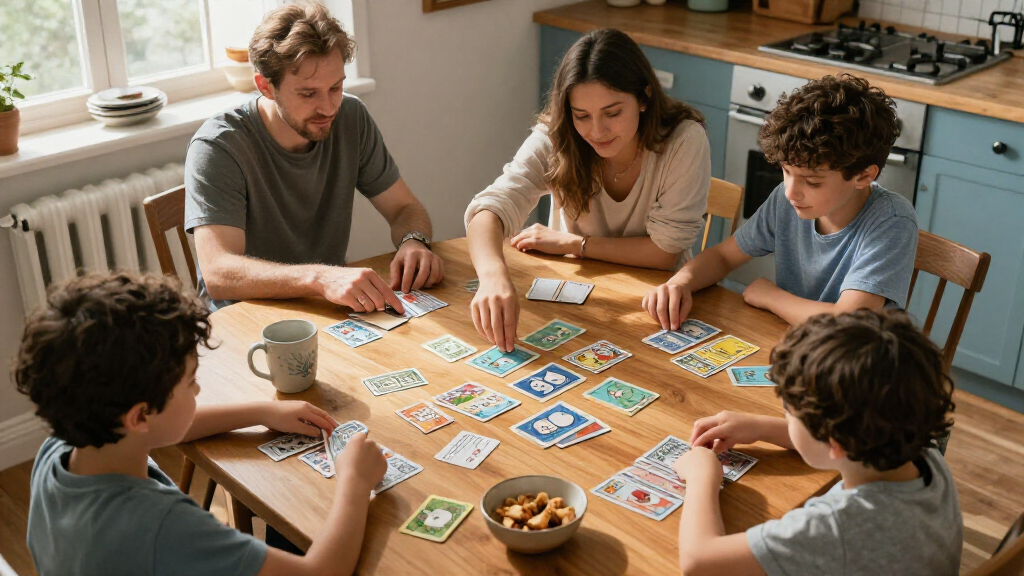
How We Picked
I ranked these games around the needs of a family game night: how quickly a group can learn the rules, how well the play works across different ages and experience levels, and whether the stated player count fits common household gatherings. I also weighed pace, interaction, replay variety, portability, and the kind of attention each game asks from players. A short rules explanation is useful, but it does not automatically make a game a strong family fit if its speed, humor, or competitive style excludes part of the group.
The ranking favors versatility and low barriers to entry, which puts UNO ahead as a broadly usable choice. Games with a clearer specialty—such as fast reflex play, social prompts, or push-your-luck decisions—rank for the families most likely to enjoy that style rather than for every household. Product descriptions do not establish details such as component durability or exact play time, so I avoid treating those as verified advantages. Buyers should check the listed ages and player limits against their group before choosing.
Factors to Consider When Choosing Best Family Card Games
Choosing among family card games is less about finding one universal winner and more about matching the game’s demands to the people at your table. I’d start with group size and attention span, then weigh pace, interaction, and how much new information players must learn.
Match the Player Count to Your Usual Group
Start with the smallest and largest groups you actually expect to play with, not the maximum number listed on a box. A game that works for a big gathering may feel thin with only two people, while a small-group title can leave guests out during a family event. Check whether the game supports the full group at once or relies on players taking turns in a way that creates long waits. If your household size varies, favor flexible player ranges over a game tied to one specific headcount. A common mistake is buying for a holiday crowd and then discovering the game rarely fits an ordinary evening. For irregular gatherings, keeping one adaptable game and one specialist game can be more useful than asking a single deck to do everything.
Choose Pace Around the Youngest or Most Cautious Player
Fast reactions can make a round exciting, but they can also turn a family game into a contest of reflexes rather than decisions. Before choosing a rapid-play title, ask whether everyone enjoys shouting, grabbing, or responding under time pressure. Slower games give players room to plan and can feel more welcoming to people who need extra time to read or process a turn. The youngest player’s listed age is a useful starting point, not a guarantee that the whole group will enjoy the same pace. Avoid assuming that a short round is automatically an easy round: speed can make rules harder to follow. If your table has mixed comfort levels, choose a game with simple turns and allow the group to play at its own rhythm.
Decide Whether You Want Strategy, Luck, or Both
Card games can make players feel involved in very different ways: some ask them to plan a hand, some hinge on chance, and others reward deciding when to take a risk. A family may enjoy luck because it keeps experienced players from dominating, while a group that wants meaningful choices may tire of outcomes that feel random. Look at what players do between draws or plays: are they making a choice, reading the group, or mainly waiting for the next card? A blend of luck and decision-making often works well when adults and children play together, since no one needs advanced tactics to stay in contention. A frequent buying mistake is choosing by theme alone and overlooking the central mechanic. Pick the kind of decision-making your group enjoys, then use theme as a tie-breaker.
Check the Humor and Conversation Style
Family labels do not mean every game’s jokes or prompts will suit every household. Some titles depend on matching humorous responses, while others invite players to answer personal questions or share opinions. Think about whether your group enjoys performing for one another or prefers to keep play focused on cards and turns. A conversation game can help relatives connect, but it may feel uncomfortable for players who dislike being put on the spot. For a mixed-age gathering, check the age guidance and consider the group’s boundaries before opening a prompt-based game. If you are buying for someone else’s family, choose a theme that does not rely on knowing their sense of humor. That small check can prevent an otherwise playable game from becoming an awkward gift.
Weigh Replay Variety Against Ease of Learning
A game with a very simple loop is easy to bring out, but some groups may want changing goals or fresh decisions to keep repeat sessions appealing. More variation can add replay interest, though it may also mean extra rules, more reading, or a longer explanation for new players. Ask how often your family is likely to replay the same game and whether the group enjoys learning new systems. If game night includes guests, a familiar structure can be more valuable than a large set of options. If the same players meet regularly, variety may matter more than instant teachability. Avoid paying attention only to the size of a deck or the number of included modes; what matters is whether those options meaningfully change play for your group.
Think About Where and When You Will Play
A portable card game can fit a kitchen table, a trip, or a short break, but portability alone does not guarantee a good travel choice. Consider whether the game needs a broad surface, clear lighting, quiet attention, or room for several players to act at once. A loud, fast game may be a poor match for a waiting room even if its cards pack easily. For travel, also think about how easily cards can be kept together and whether losing one would disrupt the game. At home, a game that asks players to spread out may be fine, while a crowded café table calls for a smaller footprint. Choose for the setting you will use most often, not the rare occasion when every possible setting might apply.
Frequently Asked Questions
Which game is the safest choice for a family with different ages and experience levels?
UNO is the broadest starting point in this lineup because its color-and-number structure is familiar and its play does not depend on fast physical reactions or personal humor. That makes it easier to bring new players into a round than a reflex game or a prompt-based party game. Still, the right choice depends on the ages and preferences at your table, so check the listed age guidance. If your group prefers quick physical play, Taco Cat Goat Cheese Pizza offers a very different kind of shared energy. If you want more tactical decisions, Monopoly Deal is a better direction.
What should I choose for a family gathering with more than five players?
Check each game’s stated player range before you buy, since not every title fits a large gathering. Piles and Dutch Blitz are among the options presented for larger groups, while Elimino is listed for two to five players and will not cover every crowd. The right fit also depends on whether your group enjoys simultaneous, fast action or prefers taking turns. A high player limit can still lead to downtime if the game’s structure makes people wait. For a gathering where guests may join or leave, simple rules and flexible participation can matter as much as the maximum count.
Are fast-paced card games a good fit for younger children?
They can be, but age guidance is only one part of the decision. Fast games may ask children to read quickly, react on cue, or handle lively competition, which can feel harder than the rules suggest. Taco Cat Goat Cheese Pizza lists ages seven and up, but a child’s comfort with speed and group noise still matters. For a more measured session, consider whether your family prefers a game with time to think rather than one built around quick reactions. If you do choose a fast game, a casual first round can help everyone learn without turning mistakes into a contest.
Should I choose a conversation game or a traditional card game for family night?
Choose based on how comfortable your group is sharing jokes, opinions, or personal answers. Do You Really Know Your Family? is framed around conversation, while Cards Against Humanity: Family Edition and What Do You Meme? Family Edition depend more on humorous prompts and responses. A traditional card game generally keeps attention on the play itself and may suit relatives who prefer not to perform or talk about themselves. Conversation games can be a strong fit when the group enjoys learning about one another, but they can put quieter players on the spot. For a mixed group, consider starting with a familiar card game before bringing out a prompt-driven option.
Is it worth choosing a more strategic game if children and adults will play together?
It can be a good choice if the game balances decisions with luck and the adults are willing to keep the competition friendly. Monopoly Deal, Flip 7, and Cover Your Assets offer different forms of tactical or risk-based play, so they suit families who want more than matching or reacting. A strategy-heavy game may give regular players satisfying choices but create a steeper learning curve for newcomers. Consider whether children in the group enjoy planning ahead, or whether they would rather play a game with more immediate turns. The best fit is one where players of different experience levels can stay involved, even if they make different choices.
Conclusion
For the best overall fit, I’d choose UNO for familiar rules and broad group appeal. For value through easy repeat play, I’d look first at a straightforward classic such as UNO, while remembering that “value” here means versatility rather than a price comparison. For beginners, UNO is again the clearest starting point; for a premium-style game night with more social interaction, consider Do You Really Know Your Family? if your group likes conversation and personal prompts. Families seeking specific experiences have clearer matches: choose Taco Cat Goat Cheese Pizza for rapid, physical fun, Monopoly Deal for compact tactical play, or Dutch Blitz for a larger group that enjoys speed. If your household dislikes noise, time pressure, or prompt-based humor, skip those specialist picks and favor a calmer game that fits your group’s pace.
Evergreen bestsellers Picks

Dyson Cyclone V10 Origin Cordless Vacuum

Bose QuietComfort Wireless Noise Cancelling Headphones, Ice Blue

Apple AirPods Max 2 Wireless Over-Ear Headphones, Midnight
As an affiliate, we earn on qualifying purchases.