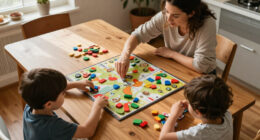
Searching for the best kids board games? The best overall pick is Candy Land for its timeless simplicity and near-universal appeal with ages 3 and up. Outfoxed stands out as the top cooperative choice, teaching teamwork without the pressure of losing, while Taco Cat Goat Cheese Pizza delivers fast, giggly rounds for older kids who crave action. The main tradeoffs come down to age range, playtime, and whether you want competitive or cooperative mechanics. Continue reading for the full breakdown of 15 top contenders, including which ones are worth your shelf space and which to skip.

Give the gift of listening to the whole family
- Choose a 1-, 3-, 6- or 12-month membership
- They pick the audiobooks they love
- Easy to send by email
Complete the kit


Key Takeaways
- Age range is the biggest divider: games for 3+ (Candy Land, Chutes and Ladders) rely on luck and simple rules, while 6+ options like Operation and Sorry add dexterity and strategy.
- Cooperative games like Outfoxed are rare in this lineup but offer a distinctly calmer, more inclusive experience than the usual competitive race.
- Party-style card games (Taco Cat, Hurry Up Chicken Butt) pack the most replay value per minute but require reading and quick reflexes, making them better for ages 6 and up.
- Classic brands like Hasbro dominate the list, but the 2025 Connect 4 edition and Battleship with Planes show how small twists can refresh familiar formulas.
- The best pick for a family often isn’t the most complex game—it’s the one that matches the youngest player’s attention span and the group’s tolerance for elimination-based rules.
| Hasbro Gaming Chutes and Ladders Board Game, 2-4 Players, Ages 3+ |  | Best for Preschoolers | Brand: Hasbro Gaming | Number of Players: 2-4 | Age Range: 3 years and up | VIEW LATEST PRICE | See Our Full Breakdown |
| Trouble Board Game for Kids Ages 5+ (2-4 Players) |  | Best for Family Game Night | Brand: Hasbro | Age Range: 5 years & up | Number of Players: 2-4 | VIEW LATEST PRICE | See Our Full Breakdown |
| Hasbro Gaming Battleship Classic Board Game |  | Best for Two-Player Strategy | Brand: Hasbro Gaming | Edition: Classic | Number of Players: 2 | VIEW LATEST PRICE | See Our Full Breakdown |
| Hasbro Connect 4 Board Game (2025 Edition) |  | Best for Quick Replayability | Brand: Hasbro | Edition: 2025 | Age Range: 6+ | VIEW LATEST PRICE | See Our Full Breakdown |
| Mouse Trap Board Game for Kids Ages 6 and Up |  | Best for Building & Cause-and-Effect | Brand: Hasbro Gaming | Age Range: 6 years and up | Number of Players: 2-4 | VIEW LATEST PRICE | See Our Full Breakdown |
| Taco Cat Goat Cheese Pizza Card Game | 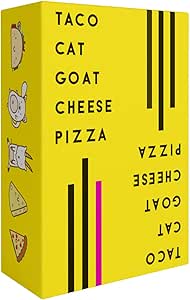 | Best for Fast-Paced Party Fun | Brand: Dolphin Hat Games | Age Range: 7+ years | Player Count: 2-8 players | VIEW LATEST PRICE | See Our Full Breakdown |
| Hasbro Gaming Battleship with Planes Strategy Board Game |  | Best for Strategic Two-Player Battles | Brand: Hasbro Gaming | Genre: Strategy | Number of Players: 2 | VIEW LATEST PRICE | See Our Full Breakdown |
| Spin Master Games Hedbanz Picture Guessing Game (2nd Edition) |  | Best for Deductive Family Fun | Brand: Spin Master Games | Age Range: 6 years and up | Player Count: 2-6 players | VIEW LATEST PRICE | See Our Full Breakdown |
| Hasbro Gaming Candy Land Board Game for Kids, Ages 3 and Up |  | Best for Preschoolers | Brand: Hasbro Gaming | Players: 2–4 | Recommended Age: 3 years and up | VIEW LATEST PRICE | See Our Full Breakdown |
| Hurry Up Chicken Butt by Exploding Kittens |  | Best for Active Young Players | Players: 2–6 | Age range: 4 years and up | Included components: 1 Chicken Shaker, 6 playmats, 45 activity cards | VIEW LATEST PRICE | See Our Full Breakdown |
| Outfoxed: A Cooperative Whodunit Board Game for Preschoolers |  | Best Cooperative Pick for Young Detectives | Age Range: 5 years and up | Player Count: 2–4 players | Gameplay Duration: 15–20 minutes | VIEW LATEST PRICE | See Our Full Breakdown |
| Hasbro Gaming Operation Electronic Board Game |  | Best for Fine Motor Skill Development | Brand: Hasbro Gaming | Age Range: 6+ years | Players: 1+ players | VIEW LATEST PRICE | See Our Full Breakdown |
| Hasbro Gaming Clue Junior Board Game: Case of the Broken Toy |  | Best Intro to Deduction and Mystery | Brand: Hasbro Gaming | Age Range: 5 years and up | Number of Players: 2–6 players | VIEW LATEST PRICE | See Our Full Breakdown |
| Uzzle 3.0 Board Game – Family Puzzle Game for Ages 4+ |  | Best Fast-Paced Puzzle and Party Game | Age Range: 4 years and up | Material: High-quality plastic | Item Weight: 1.7 pounds | VIEW LATEST PRICE | See Our Full Breakdown |
| Sorry! Board Game for Kids Ages 6 and Up |  | Best Classic Family Race with Strategic Bumps | Brand: Hasbro Gaming | Genre: Family board game | Number of Players: 2–4 players | VIEW LATEST PRICE | See Our Full Breakdown |
| kids board game | Age Range | Included Components | Brand | Number of Players |
|---|---|---|---|---|
| Hasbro Gaming Chutes and Ladde | 3 years and up | — | Hasbro Gaming | 2-4 |
| Trouble Board Game for Kids Ag | 5 years & up | Gameboard, plastic game unit with Pop-O-Matic, 16 pegs, instructions | Hasbro | 2-4 |
| Hasbro Gaming Battleship Class | 7+ years | 2 portable battle cases, 10 plastic ships, 73 red hit pegs, 168 green miss pegs, instructions | Hasbro Gaming | 2 |
| Hasbro Connect 4 Board Game | 6+ | Grid, tray, 42 discs (21 red, 21 yellow), game rules | Hasbro | 2 |
| Mouse Trap Board Game for Kids | 6 years and up | Game board, 4 plastic mice, 2 metal marbles, 25 trap building parts, 52 cheese pieces | Hasbro Gaming | 2-4 |
| Taco Cat Goat Cheese Pizza Car | 7+ years | Cards | Dolphin Hat Games | — |
| Hasbro Gaming Battleship with | 7 years & up | 2 portable battle cases, 10 plastic ships, 2 plastic planes, 84 red hit pegs, 168 white miss pegs, label sheet, instructions | Hasbro Gaming | 2 |
| Spin Master Games Hedbanz Pict | 6 years and up | 6 Headbands, 6 Headplates, 16 Scoring Badges, 1 Timer, 69 Picture Cards, 3 Sample Question Cards, Instructions | Spin Master Games | — |
| Hasbro Gaming Candy Land Board | — | Gameboard, 4 gingerbread pawns, card deck, instructions in English and Spanish | Hasbro Gaming | — |
| Hurry Up Chicken Butt by Explo | 4 years and up | 1 Chicken Shaker, 6 playmats, 45 activity cards | — | — |
| Outfoxed: A Cooperative Whodun | 5 years and up | — | — | — |
| Hasbro Gaming Operation Electr | 6+ years | Gameboard with patient, tweezers, 26 cards, 12 Funatomy parts, play money, rubber band, instructions | Hasbro Gaming | — |
| Hasbro Gaming Clue Junior Boar | 5 years and up | Gameboard, 6 character pawns, 6 furniture tokens, 7 white bases, 7 yellow bases, detective notepad, die, label sheet, game guide | Hasbro Gaming | 2–6 players |
| Uzzle 3.0 Board Game | 4 years and up | 100 unique challenges, 25 puzzles per level, 2x bigger blocks, 4 sets of 10 blocks | — | 1–4 players |
| Sorry! Board Game for Kids Age | 6 years and up | Gameboard, 12 pawns, 45 cards, instructions | Hasbro Gaming | 2–4 players |
More Details on Our Top Picks
Hasbro Gaming Chutes and Ladders Board Game, 2-4 Players, Ages 3+
For the youngest players in your household, Chutes and Ladders remains the gold standard. Unlike Trouble, which demands number recognition and a bit of strategic thinking, this game is purely visual — kids spin, move, and count as they climb ladders or slide down chutes. The no-reading requirement makes it instantly accessible to pre-readers, and the 30-minute playtime fits attention spans without overstaying its welcome. The tradeoff is that the mechanics are extremely simple; after a few sessions, older siblings may find it repetitive. But for a three-year-old’s first board game experience, that simplicity is exactly the point. It builds counting confidence and turn-taking skills in a low-pressure setting, making it a smarter pick than Mouse Trap, which requires fine motor skills and patience that preschoolers simply don’t have yet.
Pros:- No reading required — perfect for pre-readers
- Reinforces counting and number recognition
- Quick 30-minute rounds hold young attention
- All components included: board, spinner, pieces
Cons:- Simple mechanics become repetitive after multiple plays
- No strategic depth — purely luck-based movement
Best for: Families introducing board games to kids aged 3–4 who need a reading-free, counting-focused first experience.
Not ideal for: Parents of children over 5 who already understand numbers — the lack of strategy or challenge will bore them quickly.
- Brand:Hasbro Gaming
- Number of Players:2-4
- Age Range:3 years and up
- Minimum Age:36 months
- Estimated Playing Time:30 minutes
- Genre:Educational
- Model Number:4555 S5
Our verdict“If you have a preschooler ready for their first board game, Chutes and Ladders is the safest, most age-appropriate choice.”
Trouble Board Game for Kids Ages 5+ (2-4 Players)
When you need a game that bridges age gaps — from a five-year-old to a grandparent — Trouble is the pick that keeps everyone engaged. The iconic Pop-O-Matic bubble eliminates dice disputes and adds a tactile thrill that Connect 4 simply can’t match. The rules are easy to grasp, but the optional Power Up spaces inject a layer of strategy for older kids who want more than pure luck. Compared with Chutes and Ladders, Trouble offers meaningful decisions — you can choose which peg to move — making it a natural step up for kids who’ve outgrown counting games. The main drawback is the 2–4 player cap, which feels limiting for larger family gatherings. Also, getting bumped back to start can frustrate younger children, though it teaches resilience. For a balanced mix of luck and light strategy, Trouble is the most versatile family option here.
Pros:- Pop-O-Matic die roller is mess-free and satisfying
- Easy to learn, with optional Power Up spaces for added challenge
- Teaches decision-making with multiple peg choices
- Complete set: board, 16 pegs, instructions
Cons:- Only supports 2–4 players, excluding bigger groups
- Bumping back to start can feel harsh for younger kids
Best for: Families with kids aged 5–10 who want a quick, engaging game that adults can enjoy without zoning out.
Not ideal for: Groups larger than four players — you’ll need a second game or a different title.
- Brand:Hasbro
- Age Range:5 years & up
- Number of Players:2-4
- Included Components:Gameboard, plastic game unit with Pop-O-Matic, 16 pegs, instructions
- Edition:Classic Edition
- Model Year:2017
- UPC:630509556243
Our verdict“Trouble is the best all-around family game night choice for mixed-age groups that want a blend of luck and light tactics.”
Hasbro Gaming Battleship Classic Board Game
If your kids crave head-to-head competition and logical deduction, Battleship delivers a depth that Connect 4 can’t approach. The portable battle cases make it a travel-friendly option, and the Salvo mode lets advanced players fire multiple shots per turn, adding a layer of planning that keeps the game fresh. Compared with Trouble, Battleship is almost entirely skill-based — there’s no dice luck, just careful tracking and probability. That’s a double-edged sword: younger kids at the minimum age of 7 may struggle with the spatial reasoning and coordinate tracking, and the small pegs require fine motor control. The game is strictly two-player, so it won’t work for larger groups. But for siblings who enjoy a quiet, strategic duel, this is the most intellectually rewarding option in this roundup.
Pros:- Portable battle cases make travel and storage easy
- Salvo mode adds strategic depth for experienced players
- Simple rules but deep tactical thinking
- Realistic ship designs and peg-based tracking
Cons:- Limited to exactly two players
- Small pegs are hard for young children to handle
- Can feel repetitive for seasoned strategy gamers
Best for: Families with two kids aged 7+ who enjoy logic puzzles and want a portable, skill-driven game.
Not ideal for: Parents of kids under 7 or those who prefer cooperative play — the competitive, two-player format can be frustrating.
- Brand:Hasbro Gaming
- Edition:Classic
- Number of Players:2
- Age Range:7+ years
- Playing Time:30 minutes
- Included Components:2 portable battle cases, 10 plastic ships, 73 red hit pegs, 168 green miss pegs, instructions
- Model Number:F4527
Our verdict“Battleship is the go-to pick for two kids who want a pure test of strategy and deduction, with the bonus of portability.”
Hasbro Connect 4 Board Game (2025 Edition)
When you need a game that can be set up, played, and packed away in under ten minutes, the 2025 edition of Connect 4 is the efficiency champion. The all-in-1 carrying case with built-in disc storage eliminates the dreaded cleanup, and the sliding score trackers make it easy to run best-of-three rounds without pencil and paper. Compared with Battleship, which demands a longer commitment and two-player focus, Connect 4 offers the same two-player head-to-head thrill but with lightning-fast rounds that encourage rematches. The strategy is simpler than Battleship — you’re just lining up four discs — but it still teaches pattern recognition and blocking. The main downside is that it’s strictly two-player, and younger kids at age 6 may find the vertical thinking challenging at first. Still, for families who value quick, repeatable fun, this is the most practical choice.
Pros:- All-in-1 carrying case with integrated disc storage
- Built-in sliding score trackers simplify round tracking
- One-motion setup — no assembly or parental help needed
- Rounds last about 5 minutes, perfect for quick sessions
Cons:- Limited to only two players
- Requires strategic thinking that may frustrate younger kids at the minimum age
Best for: Families who want a fast, portable game that kids can play independently without adult help for setup or scoring.
Not ideal for: Groups of three or more players — this is strictly a duel, so you’ll need another game for larger gatherings.
- Brand:Hasbro
- Edition:2025
- Age Range:6+
- Number of Players:2
- Included Components:Grid, tray, 42 discs (21 red, 21 yellow), game rules
- Model Name:CONNECT 4 REFRESH
- Manufacturer Part Number:G1500
Our verdict“Connect 4 is the best pick for parents who want a no-fuss, fast-playing game that kids can set up and enjoy on their own.”
Mouse Trap Board Game for Kids Ages 6 and Up
For kids who love tinkering and watching things move, Mouse Trap offers a unique blend of board game and construction toy. The Rube Goldberg-style contraption is the star — players assemble the trap piece by piece, then trigger it to capture opponents’ mice. This hands-on element sets it apart from every other game here; unlike Trouble or Connect 4, which are purely abstract, Mouse Trap teaches cause and effect and spatial reasoning through physical play. The downside is that assembling the trap can be fiddly for younger kids — you’ll likely need to help the first few times. The game also caps at four players and includes small parts that are easy to lose. But if your child is more interested in how things work than in winning, this is the most engaging and educational option in the lineup.
Pros:- Physical contraption teaches cause and effect in a memorable way
- Encourages construction and spatial reasoning skills
- Great for family game nights and playdates
- Bilingual instructions (English and Spanish)
Cons:- Trap assembly is complex and may require adult help
- Limited to 4 players
- Small parts (marbles, cheese pieces) are easy to lose
Best for: Curious kids aged 6–9 who enjoy building and want a game that doubles as a mechanical learning toy.
Not ideal for: Families who want a quick, low-setup game — the trap assembly adds time and complexity that can frustrate impatient players.
- Brand:Hasbro Gaming
- Age Range:6 years and up
- Number of Players:2-4
- Playing Time:30 minutes
- Included Components:Game board, 4 plastic mice, 2 metal marbles, 25 trap building parts, 52 cheese pieces
- Languages:English and Spanish
- Skills:Counting, cooperation, construction, cause and effect, decision-making
Our verdict“Mouse Trap is the best choice for kids who love building and want a game that rewards curiosity about mechanics.”
Taco Cat Goat Cheese Pizza Card Game
If your family thrives on chaos and laughter, Taco Cat Goat Cheese Pizza delivers a lightning-fast card game that gets everyone on their feet. The premise is simple: flip cards, say the matching word, and slap the pile when a special action card appears. Compared with Hedbanz, which rewards careful questioning, this game tests reflexes and observation instead of deduction. The surprise Gorilla and Narwhal cards inject unpredictable twists that keep rounds lively even after repeated plays. Its compact deck makes it a natural travel companion, and the 10–15 minute sessions fit neatly between dinner and bedtime. The tradeoff is that speed trumps strategy — players who prefer thoughtful planning may find the frantic slapping repetitive. Also, younger kids with slower reaction times might get frustrated, so it suits families with older children or mixed-age groups where adults can level the playing field.
Pros:- Rules are learnable in under a minute, so even new players join instantly
- Compact card deck slips easily into a backpack or purse for travel
- Action cards like Gorilla and Narwhal keep every round unpredictable
- Short play time makes it easy to replay multiple rounds in one sitting
Cons:- Relies on physical dexterity and quick reflexes, which can disadvantage younger or less coordinated players
- The fast-paced slap mechanic may feel chaotic or repetitive for those who prefer strategic depth
Best for: Families with kids aged 7 and up who want a high-energy, portable game for parties, road trips, or quick breaks between activities.
Not ideal for: Households that prefer slower, more strategic games — this is pure reaction speed, with no room for careful planning.
- Brand:Dolphin Hat Games
- Age Range:7+ years
- Player Count:2-8 players
- Play Time:10-15 minutes
- Included Components:Cards
- Manufacturer:Dolphin Hat Games
- UPC:736284444932
Our verdict“Pick this up if you want a silly, fast, and portable party game that gets everyone laughing — just don’t expect any strategic depth.”
Hasbro Gaming Battleship with Planes Strategy Board Game
Battleship with Planes takes the classic naval combat and adds a third dimension with aerial strikes, giving players more tactical options than the original. The portable battle cases fold shut with all pegs and ships stored inside, making it a solid choice for travel — something the bulky Candy Land board can’t match. The added planes require you to track both ship coordinates and flight paths, which deepens the decision-making without overwhelming kids aged 7 and up. Compared with the pure luck of drawing cards in Taco Cat Goat Cheese Pizza, this game rewards memory and deduction as you narrow down enemy positions. The main drawback is that it’s strictly two-player, so it won’t work for larger family groups. The plastic components feel serviceable but not premium, and the peg system can occasionally pop out if the case is jostled mid-game.
Pros:- Adding planes introduces new strategic layers beyond the classic ship-sinking formula
- Portable battle cases with integrated storage make it easy to play on the go
- The coordinate-based gameplay builds memory and logical thinking skills
- Realistic-looking ships and planes add visual appeal for kids
Cons:- Limited to two players, which excludes larger family game nights
- Plastic components feel lighter and less durable than premium board game materials
Best for: Kids aged 7 and up who enjoy head-to-head challenges and want a portable strategy game that sharpens memory and logical deduction.
Not ideal for: Families expecting a multiplayer group activity — this is strictly a two-player duel with no room for additional participants.
- Brand:Hasbro Gaming
- Genre:Strategy
- Number of Players:2
- Edition:Standard Edition
- Estimated Playing Time:30 minutes
- Included Components:2 portable battle cases, 10 plastic ships, 2 plastic planes, 84 red hit pegs, 168 white miss pegs, label sheet, instructions
- Age Range:7 years & up
- Model Number:C3890
- Manufacturer:Hasbro
Our verdict“Choose this if you want a two-player strategy game that travels well and adds a fresh twist to the timeless Battleship formula.”
Spin Master Games Hedbanz Picture Guessing Game (2nd Edition)
Hedbanz turns the classic ‘who am I?’ party game into a kid-friendly guessing challenge that builds deductive reasoning without requiring reading skills. Players wear a headband, place a picture card, and ask yes/no questions to figure out what they are — a mechanic that rewards creative questioning and logical elimination. Compared with the pure luck of Candy Land, Hedbanz actively engages kids’ brains, making it a better pick for families who want a game that grows with their children. The 2nd edition’s refreshed illustrations and six new headband designs add visual variety, and the included timer keeps rounds moving. The tradeoff is that the paper cards and headplates can show wear after frequent play, and the yes/no format can become repetitive if players don’t vary their questions. With a six-player cap, it’s best for intimate gatherings rather than large parties.
Pros:- Encourages deductive reasoning and creative questioning in a fun, low-pressure setting
- Six new headband designs and updated illustrations keep the game feeling fresh
- Simple rules mean kids and adults can jump in without lengthy explanations
- Compact components make it easy to pack for travel or casual get-togethers
Cons:- Paper cards and headplates are prone to bending or tearing with frequent use
- The yes/no question format can lead to repetitive rounds if players stick to obvious questions
- Limited to six players, so larger families or parties will need multiple copies
Best for: Families with kids aged 6 and up who enjoy wordplay and want a game that strengthens deductive reasoning and communication skills.
Not ideal for: Groups larger than six players, or families who prefer games with more physical activity or movement.
- Brand:Spin Master Games
- Age Range:6 years and up
- Player Count:2-6 players
- Included Components:6 Headbands, 6 Headplates, 16 Scoring Badges, 1 Timer, 69 Picture Cards, 3 Sample Question Cards, Instructions
- Material:Paper
- Model Year:2023
- Edition:2nd Edition
Our verdict“This is the go-to choice for families who want a screen-free game that builds thinking skills while still being silly and fun.”
Hasbro Gaming Candy Land Board Game for Kids, Ages 3 and Up
For the youngest board gamers, Candy Land remains the gold standard because it requires zero reading and zero strategy — just color recognition and turn-taking. That simplicity is exactly what makes it perfect for ages 3 and up, who can grasp the color-coded cards and move their gingerbread pawn along the illustrated path. Compared with Hedbanz, which demands deductive questioning, Candy Land is purely luck-based, which levels the playing field for toddlers who can’t yet form complex questions. The bilingual instructions in English and Spanish are a nice touch for bilingual households. The tradeoff is that there’s no decision-making whatsoever, so older kids will quickly outgrow it. It’s also limited to 2–4 players, making it a poor fit for larger playgroups. But as a first board game that teaches patience and following rules, it’s unmatched.
Pros:- No reading required, making it fully accessible to preschoolers
- Color-coded cards directly support color recognition and matching skills
- Instructions included in both English and Spanish for bilingual families
- Short 15-minute play sessions hold young attention spans
Cons:- Limited to 2–4 players, excluding larger groups or siblings
- Gameplay is entirely luck-based with no strategic decisions, so older kids may lose interest quickly
Best for: Parents of preschoolers aged 3–4 who want a gentle introduction to board games that builds color recognition and turn-taking skills.
Not ideal for: Families with older children (6+) who will find the luck-based gameplay too simple and unchallenging.
- Brand:Hasbro Gaming
- Players:2–4
- Recommended Age:3 years and up
- Estimated Playing Time:15 minutes
- Included Components:Gameboard, 4 gingerbread pawns, card deck, instructions in English and Spanish
- Language:English and Spanish instructions
- Skills:Color recognition, matching, taking turns
Our verdict“If you have a toddler or preschooler, this is the perfect starter board game to teach basic skills and the joy of playing together.”
Hurry Up Chicken Butt by Exploding Kittens
Hurry Up Chicken Butt brings a physical twist to the board game shelf — kids shake the Chicken Shaker, perform the activity shown on the card, and pass it before the surprise timer buzzes. This is a far more energetic experience than the sit-down, card-flipping pace of Taco Cat Goat Cheese Pizza, making it ideal for kids aged 4 and up who need to burn off energy. The included playmats and 45 activity cards encourage creativity, quick thinking, and gross motor skills, all wrapped in the silly chicken theme that Exploding Kittens is known for. The downside is that it requires two AA batteries (not included), which is an extra purchase right out of the box. Also, if the timer goes off while a player is holding the Chicken, they’re out — which can be frustrating for younger kids who struggle with the timing. Still, for a party game that gets everyone moving, it’s a standout.
Pros:- Encourages active play, quick thinking, and creativity through physical challenges
- Simple rules make it easy for even young children to understand and join in
- The surprise timer adds suspense and keeps players on their toes
- Designed for family game nights, parties, and group play with 2–6 players
Cons:- Requires two AA batteries that are not included, adding an extra purchase before first play
- Players who get caught with the Chicken when the timer goes off are eliminated, which can disappoint younger kids
Best for: Families with energetic kids aged 4–7 who love physical play and need a game that channels that energy into a fun group activity.
Not ideal for: Quiet households or families who prefer calm, sit-down board games — the shaking and timer mechanic can get loud and frantic.
- Players:2–6
- Age range:4 years and up
- Included components:1 Chicken Shaker, 6 playmats, 45 activity cards
- Material:Cardstock
- Model:HUCB-CORE-4
- Model year:2024
- Batteries:Not included
Our verdict“This is the pick for families who want a lively, movement-based game that gets kids laughing and scrambling — just remember to buy batteries.”
Outfoxed: A Cooperative Whodunit Board Game for Preschoolers
Outfoxed stands apart from the competitive chaos of Sorry! or Operation because it removes the loser problem entirely. Everyone works as a team to deduce which fox swiped the pie, so the game ends in shared victory or shared defeat. For a 5-year-old, that means no sulking and no gloating — just collective problem-solving. The logic loop is genuinely clever: you flip clue tiles, rule out suspects, and use a simple decoder to check your guess. Compared with Clue Junior, which still asks kids to hold a mystery in their heads, Outfoxed keeps the deduction tangible and visual, with a moving fox pawn that physically inches toward the escape hole. The 15-minute runtime is a sweet spot for short attention spans, though it also means the game rarely builds sustained tension. Setup is trivial, and the cooperative structure makes it an easy first board game for families with younger siblings who aren’t ready for direct competition.
Pros:- Fully cooperative — no sore losers and everyone shares the win
- Simple rules and fast setup work well for short attention spans
- Builds real deduction, memory, and logic skills through hands-on clue elimination
- Encourages verbal teamwork and social turn-taking
Cons:- 15–20 minute sessions may feel too brief for older kids or adults
- Player cap of 4 restricts larger family gatherings or classroom use
- The mystery becomes predictable after several plays, reducing replay value
Best for: Families with kids aged 5–7 who want a gentle, teamwork-first introduction to deduction without any winner/loser friction.
Not ideal for: Households with older children (8+) who will likely solve the mystery too quickly and crave more complex strategy or longer play sessions.
- Age Range:5 years and up
- Player Count:2–4 players
- Gameplay Duration:15–20 minutes
- Game Type:Cooperative board game
- Skills Developed:Logic, memory, deduction, teamwork
Our verdict“If you want a stress-free, cooperative mystery game that teaches young kids deduction without tears, Outfoxed is the pick.”
Hasbro Gaming Operation Electronic Board Game
Operation earns its place here not for its narrative depth but for its tactile challenge. Unlike the card-driven luck of Sorry! or the pure logic of Outfoxed, this game demands steady hands and precise control. The buzzer and glowing nose turn every near-miss into a shared laugh, which keeps kids engaged even when they fail. It plays solo or with up to three others, making it flexible for a quiet afternoon or a raucous family night. The rules are almost nonexistent — you just pick a card, remove the part, and bank the money. Compared with Uzzle 3.0, which tests visual speed, Operation tests fine motor coordination, so it fills a different developmental niche. The tradeoff is that the gameplay loop stays static; after a dozen rounds, the novelty of the same twelve parts wears thin. Also, the tweezers and small pieces are genuinely tricky for younger kids, so the 6+ age rating feels honest. Battery dependency is another real consideration — the buzzer is the whole show, and when the batteries die, the game loses its punch.
Pros:- Sharpens fine motor skills and hand-eye coordination through precise tweezer use
- Works for solo play or group competition, adapting to different settings
- Electronic buzzer and light-up nose add humor and dramatic tension
- Rules are simple enough for young children to grasp immediately
Cons:- Requires 2 AA batteries that aren’t included and may need frequent replacement
- Small parts and tweezers are difficult for very young children to manipulate
- Gameplay becomes repetitive quickly because the ailment pieces never change
Best for: Kids aged 6–9 who need practice with hand-eye coordination and fine motor control, and who enjoy a bit of silly, physical challenge.
Not ideal for: Families looking for a deep strategic experience or a game that can be played silently — the buzzer is loud and the mechanics are repetitive.
- Brand:Hasbro Gaming
- Age Range:6+ years
- Players:1+ players
- Included Components:Gameboard with patient, tweezers, 26 cards, 12 Funatomy parts, play money, rubber band, instructions
- Power Source:2 AA batteries
- Skills Developed:Fine motor coordination, strategy
- Model Number:4545
Our verdict“Operation is the right call for families who want a hands-on, giggle-inducing game that builds fine motor control, even if it’s not a deep strategy title.”
Hasbro Gaming Clue Junior Board Game: Case of the Broken Toy
Clue Junior takes the classic whodunit formula and strips it down to a level that a 5-year-old can actually follow. Instead of tracking suspects, weapons, and rooms like the adult version, you’re figuring out who broke a toy, which toy, and when. That’s still a triple deduction, but the visual clue tokens and simple dice movement make it far more approachable than Outfoxed‘s cooperative guessing. What sets Clue Junior apart is that it introduces competitive deduction — kids learn to hold their own conclusions privately and make educated guesses against each other. For a family with siblings, that’s a meaningful step up from a fully cooperative game. It supports up to 6 players, which beats most other options here, and the theme is relatable without being violent. The downside is that the fixed mystery scenarios limit replayability; once kids solve all the combinations, they’ll want the original Clue. Compared with Sorry!, it requires more focused thinking and less luck, which some kids will prefer and others will find frustrating.
Pros:- Simplified mystery mechanics are perfect for ages 5 and up
- Builds critical thinking, problem-solving, and deductive reasoning
- Uses familiar Clue characters in a kid-friendly, non-violent theme
- Supports 2–6 players, making it flexible for larger families
Cons:- Too simple for older kids or experienced board game players
- Limited replayability because the mystery combinations are fixed
- Requires more patience than luck-based games like Sorry! — not ideal for very restless kids
Best for: Families with kids aged 5–8 who are ready for a light competitive mystery and want a stepping stone to the full Clue game.
Not ideal for: Older children who already understand deductive reasoning well — they’ll solve the cases too fast and miss the challenge of the original Clue.
- Brand:Hasbro Gaming
- Age Range:5 years and up
- Number of Players:2–6 players
- Theme:Mystery
- Included Components:Gameboard, 6 character pawns, 6 furniture tokens, 7 white bases, 7 yellow bases, detective notepad, die, label sheet, game guide
- Item Weight:1.3 pounds
- Educational Objective:Critical thinking, problem-solving, deductive reasoning
Our verdict“Clue Junior is the best bridge for young kids who want to solve a mystery on their own but aren’t ready for the complexity of the adult version.”
Uzzle 3.0 Board Game – Family Puzzle Game for Ages 4+
Uzzle 3.0 is the speed demon of this roundup. Unlike the turn-based pacing of Operation or the slow build of Clue Junior, this game is all about racing to match a pattern with your own set of blocks. The 100 puzzles are split into four difficulty levels, so you can start a 4-year-old on the easy cards and ramp up to challenge adults. The blocks are twice the size of typical puzzle pieces, which makes them much easier for small hands to grab and flip — a clear advantage over the fiddly tweezers in Operation. I like that it can be taught in under a minute; you just flip a card, everyone scrambles, and the first to complete the pattern wins. Compared with Sorry!‘s lengthy 120-minute sessions, Uzzle delivers a quick hit of cognitive exercise that’s perfect for a family game night opener or a travel break. The main limitation is the 1–4 player cap, and the box is a bit bulky for a backpack. It’s also only available in English, which could be a barrier for some households, but the visual nature of the puzzles means language isn’t essential to play.
Pros:- 100 unique puzzles across four difficulty levels offer long-term variety
- Larger blocks are easy for young children to grip and manipulate
- Fast-paced, learn-in-a-minute gameplay boosts quick thinking and visual processing
- Compact setup — no board, just cards and blocks
Cons:- Limited to 4 players unless you buy extra sets
- English-only instructions may be a hurdle for non-English-speaking families
- Box dimensions are a bit bulky for true travel portability
Best for: Families who love fast, competitive brain teasers and want a game that works for a wide age range — from preschoolers to grandparents.
Not ideal for: Kids who get frustrated by time pressure or who prefer slow, thoughtful strategy games over quick reflexes.
- Age Range:4 years and up
- Material:High-quality plastic
- Item Weight:1.7 pounds
- Dimensions:8 x 8 x 4 inches
- Number of Players:1–4 players
- Difficulty Levels:4 levels
- Included Components:100 unique challenges, 25 puzzles per level, 2x bigger blocks, 4 sets of 10 blocks
- Model:Uzzle 3.0
Our verdict“If you want a high-energy, skill-building puzzle game that the whole family can enjoy together, Uzzle 3.0 delivers the best mix of speed and cognitive challenge.”
Sorry! Board Game for Kids Ages 6 and Up
Sorry! is the classic race-to-home game that every family should own at least once. The rules are dead simple — draw a card, move your pawn, and occasionally send an opponent back to start. That last mechanic is where the strategy lives, and it’s also where the hurt feelings can start. Compared with the cooperative warmth of Outfoxed, Sorry! is openly competitive and can be brutal; a well-timed Sorry card can wipe out a kid’s progress in seconds. For kids aged 6 and up who can handle that, it’s a fantastic lesson in resilience and strategic card use. The random card draws mean no two games play the same, giving it high replay value that Clue Junior lacks. However, the estimated 120-minute playtime is a real commitment — much longer than the 20-minute sessions of Uzzle 3.0 — and younger kids may lose focus before the game ends. The luck factor can also frustrate kids who prefer pure skill, and the ‘send back to start’ mechanic can drag the game out if players keep getting bumped.
Pros:- Simple rules that kids aged 6+ can learn in minutes
- Card-based movement encourages strategic thinking about when to block or bump
- Works for a wide age range, making it a solid multi-generational choice
- High replay value thanks to random card draws and variable outcomes
Cons:- Reliance on luck can frustrate players who prefer pure strategy
- Sending opponents back to start can cause tears or extend the game significantly
- 120-minute playtime is too long for short attention spans
Best for: Families with kids aged 6 and up who enjoy classic board game competition and want a game that adults and children can play together on equal footing.
Not ideal for: Very young kids (under 6) who might be upset by being sent back to start, or families who prefer shorter, less luck-dependent games.
- Brand:Hasbro Gaming
- Genre:Family board game
- Number of Players:2–4 players
- Age Range:6 years and up
- Estimated Playing Time:120 minutes
- Included Components:Gameboard, 12 pawns, 45 cards, instructions
- Model Number:A5065
Our verdict“Sorry! is the go-to classic for families who want a familiar, competitive race game that teaches kids to handle both victory and defeat.”

How We Picked
I evaluated each game against five criteria: age appropriateness, ease of learning, replay value, player count flexibility, and durability of components. I also weighed whether the game encourages positive social interaction—like cooperation or turn-taking—versus pure competition. Games that punish younger kids harshly (like elimination) ranked lower for preschool audiences.
My ranking logic grouped games by the youngest recommended age, then within each age tier, I prioritized those with the clearest rules and the most consistent fun across repeated plays. I gave extra credit to games that scale well from 2 to 4 players and to those that don’t require constant adult supervision. The final order reflects a balance between timeless classics and modern innovations, with an eye toward what actually holds a child’s attention beyond the first unboxing.
| kids board game | Brand |
|---|---|
| Hasbro Gaming Chutes and Ladde | Hasbro Gaming |
| Trouble Board Game for Kids Ag | Hasbro |
| Hasbro Gaming Battleship Class | Hasbro Gaming |
| Hasbro Connect 4 Board Game | Hasbro |
| Mouse Trap Board Game for Kids | Hasbro Gaming |
| Taco Cat Goat Cheese Pizza Car | Dolphin Hat Games |
| Hasbro Gaming Battleship with | Hasbro Gaming |
| Spin Master Games Hedbanz Pict | Spin Master Games |
| Hasbro Gaming Candy Land Board | Hasbro Gaming |
| Hurry Up Chicken Butt by Explo | — |
| Outfoxed: A Cooperative Whodun | — |
| Hasbro Gaming Operation Electr | Hasbro Gaming |
| Hasbro Gaming Clue Junior Boar | Hasbro Gaming |
| Uzzle 3.0 Board Game | — |
| Sorry! Board Game for Kids Age | Hasbro Gaming |
Factors to Consider When Choosing Best Kids Board Games
Choosing the right board game for a kid isn’t just about picking a popular title. You need to match the game to the child’s developmental stage, the typical group size, and the amount of time you have for a session. Here are five factors that separate a hit from a dust-collector.
Age Range and Skill Level
The age printed on the box is a starting point, not a hard rule. A 4-year-old might handle a 5+ game if they’ve played similar ones, while a 6-year-old could struggle with a 7+ game that requires reading. Look for games with adjustable difficulty or those that allow older siblings to play without dominating. Candy Land and Chutes and Ladders are ideal for 3–4 year olds because they require no reading and no strategy—just counting and color matching. For 5–6 year olds, Trouble and Sorry introduce simple tactics without overwhelming. Avoid games with elimination mechanics for the youngest players, as sitting out can be devastating.
Player Count and Group Dynamics
Most kids’ games support 2–4 players, but that range can feel different in practice. Games like Battleship are strictly two-player, which makes them perfect for one-on-one parent-child time but useless for a playdate of three. Conversely, party games like Taco Cat Goat Cheese Pizza shine with 4–8 players and fall flat with just two. Before buying, think about who will actually play: a single child with a parent, a sibling duo, or a rotating group of friends? If you need flexibility, choose games that explicitly state ‘2–6 players’ and work well at both extremes.
Game Length and Attention Span
A 45-minute game might be fine for a 10-year-old but torture for a 4-year-old. Match the game length to the youngest player’s typical focus window—roughly 10 minutes for ages 3–4, 15–20 minutes for ages 5–6, and 30 minutes for ages 7+. Candy Land and Chutes and Ladders both run about 15–20 minutes, which is right for preschoolers. Operation and Mouse Trap can stretch longer, especially if pieces get knocked around. For a quick filler, card games like Hurry Up Chicken Butt wrap up in 5–10 minutes, making them great for transitions or waiting rooms.
Competitive vs. Cooperative Play
Most kids’ board games are competitive—someone wins, someone loses. But cooperative games like Outfoxed change the dynamic entirely, letting kids work together toward a common goal. This is a game-changer for siblings who argue over losing or for children who struggle with emotional regulation. Cooperative games also teach problem-solving and communication in a low-stress environment. However, some kids thrive on healthy competition, and games like Sorry or Trouble can help them learn to handle defeat gracefully. Consider your child’s temperament: if they cry when they lose, start with cooperative options and introduce competitive games gradually.
Educational Value vs. Pure Fun
Not every game needs to be a stealth math lesson, but the best kids’ games sneak in learning without feeling like homework. Candy Land reinforces color recognition and counting, while Operation develops fine motor skills and hand-eye coordination. Hedbanz builds vocabulary and deductive reasoning through picture-based questioning. On the other end, Taco Cat Goat Cheese Pizza is pure reaction-time fun with zero educational value—and that’s okay. Decide what you want from game night: skill-building, family bonding, or just laughter. A mix of both types is ideal, but if you’re only buying one, prioritize engagement over education, because a game that bores a kid teaches nothing.
Frequently Asked Questions
What is the best board game for a 3-year-old?
For a 3-year-old, Candy Land is the safest bet because it requires no reading, no strategy, and no fine motor skills—just color matching and counting spaces. Chutes and Ladders is a close second, but its ladders and chutes can feel arbitrary to a child who doesn’t yet grasp cause and effect. Both games last 15–20 minutes, which matches a toddler’s attention span. Avoid games with small pieces (like Operation) or complex rules (like Clue Junior) until age 5 or 6. Also, look for games with thick, durable cards and boards, since 3-year-olds are rough on components.
Are cooperative board games better for young kids than competitive ones?
Cooperative games are often less stressful and more inclusive, especially for kids ages 4–6 who haven’t developed good losing skills. Outfoxed, for example, lets everyone work together to solve a mystery, so no one feels singled out. That said, competitive games teach valuable life lessons about winning and losing gracefully—if the child is ready. I recommend starting with cooperative games and introducing light competition (like Trouble or Sorry) once the child shows they can handle a loss without a meltdown. Many families alternate between the two to build both teamwork and resilience.
How do I choose between Candy Land and Chutes and Ladders?
Both are classic preschool games, but they differ in one key way: Candy Land is purely based on drawing cards, while Chutes and Ladders uses a spinner and has a slightly more complex board with ladders and slides. Candy Land is simpler to understand—just move to the color you draw—making it better for the youngest players (3–4). Chutes and Ladders introduces the concept of climbing and sliding, which can feel more random and sometimes frustrating when you slide back. If you want the absolute easiest introduction to board games, pick Candy Land. If your child already understands turn-taking and wants a bit more visual variety, Chutes and Ladders works well.
What’s the best board game for a 6-year-old who has trouble sitting still?
For a restless 6-year-old, fast-paced action games are the way to go. Taco Cat Goat Cheese Pizza is a card game that requires quick reflexes and constant movement—players slap the pile when a matching card appears—so there’s no sitting still. Hurry Up Chicken Butt is another excellent choice, with silly sounds and quick rounds that keep kids engaged. Both games last under 10 minutes per round, which matches a short attention span. Avoid slow, strategic games like Battleship or Clue Junior, which demand patience and planning. If you want a board game rather than cards, consider Operation, which has a tactile, hands-on element that holds focus.
Are the newer editions of classic games like Connect 4 worth buying?
The 2025 edition of Connect 4 retains the same core gameplay but adds updated graphics and possibly a more durable frame, which can be worth it if you plan to play frequently. However, the mechanics haven’t changed, so if you already own an older version, there’s no need to upgrade. Similarly, Battleship with Planes adds a third dimension to the classic naval combat, which is a fresh twist for kids who’ve mastered the original. For families new to these games, the latest editions are perfectly good—but don’t buy them just for the new box art. Focus on whether the gameplay changes add value for your child’s age and interest.
Conclusion
After comparing all 15 games, Candy Land takes the title of best overall for its unmatched simplicity, reliability, and appeal to the youngest players. For the best value, Connect 4 offers endless replayability with minimal rules and a low price point, making it a staple for any game shelf. If you’re willing to spend more for a premium experience, Outfoxed delivers a beautifully designed cooperative mystery that stands out from the crowd. For beginners—especially toddlers just learning turn-taking—Chutes and Ladders is a gentle introduction alongside Candy Land. Finally, for specific needs: choose Taco Cat Goat Cheese Pizza for high-energy parties, Battleship for one-on-one strategy, and Operation for fine-motor skill practice. Whichever you pick, matching the game to the child’s age and temperament matters more than any ranking.
Black Friday Picks

KitchenAid Classic Series 4.5-Quart Tilt-Head Stand Mixer, Onyx Black
As an affiliate, we earn on qualifying purchases.