
The best ride-on toy for toddlers is the Little Tikes Push and Ride Racer, thanks to its rare two-mode design that works as both a push walker and a foot-to-floor car, stretching its usable life from first steps well into the preschool years. For families on a tighter budget, the Gamfeiny Baby Balance Bike delivers quiet indoor riding and early balance skills at a fraction of what larger ride-ons cost, while the Step2 Up & Down Roller Coaster is the standout if you have the space and want the most excitement per ride. The main tradeoffs in this category come down to foot-power versus parent-push designs, whether the toy will live indoors or in the yard, and how many months of use you will realistically get before your toddler outgrows it. Battery-powered models, themed cars, and balance bikes each serve very different developmental stages, so the right pick depends less on quality and more on fit. Keep reading for the full breakdown of all 15 options and which one matches your child’s age, space, and energy level.
Complete the kit


Key Takeaways
- Dual-mode designs like the Little Tikes Push and Ride Racer and Radio Flyer Creativity Car outperformed single-purpose ride-ons on value because they cover both the pre-walking and independent-riding stages.
- Balance bikes (Gamfeedy and SEREED) were the quietest and most apartment-friendly picks, but both are outgrown quickly — expect roughly 12–18 months of use.
- Push cars with parent handles (Step2 Whisper Ride II, VEVOR models) double as stroller alternatives, but the handle becomes dead weight once your child insists on self-propelling.
- The Step2 Up & Down Roller Coaster demands the most floor space and adult setup of anything tested here, yet it uniquely keeps appeal through ages 4–5 when other toddler ride-ons have been abandoned.
- Two tractors in this lineup (Little Tikes and John Deere Sit ‘N Scoot) overlap heavily — the Little Tikes version wins on the added cart and higher weight limit, while the John Deere suits smaller budgets and younger toddlers.
| Little Tikes Tractor and Cart Foot-to-Floor Ride-On for Ages 1–5 |  | Best Overall | Type: Foot-to-floor ride-on tractor | Included accessory: Attachable cart | Features: Working steering wheel and horn | VIEW LATEST PRICE | See Our Full Breakdown |
| John Deere Sit ‘N Scoot Ride-On Tractor for Toddlers |  | Best Classic Tractor Look | Brand: John Deere (by TOMY) | Type: Foot-to-floor ride-on tractor | Recommended age: 18 months and up | VIEW LATEST PRICE | See Our Full Breakdown |
| VEVOR Ride-On Push Car for Toddlers with Music, Horn, and Under-Seat Storage |  | Best for Sensory Fun on a Budget | Recommended age: 1–3 years | Maximum load capacity: 48.5 lb (22 kg) | Material: Impact-resistant PP | VIEW LATEST PRICE | See Our Full Breakdown |
| Gamfeiny Colorful Lighting Baby Balance Bike for 10–36 Months |  | Best First Balance Trainer | Type: No-pedal balance bike with 4 silent wheels | Recommended age: 10–36 months | Weight: 4.6 pounds | VIEW LATEST PRICE | See Our Full Breakdown |
| Radio Flyer Creativity Car 3-in-1 Toddler Walker and Ride-On Toy |  | Best Multi-Stage Pick | Modes: Push walker, ride-on, sensory play center | Interactive activities: 17, including gears, beads, horn, and dashboard | Recommended age: 1–3 years | VIEW LATEST PRICE | See Our Full Breakdown |
| Step2 Whisper Ride II Kids Push Car |  | Best Stroller Alternative | Recommended age: 18+ months (best fit 2–4 years) | Maximum weight: 50 lbs | Dimensions: 45.5″ L x 19″ W x 34″ H | VIEW LATEST PRICE | See Our Full Breakdown |
| Step2 Up & Down Roller Coaster Ride-On Toy for Toddlers |  | Best Big-Ticket Thrill Ride | Recommended age: 2–5 years | Maximum weight: 50 lbs | Track length: 9 feet | VIEW LATEST PRICE | See Our Full Breakdown |
| Licensed Caterpillar CAT Front Loader Push Car Ride-On Toy |  | Best for Construction-Obsessed Toddlers | Brand: Caterpillar (CAT), officially licensed | Type: Push car ride-on toy | Target audience: Toddlers | VIEW LATEST PRICE | See Our Full Breakdown |
| VEVOR Ride-On Push Car for Toddlers |  | Best Budget-Friendly Push Car | Recommended age: 1–3 years | Maximum weight capacity: 48.5 lb (22 kg) | Material: Impact-resistant PP plastic | VIEW LATEST PRICE | See Our Full Breakdown |
| SEREED Baby Balance Bike for Toddlers, 12–24 Months |  | Best First Riding Skill-Builder | Recommended age: 12–24 months | Maximum weight: 55 lbs | Bike weight: 3.5 lbs | VIEW LATEST PRICE | See Our Full Breakdown |
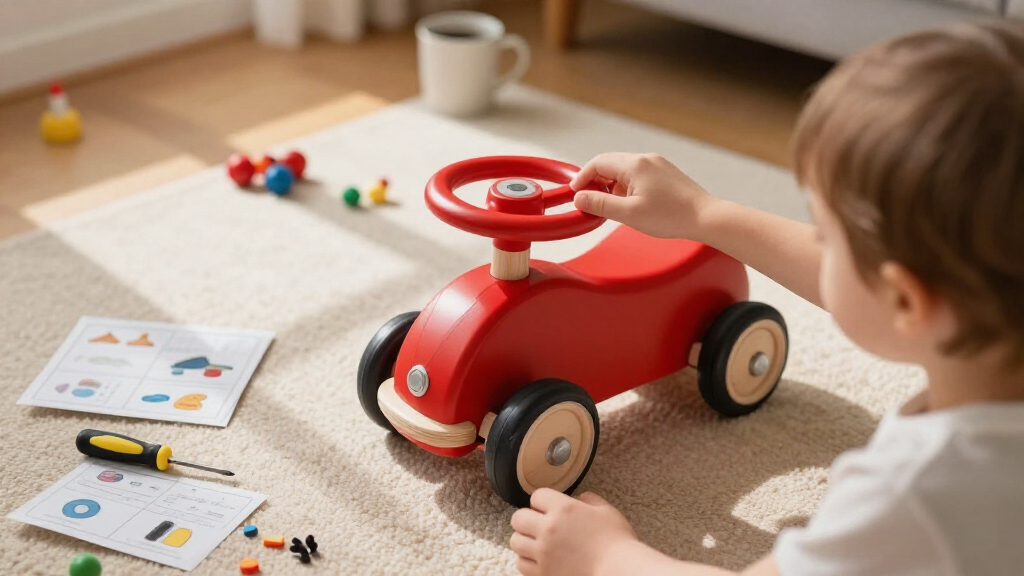
| Little Tikes Push and Ride Racer |  | Best Simple First Ride-On | Dimensions: 22 L x 10 W x 17 H inches | Maximum weight capacity: 50 lbs | Age range: Baby / toddler | VIEW LATEST PRICE | See Our Full Breakdown |
| Little Tikes Fairy Cozy Coupe |  | Best Grow-With-Me Coupe | Brand: Little Tikes | Design: Fairy Cozy Coupe | Origin: Made in the USA | VIEW LATEST PRICE | See Our Full Breakdown |
| VTech Get Growing Tractor and Mower Ride-On |  | Best Interactive Value | Recommended age: 12–36 months | Maximum weight: 42 lbs | Play modes: 3-in-1: walk-behind mower, ride-on tractor, removable driver | VIEW LATEST PRICE | See Our Full Breakdown |
| VTech 2-in-1 Map and Go Scooter for Toddlers, Pink |  | Best for Building Balance | Recommended age: 12–36 months | Maximum weight: 42 lbs | Configurations: 2-in-1: trike-style ride-on and stand-up scooter | VIEW LATEST PRICE | See Our Full Breakdown |
| Best Ride On Cars CAT Excavator Push Car for Kids |  | Best for Construction Pretend Play | Brand: Best Ride On Cars | Character/License: CAT (Caterpillar) excavator | Type: Ride-on push car | VIEW LATEST PRICE | See Our Full Breakdown |
| ride-on toys for toddler | Recommended age |
|---|---|
| Little Tikes Tractor and Cart | 1–5 years |
| John Deere Sit ‘N Scoot Ride-O | 18 months and up |
| VEVOR Ride-On Push Car for Tod | 1–3 years |
| Gamfeiny Colorful Lighting Bab | 10–36 months |
| Radio Flyer Creativity Car 3-i | 1–3 years |
| Step2 Whisper Ride II Kids Pus | 18+ months (best fit 2–4 years) |
| Step2 Up & Down Roller Coaster | 2–5 years |
| Licensed Caterpillar CAT Front | — |
| VEVOR Ride-On Push Car for Tod | 1–3 years |
| SEREED Baby Balance Bike for T | 12–24 months |
| Little Tikes Push and Ride Rac | — |
| Little Tikes Fairy Cozy Coupe | — |
| VTech Get Growing Tractor and | 12–36 months |
| VTech 2-in-1 Map and Go Scoote | 12–36 months |
| Best Ride On Cars CAT Excavato | — |
More Details on Our Top Picks
Little Tikes Tractor and Cart Foot-to-Floor Ride-On for Ages 1–5
Among foot-to-floor ride-ons, this option earns the top spot because it grows with a toddler longer than nearly anything else in this lineup — the 1–5 age range outlasts the Radio Flyer Creativity Car (1–3) and the VEVOR push car (1–3) by two full years, which matters if you have kids of staggered ages.
The attachable cart is the real differentiator: toddlers can haul toys, snacks, or backyard treasures, turning a simple ride into pretend farm work. The working horn and steering wheel add to the imaginative play that static push cars can’t match. Compared with the John Deere Sit ‘N Scoot, this model trades brand polish for genuine utility and a longer usable window.
The tradeoff is assembly time and a cart with no specified load capacity, so heavier cargo hauling is a guessing game. Still, for outdoor durability and play value, it’s the most complete package here.
Pros:- Longest usable age range in the lineup (1–5 years)
- Attachable cart adds cargo and pretend-play value
- Durable tires built for grass, gravel, and patio use
- Working steering wheel and horn encourage imaginative play
Cons:- Requires adult assembly before first use
- Cart has no stated load capacity, limiting heavier hauling
Best for: Families with toddlers aged 1–5 who want one ride-on that survives siblings and outdoor use
Not ideal for: Parents of very young 12-month-olds still learning to sit steadily — the seat is spacious but there’s no backrest or anti-tip support like the VEVOR offers
- Type:Foot-to-floor ride-on tractor
- Included accessory:Attachable cart
- Features:Working steering wheel and horn
- Seat:Spacious design for growing children
- Tires:Durable, outdoor-ready
- Assembly:Adult assembly required
- Recommended age:1–5 years
Our verdict“The pick to make if you want a single ride-on that lasts from wobbly first steps through preschool.”
John Deere Sit ‘N Scoot Ride-On Tractor for Toddlers
Where the Little Tikes Tractor and Cart wins on utility, the John Deere Sit ‘N Scoot wins on simplicity and charm. Its wide wheelbase is the standout safety feature — it resists sideways tipping in a way narrower balance bikes like the Gamfeiny can’t, making it forgiving for toddlers who lurch and lean while scooting.
The lightweight frame is a genuine advantage over bulkier options: a toddler can maneuver it, and a parent can carry it to the park one-handed. It also moves easily between indoor floors and outdoor pavement without fuss. The authentic green-and-yellow branding is a draw for farm-loving families, and it pairs nicely with themed playsets.
Tradeoffs are real, though. The 60-pound weight cap means most kids outgrow it by age four, and there’s no cart, storage, or horn — it’s a plain scooter where the Little Tikes and VEVOR models offer extras. It also needs assembly before riding.
Pros:- Wide wheelbase provides stable, tip-resistant riding
- Lightweight enough for toddlers to steer and parents to tote
- Works on both indoor floors and outdoor pavement
- Authentic John Deere colors and logos kids recognize
Cons:- 60 lb weight limit means a shorter usable lifespan than the Little Tikes tractor
- No storage, horn, or interactive features to extend play value
Best for: Parents who want a lightweight, stable first ride-on with classic farm-tractor appeal for indoor and outdoor use
Not ideal for: Buyers hoping for extras like storage, sound features, or a cargo cart — this is a bare-bones scoot toy
- Brand:John Deere (by TOMY)
- Type:Foot-to-floor ride-on tractor
- Recommended age:18 months and up
- Maximum weight:60 pounds
- Suitable for:Indoor and outdoor play
- Design:Wide wheelbase with sturdy rolling wheels
Our verdict“A great first ride-on for farm-obsessed toddlers, as long as you accept it’s simple and outgrown fairly quickly.”
VEVOR Ride-On Push Car for Toddlers with Music, Horn, and Under-Seat Storage
This push car slots into the lineup as the entertainment-focused option. Where the John Deere Sit ‘N Scoot is a plain scoot toy, the VEVOR adds music on the steering wheel, a working horn, and under-seat storage — three features that keep a 1-to-2-year-old engaged long after the novelty of rolling wears off.
Safety engineering is better than expected at this tier: the rear anti-tip support bar and wide backrest address the backward-tipping problem common to early ride-ons, giving it an edge over open-seat tractors for the youngest riders. The impact-resistant PP body shrugs off the drops and crashes toddlers inevitably deliver.
The compromises are age range and propulsion. It’s rated only for ages 1–3, so it’s a short-term purchase compared with the Little Tikes tractor’s 1–5 span, and it’s entirely kid-powered — unlike the Step2 Whisper Ride II, there’s no parent push handle, so it won’t double as a stroller alternative on long walks.
Pros:- Steering wheel music and horn add lasting entertainment value
- Under-seat storage hides toys and snacks
- Rear anti-tip support bar and wide backrest improve safety
- Impact-resistant PP body handles rough toddler treatment
Cons:- Short 1–3 year age window limits long-term value
- No parent push handle, so kids must propel it themselves
Best for: Parents of 1–3-year-olds who want an affordable, feature-packed ride-on that entertains without a push handle
Not ideal for: Families wanting a parent-push option for walks or a toy that lasts past age three
- Recommended age:1–3 years
- Maximum load capacity:48.5 lb (22 kg)
- Material:Impact-resistant PP
- Wheels:Four
- Features:Steering wheel music, horn, under-seat storage, wide backrest, rear anti-tip support bar
- Color:Red
Our verdict“A smart short-term buy for the music-and-storage years, provided you accept it will be outgrown by age three.”
Gamfeiny Colorful Lighting Baby Balance Bike for 10–36 Months
The Gamfeiny plays a different role than everything else here: it’s not a ride-on for cruising but a balance and coordination trainer, making it the right first step for a 10-month-old who can’t yet manage a tractor-style scoot. Compared with the John Deere Sit ‘N Scoot, its 135° steering limiter and fully enclosed wheels prioritize fall prevention over speed and range.
The battery-free light-up rear wheel is a clever touch — spinning generates the glow, so there’s nothing to charge or replace. The tool-free buckle assembly means it’s rideable within minutes of unboxing, and at just 4.6 pounds it’s the lightest option in this roundup by far, easy to toss in a car trunk.
Tradeoffs: no storage, no horn, and no cart — it does one job, balance training, and does it well. The small wheel size also limits it to smooth indoor surfaces and sidewalks, so it’s no substitute for the Little Tikes tractor on grass or gravel.
Pros:- Earliest starting age in the lineup (10 months) for pre-walkers
- 135° steering limiter and enclosed wheels reduce falls and foot pinching
- Light-up wheels require no batteries
- Tool-free assembly in about three minutes; only 4.6 lb to carry
Cons:- No storage, horn, or pretend-play features
- Small silent wheels struggle on grass, gravel, or uneven ground
Best for: Parents of 10–24-month-olds focused on building balance and walking confidence before graduating to bigger ride-ons
Not ideal for: Families wanting a do-everything outdoor cruiser — the small wheels and lack of features make this a single-purpose trainer
- Type:No-pedal balance bike with 4 silent wheels
- Recommended age:10–36 months
- Weight:4.6 pounds
- Dimensions:21.2 x 9.2 x 15.3 inches
- Frame material:Carbon steel
- Comfort:Soft non-slip EVA handle, PU seat
- Assembly:Buckle design, no tools required
Our verdict“Buy this as a developmental stepping stone for the under-two crowd, not as a family’s only ride-on.”
Radio Flyer Creativity Car 3-in-1 Toddler Walker and Ride-On Toy
The Radio Flyer Creativity Car justifies its premium positioning by covering three developmental stages in one purchase: push walker, ride-on, and sensory play station. No other product in this roundup doubles as a walking aid — parents of a 12-month-old not yet steady on foot get value from day one, months before a ride-on like the VEVOR push car becomes usable.
The 17 interactive activities — gears, beads, a horn, a full dashboard — mean the toy holds attention even when nobody is riding it, something the John Deere Sit ‘N Scoot simply can’t do. The anti-tip base supports beginner walkers leaning on the handle, and the flip-open seat stores the small pieces of whatever play session is underway.
Two honest drawbacks: the 42 lb weight capacity is the lowest here, and the 1–3 age window is short despite the three modes. Families buying for a 2.5-year-old will get limited years from it.
Pros:- Three modes: push walker, ride-on, and sensory play center
- 17 interactive activities extend play beyond riding
- Stable anti-tip base supports early walkers safely
- Flip-open seat provides built-in toy storage
Cons:- 42 lb weight capacity is the lowest in this lineup
- Short 1–3 year age range despite the multi-stage design
Best for: Parents of brand-new or soon-to-be walkers who want one toy that carries a child from first steps through toddler riding
Not ideal for: Buyers with an older, confident 3-year-old — the low 42 lb capacity and age cap mean it will be outgrown quickly
- Modes:Push walker, ride-on, sensory play center
- Interactive activities:17, including gears, beads, horn, and dashboard
- Recommended age:1–3 years
- Weight capacity:42 lb
- Storage:Flip-open under-seat compartment
- Safety features:Stable base with anti-tip design
Our verdict“The smartest single purchase for a one-year-old, since it starts as a walker and ends as a ride-on before being handed down.”
Step2 Whisper Ride II Kids Push Car
Most ride-ons in this roundup are toys the child drives; the Whisper Ride II works in the opposite direction — it is a parent-powered buggy that genuinely replaces a stroller for walks and errands. The whisper-quiet poly wheels set it apart from noisier plastic push cars like the Licensed CAT Front Loader, and the fold-under handle makes trunk storage far easier than bulkier playsets such as the Step2 Up & Down Roller Coaster. The seat belt, cup holders, and under-hood snack storage add real daily utility that foot-to-floor options like the Little Tikes Push and Ride Racer simply don’t offer.
The tradeoff: your toddler is a passenger, not a driver. Compared with the SEREED Baby Balance Bike, there’s no skill-building here, and assembly is on you.
Pros:- Whisper-quiet wheels make it polite for indoor and neighborhood use
- Adjustable seat belt and stable parent handle add genuine safety
- Under-hood storage and dual cup holders are practical for long outings
- Folding handle simplifies car-trunk transport and garage storage
Cons:- Entirely adult-powered, so it builds no independent riding skills
- Adult assembly required and the 45.5-inch footprint takes up real space
Best for: Parents who want a stroller substitute for zoo trips, neighborhood walks, and theme-park days with a child 18 months to about 4 years
Not ideal for: Families seeking independent, self-propelled play — an adult has to push this car at all times
- Recommended age:18+ months (best fit 2–4 years)
- Maximum weight:50 lbs
- Dimensions:45.5″ L x 19″ W x 34″ H
- Item weight:7.1 kg (about 15.7 lbs)
- Material:Double-walled plastic
- Safety features:Easy-latch adjustable seat belt
- Extras:Horn, steering wheel, 2 cup holders, under-hood storage, folding handle
Our verdict“Buy this if you walk everywhere with your toddler and want a fun, quiet stroller replacement — skip it if your goal is independent riding.”
Step2 Up & Down Roller Coaster Ride-On Toy for Toddlers
Nothing else in this lineup delivers the payoff of a 9-foot coaster track that toddlers climb, coast, and repeat for hours. Where the Step2 Whisper Ride II depends on a parent pushing, this one is fully child-driven — climbing the steps builds gross motor skills, and the controlled descent rewards balance and coordination in a way no push car or balance bike matches. It also outlasts the typical ride-on: the 2–5 year age range gives it a longer usable window than the SEREED Baby Balance Bike, which toddlers often outgrow by 24 months.
But that magic demands space. The assembled track spans 110 inches wide, so apartment families should look at compact options like the VEVOR Ride-On Push Car instead. Also note that track expansion packs are sold separately and only compatible ones apply.
Pros:- Track-based coasting provides sustained, self-directed entertainment
- Climbing and riding develop balance, coordination, and confidence
- Track disassembles for off-season storage
- Durable double-walled plastic works indoors and outdoors
Cons:- Requires a very large play area for the full 9-foot track
- Track expansions are sold separately and limited in compatibility
Best for: Suburban families with a playroom, basement, or backyard who want a high-energy toy that entertains independently for years
Not ideal for: Apartment dwellers or anyone without roughly 9+ feet of clear floor space indoors or out
- Recommended age:2–5 years
- Maximum weight:50 lbs
- Track length:9 feet
- Assembled dimensions:12.75″ H x 110″ W x 27″ D
- Material:Double-walled plastic
- Play location:Indoor or outdoor
- Storage:Track disassembles
Our verdict“This pick makes the most sense for families with room to spare who want a repeatable thrill ride — everyone else should choose a compact alternative.”
Licensed Caterpillar CAT Front Loader Push Car Ride-On Toy
For a toddler who points at every excavator on the street, the officially licensed CAT design is the whole point — no generic lookalike will do. Its functional rotating front bucket is the standout differentiator here: compared with the VEVOR Ride-On Push Car or the Best Ride On Cars CAT Excavator, this one invites genuine scooping-and-dumping pretend play, not just riding. The steering wheel adds music and horn sounds, giving it more sensory engagement than the quieter Step2 Whisper Ride II, while the under-seat storage keeps small treasures along for the ride.
The honest drawback is that it stays firmly in toddler territory — an adult still pushes, and the size range is narrower than the Little Tikes Tractor and Cart, which stretches to age 5.
Pros:- Authentic licensed CAT styling that stands out from generic ride-ons
- Rotating front bucket enables real scooping and dumping play
- Interactive steering wheel with music and horn sounds
- Under-seat storage compartment for toys
Cons:- Requires adult pushing — the child cannot propel it independently
- Narrow age window limits how many seasons of use you’ll get
Best for: Parents of digger-obsessed toddlers who want themed imaginative play with scooping action, not just a ride
Not ideal for: Families wanting a longer-use toy — the toddler sizing and push-only design get outgrown quickly
- Brand:Caterpillar (CAT), officially licensed
- Type:Push car ride-on toy
- Target audience:Toddlers
- Front bucket:Functional, rotating
- Interactive features:Music and horn sounds on steering wheel
- Storage:Under-seat compartment
- Comfort:Sturdy backrest
Our verdict“This model is better suited to short-lived but high-intensity construction-fan phases than to families shopping for a multi-year ride-on.”
VEVOR Ride-On Push Car for Toddlers
This VEVOR occupies the practical middle ground of the roundup: it delivers the music steering wheel, under-seat storage, and supportive backrest of pricier push cars at a simpler, more affordable spec. Compared with the Licensed CAT Front Loader, it trades themed flair for a rear anti-tip support bar — a genuine safety feature that matters if your toddler leans, twists, or climbs while riding. The 48.5 lb capacity comfortably covers the 1–3 year range, and the impact-resistant PP body handles the rough treatment that phase brings.
What you give up is longevity and polish: the Step2 Whisper Ride II feels more refined with its belt, folding handle, and quieter wheels, and the Step2 Roller Coaster entertains far longer. This is a solid bridge toy, not a keepsake.
Pros:- Rear anti-tip support bar adds stability for wiggly riders
- 48.5 lb capacity suits the full 1–3 year window
- Music-playing steering wheel adds engagement at low cost
- Under-seat storage and wide backrest punch above the price class
Cons:- Shorter usable lifespan than higher-capacity or older-skewed ride-ons
- Basic build lacks refinements like a seat belt or folding handle
Best for: Budget-conscious parents of 1–3 year olds who want a safe, feature-equipped push car without paying for branding
Not ideal for: Anyone hoping for a toy that lasts past age 3 or for long daily walks — it lacks the Whisper Ride II’s comfort and foldability
- Recommended age:1–3 years
- Maximum weight capacity:48.5 lb (22 kg)
- Material:Impact-resistant PP plastic
- Wheels:Four
- Safety features:Rear anti-tip support bar
- Interactive features:Music-playing steering wheel
- Storage:Under-seat compartment
Our verdict“A sensible value buy for the messy 1–3 year stretch, best skipped if you’d rather invest once in a premium push car.”
SEREED Baby Balance Bike for Toddlers, 12–24 Months
Every other product here is about being pushed or coasting — the SEREED Balance Bike is the only pick that actively teaches a skill. Its pedal-free design lets a 12-month-old practice balance and steering with their feet as safety nets, building toward a real balance bike years before peers. At 3.5 pounds, it’s the featherweight of the roundup: parents can sling it over a shoulder or stash it in the car, something impossible with the Step2 Up & Down Roller Coaster. The enclosed wheels and limited steering range are thoughtful safety choices for brand-new walkers, compared with the Gamfeiny balance bike’s similar beginner approach.
The catch is a no-brake, short-lived design — most kids outgrow it by age 2, and there’s no coasting downhill control. It’s a stepping stone, not a destination.
Pros:- Pedal-free format genuinely develops balance and steering early
- Featherlight 3.5 lb frame is effortless to carry and travel with
- Enclosed wheels and limited steering protect new walkers
- Non-slip wheels work on both indoor floors and outdoor surfaces
Cons:- No brakes, so children can’t control speed on slopes
- 12–24 month age window means a short ownership period
Best for: Parents of early walkers (12–24 months) who want to build riding fundamentals before a pedal bike, indoors or out
Not ideal for: Anyone expecting multi-year value — the narrow age and size range means it’s typically retired by the second birthday
- Recommended age:12–24 months
- Maximum weight:55 lbs
- Bike weight:3.5 lbs
- Frame material:Aluminum alloy
- Wheel size:6.7 inches, enclosed
- Brakes:None
- Intended use:Balance practice; indoor and outdoor
Our verdict“This option stands out for families prioritizing early motor-skill development over entertainment value — buy it as a deliberate first step, not a long-term toy.”
Little Tikes Push and Ride Racer
This is the purest foot-to-floor option in the lineup, and that simplicity is its whole appeal. There are no batteries, no sounds, no flashing dashboard — just a low seat, high back, and sturdy handles that let a wobbly one-year-old climb on and off without help. The rear seat doubles as a small toy carrier, which is a nice touch, and the kid-sized push bar means it works as a walker before it works as a ride-on. Compared with the VTech Get Growing Tractor, which packs in phrases and music, this model trades entertainment for independence: nothing to wait for, nothing to break. Compared with the Little Tikes Fairy Cozy Coupe, it’s far lighter and easier for a toddler to maneuver solo, but it lacks any parent-push option, so mom or dad will be walking alongside rather than pushing. The 50 lb limit also means it will be outgrown sooner than larger options.
Pros:- Doubles as both a walker and a foot-powered ride-on
- No batteries or electronics to maintain or replace
- Low seat and high back make independent mounting easy for young toddlers
- Works indoors and outdoors with a rugged molded build
Cons:- No parent push handle, so adults can’t assist on longer outings
- 50 lb weight limit means a shorter usable lifespan than bigger ride-ons
Best for: Parents of early walkers (around 12–18 months) who want a low-tech, no-batteries first ride-on that doubles as a push walker
Not ideal for: Families who want a parent-push handle for longer walks — there’s no way for an adult to push or steer this from behind
- Dimensions:22 L x 10 W x 17 H inches
- Maximum weight capacity:50 lbs
- Age range:Baby / toddler
- Type:Foot-to-floor ride-on and push walker
- Material/Origin:Made in the USA
- Assembly:Required
- Model number:4861
Our verdict“This pick makes the most sense for families wanting a stripped-down, do-it-all first ride-on that grows with a child from cruising to riding.”
Little Tikes Fairy Cozy Coupe
The Cozy Coupe formula endures for a reason, and the Fairy version adds a parent push handle and removable floorboard that make it genuinely usable before a child can pedal or scoot. With the floorboard in, a parent steers and pushes like a stroller alternative — a direct rival to the Step2 Whisper Ride II — and once the floorboard comes out, the child powers it foot-to-floor like the Little Tikes Push and Ride Racer. That two-stage design is the standout: one toy covers roughly ages 18 months to 4 years. The working horn, clicking ignition, and opening gas cap give pretend-play depth the Push and Ride Racer simply doesn’t have. Tradeoffs are real, though: assembly is fiddly, the 360-degree spinning front wheels can wander unpredictably when a child steers solo, and the fairy styling narrows its appeal compared with the classic red coupe look.
Pros:- Parent push handle turns it into a stroller alternative for pre-walkers and toddlers
- Removable floorboard lets kids switch to self-powered foot-to-floor riding
- Interactive details (horn, ignition switch, gas cap) fuel pretend play
- Rugged tires and 360-degree front wheels built for outdoor use
Cons:- Assembly required and frequently time-consuming
- Spinning front wheels can make solo steering unpredictable for young toddlers
Best for: Families who want one vehicle that shifts from parent-pushed walks to kid-powered play as the child grows
Not ideal for: Anyone wanting a compact indoor toy — the coupe footprint is large, and assembly is a genuine chore
- Brand:Little Tikes
- Design:Fairy Cozy Coupe
- Origin:Made in the USA
- Key features:Parent push handle, removable floorboard, high seat back, rear cup holders, working horn, clicking ignition switch, opening gas cap
- Wheels:Rugged durable tires; front wheels spin 360 degrees
- Weight limit:50 lbs
- Assembly:Required
Our verdict“This option stands out for families who want a single vehicle that carries a child from pushed rides to independent driving over several years.”
VTech Get Growing Tractor and Mower Ride-On
Where most ride-ons in this roundup do one job, this VTech set does three: walk-behind mower, ride-on tractor, and a take-along interactive driver. That flexibility is what earns it a spot — a toddler can push it as a mower, ride it around the yard, then carry the light-up driver inside for continued play. Compared with the Little Tikes Tractor and Cart foot-to-floor model, this one is clearly the choice for families who value electronic engagement: realistic sounds, phrases, weather and counting content, and a play radio. The tradeoff runs both ways — all that audio requires 2 AA batteries (demo cells included, so expect to buy fresh ones almost immediately), and the 42 lb limit sits below the 50 lb ratings of the Little Tikes options. It’s also better suited to smooth indoor surfaces and paved paths than rough grass.
Pros:- Three play modes in one toy extend usable life and play variety
- Removable light-up driver works as a standalone take-along toy
- Educational content covers weather, counting, and pretend destinations
- Encourages both pushing and riding, supporting different developmental stages
Cons:- Requires 2 AA batteries, with included cells for demo only
- 42 lb weight limit is lower than comparable ride-ons
- Best on smooth surfaces; not built for rough outdoor terrain
Best for: Parents of 12–36 month olds who want a multi-mode toy that combines physical play with songs, sounds, and early-learning content
Not ideal for: Households that avoid noisy battery-powered toys, or buyers needing a higher weight limit for a bigger toddler
- Recommended age:12–36 months
- Maximum weight:42 lbs
- Play modes:3-in-1: walk-behind mower, ride-on tractor, removable driver
- Interactive features:Realistic sounds, phrases, songs, light-up driver, play radio
- Learning content:Weather, counting, and location-based pretend play
- Batteries:2 AA required (demo batteries included)
Our verdict“This model is better suited to families who see a ride-on as an learning toy as much as a vehicle, and who want maximum modes per dollar.”
VTech 2-in-1 Map and Go Scooter for Toddlers, Pink
This is the lineup’s bridge toward real riding skills. Unlike the stationary-seat push cars like the Fairy Cozy Coupe, the Map and Go Scooter transforms from a stable trike-style ride-on into a stand-up scooter, which means it actively trains balance and coordination as a child gains confidence. The electronics angle — a roller map, twistable headlight ring, motion-activated motor sounds, and dashboard buttons covering counting and road safety — gives it the same VTech learning DNA as the Get Growing Tractor, but aimed at a slightly more mobile, adventurous rider. The key tradeoff is stability: in scooter mode there’s no backrest or enclosed seat, so it suits toddlers who are already steady on their feet rather than brand-new walkers. The 42 lb limit also means it will be outgrown around age three, sooner than heartier molded options. Note that demo batteries are included, but fresh AAs are needed for regular use.
Pros:- 2-in-1 design converts from seated trike to stand-up scooter as balance improves
- Teaches counting and road-safety phrases through dashboard buttons
- Motion-activated motor sounds reward active riding
- Roller map and turning key deepen pretend play
Cons:- Less physical support than enclosed ride-ons once converted to scooter mode
- 42 lb weight limit and 36-month age cap shorten its lifespan
- Requires 2 AA batteries beyond the included demo cells
Best for: Parents of confident 18–36 month walkers who want a toy that develops toward scooter skills, not just sitting-and-scooting
Not ideal for: Very early walkers or wobbly riders — scooter mode offers no seat or back support, and the weight limit is only 42 lbs
- Recommended age:12–36 months
- Maximum weight:42 lbs
- Configurations:2-in-1: trike-style ride-on and stand-up scooter
- Interactive features:Roller map, turning key, twistable headlight ring, motion-activated motor sounds
- Learning content:Counting, traffic and road safety phrases, songs and melodies
- Color:Pink
- Batteries:2 AA required (demo batteries included)
Our verdict“This pick makes the most sense for active toddlers ready to graduate from sitting ride-ons toward balance-based riding, with learning content built in.”
Best Ride On Cars CAT Excavator Push Car for Kids
For a toddler obsessed with diggers and job sites, this licensed CAT excavator is the most play-focused push car in the batch. The rotating front bucket actually works, so a child can scoop, dump, and repeat — a loop that the Licensed Caterpillar Front Loader Push Car also offers, but this excavator adds an interactive steering wheel with music and horn sounds plus under-seat storage. Compared with the plain Little Tikes Push and Ride Racer, the payoff is imagination: this is a machine, not just a seat with wheels, and the backrest gives some support during rides. The honest drawback is vagueness in the product listing — no stated dimensions, weight capacity, or recommended age range, which makes sizing and safety judgments harder than with any other pick here. Buyers should confirm fit expectations before purchasing, especially for toddlers at the older or heavier end.
Pros:- Functional rotating front bucket enables real scoop-and-dump play
- Licensed CAT design appeals strongly to construction-vehicle fans
- Under-seat storage compartment keeps small toys along for the ride
- Interactive steering wheel with music and horn sounds adds engagement
Cons:- No published weight limit, dimensions, or recommended age range
- Sound features mean battery replacement over time
Best for: Construction-vehicle-obsessed toddlers whose parents want a ride-on that doubles as an active digging and hauling playset
Not ideal for: Buyers who need clear age and weight ratings — the listing omits both, making it a riskier choice for bigger or older toddlers
- Brand:Best Ride On Cars
- Character/License:CAT (Caterpillar) excavator
- Type:Ride-on push car
- Key features:Rotating front bucket, under-seat storage, steering wheel with music and horn sounds, backrest
- Age range:Not specified by manufacturer
- Weight capacity:Not specified by manufacturer
- Model number:CATEX_Push_F2F
Our verdict“This option stands out for digger-loving toddlers, provided parents are comfortable buying without confirmed age and weight specifications.”

How We Picked
My ranking starts with age range and grow-with-me potential, because the single biggest complaint parents have about toddler ride-ons is how fast they are outgrown. Products that serve two stages — walker plus rider, or push car plus foot-to-floor car — ranked higher than single-phase toys of similar build quality. From there I weighed propulsion type, since foot-to-floor cars, parent-push cars, balance bikes, and track-based coasters develop completely different skills and suit completely different homes.
I also scored each model on build quality and weight capacity, indoor versus outdoor suitability, storage demands (folding handles and compact footprints earned credit), and cleanup factors like washable surfaces and replaceable stickers. Finally, I penalized toys with short realistic lifespans, loud non-defeatable sound features, or assembly headaches disproportionate to the fun delivered. The result is a list ordered by overall fit for the widest range of toddlers, with specialist picks — quieter, cheaper, or more thrill-focused — placed lower but clearly flagged for the buyers they serve best.
Factors to Consider When Choosing Ride-on Toys For Toddlers
Before locking in a pick, step back and think about how and where the toy will actually be used. The biggest mistakes parents make in this category have nothing to do with product quality — they come from mismatched expectations about age, space, and how toddlers really play. These six factors separate a ride-on that gets used daily from one that collects dust by spring.
Match the Propulsion Type to Your Child’s Stage
A ride-on is only fun if your toddler can actually move it. Parent-push cars suit the 10-to-24-month window when a child cannot pedal or kick effectively but wants the sensation of movement — the tradeoff is that you become the engine on every trip. Foot-to-floor cars click once toddlers walk confidently, typically around 18 months, and they build leg strength and spatial awareness in a way push cars cannot. Balance bikes sit earliest of all, working from around 12 months, and prepare kids for pedal bikes years earlier than tricycles do. A common mistake is buying a foot-to-floor car for a child who just learned to walk; the child stalls, gets frustrated, and the toy sits unused for months. When in doubt, a dual-mode model bridges the gap.
Measure Your Space Before You Buy
Indoor ride-ons and outdoor ride-ons are almost different product categories. Balance bikes with silent wheels and compact foot-to-floor cars glide across hardwood and tile, while anything with rugged outdoor tires — or a roller coaster track spanning ten feet — needs a driveway, patio, or large lawn. Parents routinely underestimate this: the Step2 roller coaster is a spectacular toy that simply does not fit in an apartment, and wide coupe-style cars scrape doorframes in older homes. Also check turning radius. Cars with a full steering wheel but fixed front wheels can frustrate toddlers who cannot understand why the wheel does nothing. If storage is tight, prioritize models with folding handles or a footprint under two feet by one foot.
Weight Limits Are About More Than Safety
The listed weight limit tells you the realistic lifespan of the toy, not just whether it will break. A 35-pound limit means an average-sized child maxes it out around age three; a 50-pound limit can stretch to five. This is where cheaper ride-ons quietly lose — a low price on a toy used for eighteen months can be worse value than a pricier model used for four years. Weight limits matter doubly for parent-push cars, because tired toddlers lean, slump, and climb out sideways, stressing the shell in ways static ratings do not capture. If you have two children close in age, buy toward the higher end of the weight range so the younger sibling inherits a toy that still works.
Decide How You Feel About Sounds and Batteries
Many ride-ons ship with horns, music, and light-up features powered by button cells or AA batteries. Some children are captivated; many parents regret it by day three. Before buying, check whether sounds can be switched off or removed entirely — models with battery compartments you can simply leave empty are the safest bet for noise-sensitive households. Lights and interactive panels do add genuine value in some cases, such as the VTech picks, where the electronics teach cause and effect rather than just blasting songs. Also factor battery costs over the toy’s life, and know that electronics are the most common failure point on otherwise sturdy plastic ride-ons.
Watch for Assembly Time and Part Count
Ride-on toys are deceptively labor-intensive to assemble — decals, wheels, steering columns, and handles often arrive in a dozen pieces, and some models take over an hour with improvised tools. Read the assembly expectations before buying if you are time-strapped or gifting the toy for a birthday morning. Under-seat storage, a feature on several cars in this roundup, is a small convenience that toddlers genuinely love and that costs nothing in floor space. Similarly, a removable parent handle and adjustable seat positions extend usable life more reliably than any electronic feature. These details rarely appear on the box front but shape daily satisfaction.
Buy for the Child You Have, Not the Child You Want
The most common regret I hear described in this category is buying ahead — a pedal-powered or larger ride-on purchased for a one-year-old that the child cannot reach the ground on. Ride-ons work best when purchased at the start of the developmental window they serve, not six months early. Conversely, do not overspend on a beginner toy a confident two-and-a-half-year-old will master in a week. Themed designs (tractors, excavators, coupes) hold attention longer than you might expect because they feed pretend play, so a theme your child already loves can justify a modest price premium. Speed of mastery, not price, is what shortens a ride-on’s life.
Frequently Asked Questions
What age should a toddler start using a ride-on toy?
Most toddlers are ready for their first ride-on between 10 and 12 months, but the type matters more than the age. At that stage, parent-push cars and walker-style ride-ons are appropriate because the child sits while an adult steers and propels. Foot-to-floor cars generally click around 18 months, once a child walks confidently enough to sit, scoot, and steer at the same time. Balance bikes can start as early as 12 months for models with low sling seats like the SEREED. If your child cannot yet reach the floor flat-footed while seated, they are too young for self-propelled models regardless of the listed age range.
Is a balance bike or a foot-to-floor car better for a 1-year-old?
For a one-year-old, a balance bike is usually the better developmental choice because it trains the balance and coordination that transfer directly to a pedal bike later — foot-to-floor cars teach scooting but not balance. However, balance bikes demand more from the child, so cautious toddlers may ignore them for months. Foot-to-floor cars, especially themed models like a tractor or coupe, win on pretend-play value and often accommodate a wider weight range, so siblings can share them. If your child is already climbing on everything and fearlessly mobile, go balance bike; if they are more deliberate or drawn to vehicles, the car will get more daily use. Dual-mode products like the Radio Flyer Creativity Car hedge this decision nicely.
Are parent-push ride-on cars worth it, or should I skip straight to foot-to-floor?
Push cars earn their cost in a specific window — roughly 10 to 24 months — when they function as stroller alternatives with better visibility and engagement for the child. Parents who walk daily with a toddler often find them genuinely useful, especially models with seat belts, storage, and a folding handle like the Step2 Whisper Ride II. The catch is the transition: once your child insists on propelling themselves, the parent handle becomes an obstruction and you have a heavier, more cumbersome foot-to-floor car than a purpose-built one. If you rarely take walks or your child is already past 18 months, skip the push stage. If you are replacing stroller rides before that age, a push car is one of the better buys in the category.
How long do toddler ride-on toys actually last before being outgrown?
Realistically, expect 18 months to 3 years of active use depending on the type. Balance bikes for 12–24-month-olds have the shortest window, often less than 18 months before the seat height limits legroom. Foot-to-floor cars with 50-pound weight limits, like the Little Tikes tractor, can genuinely last to age five, especially with a younger sibling inheriting them. Track-based toys like the Step2 roller coaster have the longest effective lifespan because coasting stays thrilling even after riding skills advance. Check both the weight limit and seat-to-floor height — the height matters more, because a child whose knees hit the steering wheel is done with the toy long before the weight limit is reached.
Can ride-on toys be used indoors without damaging floors?
Yes, if you choose the right wheels. Models with silent or rubberized wheels, like the Gamfeiny and SEREED balance bikes, are designed specifically for hardwood and tile and roll without scratching or clattering. Hard plastic wheels common on coupe-style cars are safe for most flooring but loud, and they can scuff softer finishes over time. Outdoor-oriented models with treaded tires should stay outside — the tread that grips grass also grips and marks floors. A practical compromise for indoor use is a low balance bike or a walker/ride-on hybrid with a wide, stable base, and save the big yard toys for the driveway. Also consider threshold and doorway width; wide ride-ons are the number one cause of scuffed door frames in homes with toddlers.
Conclusion
The right ride-on comes down to your child’s stage and your space, not a single best product. For best overall, the Little Tikes Push and Ride Racer wins because its two-mode design covers both the pushing and riding phases, giving it the longest useful life in the lineup. For best value, the Gamfeiny Colorful Lighting Baby Balance Bike delivers quiet, skill-building indoor play at a budget price, with the John Deere Sit ‘N Scoot as the value pick for vehicle-obsessed toddlers. For the premium experience, the Step2 Up & Down Roller Coaster is unmatched on excitement and longevity — provided you have the room for its track. For beginners, the Radio Flyer Creativity Car 3-in-1 is the gentlest entry point, supporting a child from first steps through independent riding. And for specific needs: the Step2 Whisper Ride II for parents wanting a stroller alternative, the VTech Get Growing Tractor and Mower for toddlers who need interactive engagement, and the CAT excavator and loader push cars for construction-mad kids. Whatever you choose, buy at the start of the developmental window rather than ahead of it — that single decision does more for satisfaction than any feature on the box.