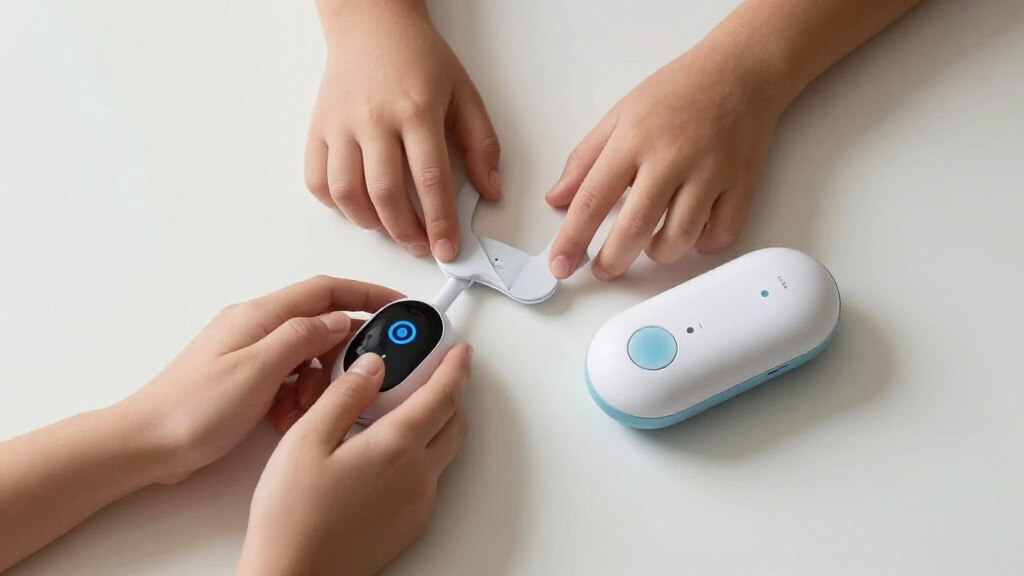

The best parental control devices depend on where your child goes online: my best overall pick is Bark Home for network-wide controls, while Bark Phone suits families who want a managed phone and the locking smart plug offers a simple way to set limits on connected screens. These options solve different problems, so a router, phone, or plug may leave gaps if your rules need to follow a child across devices and networks. The main tradeoff is between broad coverage and simple, focused controls, with ongoing plans and setup needs varying by product. I compare all eight picks by what they can control, how much effort they ask of parents, and where their limits show up. Continue reading for the full breakdown and a guide to matching a device to your household.

Turn the school run and nap time into listening time
- Thousands of audiobooks, podcasts and originals
- Listen on your phone, tablet or Echo — also offline
- Cancel anytime
Key Takeaways
- Bark Home is the broadest fit for a connected household: it focuses on controls across the home Wi-Fi network, while phone-based picks focus on a specific device.
- Bark Phone and Teracube Thrive address different phone priorities: compare their control approach, location tools, and plan requirements before choosing a child’s first phone.
- The locking smart plug keeps screen rules physical and simple: it can cut power to selected equipment, but it cannot manage apps or usage away from that outlet.
- The routers vary in how much network oversight they invite: the OLAX and ASUS options combine Wi-Fi with controls, while Firewalla Purple SE is the more security-focused network device.
- Echo Show 5 Kids is a child-oriented smart display, not a whole-home control system: its parental controls and included Kids+ year center on the Echo experience.
| Bark Home – Parental Controls for Wi-Fi – Screentime & App Blocker for Kids |  | Best Overall for Whole-Home Screen Rules | Connectivity: Ethernet | Coverage: Home Wi-Fi network | Compatible devices: Gaming consoles, personal computers, smart TVs, smartphones, and tablets | VIEW LATEST PRICE | See Our Full Breakdown |
| Amazon Echo Show 5 Kids (newest model), Designed for kids, Designed for Alexa+, parental controls, Includes 1 year of Amazon Kids+, Galaxy |  | Best for a Shared Kids’ Room | Included content subscription: 1 year of Amazon Kids+ | Voice assistant: Alexa+ | Privacy controls: Microphone-off button and built-in camera shutter | VIEW LATEST PRICE | See Our Full Breakdown |
| OLAX Scorpio X60 AC1200 Dual Band WiFi Router, 1200Mbps Wireless Mesh Router with MU-MIMO, Full Gigabit, WPA3 Security, Parental Control, Smart Roaming, 4 High Gain Antennas |  | Best Router Upgrade for Growing Coverage | Wi-Fi generation: Wi-Fi 5 | Wireless standard: 802.11ac | Bands: Dual-band | VIEW LATEST PRICE | See Our Full Breakdown |
| Locking Smart Plug for Kids’ Screen Time – Supports Consistent Screen Time Boundaries for TVs, Gaming Consoles & Computers – No Monthly Fees |  | Best for Enforcing Console Cutoff Times | Voltage: 120 V | Plug type: Type B, North American | Wi-Fi requirement: 2.4 GHz | VIEW LATEST PRICE | See Our Full Breakdown |
| Bark Phone for Kids & Teens – GPS Tracking & Parental Controls – A16 |  | Best Phone for Monitoring and Location | Operating system: Android 14 | RAM: 4 GB | Storage: 128 GB | VIEW LATEST PRICE | See Our Full Breakdown |
| Teracube Thrive Kids Smart Phone |  | Best for a Child’s First Smartphone | Operating system: Android 14 | Storage: 64GB | RAM: 4GB | VIEW LATEST PRICE | See Our Full Breakdown |
| ASUS RT-AX1800S Dual Band WiFi 6 Router |  | Best for Whole-Home Network Controls | Wi-Fi generation: Wi-Fi 6 (802.11ax) | Bands: Dual-band | Data transfer rate: Up to 1800 Mbps, listed | VIEW LATEST PRICE | See Our Full Breakdown |
| Firewalla Purple SE Cybersecurity Firewall and Router |  | Best for Detailed Network Monitoring | Model: Purple SE | Wi-Fi generation: Wi-Fi 5 (802.11ac) | IPS data rate limit: 500 Mbps | VIEW LATEST PRICE | See Our Full Breakdown |
| parental control device | Operating system |
|---|---|
| Bark Home | Linux |
| Amazon Echo Show 5 Kids | — |
| OLAX Scorpio X60 AC1200 Dual B | — |
| Locking Smart Plug for Kids’ S | — |
| Bark Phone for Kids & Teens | Android 14 |
| Teracube Thrive Kids Smart Pho | Android 14 |
| ASUS RT-AX1800S Dual Band WiFi | — |
| Firewalla Purple SE Cybersecur | Linux |
More Details on Our Top Picks
Bark Home – Parental Controls for Wi-Fi – Screentime & App Blocker for Kids
Bark Home is the most direct fit for families who want screen schedules and content limits to cover the household’s Wi-Fi devices, from phones and tablets to TVs and game consoles. Its in-home controls include daily schedules, bedtimes, school times, website filtering, and app blocking, so parents can set shared boundaries without configuring each device separately. Compared with the Egis Control locking smart plug, Bark Home can limit access across connected devices and filter sites, while Egis offers a physical shutoff for selected equipment. The tradeoff is that Bark Home depends on the home Wi-Fi connection and does not provide the phone’s location and communication controls found on the Bark Phone. Its listed 10 Mbps bandwidth also makes the network specification worth checking against your household’s needs.
Pros:- Covers a range of Wi-Fi-connected device types, including TVs and game consoles
- Offers custom daily schedules plus school-time and bedtime limits
- Can block selected apps and filter websites
- Includes in-home controls without a paid subscription
Cons:- Its in-home coverage does not provide the Bark Phone’s GPS tracking away from home
- Listed bandwidth is 10 Mbps, which may not suit every household’s network needs
Best for: Families who want one set of Wi-Fi-based schedules and content limits across kids’ phones, tablets, computers, TVs, and consoles at home
Not ideal for: Parents who need location tracking or controls that follow a child’s device outside the home
- Connectivity:Ethernet
- Coverage:Home Wi-Fi network
- Compatible devices:Gaming consoles, personal computers, smart TVs, smartphones, and tablets
- Operating system:Linux
- Security protocols:WPA2-PSK and WPA3
- Ports:1 LAN port
- Listed bandwidth:10 Mbps
- Model:Bark Home
Our verdict“Choose Bark Home if you want shared screen schedules and filtering for many devices on your home Wi-Fi.”
Amazon Echo Show 5 Kids (newest model), Designed for kids, Designed for Alexa+, parental controls, Includes 1 year of Amazon Kids+, Galaxy
The Echo Show 5 Kids brings parental controls to a particular screen and speaker, pairing kid-oriented Alexa features with an included year of Amazon Kids+. Children can ask for stories, music, games, and homework help; parents can manage activity through the Parent Dashboard. The camera shutter and microphone-off button give families clear physical privacy controls, while alarms and routines can support morning and bedtime habits. Compared with Bark Home, this is a single-room device rather than a way to manage the family’s broader Wi-Fi use. It also does not offer the Bark Phone’s GPS tracking or contact approvals. The main tradeoff is the subscription: Kids+ renews monthly after the included year unless canceled, and the device’s controls apply to its Alexa experience rather than every device a child uses.
Pros:- Includes one year of kid-focused Amazon Kids+ content
- Parent Dashboard allows remote monitoring of listening and creations
- Physical camera shutter and microphone-off control
- Two-year worry-free replacement guarantee
Cons:- Amazon Kids+ renews monthly after the included year unless canceled
- Its controls focus on the Echo and Alexa experience rather than all household devices
Best for: Families with younger children who want a shared bedside or bedroom device for stories, music, routines, and parent-managed Alexa content
Not ideal for: Parents seeking household-wide web filtering, device-wide screen schedules, or a phone with location and contact controls
- Included content subscription:1 year of Amazon Kids+
- Voice assistant:Alexa+
- Privacy controls:Microphone-off button and built-in camera shutter
- Parent management:Amazon Kids Parent Dashboard app
- Audio content:Filtered explicit lyrics from supported music services
- Routines:Alarms, daily routines, and bedtime ambient sounds
- Warranty:2-year worry-free guarantee
Our verdict“Pick the Echo Show 5 Kids for a managed, child-friendly Alexa device in a shared family space.”
OLAX Scorpio X60 AC1200 Dual Band WiFi Router, 1200Mbps Wireless Mesh Router with MU-MIMO, Full Gigabit, WPA3 Security, Parental Control, Smart Roaming, 4 High Gain Antennas
The OLAX Scorpio X60 combines network-level parental controls with a dual-band router, giving it a broader infrastructure role than a dedicated plug such as the Egis Control. Its controls are described as allowing signal-strength and power-schedule management, alongside connected-device monitoring; the listing does not spell out the same website and app blocking that Bark Home advertises. EasyMesh support gives families a path to extend coverage with compatible routers, while four antennas and Smart Roaming are intended to help devices stay connected across the home. The tradeoff is that this is a Wi-Fi 5 router, and the product description gives limited detail about how its parental-control schedules and filtering work. Families comparing it with the ASUS RT-AX1800S should weigh that router’s Wi-Fi 6 generation against OLAX’s stated mesh and roaming features.
Pros:- Includes parental controls and monitoring for connected devices
- WPA3 security protocol support
- EasyMesh support can extend coverage with compatible routers
- Gigabit Ethernet ports support wired connections
Cons:- Uses Wi-Fi 5 rather than the newer Wi-Fi 6 generation listed for the ASUS RT-AX1800S
- Product details do not clearly describe specific filtering categories or child-profile features
Best for: Households replacing a router that want WPA3, device monitoring, basic parental controls, and the option to extend coverage with compatible mesh units
Not ideal for: Families who need clearly specified app blocking, website filtering, or detailed child profiles before choosing a router
- Wi-Fi generation:Wi-Fi 5
- Wireless standard:802.11ac
- Bands:Dual-band
- Combined data rate:Up to 1200 Mbps
- Antennas:4 fixed 6 dBi antennas
- Ethernet ports:4 Gigabit ports
- Security:WPA3, WPA, and WPA2
- Listed coverage:2500 square feet
Our verdict“Choose the OLAX Scorpio X60 if you need a mesh-capable router with basic network controls and can accept limited detail about their scope.”
Locking Smart Plug for Kids’ Screen Time – Supports Consistent Screen Time Boundaries for TVs, Gaming Consoles & Computers – No Monthly Fees
The Egis Control locking smart plug takes a direct approach: it secures connected power cords and shuts off selected equipment according to schedules and time limits. That makes it a distinct choice for families whose main struggle is ending console, computer, or TV sessions; unlike Bark Home, it does not aim to filter websites or manage a broad range of Wi-Fi devices. Its registered-parent account protects schedules and overrides, and the plug stores schedules so they continue during temporary internet outages. A warning alert gives children notice before power shuts off. The tradeoff is the physical scope: only devices plugged into the enclosure are controlled, and console standby can keep drawing power unless the console is set to fully power off. Setup requires 2.4 GHz Wi-Fi, and its 10 A rating calls for checking the connected equipment’s requirements.
Pros:- Physically secures plug heads and cord sections to limit simple workarounds
- Schedules continue running during temporary internet outages
- Parent account protects device management, limits, schedules, and overrides
- Warning alert can give children notice before the power cutoff
Cons:- Controls only equipment plugged into its enclosure, not phones or other Wi-Fi devices
- Consoles need to be set to fully power off because standby can continue drawing power
- Requires 2.4 GHz Wi-Fi for setup and has a listed 10 A rating
Best for: Parents whose main goal is enforcing predictable end times for a console, gaming PC, or TV that plugs into the controlled outlet
Not ideal for: Families who need web filtering, app blocking, portable-device controls, or schedules that follow children away from home
- Voltage:120 V
- Plug type:Type B, North American
- Wi-Fi requirement:2.4 GHz
- Schedule storage:Schedules stored on the plug
- Controlled equipment:Devices connected to the outlet, including consoles, PCs, TVs, and VR headsets
- Dimensions:8.5 x 3.75 x 2.75 inches
- Subscription:No monthly subscription
Our verdict“Choose Egis Control when a physical, scheduled cutoff for specific plugged-in entertainment devices matters more than network filtering.”
Bark Phone for Kids & Teens – GPS Tracking & Parental Controls – A16
The Bark Phone A16 puts communication and location controls in the handset a child carries, with alerts for potential risks in texts, email, and more than 30 social platforms and apps. Parents can approve apps and contacts, restrict web access, pause the internet, and use real-time GPS, location alerts, and check-ins. Compared with Bark Home, this is a personal-device solution that can support supervision outside the home; Bark Home instead covers a wider mix of connected household equipment. That reach comes with a continuing service commitment: activation requires selecting a monthly data plan. The phone also does not replace a household router’s controls, and the listing does not describe how alert accuracy varies across services. Its 128 GB storage and 5000 mAh battery are useful device specifications, but they do not remove the need to choose a plan.
Pros:- Monitors texts, email, and more than 30 social platforms and apps for potential risks
- Supports app and contact approvals, web filtering, and internet pause
- Provides live GPS location, customizable alerts, and check-ins
- Tamper-resistant controls include restrictions on deleting texts without permission
Cons:- Activation requires choosing a monthly data plan
- Phone-level controls do not replace a router solution for the rest of the household
- The listing does not specify alert accuracy or coverage limits across supported services
Best for: Parents ready to provide a child with a dedicated phone who want contact and app approvals, risk alerts, and location tools in one device
Not ideal for: Families who want controls without a required monthly phone plan or only need to manage devices on home Wi-Fi
- Operating system:Android 14
- RAM:4 GB
- Storage:128 GB
- SIM:Single nano-SIM
- Battery capacity:5000 mAh
- Rear cameras:3 cameras; 50 MP listed optical sensor resolution
- Front camera:8 MP
- Water resistance:Water resistant
- Location features:Built-in GPS with geotagging
Our verdict“Choose the Bark Phone A16 if your child needs a phone and you want its communications, apps, and location managed together.”
Teracube Thrive Kids Smart Phone
The Teracube Thrive puts parental controls on the phone a child carries, with remote limits for social media and screen time, restricted contacts, spam blocking, and GPS location. That makes it a more direct fit for families who want to manage one child’s mobile use than Bark Home, which focuses on the home Wi-Fi network. The included case and screen protector also give this first phone some practical protection from everyday knocks. The main tradeoff is the required Teracube Wireless plan: the phone cannot be used with other networks, so families must accept the service commitment as part of the setup. Its 64GB storage and Android 14 cover everyday use, but buyers seeking broad network controls for every device should look at a router or dedicated network device instead.
Pros:- Parent app can manage social media access and screen-time limits remotely
- Restricted contacts and spam blocking support safer calls and texts
- GPS tracking helps parents check a child’s location
- Case and screen protector are included
Cons:- Requires Teracube Wireless activation and does not support other networks
- Phone-level controls do not replace network-wide management for other devices
Best for: Parents choosing a first phone for a child who want remote screen-time limits, safer contacts, and location tracking in one device.
Not ideal for: Families who already have a preferred mobile carrier, want to avoid an ongoing phone plan, or need controls that cover multiple devices across the home.
- Operating system:Android 14
- Storage:64GB
- RAM:4GB
- Processor:MediaTek Helio, 1.8GHz
- Display input:Touchscreen
- SIM:Single nano-SIM
- Rear camera:13MP
- Weight:9.45 ounces
Our verdict“Choose the Thrive when a child needs a first smartphone with built-in controls and location tracking, and the required wireless plan suits your family.”
ASUS RT-AX1800S Dual Band WiFi 6 Router
The ASUS RT-AX1800S makes sense for parents who want a single network hub for a mix of phones, computers, consoles, and smart TVs. Its product listing identifies parental controls alongside AiProtection Classic network security, while Wi-Fi 6 and OFDMA help the router handle multiple connected devices more efficiently. Compared with the Teracube Thrive, which puts limits and location tools on one child’s phone, this router works at the home network level. It also offers four gigabit LAN ports and AiMesh compatibility for families building out a wired or expandable setup. The tradeoff is that router controls are not the same as phone-level supervision: the listing does not specify features like GPS tracking or device-specific mobile controls. Coverage and throughput also depend on the home and network conditions.
Pros:- Parental controls and AiProtection Classic are built into the router
- Wi-Fi 6 with MU-MIMO and OFDMA supports busy home networks
- Four gigabit LAN ports support wired devices
- AiMesh compatibility allows network expansion with compatible equipment
Cons:- Router-level controls do not provide the phone-specific GPS and contact features of the Teracube Thrive
- Actual coverage and data throughput vary with the home layout and network conditions
Best for: Households seeking parental controls and network security for several Wi-Fi devices, with gigabit wired connections and possible AiMesh expansion.
Not ideal for: Parents who need location tracking, direct controls while a child is away from home, or a standalone child-focused device.
- Wi-Fi generation:Wi-Fi 6 (802.11ax)
- Bands:Dual-band
- Data transfer rate:Up to 1800 Mbps, listed
- Antennas:4
- Ports:1 gigabit WAN and 4 gigabit LAN
- RAM:256MB
- Security:AiProtection Classic; WPA-Enterprise and WPA2-Enterprise listed
- Mesh compatibility:AiMesh
Our verdict“Pick the ASUS if you want one Wi-Fi 6 router to manage and protect a connected household, rather than controls tied to one child’s phone.”
Firewalla Purple SE Cybersecurity Firewall and Router
The Firewalla Purple SE is the network-focused choice for parents who want visibility as well as filtering: its listed tools include parental controls, content filtering, threat blocking, and network activity and bandwidth monitoring. Router and transparent bridge modes provide two ways to fit it into a home network, while the ASUS RT-AX1800S is a more conventional Wi-Fi 6 router with gigabit LAN ports and AiMesh support. The Purple SE’s central drawback is speed: its intrusion prevention is limited to 500 Mbps, and its LAN bandwidth is listed at 100 Mbps. Setup also relies on the Firewalla app and may involve router configuration; Simple Mode may not work with every router. It suits parents willing to handle network setup for more detailed oversight, rather than those seeking a simple phone-level solution like the Teracube Thrive.
Pros:- Combines parental controls and content filtering with threat blocking
- Network activity and bandwidth monitoring provide added visibility
- Router and transparent bridge modes offer different installation options
- App-based control keeps network management in one place
Cons:- Intrusion prevention is limited to 500 Mbps
- LAN port bandwidth is listed at 100 Mbps
- Setup requires the app and may require router configuration; Simple Mode may not suit every router
Best for: Technically comfortable parents who want network activity visibility, content filtering, and threat blocking across a home network.
Not ideal for: Households with internet service above the device’s 500 Mbps IPS limit, gigabit wired needs, or little appetite for app-led router configuration.
- Model:Purple SE
- Wi-Fi generation:Wi-Fi 5 (802.11ac)
- IPS data rate limit:500 Mbps
- LAN port bandwidth:100 Mbps
- Installed RAM:3GB
- Operating system:Linux
- Modes:Router and transparent bridge
- Control method:App
Our verdict“Choose the Purple SE for network monitoring and filtering if its speed limits fit your connection and you are comfortable configuring it.”

How We Picked
I compared these products by the scope of control they offer, the devices and activities they can reach, and how much setup or ongoing management they ask of a parent. A household-wide network tool earns a different role from a phone with built-in controls or a plug that limits power to one screen; I judged each against the job it is meant to do.
The ranking favors useful coverage and a clear fit for common family needs, then accounts for tradeoffs such as dependence on home Wi-Fi, monthly plans, device-specific limits, and technical setup. Bark Home ranks first for families seeking one home-network layer; the phone, router, display, firewall, and plug follow according to their narrower or more specialized strengths. This is a feature-based comparison of the listed products, not a claim of hands-on testing.
| parental control device | Operating system |
|---|---|
| Bark Home | Linux |
| Amazon Echo Show 5 Kids | — |
| OLAX Scorpio X60 AC1200 Dual B | — |
| Locking Smart Plug for Kids’ S | — |
| Bark Phone for Kids & Teens | Android 14 |
| Teracube Thrive Kids Smart Pho | Android 14 |
| ASUS RT-AX1800S Dual Band WiFi | — |
| Firewalla Purple SE Cybersecur | Linux |
Factors to Consider When Choosing Best Parental Control Devices
Before choosing a device, decide what boundary you need it to enforce. A control that works at home may not follow a child to school or a friend’s house, and a tool for one console cannot set rules for every app. These broader questions help prevent buying overlapping controls that still leave the main gap in your household.
Decide Where the Rules Need to Work
Start with the places your child uses devices: at home, on cellular data, or on other people’s Wi-Fi. A router or network device can cover connected equipment at home, but its reach can stop when a phone switches to mobile data. A phone-based control can stay with that phone, though it will not govern a sibling’s tablet or a shared television. Families often mistake home coverage for device-wide coverage. Map the devices and locations that matter before choosing a control layer. If rules need to travel, prioritize controls tied to the child’s device or account.
Match the Control to the Behavior
Different tools enforce different kinds of boundaries. App and web controls can address what a child accesses, while schedules and power limits can address when a screen is available. A smart plug may be useful when the sticking point is a shared console or television, but it cannot distinguish which app is open. A network filter may affect everyone using the household connection, including adults. Write down the specific behavior you want to change before comparing feature lists. This keeps a broad product from seeming like a fit when it lacks the control your family actually needs.
Check Who Gets Affected by Network Controls
Household-level controls can be efficient, but they may apply to shared devices and every person on the network. That can create friction when adults work from home, guests connect, or children have different permissions. Look for a way to set rules by device or profile if your household needs different boundaries. Also think about devices that are not always connected to the main router, such as phones on cellular data. A common mistake is to assume network controls automatically identify each user. Confirm how the system distinguishes devices and what happens when a device leaves the network.
Compare Ongoing Plans and Included Services
A device can require an ongoing plan, include a service for a limited period, or provide controls without a monthly charge. Those differences affect both the long-term household routine and which features remain available over time. Check what the listed plan covers, when any included period ends, and whether core controls depend on a subscription. Do not compare a bundled service and a standalone device as if their ongoing obligations were identical. Keep a note of renewal dates and account requirements before setting up a child’s device. This can prevent a control setup from changing unexpectedly when an included service period ends.
Choose the Setup Burden Your Family Can Maintain
Some controls ask parents to manage a phone, while network products may require router configuration or a change to how traffic flows through the home. A more configurable system can suit a parent who wants detailed network oversight, but complexity has little value if settings go unattended. Consider who will handle updates, troubleshoot connection issues, and adjust rules as children grow. If multiple caregivers share responsibility, favor controls and routines everyone can understand. Before buying, check whether installation changes the existing Wi-Fi setup or requires accounts on more than one service. A manageable system is more likely to remain part of family life.
Plan for Shared Screens and Offline Limits
Not every screen is best managed through an app or network setting. A shared television or console can call for a household rule that applies regardless of which child holds a phone. Physical power limits can make that boundary visible, while digital controls may offer more detail about access and timing. Think about what happens during homework, emergencies, and approved exceptions before choosing a strict cutoff. Check whether other household members rely on the same outlet or equipment. The best approach is the one that sets a clear boundary without creating avoidable interruptions for the rest of the family.
Frequently Asked Questions
Will a parental control router still manage a child’s phone away from home?
Usually, a home router’s rules apply while a device uses that home network. A phone may connect through cellular data or another Wi-Fi network and fall outside those controls. If rules need to follow a child beyond home, look for controls attached to the phone or its account as well. Ask how the product handles devices that switch networks before relying on it as the only layer. The right choice depends on whether your main concern is home browsing or access throughout the day.
Should I choose a managed kids’ phone or add controls to a phone we already own?
Choose based on how much control you want built into the child’s device and how much flexibility you want to keep. A purpose-oriented kids’ phone can make a more bounded setup easier to manage, while adding controls to an existing phone may preserve familiarity and avoid replacing hardware. Compare supported apps, communication options, location features, and plan requirements rather than relying on the label “kids’ phone.” Also decide who will administer settings and what access the child should earn over time. A gradual plan can make either route easier to adapt as responsibilities change.
Can a smart plug replace software screen-time controls?
A smart plug can impose a clear power boundary on equipment connected to that outlet, which may help with a television, console, or computer. It does not provide the same app, website, or account controls as software. It may also affect other people if shared equipment is plugged into it, and it cannot limit a portable device used elsewhere. Treat it as a focused tool for a physical screen routine. Families that need content filtering or rules that travel will need another control layer.
Do I need both a parental control device and a router with parental controls?
Not always. A separate control device can add coverage or security features, but overlapping controls may make troubleshooting harder if each system applies different rules. First identify the gap in your current setup, such as cellular use, a shared console, or network protection. Then check whether a second product addresses that gap and works alongside the existing router. Avoid paying for duplicate controls that enforce the same home-only schedule. Clear ownership of each rule makes a multi-device setup easier to maintain.
What should I check before choosing a device with a subscription or included service period?
Find out which controls remain available without a paid plan and which depend on the service. For a bundle with an included period, check when it ends and what account or renewal steps follow. Compare the plan’s role with your family’s actual needs, especially if the device still works as hardware without the service. Keep the terms and renewal date somewhere caregivers can find them. This matters most when a child depends on the device for communication or when rules are built around a specific service feature.
Conclusion
For most families seeking home-wide coverage, Bark Home is my best overall pick; it leads because its role centers on managing connected devices across the household network. For best value in a focused job, I’d choose the locking smart plug when the goal is a straightforward boundary for a shared screen and no monthly fee. The product list does not establish a distinct best premium pick on features alone, so I’d choose Firewalla Purple SE only if network security and hands-on oversight are priorities. For beginners, Echo Show 5 Kids is the clearest fit when the child mainly needs a controlled Echo experience, while families buying a first phone should compare Bark Phone and Teracube Thrive by their plan terms and desired phone controls. Choose a router if Wi-Fi coverage and network controls are the main need; choose the plug for one physical screen. Match the device to the gap you want to close, then add another layer only if that gap extends beyond its reach.
Fall Picks
fall essentials
As an affiliate, we earn on qualifying purchases.