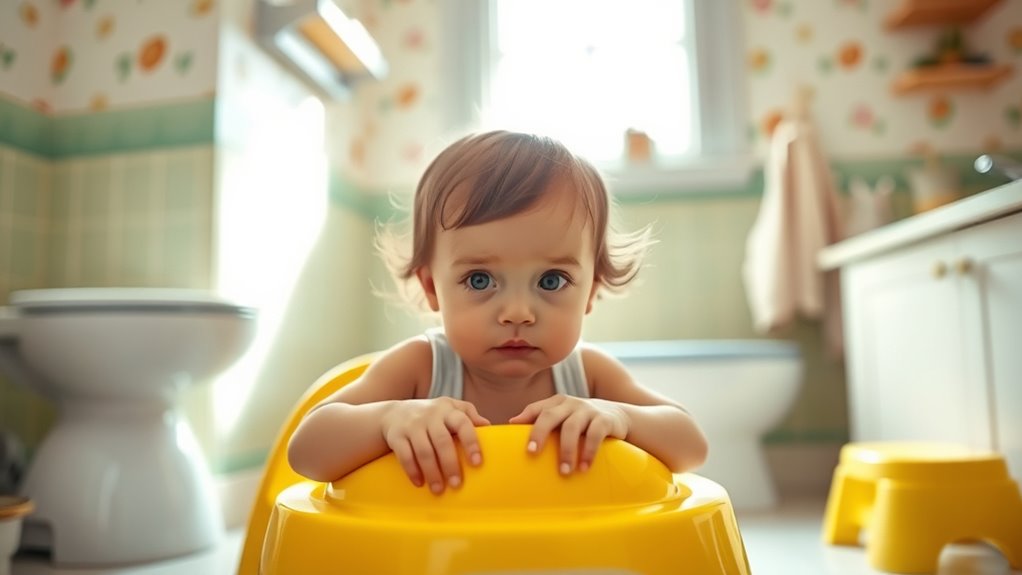

To tell if your child is ready for toilet learning, look for signs like staying dry for two hours, showing interest in the bathroom, or asking to use the toilet. They should be able to follow simple instructions, manage clothing, and show awareness of bodily cues. Watch for curiosity about the potty and discomfort with wet diapers. Noticing these signs can help you plan the right time—keep going to discover more helpful tips.

Turn the school run and nap time into listening time
- Thousands of audiobooks, podcasts and originals
- Listen on your phone, tablet or Echo — also offline
- Cancel anytime
Key Takeaways
- Child stays dry for at least two hours during the day or after naps.
- Shows interest in using the bathroom or observing others with curiosity.
- Can follow simple instructions like “sit down” or “pull up pants.”
- Demonstrates awareness of bodily signals indicating the need to go.
- Exhibits discomfort with wet diapers and resists wearing them.

Toilet learning is an important milestone in your child’s development, marking their move toward independence and self-care. This process involves more than just teaching them to use the toilet; it’s about recognizing when they’re ready and supporting their shift from diapers to a potty. Before jumping into potty training, you need to observe certain signs that indicate your child is prepared, making the diaper transition smoother and more successful. Pushing your child before they’re ready can lead to frustration for both of you, so patience is key.
One of the first signs of readiness is your child’s ability to stay dry for longer periods. If they’re consistently dry for at least two hours during the day or after naps, it suggests that their bladder capacity is developing, and they may be ready to start the potty training process. Additionally, watch for their interest in the bathroom or in watching you or other family members use the toilet. If they begin asking questions about what you’re doing or want to sit on the potty, it indicates curiosity and a desire to imitate adult behaviors, which is a good sign they’re ready to begin potty training.
Children showing interest and staying dry for two hours are ready to start potty training.
Another clear indicator is their ability to follow simple instructions. If your child can understand and follow basic directions, such as “sit down” or “pull up your pants,” they’re more likely to succeed in toilet learning. Fine motor skills matter too; if they can manage to unzip or pull down their pants independently, they’re more prepared for the diaper transition and potty training. Recognizing these signs early can help you plan for a smooth shift from diapers to a potty, reducing frustration and making the experience more positive. Furthermore, understanding that consistent dry periods are linked to bladder control can help you gauge overall readiness for toilet learning.
It’s also important to think about your child’s physical cues. If they show discomfort with a wet diaper or resist wearing it, they might be signaling that they’re ready to move on. Some children may also develop a regular bowel movement schedule, indicating they’re becoming more aware of their body signals. This awareness often coincides with their interest in learning to use the potty.
Understanding these readiness signs helps you approach toilet learning with confidence and patience. When your child shows these signs, it’s time to introduce the potty in a relaxed, pressure-free manner. Remember, every child develops at their own pace, and rushing the diaper transition can set back progress. By paying attention to these cues, you can support your child’s journey toward independence in a positive and encouraging way, making potty training a natural next step rather than a stressful challenge.
potty training seat for toddlers
As an affiliate, we earn on qualifying purchases.
As an affiliate, we earn on qualifying purchases.
Frequently Asked Questions
How Long Does Toilet Training Typically Take?
Toilet training usually takes anywhere from a few weeks to several months, depending on your child’s potty timing and readiness. You might see progress within a few days or need to be patient for up to three or four months. Consistency and positive reinforcement are key. Remember, every child is different, so don’t rush the training duration. Stay patient, and celebrate small successes along the way.
What if My Child Resists Toilet Learning?
If your child resists toilet learning, it might feel like you’re facing an impossible mountain! Stay patient and use encouragement strategies like praise and gentle reassurance. Understand that child resistance is normal, so don’t force it. Instead, make toilet time fun, offer choices, and give them plenty of time to warm up. Your calm persistence and positive attitude will help ease their fears and build confidence gradually.
Are There Specific Age Guidelines for Toilet Readiness?
You should look for age milestones and developmental indicators to assess toilet readiness, as there’s no exact age. Most children show signs of readiness between 18 to 24 months, but every child develops at their own pace. Watch for increased bladder control, communication skills, and the ability to follow simple directions. If your child shows these signs, they’re likely ready to start toilet training, regardless of the specific age.
How Can I Encourage My Shy or Anxious Child?
You can encourage your shy or anxious child by using social stories to gently explain toilet routines, helping them feel more comfortable. Practice gradual exposure by introducing the toilet in a non-pressuring way, like sitting together or reading about using the toilet. Celebrate small successes to boost confidence. Patience and consistency are key, so let your child take steps at their own pace while offering reassurance and support.
What Supplies Are Essential for Successful Toilet Training?
You’ll need basic potty training supplies to make the process smoother. Essential toilet accessories include a child-sized potty or seat adapter, step stool, and waterproof training pants. Keep a small supply of flushable wipes and hand sanitizer nearby for hygiene. Having these potty training supplies ready helps your child feel comfortable and confident, making the progression easier. Be patient and encouraging as they learn to use their new toilet accessories.
Conclusion
Remember, toilet learning is like planting a seed—you need patience, the right signs, and a gentle nudge. When your child shows readiness, it’s like opening a window to a new world of independence. Trust your instincts and celebrate small victories along the way. With time, patience, and encouragement, you’ll watch your little one blossom into a confident, potty-trained star. Keep believing in their potential, and the journey will be a rewarding adventure for both of you.
Halloween Picks
halloween
As an affiliate, we earn on qualifying purchases.