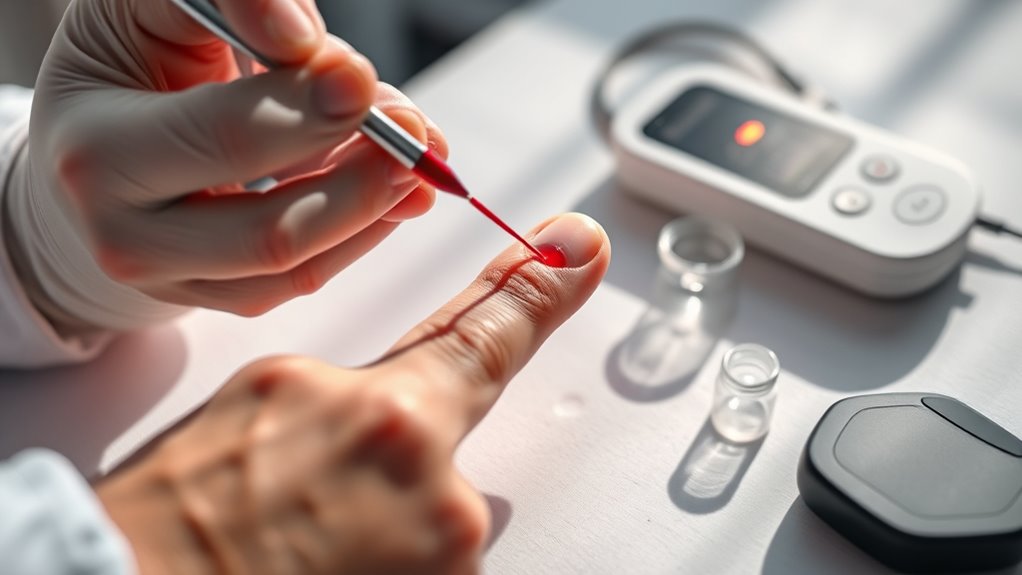

Regular anemia screening is important if you have risk factors like fatigue, weakness, or a family history of blood disorders. It helps detect iron deficiencies or hereditary conditions early, so you can get timely treatment and avoid serious health problems. Screening is especially valuable if your diet lacks iron sources or if you have absorption issues. To learn more about when and why you should get tested, keep exploring these important health insights.
Key Takeaways
- Screening helps detect anemia early, preventing serious health complications.
- Regular assessments are recommended for individuals with risk factors or family history.
- Anemia screening is essential during pregnancy and routine health checkups.
- It identifies underlying causes like iron deficiency or hereditary conditions.
- Early diagnosis allows timely management and appropriate dietary or medical interventions.

Anemia screening is a pivotal step in detecting a condition that affects millions worldwide. If you’re concerned about developing anemia or have risk factors, understanding when and why to get screened can save your health. One key aspect of anemia prevention involves paying attention to your dietary iron sources. Iron is essential for producing hemoglobin, the protein that carries oxygen in your blood. You should focus on incorporating iron-rich foods into your diet, such as lean meats, seafood, beans, lentils, spinach, and fortified cereals. These dietary sources help maintain adequate iron levels, especially if your body isn’t absorbing iron efficiently. However, dietary iron alone isn’t always enough; some people might struggle to get enough from food alone due to dietary restrictions or absorption issues. That’s when screening becomes critical to catch deficiencies early before they cause serious health problems. Regular health assessments can aid in early detection and management of anemia and its underlying causes. Beyond diet, genetic predispositions play a significant role in anemia risk. If anemia runs in your family, you might be more susceptible due to inherited conditions like sickle cell anemia or thalassemia. These genetic traits affect how your body produces or handles hemoglobin, making you more prone to developing anemia regardless of your diet. Knowing your family history helps you and your healthcare provider determine if you should undergo screening more frequently or at an earlier age. Screening detects not only iron deficiency anemia but also hereditary forms that might require specialized management or treatment. If you know or suspect a genetic predisposition, discussing this with your doctor ensures you’re proactive about your health.
Frequently Asked Questions
Can Anemia Be Cured Completely?
Yes, anemia can be cured completely, especially if diagnosed early. You might need nutritional therapy, such as iron-rich foods or supplements, to address deficiencies. In some cases, genetic testing helps identify hereditary types of anemia, allowing for targeted treatments. With proper care and management, many forms of anemia improve considerably or resolve entirely, so it is crucial to follow your healthcare provider’s advice and get tested when needed.
Are There Any Risks Associated With Anemia Screening?
Yes, anemia screening can have risks like false positives, which may lead to unnecessary tests or treatments, and screening anxiety, causing stress or worry. You might feel anxious about results or undergo invasive follow-up procedures if your screening indicates potential anemia. While generally safe, it’s important to discuss these risks with your healthcare provider to understand the benefits and limitations of screening, ensuring you make informed decisions about your health.
How Often Should High-Risk Groups Get Screened?
Think of screening like checking your car’s oil; the more risk factors you have—like pregnancy, chronic disease, or a family history—the more often you should check. For high-risk groups, screening frequency is typically every 1-2 years, depending on your risk factors. Regular checks help catch anemia early, preventing complications and ensuring you stay healthy. Always follow your healthcare provider’s recommendations for personalized screening schedules.
What Are the Early Signs of Anemia?
You might notice early signs of anemia, such as fatigue, weakness, and pale skin, which often result from iron deficiency. You could also experience shortness of breath, dizziness, or cold hands and feet. These fatigue symptoms happen because your body isn’t getting enough oxygen due to low red blood cell levels. Pay attention to these signs, especially if you’re at risk, and consult your healthcare provider promptly.
Is Anemia Screening Covered by Insurance?
Imagine your health as a garden needing regular tending. Insurance coverage often acts like a protective fence, helping cover screening costs so you don’t have to bear the full burden. Most plans include anemia screening, making it accessible like sunlight for your well-being. However, coverage varies, so it’s wise to check with your provider beforehand, ensuring you don’t miss out on essential early detection that keeps your health thriving.
Conclusion
By staying vigilant and catching anemia early, you can navigate your health journey with confidence. Think of screening as your trusty compass, guiding you through potential health storms before they take hold. Don’t wait for symptoms to knock on your door—be proactive and give your body the care it deserves. When you prioritize regular screenings, you’re planting the seeds for a healthier, brighter tomorrow, turning the uncertain into a clear, shining path ahead.