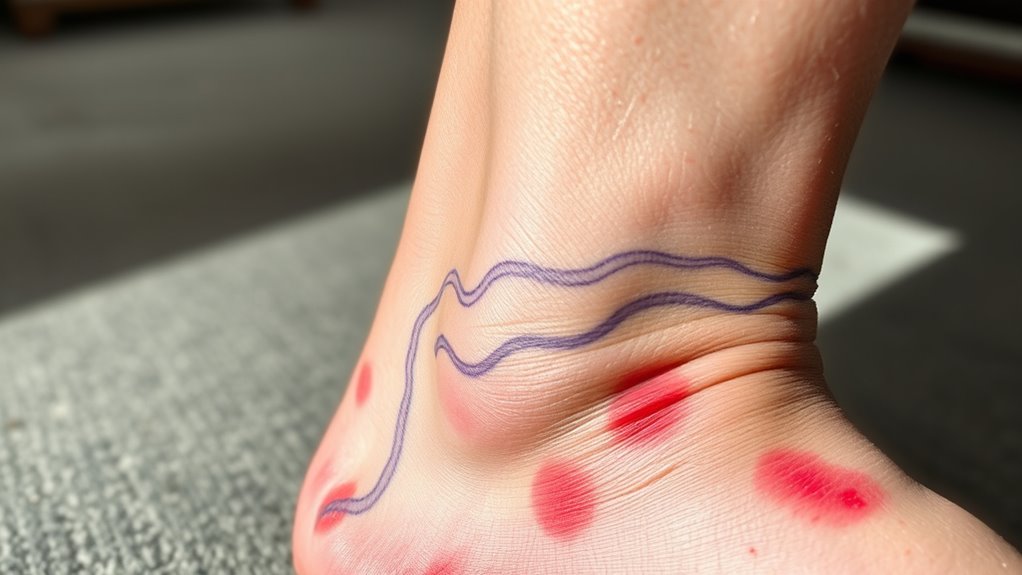

If you notice swollen legs and visible bulging veins, it’s likely due to weak vein valves that cause blood to pool. This buildup increases pressure, leading to discomfort, swelling, and vein expansion. Wearing compression stockings and making lifestyle changes like elevating your legs, staying active, and maintaining a healthy weight can help manage these symptoms. To understand more about how to effectively control your condition, keep exploring effective strategies and support options.
Key Takeaways
- Weak vein valves cause blood pooling, leading to bulging veins and swelling in the legs.
- Compression stockings support circulation, reduce swelling, and alleviate symptoms.
- Lifestyle changes like regular movement, leg elevation, and healthy weight help manage varicose veins.
- Gentle exercises and proper footwear improve blood flow and lessen leg discomfort.
- Early medical consultation can prevent complications and improve overall vascular health.
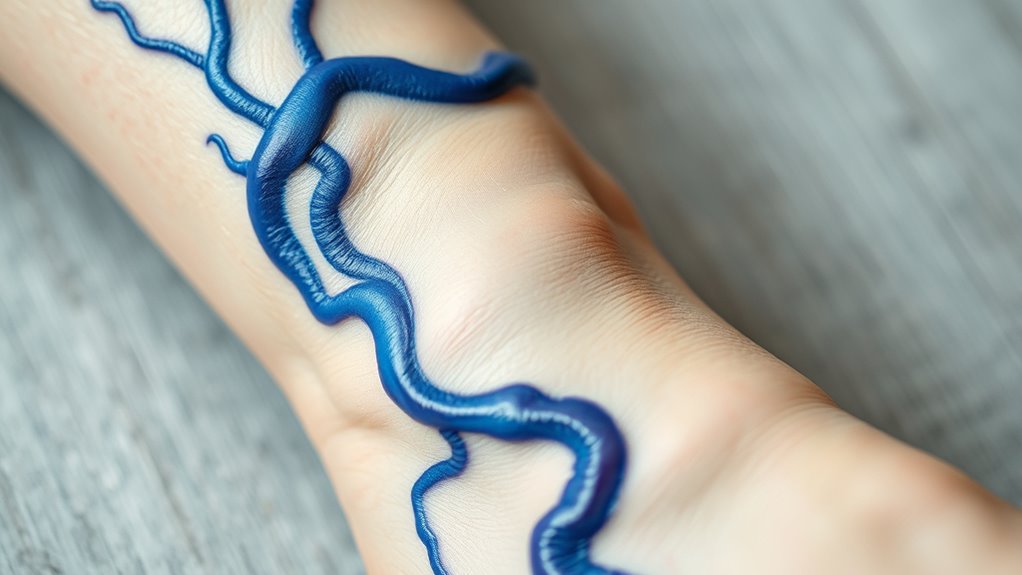
Varicose veins and swelling often go hand in hand, causing discomfort and affecting your daily life. If you’ve noticed bulging veins or persistent swelling in your legs, you’re not alone. These symptoms usually result from weakened valve function in your veins, which leads to blood pooling and increased pressure. To manage this, compression therapy is often recommended. Wearing compression stockings applies gentle pressure to your legs, helping to improve blood flow and reduce swelling. These stockings come in various strengths, so it’s important to choose the right level of compression for your needs, ideally under the guidance of a healthcare professional. Consistent use can considerably alleviate symptoms, prevent progression, and keep swelling under control.
Varicose veins and swelling can be managed effectively with compression therapy and lifestyle changes.
Alongside compression therapy, lifestyle modifications play a crucial role in managing varicose veins and swelling. You can start by incorporating regular movement into your routine. Avoid prolonged periods of standing or sitting, which can worsen blood pooling. Instead, take short walks or elevate your legs whenever possible. Elevating your legs above heart level for 15-20 minutes several times a day encourages blood return to your heart, reducing pressure in the veins. Maintaining a healthy weight also eases stress on your legs, making it easier for your veins to function properly. Eating a balanced diet rich in fiber helps prevent constipation, which can increase pressure in your abdominal veins and worsen leg swelling.
Staying hydrated and limiting salt intake can prevent fluid retention, another contributor to swelling. Avoid tight clothing around your waist, legs, or groin, as it can restrict blood flow and exacerbate symptoms. If you’re experiencing discomfort, consider gentle leg exercises that improve circulation without overexerting yourself. Swimming or cycling are excellent low-impact options that strengthen your leg muscles and support healthy blood flow. Wearing comfortable shoes with good arch support can also reduce strain on your legs and improve overall circulation. Additionally, understanding how vascular health influences vein function can motivate you to adopt these habits and seek appropriate medical guidance.
Making these adjustments doesn’t just help with immediate symptoms—it can slow the progression of varicose veins and prevent complications. Combining compression therapy with lifestyle modifications empowers you to take control of your condition. Remember, early intervention often leads to better outcomes, so don’t hesitate to seek medical advice if your symptoms worsen or persist. With consistent effort, you can minimize swelling, relieve discomfort, and maintain a more active, comfortable life.
compression stockings for varicose veins
As an affiliate, we earn on qualifying purchases.
As an affiliate, we earn on qualifying purchases.
Frequently Asked Questions
Can Varicose Veins Cause Blood Clots?
Yes, varicose veins can increase your blood clot risks because swollen, twisted veins may lead to vein inflammation. When veins become inflamed or damaged, blood flow slows down, raising the chance of clot formation. While not everyone with varicose veins develops clots, it’s important to monitor symptoms and seek medical advice to prevent complications like deep vein thrombosis. Proper care can reduce these risks.
Are There Natural Remedies for Reducing Swelling?
You can reduce swelling naturally by trying herbal teas like ginger or chamomile, which have anti-inflammatory properties. Dietary changes, such as increasing your intake of fruits, vegetables, and reducing salt, help decrease fluid retention. While natural remedies can assist, don’t rely solely on them if swelling persists—consult your healthcare provider. Combining herbal teas and dietary adjustments offers a gentle, effective way to manage swelling and improve your overall comfort.
How Long Does It Take for Treatment Results?
The treatment results for swelling can vary, but generally, you might start noticing improvements within a few days to a few weeks. The treatment duration depends on the method used, such as compression therapy or lifestyle changes. Recovery time also varies; for some, swelling reduces quickly, while others may take longer. Stay consistent with your treatment plan, and you’ll likely see the best results within a few weeks to a couple of months.
Can Varicose Veins Lead to Skin Ulcers?
Yes, varicose veins can lead to skin ulcers, especially if untreated. You might notice skin discoloration, such as darkening or redness, around the affected area. Over time, increased pressure and poor circulation can cause venous ulcers, which are open sores that develop on the skin. Addressing venous issues early helps prevent ulcers and skin damage, so seek treatment if you notice these signs.
Are Compression Stockings Effective for Prevention?
Yes, compression stockings are effective for prevention. They offer medical benefits by improving blood flow and reducing vein pressure. To maximize their effectiveness, follow usage guidelines carefully, such as wearing the stockings as prescribed and putting them on in the morning. Consistent use helps prevent symptoms from worsening and lowers the risk of complications like ulcers. Always consult your healthcare provider for proper fit and advice tailored to your needs.
Conclusion
Understanding varicose veins and swelling helps you take control of your health. By recognizing the signs and seeking proper treatment, you can prevent discomfort from becoming overwhelming. Think of your veins like a garden hose—if they’re clogged or swollen, water can’t flow smoothly. Staying active, elevating your legs, and consulting a doctor keeps the flow steady. Don’t let varicose veins be a thorn in your side; address them early for healthier, happier legs.