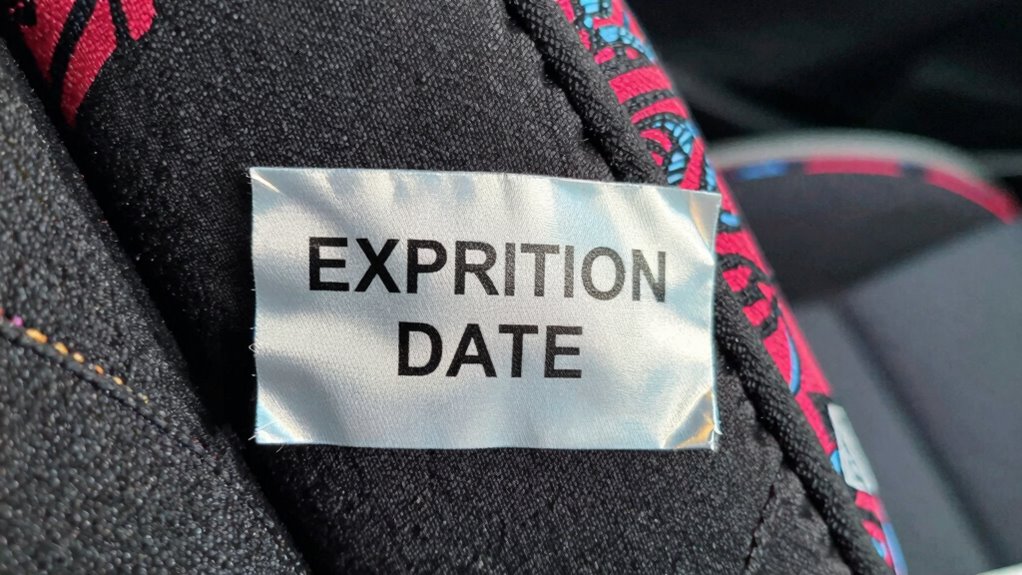

Car seat expiration dates aren’t just suggestions—they’re essential safety guidelines. Over time, the materials like foam and plastic weaken from environmental exposure and regular use, reducing their crash protection ability. Safety standards also evolve, making outdated seats less reliable. Using an expired seat risks compromised safety features and increased injury risk. To keep your child safe, it’s important to understand how wear and tech advancements impact lifespan. If you want to learn more, you’ll find helpful tips below.
Key Takeaways
- Expiration dates ensure seats are replaced before materials weaken, maintaining crash protection and safety standards.
- Over time, plastic, foam, and fabric degrade, reducing impact absorption and increasing injury risk during accidents.
- Technological safety features evolve; expired seats may lack current protections or fail to meet modern safety requirements.
- Visible damage or aging signs indicate safety compromise; ignoring expiration increases the risk of injury.
- Expiration dates are vital guidelines, not just suggestions, to guarantee ongoing safety and compliance throughout the seat’s lifespan.
As an affiliate, we earn on qualifying purchases.
Do Expired Car Seats Still Keep Your Child Safe?

Many parents wonder if an expired car seat can still protect their child in a crash. While it might seem tempting to keep using it, an expired seat can compromise safety and comfort. Over time, the materials in the seat, like foam and plastic, weaken, reducing crash protection. Plus, the aesthetic appeal declines, making the seat look worn and less inviting for your child. This can affect child comfort, which is important for staying secure and calm during travel. Even if the seat appears fine externally, its internal components may have degraded, increasing risk in an accident. Ultimately, using an expired car seat isn’t worth the potential safety compromise or discomfort for your child. It’s best to replace it with a current, properly certified seat.
Why Safety Standards Set Expiration Dates for Car Seats

Safety standards set expiration dates for car seats to guarantee they provide ideal protection as materials and technology improve. Over time, materials can degrade, making the seat less effective in a crash. Additionally, manufacturing standards evolve, ensuring newer seats meet stricter safety requirements. By enforcing expiration dates, manufacturers ensure you’re not relying on outdated safety features. This also encourages regular safety evaluations and replacements, which is essential given the ongoing advancements in safety technology and materials. Regularly replacing your car seat based on these dates ensures ongoing safety. Furthermore, material degradation can occur even with proper use, underscoring the importance of timely replacement. Remember, even if the seat looks fine, material degradation might have occurred beneath the surface, and manufacturing standards may have changed since production. Staying within the expiration date keeps your child safer during every ride. Color accuracy and other technological improvements in manufacturing also contribute to the ongoing safety of modern car seats.
How Material Wear and Tear Affects Car Seat Safety

Over time, the materials in your child’s car seat can weaken due to regular use and exposure to environmental factors. This process, known as material fatigue, causes the structural components and fabric to lose their strength and resilience. Fabric degradation happens when the seat’s fabric fibers break down from sun exposure, moisture, and general wear, making the seat less durable. As these materials weaken, the seat’s ability to absorb impact and protect your child diminishes. Cracks, tears, or frayed fabric are signs of deterioration, compromising safety. Even if the seat looks fine on the outside, internal components may have lost their integrity. Regularly inspecting for signs of wear helps guarantee your child’s seat remains safe and effective during use. material fatigue is a critical factor in understanding why car seats have expiration dates. Additionally, environmental factors such as temperature fluctuations can accelerate material deterioration, further reducing the seat’s protective capabilities. Factors like UV exposure can also accelerate the breakdown of materials, emphasizing the importance of timely replacement. Moreover, product recalls can identify safety issues that might not be visible through regular inspections.
How New Safety Tech Influences Car Seat Lifespan
As new safety technology emerges, it can extend the effective lifespan of your child’s car seat by providing enhanced monitoring and protection features. Modern seats now incorporate sensor technology that detects impacts, seat belt tension, and even occupant position. Advanced crash algorithms analyze this data instantly, improving safety responses and reducing false alarms. These innovations can help identify issues before they become critical, potentially prolonging the seat’s usability. Additionally, sensor technology advancements in monitoring systems are inspiring new safety features in automotive technology. The integration of wearable safety devices further enhances protection by continuously tracking environmental and occupant data to ensure optimal safety. Moreover, understanding vehicle safety standards can help consumers better evaluate car seat longevity and safety compliance.
Signs Your Car Seat Might Be Past Its Prime

Even if your car seat looks fine on the outside, it might be past its prime if you notice cracks in the plastic, frayed straps, or faded fabric. These signs can compromise child safety and indicate that the seat’s structural integrity has weakened. Regular car seat maintenance helps identify issues early, but don’t ignore visible damage. Here’s a quick guide:
| Signs to Watch For | What It Means |
|---|---|
| Cracks or breaks | Plastic may be brittle, reducing safety during an accident |
| Frayed straps | Straps could fail under stress |
| Faded or worn fabric | Material weakened, affecting protection |
| Unusual odors | Indicates mold or material breakdown |
| Loose or damaged buckles | Compromises secure fit and safety |
Staying aware of these wear and tear signs can help ensure your child’s safety. Additionally, understanding car seat expiration dates is crucial, as material degradation over time can also affect safety. It’s also important to be aware of cumulative use limits, which can lead to unnoticed weakening of the seat. Being familiar with material lifespan can prevent unexpected failures. Stay vigilant—these signs mean it’s time to replace your car seat.
Understanding Your Car Seat’s Expiration Date

While visible damage can signal that a car seat needs replacing, many safety concerns stem from understanding its expiration date. Your car seat’s expiration isn’t arbitrary; it’s based on factors like material degradation and manufacturing lifespan. Over time, exposure to sunlight, heat, and moisture can weaken plastics and foam, reducing safety. The manufacturer’s recommended expiration date accounts for these factors, ensuring you replace the seat before its integrity fails. To stay safe, regularly check the label or manual for the expiration date. Remember, even if the seat looks fine, it might have compromised structural integrity due to age. Keep in mind:
- Material degradation weakens components
- Manufacturing lifespan limits safety effectiveness
- Exposure accelerates deterioration
- Expiration date indicates when safety can no longer be guaranteed
- Material deterioration in safety testing highlight the importance of timely replacement. Additionally, understanding the safety standards set by manufacturers can help parents make informed decisions about their child’s protection. Regular inspection and awareness of wear and tear are crucial for maintaining safety. Moreover, staying informed about material aging can help you recognize subtle signs of deterioration before safety is compromised.
Risks of Using an Expired Car Seat in an Accident

Using an expired car seat can considerably reduce crash protection when an accident occurs. Over time, materials weaken, increasing the risk of failure, and safety features may no longer function properly. Ignoring the expiration date puts your child at unnecessary risk during a collision. Additionally, vetted safety standards evolve, making older seats potentially non-compliant with current regulations.
Reduced Crash Protection
Once a car seat expires, its ability to protect your child in a crash diminishes considerably. An expired seat may no longer meet current safety standards, reducing its effectiveness during an accident. This compromises child safety and undermines accident prevention efforts. You might think it’s still usable, but the materials and design can weaken over time, making it less reliable.
Here are key risks:
- Weakened harnesses and straps that don’t hold securely
- Deteriorated impact absorption features
- Outdated safety technology and standards
- Increased risk of injury in a crash
Using an expired car seat puts your child at unnecessary risk, defeating the purpose of safety features meant to prevent severe injuries. Staying current with expiration dates guarantees maximum crash protection and peace of mind.
Material Deterioration Risks
As a car seat ages past its expiration date, its materials gradually break down, increasing the risk of failure during an accident. Over time, exposure to heat, sunlight, and humidity accelerates chemical degradation, weakening plastics, foam, and adhesives. Material fatigue causes components like straps and shells to lose strength and elasticity, reducing their ability to absorb impact. This deterioration isn’t always visible, but it compromises the seat’s structural integrity and safety features. Using an expired car seat means trusting materials that may no longer perform as intended when you need them most. The breakdown of these critical components can lead to catastrophic failure during a crash, putting your child at serious risk. Replacing expired seats ensures that materials remain reliable and effective in protecting your little one.
Safety Feature Failures
When a car seat expires, its safety features may no longer function properly during a crash. Over time, sensor failure can occur, preventing essential safety systems from activating correctly. Manufacturing defects may also develop or worsen, compromising structural integrity or restraint mechanisms. Using an expired seat increases the risk that safety features like impact sensors or side-impact protection won’t respond as intended. This can lead to ineffective protection when you need it most. Additionally, aging materials may weaken, causing failure under stress. Ignoring expiration dates means you might unknowingly rely on compromised safety systems, putting your child at greater risk during an accident. Regularly replacing expired car seats ensures all safety features remain reliable and functional when safety is most critical.
- Sensor failure compromises crash response
- Manufacturing defects worsen over time
- Structural weakening increases injury risk
- Safety features may not activate properly
How to Maintain Your Car Seat for Maximum Safety

To keep your car seat safe, it’s important to inspect it regularly for wear or damage. Make sure you install it correctly following the manufacturer’s instructions, and always replace it after any impact. Staying vigilant with these steps helps guarantee your child’s safety on every trip.
Regular Inspection Schedule
Regularly inspecting your car seat is essential to keep it safe and effective. Establishing a consistent maintenance schedule helps catch issues early and ensures your seat remains secure. Use an inspection checklist to evaluate key areas, such as the harness, buckles, and overall fabric condition. Look for fraying, cracks, or missing parts that could compromise safety. Keep track of expiration dates and any past incidents or damage. Regular checks also include cleaning to prevent dirt buildup that can weaken materials. Schedule inspections at least once every few months or before long trips. Staying proactive helps extend your seat’s lifespan and guarantees it provides maximum protection for your child. Remember, consistent inspection is your best defense against unnoticed wear or damage.
Proper Installation Techniques
Proper installation is essential to guarantee your car seat provides maximum safety for your child. To ensure correct belt positioning, follow these installation tips: keep the harness snug, avoid slack, and ensure the chest clip is at armpit level. Always read your specific car seat manual for detailed instructions. Secure the seat tightly, so it doesn’t move more than an inch side-to-side. Use the LATCH system when possible for added stability. Check the angle indicator to prevent recline issues.
| Tip | Action | Result |
|---|---|---|
| Tighten straps | Pull harness until snug | Prevents excessive movement |
| Correct belt positioning | Chest clip at armpit level | Ensures proper restraint |
| Use LATCH system | Attach anchors securely | Adds overall stability |
| Check recline angle | Adjust as needed | Protects airway |
| Regularly inspect | Ensure proper fit | Maintains maximum safety |
Replace After Impact
After your car seat experiences a significant impact, it’s important to evaluate whether it needs replacement. Even if the damage isn’t visible, the impact could compromise its safety, especially considering age considerations and manufacturing standards. A crash can weaken the seat’s structure, making it less effective in protecting your child during future accidents. Always check for cracks, deformities, or broken parts. Remember, car seats are designed to meet strict manufacturing standards, but these can be compromised after an impact.
- Inspect the seat thoroughly for cracks or damage
- Follow manufacturer guidelines for impact assessment
- Replace if the seat is past the recommended age or shows signs of wear
- Prioritize safety over cost to ensure maximum protection
When and How to Replace Your Child’s Car Seat Safely

Knowing when and how to replace your child’s car seat is essential for their safety. If your child is sleeping comfortably during car rides, it’s a good sign the seat fits well and is installed properly. However, if you notice signs of wear, damage, or the seat has expired, it’s time to substitute it. Always check the manufacturer’s guidelines for replacement timelines, especially after an impact or if the seat shows cracks or fading. When installing a new seat, follow the instructions carefully to ensure proper fit and security. Remember, a correctly installed car seat minimizes risks and keeps your child safe. Regularly review the seat’s condition, and don’t hesitate to replace it when needed to maintain the highest safety standards.
Why Following Expiration Guidelines Gives You Peace of Mind

Following expiration guidelines for your child’s car seat may seem like a small detail, but it plays a crucial role in guaranteeing your child’s safety. When you adhere to these timelines, you reduce risks from material degradation and outdated safety features. Plus, it helps you keep your child comfortable by ensuring the seat remains supportive and properly aligned. An expired seat might also have worn aesthetic design elements that can compromise its appearance and your confidence. Staying within the expiration date provides peace of mind, knowing you’ve taken every precaution to protect your child.
- Maintains ideal child comfort during travel
- Ensures the aesthetic design stays appealing and functional
- Keeps safety features up-to-date and reliable
- Eliminates worries about unseen material wear or damage
Frequently Asked Questions
Can I Legally Use an Expired Car Seat?
You can’t legally use an expired car seat, as doing so could lead to legal implications if you’re involved in an accident. Expiration dates guarantee safety and warranty validity; once passed, the seat might not provide the necessary protection. Even if it looks fine, manufacturers recommend replacing it. Using an expired seat risks your child’s safety and could result in fines or liability issues, so it’s best to replace it promptly.
Are All Car Seat Materials Equally Prone to Wear?
Not all car seat materials are equally prone to wear. You should know that material degradation varies based on manufacturing quality and exposure to conditions like sunlight and moisture. Higher-quality seats often use more durable materials, but over time, even the best can weaken. Regularly inspect your seat for signs of wear, especially in areas exposed to friction or sunlight, to guarantee it remains safe for your child’s protection.
How Does Temperature Affect Car Seat Longevity?
Temperature effects profoundly impact your car seat’s longevity by accelerating material degradation. High temperatures cause plastics and foams to weaken and crack, while cold can make materials brittle and prone to damage. You should avoid exposing your seat to extreme heat or cold for extended periods, as these temperature effects shorten its lifespan. Proper storage and regular inspection help guarantee your seat stays safe and durable for as long as possible.
Do Booster Seats Have Expiration Dates Like Infant Seats?
Booster seats do have expiration dates, just like infant seats. You need to check booster longevity because materials degrade over time, affecting seatbelt compatibility and safety. An expired booster may not fit correctly or keep your child secure during a crash. Don’t risk your child’s safety—regularly verify expiration dates and replace worn or outdated boosters. Stay proactive, stay safe, and ensure every ride is protected.
Is It Safe to Modify or Repair an Expired Car Seat?
You shouldn’t modify or repair an expired car seat because it compromises safety. Instead, consider car seat recycling programs to dispose of it properly. Repair safety isn’t guaranteed, and any structural or safety feature changes could fail during a crash. Always follow manufacturer guidelines and local regulations. Investing in a new seat ensures your child’s protection, giving you peace of mind that it meets current safety standards.
Conclusion
So, next time you consider stretching your car seat’s life beyond its expiration date, remember—it’s not just an arbitrary number. Ignoring these guidelines might turn that cozy, well-loved seat into a hazardous relic rather than a safe haven. Because, after all, risking your child’s safety just to save a few bucks or a bit of time is the kind of brilliant decision that really pays off… in the worst way possible. Safety first, or at least, safety somewhat later.