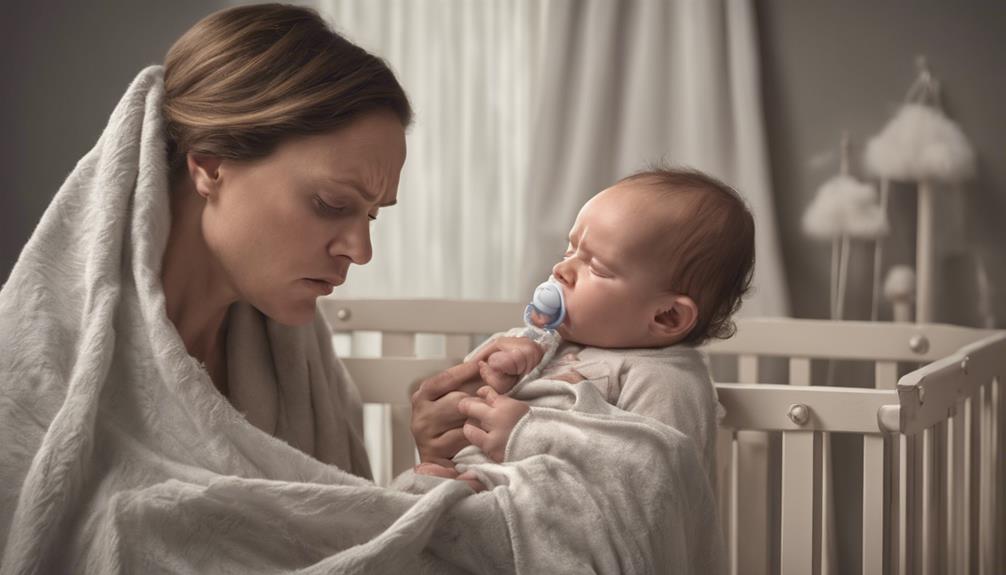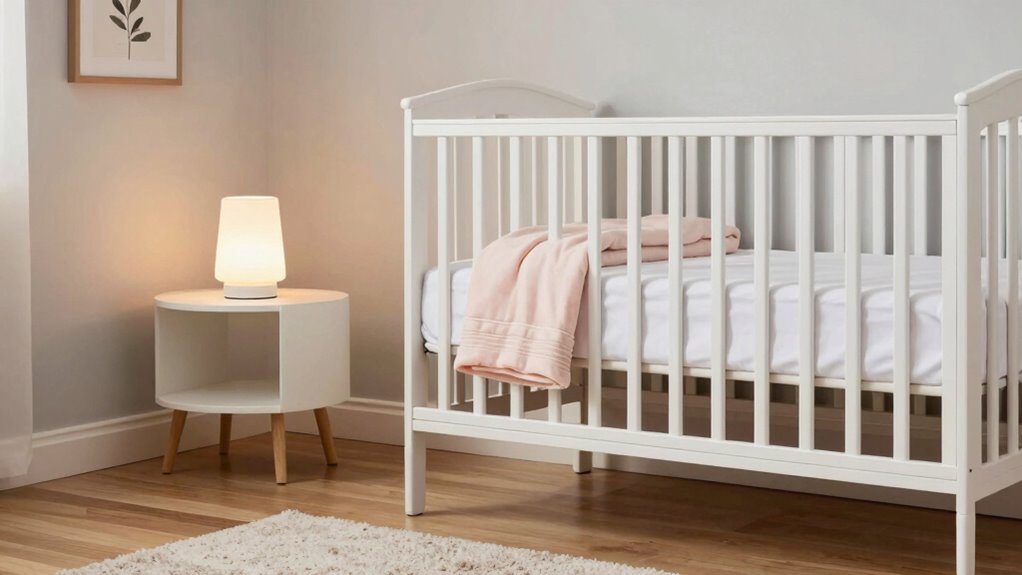

Creating a safe sleep setup involves keeping your baby’s sleep area minimal, clutter-free, and free of hazards. Use a firm mattress with a snug-fitting sheet, and avoid pillows, blankets, or stuffed animals. Keep the crib simple and well-organized, regularly inspecting for unsafe items or hazards. As your baby grows, adjust the environment for safety and comfort. To guarantee you cover all essentials and safety tips, continue exploring more about this minimalist checklist.
Key Takeaways
- Create a clutter-free, minimal sleep environment with only a firm, snug mattress and fitted sheet in the crib.
- Avoid soft bedding, pillows, stuffed animals, and bulky blankets to reduce suffocation risks.
- Regularly inspect the sleep area for hazards and ensure proper ventilation and safety standards.
- Minimize overcrowding and loose items, and adapt the setup as the baby grows to maintain safety.
- Use organized storage solutions and routine decluttering to keep the sleep space safe, clean, and calming.
As an affiliate, we earn on qualifying purchases.
How to Create a Minimalist, Safe Sleep Environment for Your Baby
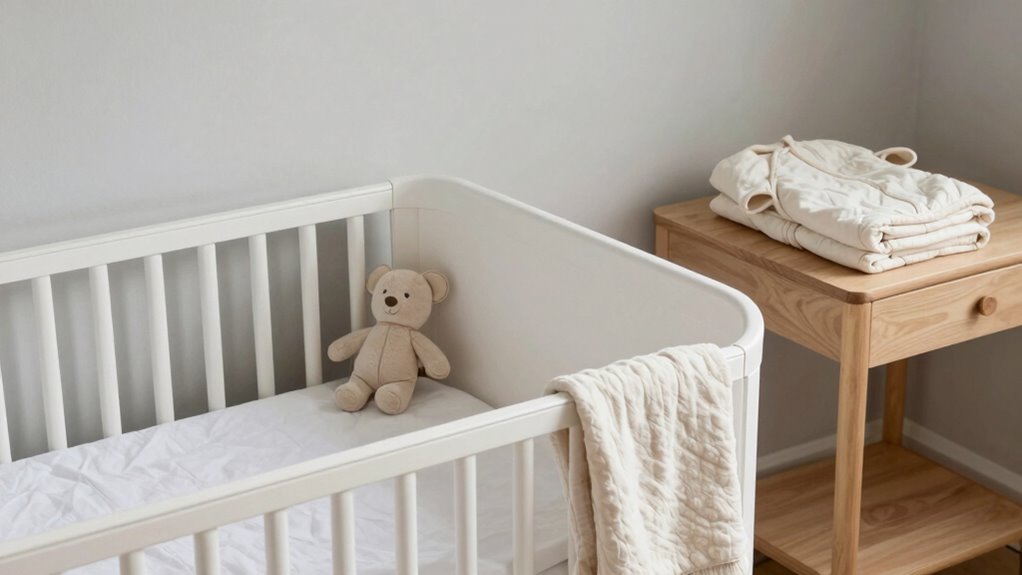
Creating a minimalist, safe sleep environment for your baby starts with removing unnecessary items from the crib. Keep nursery decor simple—opt for calming colors and avoid busy patterns to promote relaxation. Limit bedding to a fitted sheet and a sleep sack, avoiding pillows, stuffed animals, or bulky blankets that could pose suffocation hazards. A clutter-free space helps your baby focus on sleeping peacefully and reduces distractions. When it comes to sleep training, a minimalist setup encourages consistency and routine, making it easier for your little one to associate their sleep space with rest. Less is more here; a clean, simple crib promotes safety, comfort, and a peaceful environment conducive to healthy sleep habits. Maintaining a tidy nursery also supports overall home safety by reducing potential hazards. Practicing safe sleep guidelines ensures your baby’s environment remains secure and hazard-free. Incorporating proper lighting can also help establish a calming sleep atmosphere and reinforce bedtime routines. Additionally, maintaining good ventilation in the nursery helps prevent overheating and creates a healthier sleep environment. Using natural light during the day can also help regulate your baby’s sleep-wake cycle, promoting better rest.
Essential Elements Every Safe Baby Sleep Space Needs
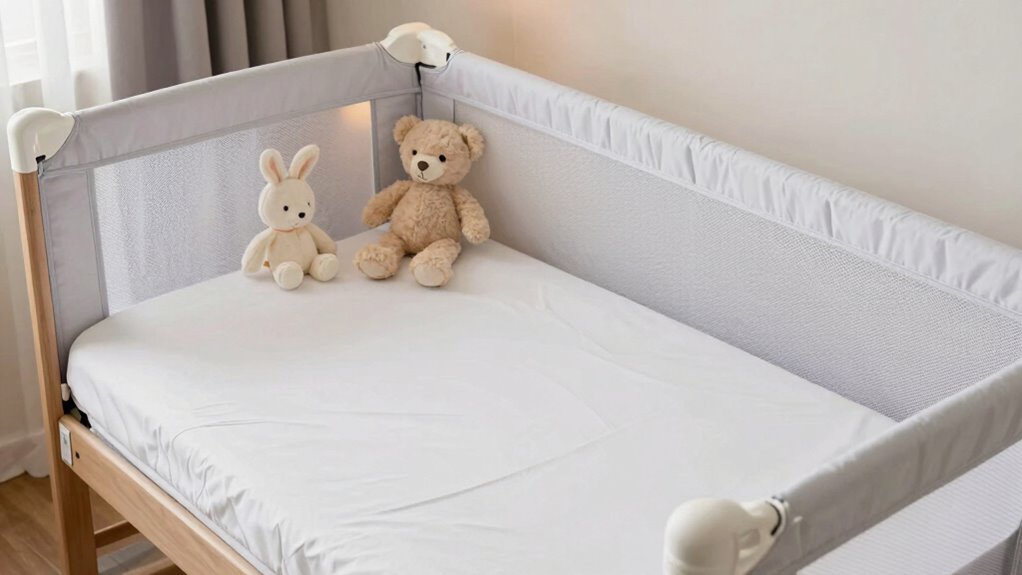
To make certain your baby sleeps safely and comfortably, certain key elements must be included in their sleep space. First, a firm, flat mattress with a fitted sheet provides a safe foundation, avoiding baby sleep myths like soft bedding causing suffocation. Proper sleep environment lighting is essential—dim, not harsh, lights help promote better rest and reduce sleep disruptions. Avoid clutter that can pose risks or interfere with safe sleep practices. Here’s a quick overview:
| Element | Why It Matters | Tips |
|---|---|---|
| Firm Mattress | Prevents suffocation risks | Use a tight-fitting sheet |
| Sleep Environment Lighting | Supports healthy sleep cycles | Keep room dim during sleep |
| Clutter-Free Space | Reduces hazards | Keep sleep area minimal |
Additionally, maintaining a safe sleep environment free of loose objects and hazards helps ensure your baby’s sleep space is safe, calming, and free of common sleep myths. Regularly inspecting the sleep area for potential hazards can further reduce risks and promote peace of mind for caregivers. Ensuring proper ventilation is also important for a safe sleep environment, as it helps regulate temperature and reduce suffocation risks.
How to Choose a Safe, Comfortable Mattress and Bedding
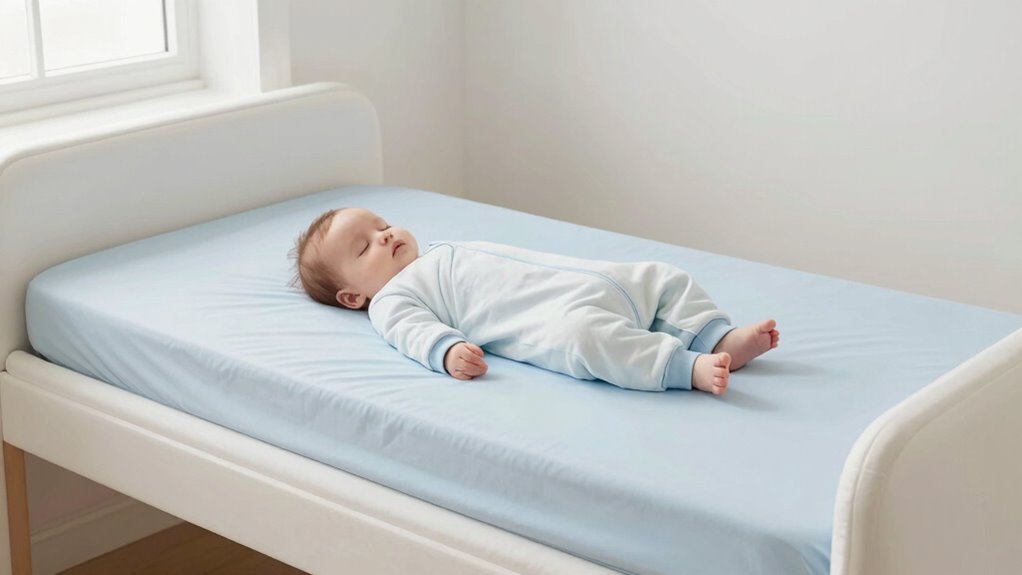
Choosing the right mattress and bedding is essential for your baby’s safety and comfort during sleep. Focus on a firm, snug-fitting mattress that meets current crib safety standards to prevent gaps and reduce suffocation risks. Avoid soft or plush bedding, pillows, and stuffed animals that can pose suffocation hazards. The sleep surface should be flat and sturdy, with no loose or sagging areas. Use a fitted sheet made specifically for your crib mattress, ensuring it fits tightly without slipping. Keep the sleep area minimal—just the mattress and fitted sheet—to reduce the risk of entrapment or suffocation. Prioritize crib safety by selecting a mattress that fits securely and adhering to guidelines that promote a safe, comfortable sleep environment for your baby. Always check that your bedding and sleep setup meet safety standards, and consider the material quality of your bedding to prevent potential allergens or irritants.
Tips for Keeping Your Baby’s Sleep Area Clutter-Free
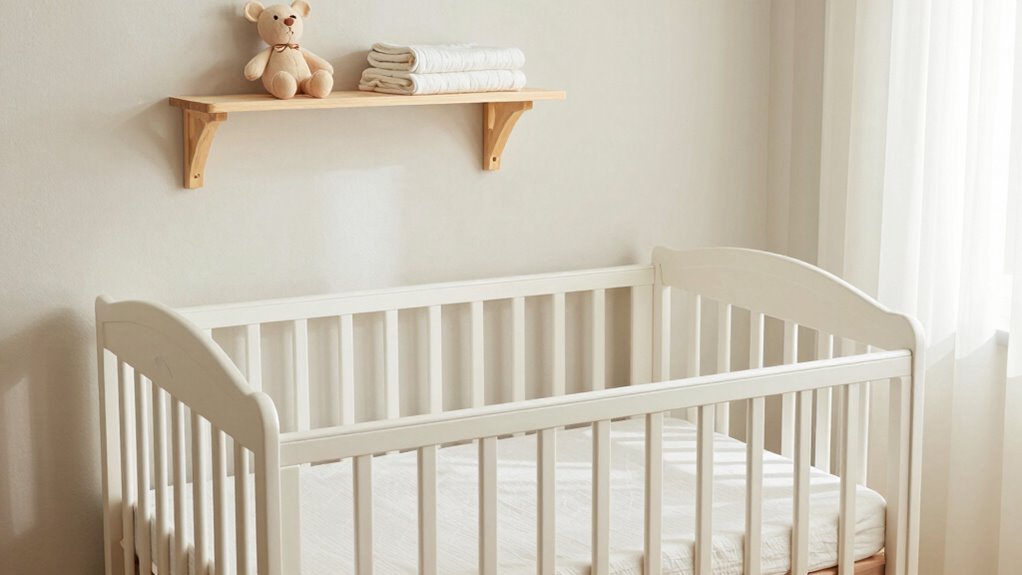
Keeping your baby’s sleep area clutter-free is essential for safety. Use safe storage solutions to organize essentials and prevent hazards, and establish regular decluttering routines. Staying organized helps create a calm, safe environment for your little one to sleep peacefully. Incorporating digital content can also help parents access helpful tips and resources on maintaining a clutter-free sleep space. Additionally, understanding cybersecurity best practices can help protect your family’s digital safety while seeking online parenting support. Being aware of drone safety regulations can further promote a secure environment for your family both offline and online. Regularly reviewing home safety guidelines ensures your sleep area remains a secure space for your baby. To stay current, parents should also explore latest safety trends that promote a healthier sleep environment.
Safe Storage Solutions
Ever wonder how a tidy sleep area can make bedtime safer for your little one? Using space-saving furniture helps maximize your room’s layout, reducing clutter around the crib. Opt for compact storage options that keep essentials within reach without overcrowding the space. Toy storage solutions, like bins or shelves, organize toys and prevent them from piling up in the sleep zone. Keep only necessary items nearby—anything that isn’t essential can be stored elsewhere. This minimizes distractions and reduces the risk of items falling into the crib. Clear, designated storage areas make it easier to maintain a clutter-free environment. Additionally, choosing safe cabling solutions when organizing electrical cords can prevent accidental pulls or hazards near your baby’s sleep area. Using childproof organization techniques can further enhance safety by keeping cords and other potentially dangerous items out of reach. Implementing organizing tips will help ensure everything remains secure and out of reach. Remember, a clean, organized sleep space promotes safer sleep and peace of mind for you. Maintaining organized storage also contributes to a calm and soothing atmosphere conducive to restful sleep. Proper storage is key to ensuring your baby’s sleep area remains safe and serene.
Regular Decluttering Routines
Establishing a regular decluttering routine helps you maintain a safe and organized sleep space for your baby. Start by routinely sorting through toys, ensuring only age-appropriate, essential items remain nearby. Proper toy organization prevents clutter from accumulating and reduces the risk of accidents. Additionally, regularly review sleepwear selection, removing any worn or ill-fitting items that could pose a safety hazard. Keep the area tidy by discarding unnecessary items and storing belongings out of the baby’s reach. A clutter-free environment minimizes distractions and potential suffocation hazards, promoting better sleep safety. Regularly inspecting items for comedogenic ratings can help prevent skin irritations from certain materials. Scheduling weekly or biweekly checks to maintain this routine makes it easier to spot and address clutter before it becomes overwhelming. Incorporating safety inspection routines ensures ongoing vigilance and helps maintain a safe sleep environment. Consistent decluttering keeps your baby’s sleep space safe, clean, and conducive to restful sleep. Additionally, maintaining a cleanliness routine helps to prevent dust and allergens from accumulating, supporting your baby’s respiratory health.
Common Safety Mistakes to Avoid in a Minimalist Sleep Setup
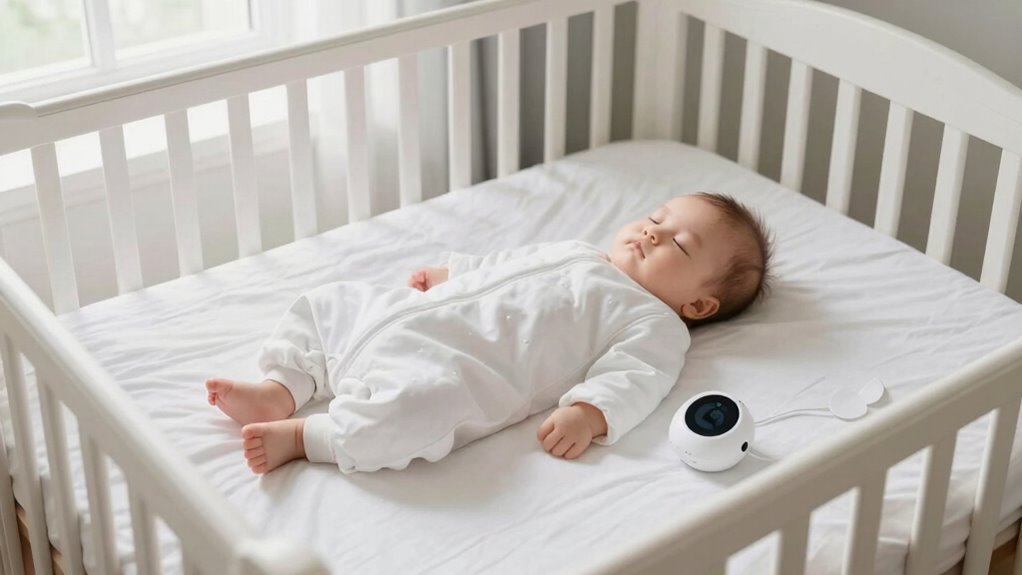
One common mistake is overcrowding the crib, which can increase the risk of suffocation or accidental entanglement. Another mistake is using loose bedding, such as blankets or pillows, that can pose suffocation hazards. Avoiding these issues helps create a safer, minimalist sleep environment for your baby.
Overcrowding in Crib
Overcrowding a crib is a common mistake that can compromise your baby’s safety during sleep. When the crib is too full, it increases sleep congestion and limits proper airflow, which can lead to overheating or accidental suffocation. To maintain a safe sleep environment, keep the crib minimal—only a fitted sheet and your baby. Avoid adding pillows, stuffed animals, or extra bedding that can clutter the crib space.
| Item | Good Practice | Unsafe Practice |
|---|---|---|
| Crib space | Clear, minimal, with only essentials | Overloaded with toys or bedding |
| Sleep congestion | Allow airflow, avoid excess items | Stuffed animals and pillows crowding |
| Bedding | Use a fitted sheet only | Loose blankets or multiple layers |
Using Loose Bedding
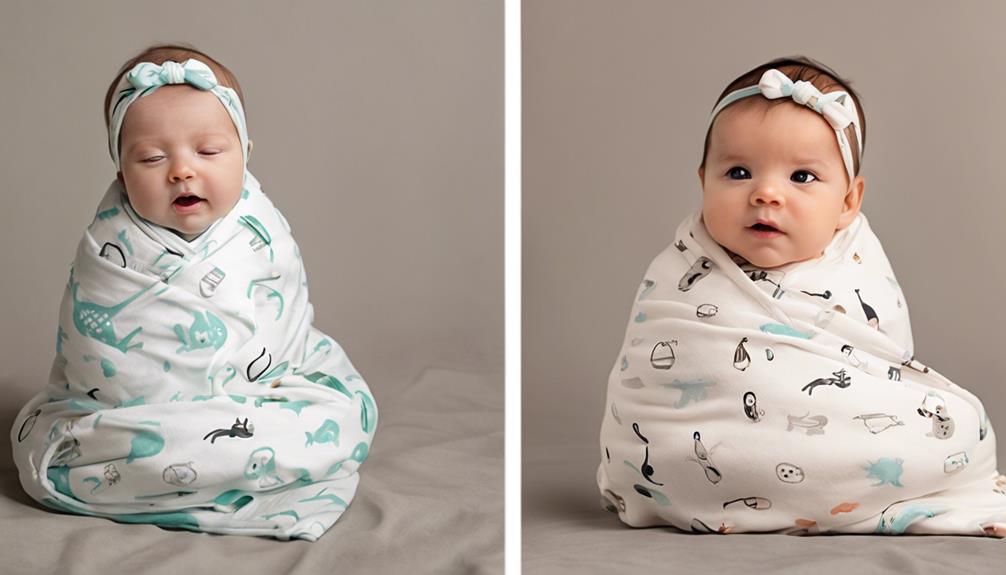
Did you know that loose bedding is a leading cause of sleep-related accidents in infants? To keep your baby safe, avoid using items like crib bumpers and loose blankets that can cover their face or cause suffocation. Instead, opt for a fitted sheet over a firm mattress to create a minimalist sleep environment. Swaddle blankets can be useful during the day or for short naps, but they should be used correctly and removed once your baby shows signs of rolling over. Never place pillows, stuffed animals, or thick blankets in the crib. By focusing on a simple, bare setup, you reduce the risk of suffocation or entrapment, ensuring your little one sleeps safely and soundly.
How to Maintain and Adjust Your Baby’s Sleep Environment as They Grow
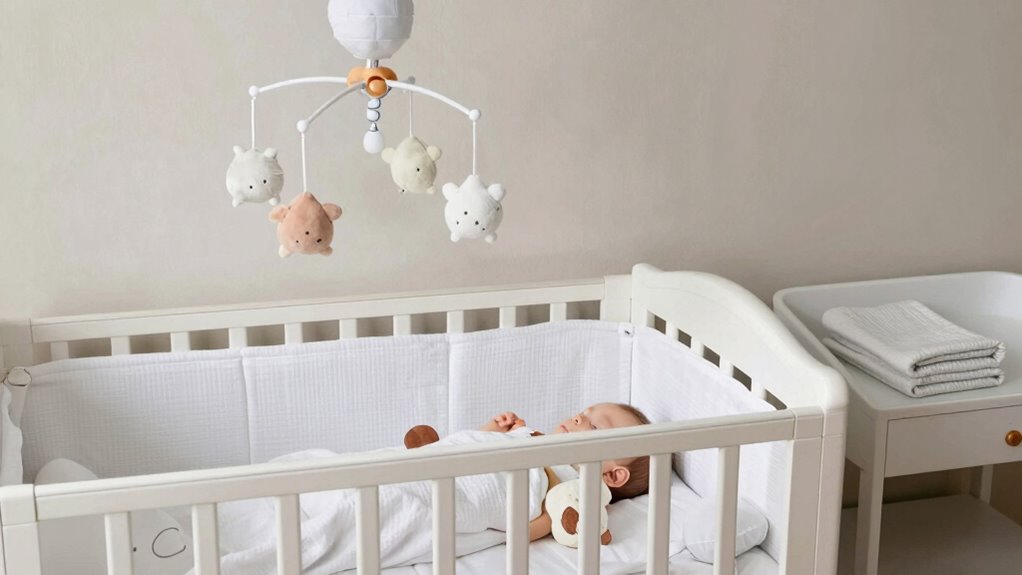
As your baby grows, their sleep environment needs regular adjustments to stay safe and comfortable. You’ll want to update nursery decor to reflect their changing needs, ensuring the space remains cozy yet minimalist. Adjust the crib’s mattress height as they gain strength, making sure it’s always at the safest level. As they start sleep training, create a consistent routine, and remove excess items that could pose risks. Use the table below to guide adjustments at different stages:
| Stage | Focus | Tips |
|---|---|---|
| Newborn | Safety, minimal decor | Keep crib bare, firm mattress |
| 4-6 months | Transition to toddler sleep | Lower crib mattress, remove loose items |
| 1 year+ | Independent sleep, decor updates | Add sleep-friendly decor, routines |
| Growing toddler | Safety check, sleep habits | Regularly reassess environment |
Frequently Asked Questions About Minimalist Baby Sleep Safety
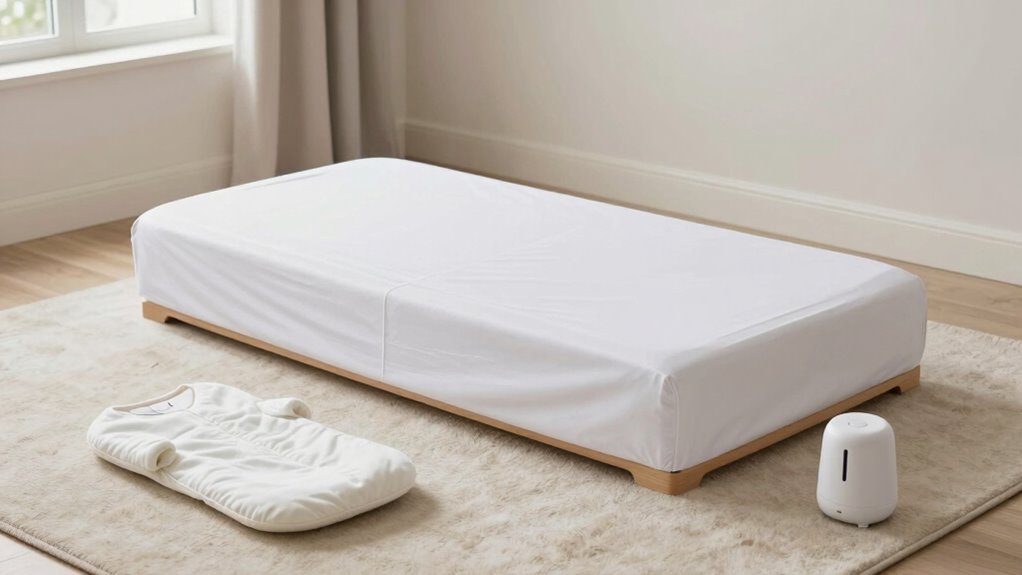
Are you wondering about the most important safety tips for maintaining a minimalist sleep environment for your baby? Keeping nursery decor simple helps reduce clutter and distractions, creating a calm space that promotes better sleep. To guarantee safety, avoid pillows, stuffed animals, or loose bedding in the crib. When it comes to sleep training, a minimalist setup makes it easier to establish consistent routines without overstimulation. Remember, a firm mattress with a fitted sheet is all you need for a safe sleep surface. If you’re concerned about your baby’s sleep safety, stick to these basics and keep the environment uncluttered. This approach not only promotes safe sleep but also simplifies your sleep training process, helping your little one develop healthy sleep habits early on.
Frequently Asked Questions
How Often Should I Inspect My Baby’s Sleep Environment for Safety?
You should inspect your baby’s sleep environment at least once a week to guarantee ongoing safety. Regular sleep environment inspections help you spot potential hazards, like loose bedding or toys, that could compromise baby sleep safety. Keep an eye out for any changes or wear and tear. Staying vigilant with these inspections ensures your baby’s sleep space remains safe and comfortable, giving you peace of mind every night.
Are There Specific Materials to Avoid in Minimalist Baby Bedding?
Avoid flammable fabrics like polyester or fleece in your baby’s bedding, as they pose a fire risk. Steer clear of materials with loose threads or embellishments that could become choking hazards, especially around tiny hands and mouths. Instead, choose soft, breathable fabrics like cotton or muslin, which are safe, gentle, and easy to clean. This way, you create a cozy, secure sleep space that minimizes risks and promotes restful nights.
Can a Minimalist Sleep Setup Adapt for Twins or Multiple Babies?
Yes, a minimalist sleep setup can adapt for twins or multiple babies by implementing twin sleep strategies that prioritize multiple baby safety. You’ll want to use separate sleep spaces or cribs to reduce risk, making sure each baby has enough room and proper ventilation. Keep the setup simple with breathable bedding and avoid overcrowding. Consistently monitor each baby, and follow safe sleep guidelines to ensure everyone sleeps soundly and safely.
What Are Signs My Baby’s Sleep Environment Is Unsafe?
Think of your baby’s sleep environment as a delicate garden—any weeds can threaten its health. If you notice sleep environment hazards like loose bedding, pillows, or stuffed animals, it’s a red flag. Unsafe sleep indicators also include alarms like frequent waking, difficulty settling, or signs of discomfort. Always guarantee the crib is clear, the mattress firm, and your baby sleeps on their back to keep their sleep space safe and sound.
How Do I Introduce New Sleep Elements Safely as My Baby Grows?
When introducing new sleep elements as your baby grows, start gradually. Make certain the sleep surface remains firm and free of loose bedding or toys, and always prioritize proper sleep positioning—on their back. Observe how your baby responds, and consult your pediatrician if you’re unsure. Keep the environment safe, consistent, and simple, making adjustments slowly to help your little one shift comfortably while maintaining safety.
Conclusion
Creating a minimalist, safe sleep space for your baby is like designing a cozy, clutter-free oasis where dreams can flourish. By keeping essentials simple and safety top of mind, you build a peaceful haven that grows with your little one. Imagine soft morning light filtering through a tidy crib, a gentle reminder that less truly is more. Trust your instincts, stay vigilant, and watch your baby drift into restful sleep in their perfect, safe sanctuary.