You should consider using a bottle sterilizer when your baby shows signs of illness, or if bottles are visibly dirty, sticky, or have odors after cleaning. Sterilizers provide extra protection during high-risk times, outbreaks, or when your baby has a weakened immune system. For everyday cleaning, thorough handwashing and boiling may suffice. Want to find out how to choose the right sterilizer and when it’s truly necessary? Keep exploring for helpful tips.

Get baby and family essentials delivered free — and shop member deals
- Fast, free delivery on millions of items
- Access to Prime Big Deal Days deals on October 6–7
- Prime Video, Amazon Music and more included
Key Takeaways
- Use a sterilizer during illness, dirty bottles, or outbreaks to ensure safety and reduce infection risks.
- Regular cleaning with soap and boiling may suffice for routine hygiene; sterilizers are for added protection during vulnerable times.
- Choose sterilizers based on your routine, budget, and convenience, considering options like boiling, microwave, or electric devices.
- Proper maintenance and understanding of sterilizer features are essential to ensure effective sterilization and safety.
- Sterilizers are beneficial for supporting immune development and preventing illness, but not always necessary for everyday bottle cleaning.
As an affiliate, we earn on qualifying purchases.
What Are Bottle Sterilizers, and Do You Need One?

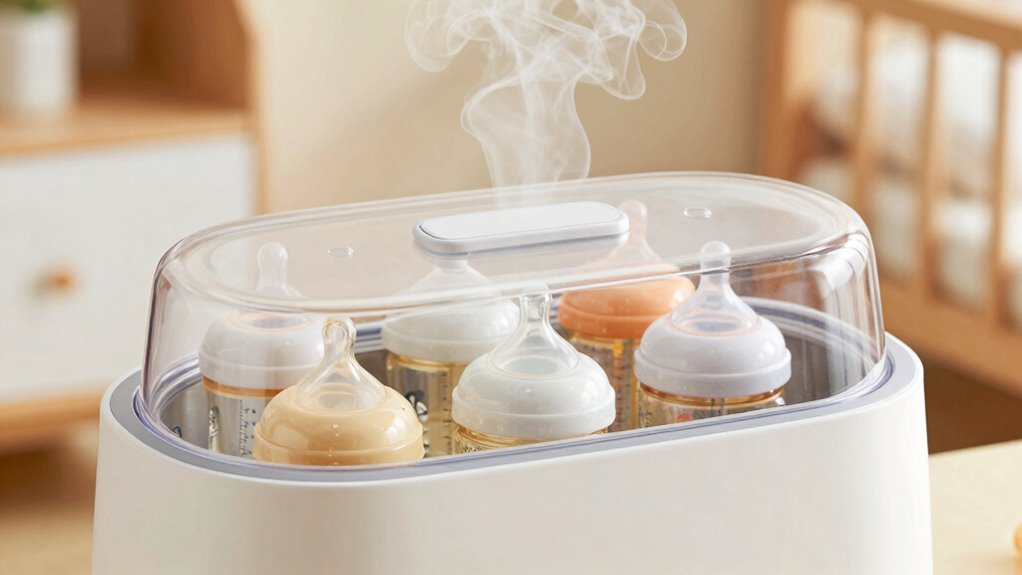
Are bottle sterilizers worth the investment? If you’re focused on nursery organization and maintaining consistent feeding schedules, they can be a game-changer. A bottle sterilizer uses heat or steam to eliminate harmful bacteria, making bottles safe for your baby. This helps streamline your routine, giving you peace of mind during busy feeding times. If you prefer a tidy nursery and want to reduce the risk of infection, a sterilizer can save you time and effort. It’s especially useful if you’re feeding multiple bottles daily or using expressed milk. However, if you’re comfortable with thorough handwashing and boiling, a sterilizer might be optional. Consider your nursery setup and how much convenience matters to your feeding routine before deciding.
When Is Handwashing and Boiling Enough to Keep Baby Bottles Safe?

Handwashing and boiling can be effective ways to keep baby bottles safe when done correctly. If you thoroughly wash bottles with soap and hot water, and then boil them for at least five minutes, you usually eliminate harmful germs. However, it’s important to understand when these methods are enough and when you might need additional sterilization.
Effectiveness of Handwashing
While thorough handwashing is essential for preventing contamination, it may not always be enough to keep baby bottles completely safe. Proper hand hygiene reduces germs, but some bacteria and viruses can survive if handwashing isn’t thorough or if surfaces are contaminated. To enhance germ prevention, consider the environment and the tools you use. Use the table below to evaluate your hand hygiene practices:
| Situation | Effectiveness of Handwashing | Additional Measures Needed |
|---|---|---|
| After diaper change | Often effective | Sterilize bottles if dirty |
| When hands look visibly dirty | Less effective | Use sanitizer or boil bottles |
| Handling raw milk or formula | May need extra steps | Sterilize bottles regularly |
| When in doubt about cleanliness | Inconsistent effectiveness | Consider sterilization methods to ensure safety |
In some cases, handwashing alone isn’t enough; sterilization methods may be necessary. Additionally, proper sterilization can eliminate bacteria and viruses that handwashing might miss, ensuring the highest level of safety for your baby. Regularly cleaning bottles thoroughly is also important to prevent buildup of residues and germs that handwashing alone may not remove completely. Employing appropriate sterilization techniques further reduces the risk of contamination and provides peace of mind for parents.
Boiling as Sterilization Method
After guaranteeing your hands are clean, boiling bottles can provide an added layer of safety, especially when handwashing might not eliminate all germs. Boiling is a simple, effective method that kills bacteria and viruses, making it suitable for many situations. However, it may not remove chemical disinfectants or residues from UV sterilization devices. Use boiling when:
- Bottles are visibly soiled or contaminated.
- UV sterilization or chemical disinfectants aren’t available.
- You want an extra assurance beyond handwashing, especially in areas with higher infection risks.
- Piercing care and hygiene practices are not being followed properly, increasing the risk of contamination.
- Proper air purifier maintenance is not being followed, which could compromise overall sanitation practices.
While boiling is effective, it’s essential to understand its limits. Combining it with proper cleaning and considering alternative methods like UV sterilization or chemical disinfectants can ensure your baby’s bottles are as safe as possible.
How Do You Know When It’s Time to Use a Bottle Sterilizer?
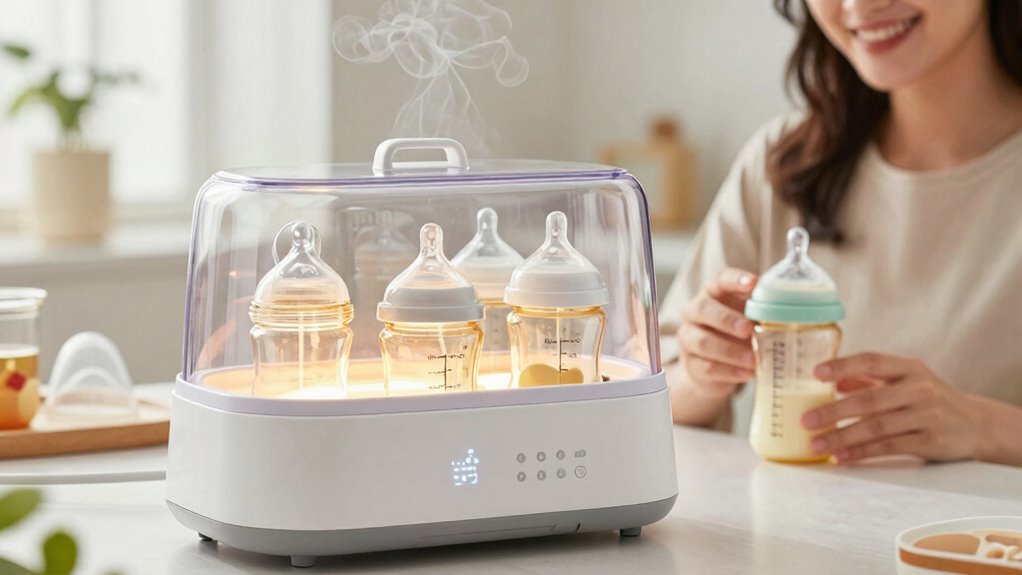
You should consider using a bottle sterilizer when your baby shows signs of illness or if you notice bottles are particularly dirty or sticky. Even if you wash bottles regularly, sterilizing can provide extra protection during vulnerable times. Pay attention to these signs to decide when sterilization is necessary for your little one’s safety. Incorporating temperature treatments like hot or cold sterilization methods can further enhance safety measures. Additionally, hygiene practices such as proper storage and handling can help maintain bottle cleanliness between sterilizations. Regular sterilization can also help maintain the resale value of bottles and accessories by reducing bacterial buildup. Understanding survival gear maintenance and proper usage can also be applicable in maintaining your sterilization equipment for optimal performance. Proper sterilization routines contribute to overall infant health by minimizing the risk of infections.
Signs of Illness
Knowing when to use a bottle sterilizer is essential for keeping your baby safe, especially if they show signs of illness. If your baby’s health seems compromised, sterilizing bottles can help reduce infection risk. Watch for these signs of illness:
- Unusual fussiness or irritability around feeding time.
- Diarrhea or vomiting, which can indicate infection.
- Fever or lethargy that suggests a health issue.
If you notice any of these signs of illness, sterilize bottles more frequently to prevent germs from spreading. Keeping bottles clean is a key part of maintaining your baby’s overall health. When your baby isn’t feeling well, proper sterilization becomes even more vital to support their recovery and protect their delicate immune system. Additionally, hygienic practices like sterilizing bottles can help minimize exposure to harmful bacteria during vulnerable times.
Dirty or Sticky Bottles
How can you tell when it’s time to use a bottle sterilizer? If your bottles look dirty or sticky despite regular bottle cleaning, it’s a good indication that sterilization methods are needed. Residual formula, milk, or spit-up can leave surfaces sticky and create bacteria buildup. When bottles develop a film or odor, sterilization helps eliminate germs that cleaning alone might miss. Even if bottles seem visually clean, sterilizing ensures they’re free from harmful microbes, especially during illness outbreaks or if your baby has a weakened immune system. Use a sterilizer after each thorough cleaning or when you notice sticky residue. Incorporating sterilization methods like steaming, boiling, or electric sterilizers guarantees your bottles remain safe and hygienic for your little one. Proper sterilization techniques are essential for maintaining hygiene standards and preventing potential infections. Regular sterilization also helps reduce the risk of microbial contamination, ensuring your baby’s health and safety.
Which Type of Bottle Sterilizer Is Right for Your Family?
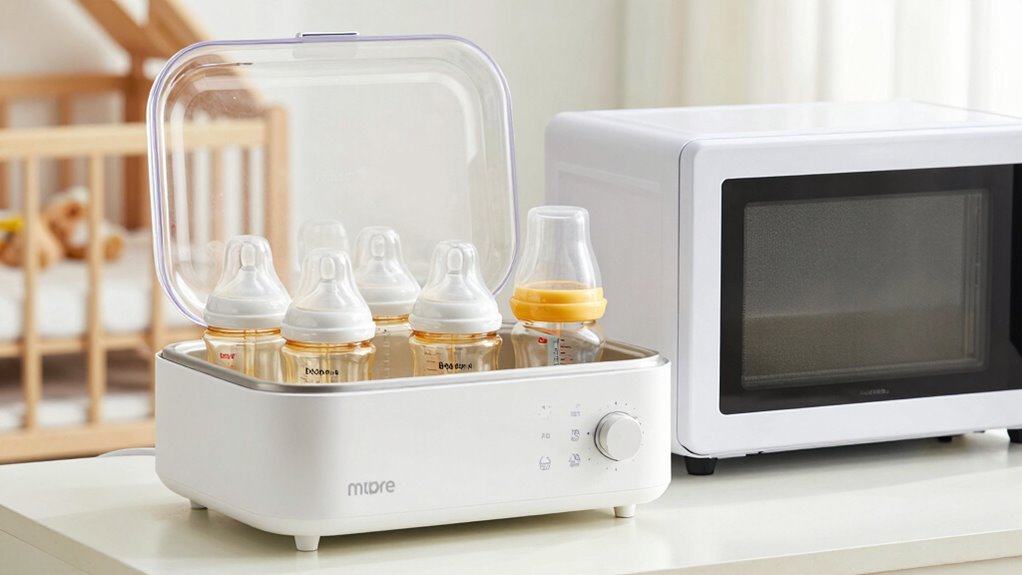
Choosing the right bottle sterilizer depends on your family’s specific needs and lifestyle. Consider how often you sterilize bottles, your feeding routines, and storage safety. Regularly cleaning and maintenance and digital concepts are essential to explore for maintaining safe and effective sterilization routines. For instance, some sterilizers incorporate automatic shut-off features to prevent overheating and ensure safety. Select a sterilizer that fits your routine, ensuring bottles stay clean and safe for your baby’s feeding and storage needs. Additionally, understanding the types of sterilizers available can help you make an informed decision that best suits your daily schedule and preferences. Recognizing early warning signs of improper sterilizer use can also prevent potential health risks for your baby.
What Are the Benefits of Using a Bottle Sterilizer for Your Baby’s Health?
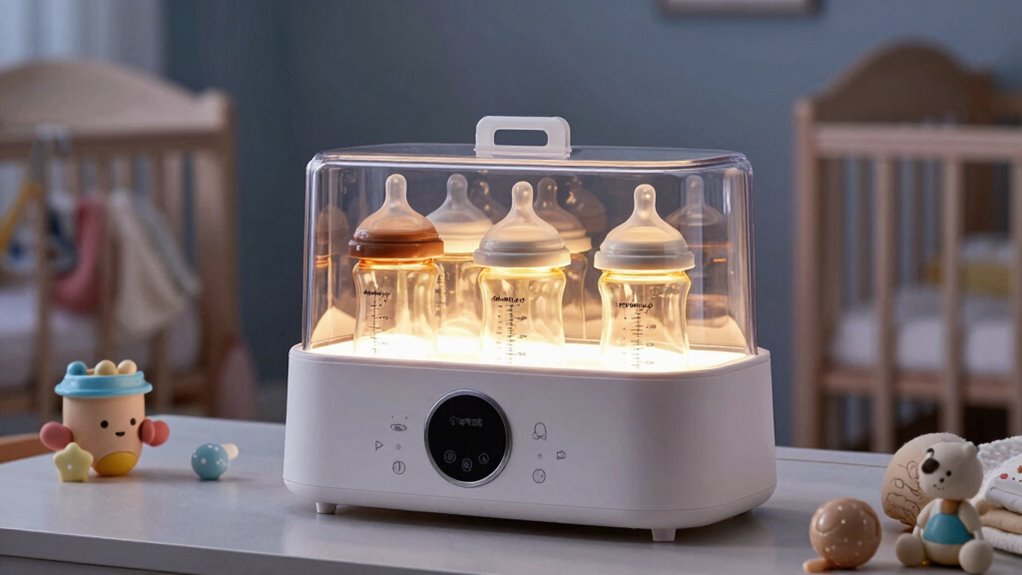
Using a bottle sterilizer considerably reduces the risk of exposing your baby to harmful bacteria and germs, which is essential for their developing immune system. Sterilizing bottles helps eliminate bacteria that can cause infections, supporting your baby’s health and well-being. This process complements breastfeeding benefits by ensuring that bottle-fed babies receive a similar level of protection, especially in the early months. When bacteria are minimized, your baby’s immune system can develop stronger defenses naturally. Regular sterilization also provides peace of mind, knowing that feeding equipment is clean and safe. Overall, using a sterilizer helps prevent illness and promotes healthier feeding habits, giving your little one a solid foundation for a robust immune system as they grow.
What Myths About Baby Bottle Sterilization Should You Ignore?
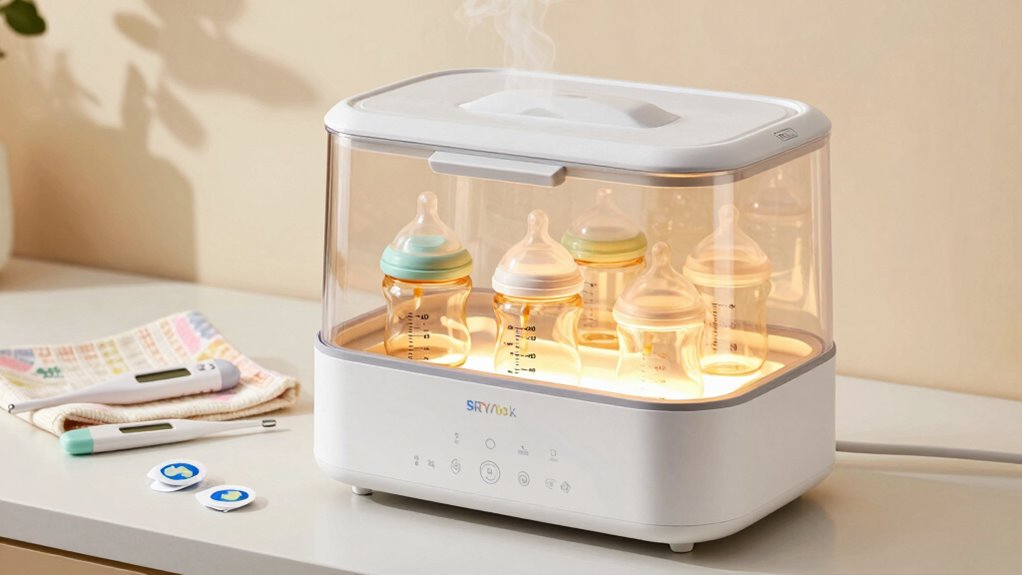
Many popular myths about baby bottle sterilization can lead parents to misunderstand its true purpose and necessity. Don’t fall for sterilization myths that suggest sterilizing after every feed is essential or that boiling bottles is the only safe method. Myth busting reveals that daily sterilization isn’t always required, especially as your baby gets older and their immune system matures. Here are common sterilization myths to ignore:
- Sterilizing kills all germs—some bacteria are harmless or beneficial.
- Boiling is the only effective method—other options like sterilizers or dishwasher sterilization work well.
- Sterilizing is necessary for every feeding—regular cleaning with hot soapy water often suffices.
Focus on evidence-based practices rather than myths, and avoid unnecessary sterilization routines.
How Can You Sterilize Baby Bottles Effectively and Easily?

Sterilizing baby bottles can be simple and effective when you choose the right methods. Start by cleaning bottles thoroughly with warm, soapy water, paying attention to all crevices. You can then sterilize using boiling water, a microwave steam sterilizer, or an electric sterilizer—whichever fits your routine. Keeping your nursery decor clean and organized helps remind you to maintain hygiene, reducing the risk of contamination. Incorporate sterilizing into your feeding schedules to ensure bottles are always ready when needed. If you’re short on time, electric sterilizers offer quick, hands-free solutions. Remember, consistency is key to keeping your baby safe and healthy. By establishing a simple sterilization routine, you make feeding time easier and more reassuring for both of you. Additionally, choosing eco-friendly sterilization options, such as biodegradable tissue paper for cleaning or packaging, can help reduce your environmental impact while maintaining hygiene.
Are There Cheaper Alternatives to Electric Bottle Sterilizers?

If you’re looking for budget-friendly options to sterilize baby bottles, there are several alternatives to electric sterilizers that won’t break the bank. These cheaper alternatives provide effective budget sterilization without the need for specialized equipment.
- Boiling: Submerge bottles and accessories in boiling water for 5-10 minutes. It’s a simple, reliable method used worldwide.
- Steaming in a Microwave: Use microwave sterilization bags or steamers designed for bottles. They’re affordable and quick.
- Dishwasher: Run bottles through a hot water cycle with a heated dry setting. Many dishwashers can effectively sterilize bottles if properly loaded.
These methods are cost-effective, easy, and suitable for daily sterilization needs, giving you budget sterilization options without sacrificing safety.
Should You Invest in a Bottle Sterilizer? Here’s How to Decide
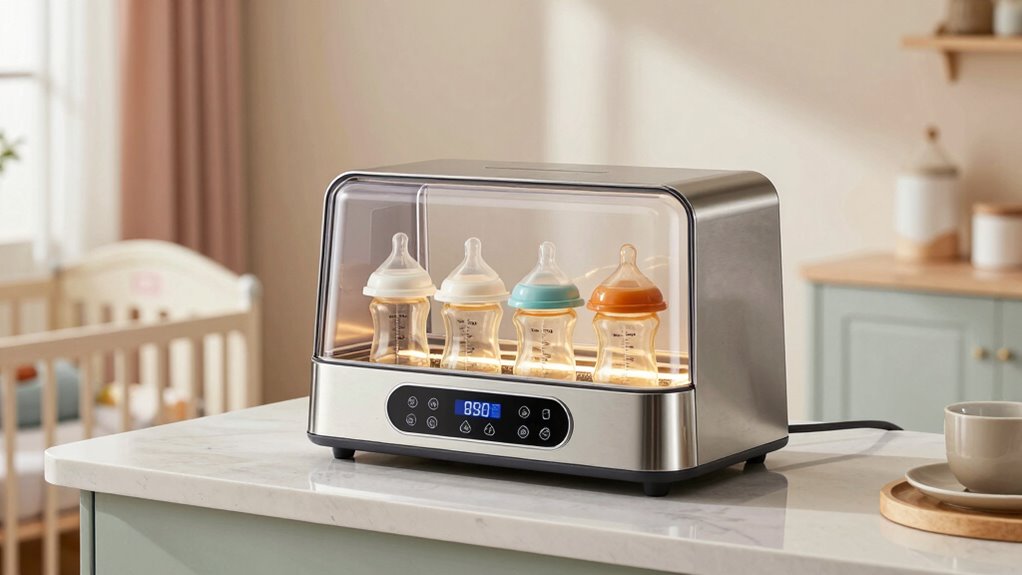
While simple methods like boiling or using your dishwasher can handle daily sterilization, investing in a dedicated bottle sterilizer can offer added convenience and peace of mind. If your nursery decor emphasizes minimalism, a sleek sterilizer can blend seamlessly into the space. Consider your breastfeeding tips—if you’re frequently on the go or prefer quick, reliable sterilization, a sterilizer saves time and reduces stress. Think about your lifestyle: busy parents may find the automatic features worthwhile, while others might prefer traditional methods. Evaluate your budget and how often you’ll use it. If sterilizing multiple bottles daily and maintaining a hygienic environment is a priority, investing in a sterilizer makes sense. Additionally, understanding regional flavors and pairings can help you create a more enjoyable feeding routine, especially when selecting bottles or accessories that complement your lifestyle. Ultimately, it’s about balancing convenience with your specific needs.
Frequently Asked Questions
How Often Should I Sterilize Baby Bottles?
You should sterilize baby bottles daily, especially for newborns, to guarantee they’re germ-free. Many believe sterilization myths, like needing it after every use, but thorough bottle cleaning tips suggest regular washing with soap and water suffices as babies grow older. Use a sterilizer when recommended—such as for premature or immunocompromised infants—and always follow manufacturer instructions to keep bottles safe and hygienic.
Can I Sterilize Bottles With Microwave or Dishwasher?
Yes, you can sterilize bottles with microwave or dishwasher sterilization methods. For microwave sterilization, place bottles in a microwave-safe sterilizer or cover with water and microwave for about 2-5 minutes. For dishwasher sterilization, run your bottles through a hot cycle with a sterilizing rinse or use a sterilizing bag. These methods are efficient, quick, and help guarantee your baby’s bottles stay germ-free.
Are Sterilizers Necessary for Breastfeeding Moms?
Sterilizers aren’t strictly necessary for breastfeeding moms, especially if you’re practicing good hygiene and following proper breastfeeding techniques. However, if you prepare formula, sterilizing bottles can help prevent germs. Using a sterilizer guarantees bottles are thoroughly clean, giving you peace of mind. Whether you choose sterilization or not depends on your comfort level and specific circumstances, but maintaining cleanliness during formula preparation is always important for your baby’s health.
How Long Does a Typical Bottle Sterilizer Cycle Take?
A typical bottle sterilizer cycle usually takes about 6 to 15 minutes, depending on the model. You might worry about time, but sterilizer efficiency means you get clean, germ-free bottles quickly. Most modern sterilizers are designed for quick cycle durations, so you can easily fit sterilizing into your busy schedule. Trust these quick cycles to keep your baby’s bottles safe without adding stress to your day.
Is Sterilizing Necessary if Bottles Are Stored in the Fridge?
Sterilizing bottles isn’t always necessary if you store them properly in the fridge, as this can guarantee fridge storage safety. If you prefer, you can use alternative sterilization methods like boiling or microwave sterilizers to keep bottles germ-free. Simply washing bottles thoroughly with hot soapy water can also help, but sterilizing provides extra peace of mind, especially if your baby’s immune system is still developing.
Conclusion
So, whether you’re ready to shell out for that fancy electric sterilizer or just boil bottles in a pot, remember: your baby’s health will survive a little soap and water. If you’re lucky, your little one won’t develop superpowers from bacteria lurking in unsterilized bottles. Sometimes, simplicity wins. After all, if you can’t keep a tiny human alive with basic hygiene, maybe you’re better off just sticking to cuddles.
Fall Picks
fall essentials
As an affiliate, we earn on qualifying purchases.